
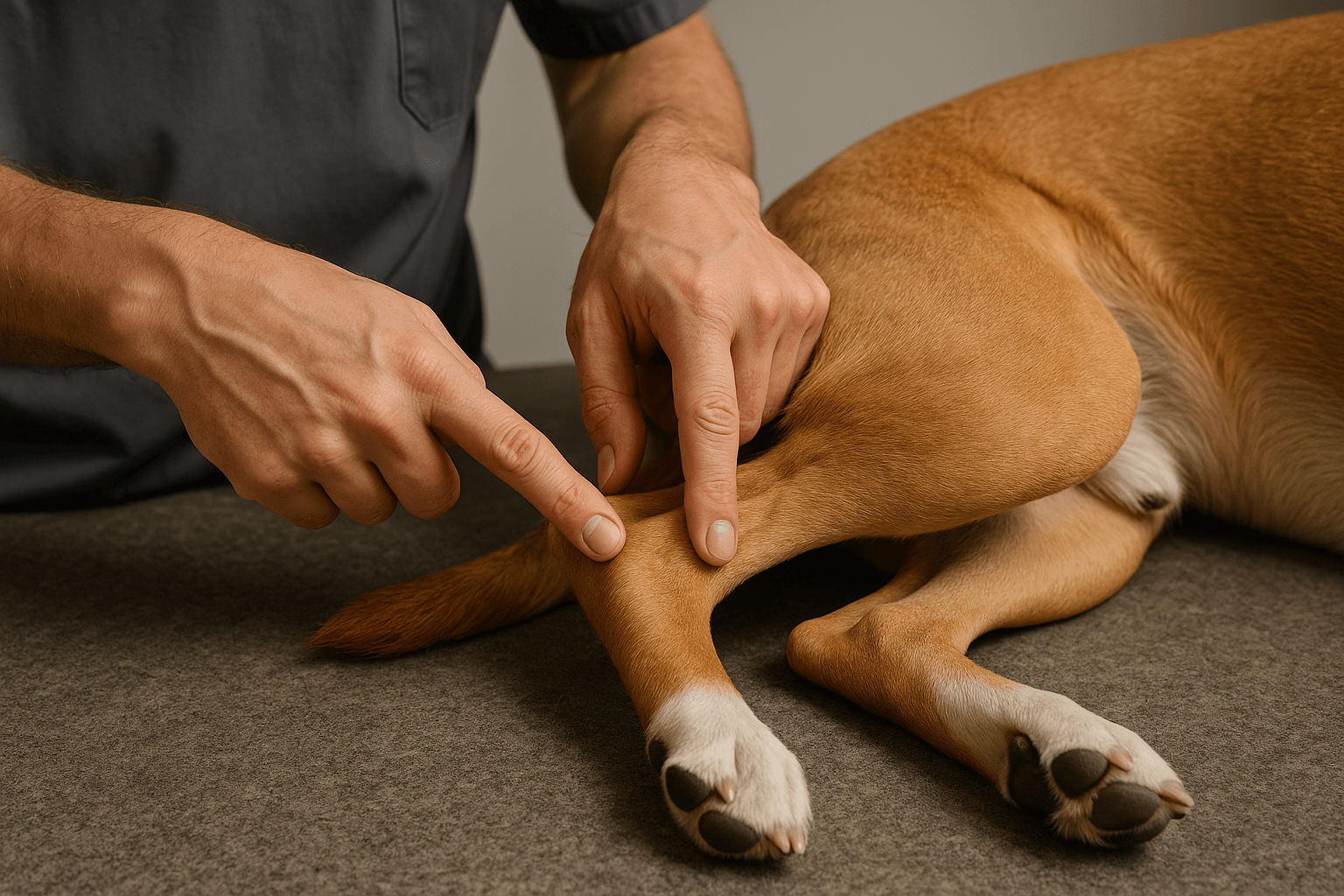
Dog Anterior Cruciate Ligament Location: Best 7 Expert Tips!
Deep inside your dog’s knee—quietly but critically holding everything together—lies the anterior cruciate ligament (ACL), known in veterinary terms as the cranial cruciate ligament (CCL). This small yet essential structure stabilizes the stifle joint, allowing smooth, pain-free movement with every leap, trot, and playful dash. Unlike humans, dogs carry significant weight on their hind limbs even while standing, making this ligament especially vulnerable. Knowing where it’s located and how it functions is the first step toward protecting your dog’s mobility and long-term comfort.
What Exactly Is the Canine Anterior Cruciate Ligament?
The anterior cruciate ligament in dogs—more accurately called the cranial cruciate ligament (CCL)—is a strong band of fibrous tissue inside the stifle (knee) joint of the hind leg. It connects the femur (thigh bone) to the tibia (shin bone) and plays a key role in preventing abnormal joint motion. Without it, the knee becomes unstable, leading to pain, lameness, and eventually arthritis.
- Connects Femur to Tibia
The CCL runs diagonally within the stifle joint, anchoring the back of the femur to the front of the tibia to control forward sliding. - Prevents Cranial Tibial Thrust
When a dog steps down, body weight pushes the femur backward; the CCL stops the tibia from sliding forward—a motion known as cranial tibial thrust. - Works With Other Joint Structures
It collaborates with the caudal cruciate ligament, menisci, and joint capsule to maintain full stifle stability during movement. - Non-Elastic and Load-Bearing
Unlike muscles, the CCL doesn’t stretch. It’s designed to bear constant stress, which is why chronic wear or sudden trauma can lead to tears. - Present in Both Hind Legs
Every dog has two CCLs—one in each rear knee—and injury to one doesn’t guarantee the other will stay healthy, especially if gait changes occur.
Understanding this tiny but mighty ligament helps explain why CCL injuries are so common—and so consequential—in our canine companions.
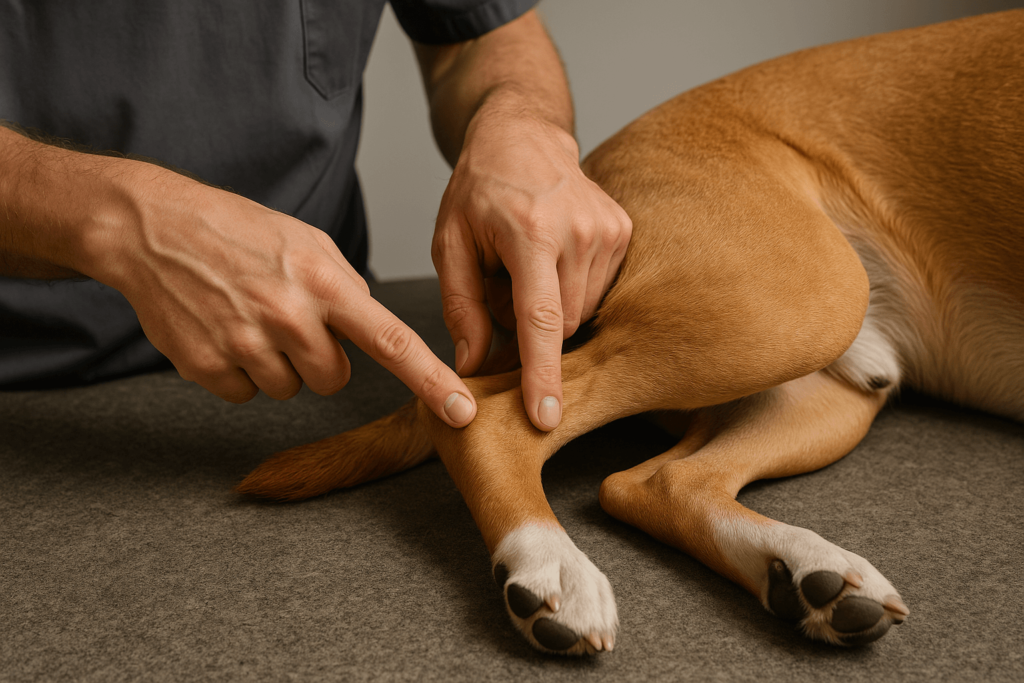
Where Is the Anterior Cruciate Ligament Located in a Dog’s Body?
Pinpointing the CCL’s location helps dog owners recognize signs of trouble and appreciate the complexity of their pet’s anatomy. Nestled deep within the stifle—the equivalent of the human knee—the ligament is not visible from the outside but is central to smooth joint function.
- Inside the Stifle Joint
The CCL resides entirely within the knee capsule of the hind leg, hidden beneath layers of muscle, skin, and connective tissue. - Between Femur and Tibia
It originates on the lateral condyle of the femur and inserts on the intercondylar area of the tibia, forming a cross with the caudal cruciate ligament. - Surrounded by Synovial Fluid
The ligament is bathed in joint fluid that nourishes it and reduces friction during movement—though this also means inflammation spreads quickly if injured. - Near the Meniscus
The medial and lateral menisci (cartilage pads) sit just below the CCL, acting as shock absorbers; CCL tears often damage these too. - Protected by Joint Capsule
A fibrous envelope encases the entire stifle joint, including the CCL, but this capsule offers little protection against degeneration or acute trauma.
This precise placement makes the CCL both indispensable and vulnerable—highlighting why early detection of injury is so crucial.
Check this guide 👉Understanding the Cost of Dog Torn ACL Surgery: Best 7 Tips!
Check this guide 👉Dog ACL Tear vs Sprain: Best 7 Expert Tips!
Check this guide 👉Dog CCL Surgery: Best 7 Expert Tips!
| Key Functions of the CCL | Common Signs of CCL Injury |
|---|---|
| Stabilizes the stifle during weight-bearing | Sudden lameness in a hind leg |
| Prevents forward shift of the tibia | “Toe-touching” gait—reluctance to fully place the paw down |
| Enables smooth flexion and extension | Swelling on the inner side of the knee |
| Protects meniscal cartilage from shear forces | Stiffness after rest, especially in the morning |
| Maintains proper joint alignment | Audible clicking or popping during movement |
Why Is the Canine CCL So Prone to Injury?
Unlike in humans—where ACL tears often result from sports trauma—dogs typically suffer CCL damage due to slow degeneration. Their unique anatomy and constant weight-bearing put continuous stress on this ligament, making it susceptible over time.
- Conformation and Breed Predisposition
Certain breeds like Rottweilers, Labrador Retrievers, and German Shepherds have steeper tibial plateaus, increasing strain on the CCL. - Chronic Degeneration Over Acute Trauma
Most CCL injuries stem from gradual fiber breakdown due to age, obesity, or poor joint alignment—not a single “wrong step.” - Obesity as a Major Risk Factor
Extra weight dramatically increases load on the stifle joint, accelerating ligament wear and reducing healing capacity. - Bilateral Vulnerability
Up to 60% of dogs who rupture one CCL will injure the other within 12–18 months due to compensatory gait changes. - Lack of Blood Supply
The CCL has limited circulation, impairing its ability to repair microtears before they become full ruptures.
This slow-burn nature means prevention and early intervention are far more effective than waiting for a complete rupture.
Diagnosing a CCL Injury: What Vets Look For
Veterinarians use a combination of physical tests, imaging, and gait analysis to confirm CCL damage. Early diagnosis can significantly improve outcomes and reduce long-term joint damage.
- Cranial Drawer Test
The vet gently moves the tibia forward while stabilizing the femur; abnormal motion indicates ligament rupture. - Tibial Compression Test
Flexing the hock while holding the femur can reveal the same abnormal forward slide if the CCL is compromised. - Radiographs (X-rays)
While ligaments don’t show on X-rays, vets look for joint swelling, arthritic changes, or tibial plateau angle. - Observation of Gait
A shortened stride, reluctance to jump, or “sitting with leg out” are telltale behavioral clues. - Advanced Imaging (if needed)
MRI or arthroscopy may be used in complex cases, though often unnecessary for clear-cut ruptures.
Accurate diagnosis ensures the right treatment path—whether conservative management or surgical repair.
Treatment Options for CCL Injuries in Dogs
Once diagnosed, treatment depends on the dog’s size, age, activity level, and severity of the injury. Small dogs may heal with rest, but larger breeds usually require surgery.
- Medical (Conservative) Management
For dogs under 30 lbs, strict crate rest, anti-inflammatories, and physical therapy can sometimes suffice—though arthritis risk remains high. - TPLO (Tibial Plateau Leveling Osteotomy)
A gold-standard surgery for medium to large dogs; it changes the tibial angle so the CCL is no longer needed for stability. - TTA (Tibial Tuberosity Advancement)
Another surgical option that shifts the patellar tendon to counteract tibial thrust—ideal for active dogs. - Extracapsular Repair (Lateral Suture)
A less invasive procedure where a synthetic suture mimics the CCL; best for smaller or less active dogs. - Rehabilitation and Physical Therapy
Post-op or post-injury rehab—including laser therapy, hydrotherapy, and controlled exercise—is critical for full recovery.
Choosing the right approach isn’t just about fixing the knee—it’s about preserving long-term joint health.
Preventing CCL Injuries Through Proactive Care
While not all CCL tears can be avoided, smart lifestyle choices significantly reduce risk—especially in predisposed breeds.
- Maintain Ideal Body Weight
Keeping your dog lean is the single most effective way to reduce stress on the stifle joints. - Provide Joint Supplements Early
Glucosamine, chondroitin, and omega-3 fatty acids support cartilage health and may slow degeneration. - Avoid Sudden High-Impact Activity
Warm-ups before play and avoiding slippery floors or uneven terrain can prevent acute strain. - Regular Exercise for Muscle Support
Strong thigh and hamstring muscles stabilize the knee; consistent, low-impact activity builds this support. - Annual Orthopedic Check-Ups
Especially for at-risk breeds, early detection of mild laxity or gait changes can prompt preventive measures.
Prevention is always gentler—and cheaper—than repair.
Living Well After a CCL Diagnosis
A CCL injury doesn’t mean the end of joy or adventure for your dog. With proper care, most dogs return to happy, active lives—even if their pace slows a little.
- Follow Veterinary Rehabilitation Plans
Stick strictly to post-op or post-injury protocols; rushing recovery can undo weeks of healing. - Use Supportive Gear if Needed
Orthopedic braces or harnesses can provide extra stability during walks or in slippery homes. - Modify Home Environment
Ramps instead of stairs, non-slip rugs, and elevated food bowls reduce strain on healing joints. - Monitor for Arthritis Signs
Even successful repairs often lead to some osteoarthritis; manage it with meds, diet, and warmth. - Celebrate Small Wins
Every pain-free walk, playful bark, or wagging tail is a victory worth cherishing.
With love and consistency, your dog can thrive—not just survive—after a CCL challenge.
“The anterior/cranial cruciate ligament prevents the tibia from slipping forward out from under the femur” — Wendy Brooks, DVM, DABVP
Frequently Asked Questions About Dog Anterior Cruciate Ligament Location
Is the ACL in dogs the same as in humans?
Not exactly. Dogs have a cranial cruciate ligament (CCL), which serves a similar function but is under constant load due to their angled hind limbs.
Can a dog live with a torn CCL without surgery?
Small dogs sometimes manage with conservative care, but larger dogs almost always need surgery to avoid chronic pain and severe arthritis.
How long does recovery take after CCL surgery?
Full recovery typically takes 8–12 weeks, with strict activity restriction for the first 6–8 weeks.
What’s the cost of CCL surgery?
Prices range from $1,500 to $5,000 depending on the procedure, location, and veterinary specialist.
Will my dog re-injure the same CCL?
Once fully healed and properly rehabilitated, re-rupture of the same ligament is rare—but the opposite leg remains at risk.
A Small Ligament With a Massive Impact on Your Dog’s Life
The anterior cruciate ligament—though hidden deep within your dog’s knee—holds the key to pain-free movement, joyful play, and graceful aging. Understanding its location, function, and vulnerability empowers you to act quickly at the first sign of trouble and make informed choices that honor your dog’s comfort and mobility. Whether through prevention, early diagnosis, or thoughtful recovery, your attention to this tiny structure can make a world of difference. After all, every wag, leap, and sprint starts with healthy knees—and your love is the best medicine of all.

Is Rawhide Bad for Cats? Best 7 Expert Tips! – Discover the risks, safe alternatives, and expert advice to keep your feline friend healthy and happy.

Is Rawhide Bad for Dogs? Best 7 Expert Tips! – Discover the risks, benefits, and safer alternatives to rawhides for your dog’s chewing needs.

Understanding Anorexia in Cats: Best 7 Expert Tips! – Learn why cats stop eating, spot warning signs, and discover how to help your feline regain appetite safely.

Understanding Anorexia in Dogs: Best 7 Expert Tips! – Learn causes, symptoms, and solutions to help your dog regain appetite and stay healthy.