
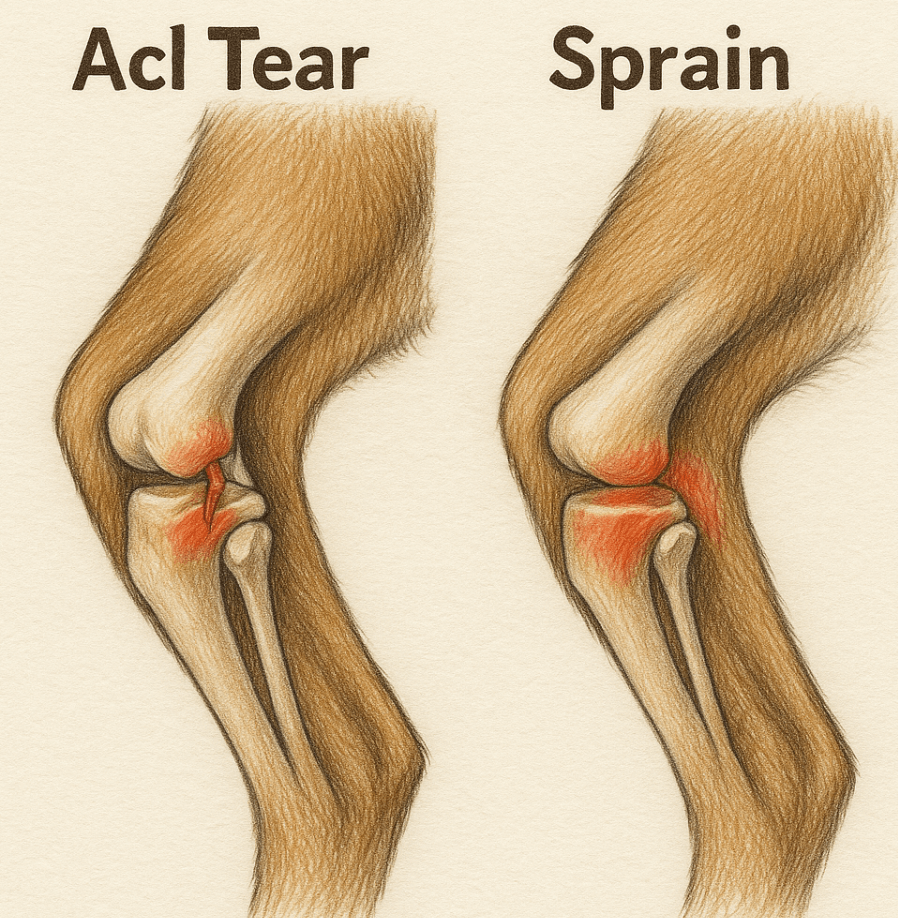

Dog ACL Tear vs Sprain: Understanding the Difference
If your dog is limping or showing signs of hind leg discomfort, it’s natural to worry about what might be causing their pain. Two common culprits are an ACL tear and a sprain—both of which affect the knee joint but differ significantly in severity and treatment. While both conditions can limit your dog’s mobility, understanding the distinction between them is crucial for ensuring proper care. In this blog post, we’ll explore the symptoms, causes, and treatment options for ACL tears and sprains, helping you make informed decisions about your furry friend’s health.
Symptoms of Dog ACL Tears and Sprains
Recognizing the signs of an ACL tear versus a sprain is the first step toward addressing your dog’s injury. While both conditions involve pain and lameness, there are key differences in how they present.
Limping or Lameness:
Dogs with ACL tears often hold their injured leg completely off the ground, while sprains may cause a milder limp that improves with rest.Swelling Around the Knee Joint:
ACL tears typically result in significant swelling due to ligament damage, whereas sprains may cause mild or moderate inflammation.Difficulty Rising or Walking:
A dog with a torn ACL will struggle to stand or walk, especially after resting, while sprains usually allow some level of movement.Popping or Clicking Sounds:
ACL tears may produce a noticeable “pop” or clicking noise when the dog moves, a symptom rarely associated with sprains.Behavioral Changes:
Both injuries can lead to irritability or reluctance to play, but ACL tears tend to cause more pronounced behavioral shifts due to severe pain.
By paying attention to these symptoms, you can better identify whether your dog is suffering from an ACL tear or a sprain and seek appropriate care.
Causes of ACL Tears and Sprains in Dogs
Understanding what leads to these injuries can help you take preventive measures and reduce the risk of future incidents.
High-Impact Activities:
Sudden movements like jumping, twisting, or sprinting can strain the ligaments, leading to either a sprain or, in severe cases, an ACL tear.Obesity or Excess Weight:
Extra weight puts added stress on the joints, increasing the likelihood of ligament damage over time.Genetic Predisposition:
Certain breeds, such as Labrador Retrievers and Rottweilers, are more prone to ACL injuries due to their body structure.Repetitive Stress:
Activities like running on hard surfaces or frequent stair climbing can weaken ligaments, making them more susceptible to injury.Trauma or Accidents:
Falls, collisions, or rough play can directly damage the ligaments, resulting in either a sprain or a tear.
Identifying these causes allows you to minimize risks and keep your dog active and healthy for years to come.
Check this guide 👉Understanding the Cost of Dog Torn ACL Surgery: Best 7 Tips!
Check this guide 👉Dog Sprained Ankle: Best 7 Expert Tips!
Dog ACL Tear Characteristics | Dog Sprain Characteristics |
|---|---|
Severe lameness or complete immobility | Mild to moderate limping that improves with rest |
Significant swelling around the knee | Mild swelling localized to the joint |
Requires surgical intervention | Typically heals with conservative care |
Long recovery period (months) | Short recovery period (weeks) |
Often caused by genetic predisposition | Commonly caused by trauma or overuse |
Treatment Options for ACL Tears and Sprains
The approach to treating your dog’s injury depends on whether it’s an ACL tear or a sprain. Here’s what you need to know about each condition’s treatment plan.
Surgical Repair for ACL Tears:
Severe ACL tears often require surgery, such as TPLO (Tibial Plateau Leveling Osteotomy) or TTA (Tibial Tuberosity Advancement), to stabilize the joint.Conservative Management for Sprains:
Sprains are typically treated with rest, anti-inflammatory medications, and physical therapy to promote healing.Physical Therapy and Rehabilitation:
Both conditions benefit from controlled exercises and hydrotherapy to rebuild strength and improve mobility.Weight Management Programs:
Reducing excess weight alleviates pressure on the joints, aiding recovery for both ACL tears and sprains.Pain Management Strategies:
Pain relief medications or supplements like glucosamine can help manage discomfort during the healing process.
Understanding these treatment options ensures your dog receives the care they need to recover fully and regain their quality of life.
Preventing ACL Tears and Sprains in Dogs
Prevention is always better than cure when it comes to your dog’s joint health. These proactive steps can help minimize the risk of ACL tears and sprains.
Maintain a Healthy Weight:
Keeping your dog at an ideal weight reduces strain on their joints and ligaments.Provide Balanced Exercise:
Avoid high-impact activities and focus on low-impact exercises like swimming or walking to strengthen muscles without overloading the joints.Use Joint Supplements:
Glucosamine and chondroitin supplements support cartilage health and may prevent ligament injuries.Avoid Slippery Surfaces:
Ensure your home has non-slip flooring to prevent accidents that could lead to joint injuries.Schedule Regular Vet Check-Ups:
Routine veterinary exams can detect early signs of joint issues and address them before they worsen.
By implementing these preventive measures, you can protect your dog’s joints and keep them active and pain-free.
Common Mistakes to Avoid When Managing ACL Tears and Sprains
When caring for a dog with an ACL tear or sprain, certain mistakes can delay recovery or worsen the injury. Here’s what to avoid.
Ignoring Early Warning Signs:
Dismissing subtle symptoms like occasional limping can lead to untreated injuries progressing into more severe problems.Allowing Too Much Activity Too Soon:
Overexertion before the injury has healed can re-injure the ligaments and prolong recovery.Skipping Veterinary Consultations:
Attempting to self-diagnose or treat the injury without professional advice can result in improper care.Neglecting Weight Management:
Failing to address obesity increases stress on the joints, complicating recovery efforts.Using Human Pain Medications:
Giving your dog over-the-counter human medications can cause toxicity and harm their liver or kidneys.
Avoiding these pitfalls ensures a smoother and safer recovery process for your dog.
Alternative Therapies for ACL Tears and Sprains
In addition to traditional treatments, alternative therapies can complement your dog’s recovery plan and enhance their healing journey.
Acupuncture:
This ancient practice stimulates specific points on the body to reduce pain and inflammation naturally.Massage Therapy:
Gentle massage promotes circulation, relaxes muscles, and aids in faster recovery.Cold Laser Therapy:
Low-level laser treatments reduce inflammation and accelerate tissue repair without invasive procedures.Hydrotherapy:
Swimming or walking in water provides low-impact exercise that strengthens muscles without straining the joints.Herbal Supplements:
Natural remedies like turmeric and omega-3 fatty acids support joint health and reduce inflammation.
Incorporating these therapies can boost your dog’s recovery and improve their overall well-being.
Long-Term Care for Dogs Recovering from ACL Tears and Sprains
After the initial recovery phase, ongoing care is vital to prevent re-injury and maintain joint health. These strategies can help your dog thrive in the long run.
Continued Physical Therapy:
Regular therapeutic exercises ensure your dog maintains muscle strength and flexibility.Joint Health Monitoring:
Schedule periodic check-ups to monitor your dog’s joint condition and catch potential issues early.Adapting Their Environment:
Make modifications like adding ramps or carpeted floors to minimize stress on their joints.Encouraging Low-Impact Play:
Opt for gentle games like fetch with soft toys instead of high-energy activities.Providing Emotional Support:
Recovery can be frustrating for dogs; offering plenty of affection and encouragement keeps their spirits high.
With consistent care and attention, your dog can enjoy a fulfilling life free from joint-related challenges.
Frequently Asked Questions About Dog ACL Tears and Sprains
How can I tell if my dog has an ACL tear or a sprain?
A torn ACL typically causes severe lameness and swelling, while a sprain results in milder symptoms that improve with rest.
Does a dog ACL tear always require surgery?
While surgery is often recommended for complete tears, some partial tears may heal with conservative management under veterinary guidance.
How long does it take for a sprain to heal?
Most sprains heal within 4-6 weeks with proper rest and care, but recovery times vary depending on the severity.
Can I prevent ACL tears in my dog?
Yes, maintaining a healthy weight, avoiding high-impact activities, and using joint supplements can reduce the risk of ACL injuries.
What should I do if my dog injures their leg?
Limit their activity, apply a cold compress to reduce swelling, and consult your veterinarian as soon as possible for a diagnosis.
Supporting Your Dog Through ACL Tears and Sprains
Whether your dog is dealing with an ACL tear or a sprain, understanding the differences and seeking timely treatment are essential for their recovery. By recognizing symptoms early, exploring treatment options, and taking preventive measures, you can ensure your furry companion stays happy and healthy. Remember, your dog relies on you to advocate for their well-being, so don’t hesitate to consult your veterinarian whenever you notice signs of joint trouble. With the right care and attention, your dog can bounce back stronger than ever.
Is Rawhide Bad for Cats? Best 7 Expert Tips! – Discover the risks, safe alternatives, and expert advice to keep your feline friend healthy and happy.

Is Rawhide Bad for Dogs? Best 7 Expert Tips! – Discover the risks, benefits, and safer alternatives to rawhides for your dog’s chewing needs.

Understanding Anorexia in Cats: Best 7 Expert Tips! – Learn why cats stop eating, spot warning signs, and discover how to help your feline regain appetite safely.

Understanding Anorexia in Dogs: Best 7 Expert Tips! – Learn causes, symptoms, and solutions to help your dog regain appetite and stay healthy.