
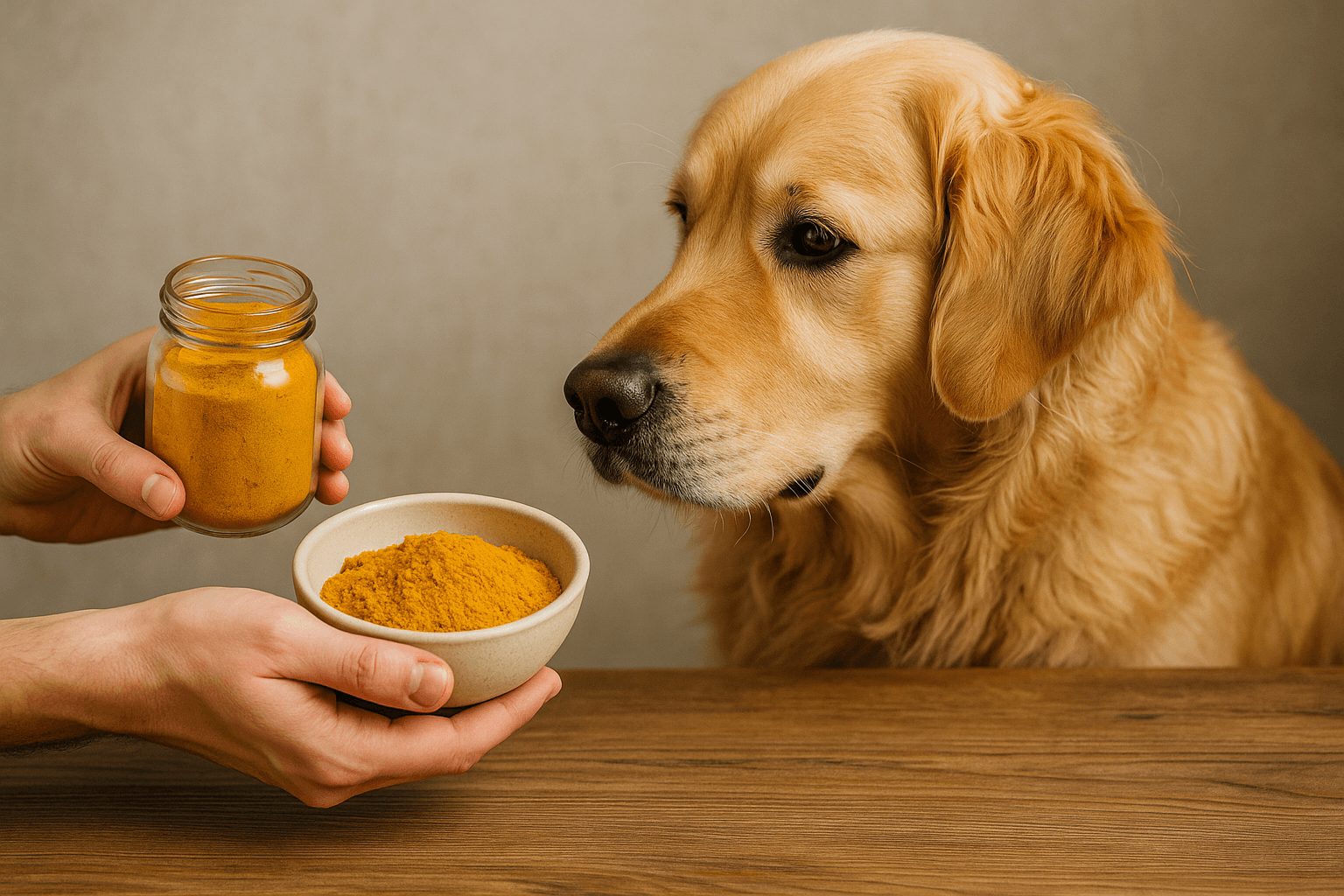

Can You Give Your Dog Turmeric? Best 7 Expert Tips!

Can You Give Your Dog Turmeric? Best 7 Expert Tips!

Can You Give Your Dog Turmeric?

Many dog owners turn to turmeric hoping to ease joint pain, support digestion, or boost overall wellness—thanks to its famous anti-inflammatory properties. But while this golden spice is safe for humans, the question remains: is it safe and beneficial for dogs? The answer isn’t a simple yes or no—it depends on form, dosage, and your dog’s individual health. In this guide, we’ll break down what the science says, how to use it responsibly, and when to skip it entirely. Because when it comes to your dog’s health, natural doesn’t always mean risk-free.

What Is Turmeric and Why Do Pet Owners Use It?


Turmeric, a bright yellow spice from the ginger family, contains curcumin—the compound credited with most of its health benefits. Dog owners often explore it as a natural complement to conventional care.

 
  • Historical use in traditional medicine:
    Turmeric has been used for centuries in Ayurvedic and Chinese medicine for its anti-inflammatory and antioxidant effects.
     
  • Curcumin’s potential benefits:
    Studies suggest it may help manage arthritis, support liver function, and even offer mild pain relief in both humans and animals.
     
  • Interest in holistic pet care:
    As more owners seek natural alternatives, turmeric has gained popularity as a kitchen-to-canine wellness tool.
     
  • Commercial dog supplements:
    Many joint and mobility formulas now include turmeric or curcumin as a key ingredient.
     
  • Anecdotal success stories:
    Countless pet parents report improved mobility and comfort in aging dogs after consistent, vet-approved use.
 

While promising, turmeric isn’t a miracle cure—and proper use is essential to avoid side effects or interactions.

Can You Give Your Dog Turmeric? Best 7 Expert Tips!

Potential Benefits of Turmeric for Dogs


When used correctly, turmeric may offer real support for common canine health concerns—especially those involving inflammation or oxidative stress.

 
  • Joint and arthritis support:
    Curcumin may help reduce swelling and stiffness in aging dogs or those with osteoarthritis.
     
  • Digestive aid:
    In small amounts, it might stimulate bile production and support gut health—but too much can cause upset.
     
  • Antioxidant protection:
    Helps neutralize free radicals that contribute to cellular aging and chronic disease.
     
  • Skin health support:
    Some owners use it (externally or internally) to soothe mild allergies or itchy skin—though evidence is limited.
     
  • Immune modulation:
    Preliminary research suggests curcumin may help regulate immune responses, potentially benefiting dogs with autoimmune tendencies.
 

These benefits are most likely when turmeric is high-quality, properly formulated, and given under veterinary supervision.

 
Safe & Effective Use Risks & Red Flags
Use vet-approved curcumin supplements Giving plain kitchen turmeric without black pepper or fat
Pair with healthy fat (e.g., coconut oil) for absorption High doses causing vomiting or diarrhea
Start with a very small dose Use in dogs on blood thinners or diabetes meds
Monitor for 48 hours after first dose Giving to pregnant or nursing dogs
Use consistently for chronic issues Long-term use without vet check-ins

How to Give Turmeric Safely to Your Dog


Not all turmeric is created equal—and how you administer it makes a huge difference in safety and effectiveness.

 
  • Choose a bioavailable form:
    Plain turmeric powder has poor absorption; look for supplements containing black pepper extract (piperine) or phospholipids.
     
  • Mix with healthy fat:
    Curcumin is fat-soluble—combine with coconut oil, fish oil, or plain yogurt to boost uptake.
     
  • Follow weight-based dosing:
    A common guideline is 1/8 to 1/4 teaspoon per 10 lbs of body weight—but always confirm with your vet first.
     
  • Introduce gradually:
    Start with ¼ of the target dose and increase over 3–5 days to assess tolerance.
     
  • Give with food:
    Always administer with a meal to reduce the risk of stomach upset or nausea.
 

Consistency and caution are key—what works for one dog may not suit another.

Risks and Side Effects to Watch For


Despite its natural origin, turmeric can cause problems if misused or given to vulnerable dogs.

 
  • Gastrointestinal upset:
    Vomiting, diarrhea, or constipation are the most common side effects, especially at high doses.
     
  • Blood-thinning effect:
    Curcumin may slow clotting—dangerous for dogs on anticoagulants or before surgery.
     
  • Gallbladder stimulation:
    May worsen gallstones or bile duct obstruction in predisposed dogs.
     
  • Drug interactions:
    Can interfere with diabetes medications, NSAIDs, and certain chemotherapy drugs.
     
  • Allergic reactions (rare):
    Watch for itching, hives, or swelling after first use—discontinue immediately if seen.
 

When in doubt, consult your veterinarian before adding turmeric to your dog’s routine.

What NOT to Do When Using Turmeric for Dogs


Good intentions can lead to risky choices. Avoid these common mistakes to keep your dog safe.

 
  • Don’t use human turmeric capsules:
    They may contain fillers, additives, or dosages unsafe for dogs.
     
  • Don’t assume “natural equals safe”:
    Even herbs can be toxic in excess or for certain health conditions.
     
  • Don’t combine with NSAIDs like carprofen:
    Both affect the same inflammatory pathways—risk of stomach ulcers increases.
     
  • Don’t give to puppies under 6 months:
    Their developing systems aren’t equipped to process supplements safely.
     
  • Don’t use as a substitute for vet care:
    Turmeric may support comfort but won’t cure infections, fractures, or serious disease.
 

Responsible use means respecting both the potential and the limits of this golden spice.

Turmeric for Specific Conditions: What the Evidence Says


While research in dogs is limited, some areas show more promise than others.

 
  • Osteoarthritis:
    Multiple small studies show reduced pain scores and improved mobility with curcumin supplements over 6–12 weeks.
     
  • Inflammatory bowel disease (IBD):
    Preliminary data suggests curcumin may help modulate gut inflammation—but only as part of a full treatment plan.
     
  • Cancer support (palliative):
    Lab studies show curcumin may inhibit tumor growth, but clinical evidence in dogs is lacking; never use in place of oncology care.
     
  • Liver detox support:
    May aid mild liver enzyme elevation, but avoid in dogs with active liver disease without veterinary approval.
     
  • Skin allergies:
    Anecdotal reports exist, but no strong studies confirm efficacy—better options include omega-3s or prescribed antihistamines.
 

Always treat turmeric as a complementary tool, not a primary therapy.

Alternatives to Turmeric for Inflammation and Joint Health


If turmeric isn’t right for your dog, several other options offer similar benefits with stronger safety profiles.

 
  • Omega-3 fatty acids (fish oil):
    Proven anti-inflammatory effects with robust research backing in dogs.
     
  • Glucosamine and chondroitin:
    Support cartilage health and are widely used for arthritis with minimal risk.
     
  • Green-lipped mussel extract:
    A natural source of omega-3s, glycosaminoglycans, and antioxidants—well-tolerated by most dogs.
     
  • CBD oil (where legal):
    May help with pain and inflammation; choose THC-free, vet-formulated products.
     
  • Prescription NSAIDs (when needed):
    For moderate to severe pain, vet-approved medications like Galliprant offer targeted, monitored relief.
 

Discuss these options with your vet to find the best fit for your dog’s age, condition, and lifestyle.

“There isn’t a one-size-fits-all dosage… the right amount depends on your dog’s size, overall health, and the specific product. Always consult your vet before adding turmeric or any supplement to your dog’s diet.” — Renee Schmid, DVM, Senior Veterinary Toxicologist

Frequently Asked Questions

Can I mix turmeric with my dog’s food?

Yes—but only in small, vet-approved amounts and always with a healthy fat to aid absorption.

For chronic issues like arthritis, it may take 4–8 weeks of consistent use to see noticeable improvement.

Use with extreme caution. Curcumin may affect kidney function—never give without veterinary clearance.


Yes. Its intense yellow pigment can discolor light-colored fur, dishes, or fabrics—rinse bowls thoroughly.

Turmeric is the whole spice; curcumin is the active compound (about 3% of raw turmeric). Supplements often use concentrated curcumin for better efficacy.

Final Thoughts – Golden Spice, Smart Choices


Turmeric can be a thoughtful addition to your dog’s wellness routine—but only when used wisely, sparingly, and under guidance. Its potential to ease discomfort and support long-term health is real, yet it’s not a cure-all or a replacement for professional care. By prioritizing quality, dosing carefully, and staying alert to your dog’s response, you honor both their well-being and your role as a mindful caregiver. After all, the best natural remedies aren’t just about what you give—they’re about how thoughtfully you give it.

Is Rawhide Bad for Cats? Best 7 Expert Tips!

Is Rawhide Bad for Cats? Best 7 Expert Tips! – Discover the risks, safe alternatives, and expert advice to keep your feline friend healthy and happy.

Is Rawhide Bad for Dogs? Best 7 Expert Tips!

Is Rawhide Bad for Dogs? Best 7 Expert Tips! – Discover the risks, benefits, and safer alternatives to rawhides for your dog’s chewing needs.

Understanding Anorexia in Cats: Best 7 Expert Tips!

Understanding Anorexia in Cats: Best 7 Expert Tips! – Learn why cats stop eating, spot warning signs, and discover how to help your feline regain appetite safely.

Understanding Anorexia in Dogs: Best 7 Expert Tips!

Understanding Anorexia in Dogs: Best 7 Expert Tips! – Learn causes, symptoms, and solutions to help your dog regain appetite and stay healthy.

Leave a Reply

Your email address will not be published. Required fields are marked *