

How to Transition Dog Food: Best 7 Expert Tips!

How to Transition Dog Food: Best 7 Expert Tips!

How to Transition Dog Food: A Gentle Guide for Happy, Healthy Dogs

Switching your dog’s food might seem simple, but their digestive system is far more sensitive than ours. A sudden change can trigger upset stomachs, diarrhea, or even refusal to eat. Knowing how to transition dog food properly ensures your pup gets the nutrition they need—without the discomfort. Whether you’re upgrading to a higher-quality brand, addressing allergies, or adapting to a new life stage, a thoughtful approach makes all the difference.

Why a Gradual Food Transition Matters

Dogs thrive on routine, and their gut microbiome is finely tuned to their current diet. Introducing a new food too quickly can overwhelm their digestive tract and cause unnecessary stress. A slow, structured transition gives their system time to adapt while maintaining appetite and gut health.

 
  • Prevents Digestive Upset:
    Sudden changes can lead to gas, vomiting, or loose stools. A gradual shift minimizes these risks.

     
  • Supports Gut Microbiome Balance:
    Beneficial gut bacteria need time to adjust to new proteins, fibers, and nutrients.

     
  • Reduces Food Rejection:
    Dogs may refuse unfamiliar food if introduced too abruptly. Mixing builds familiarity and acceptance.

     
  • Allows You to Monitor Reactions:
    Slow transitions let you spot signs of intolerance—like itching, ear infections, or lethargy—early.

     
  • Maintains Energy and Mood:
    A stable digestive system supports consistent energy, behavior, and overall well-being.


Taking a week or more to switch food isn’t just cautious—it’s compassionate. Your dog’s comfort and health are worth the extra patience.

How to Transition Dog Food: Best 7 Expert Tips!

Common Reasons to Change Your Dog’s Food

There’s rarely a “one-size-fits-all” dog food. Life changes, health needs, and new research often make a switch necessary or beneficial.

 
  • Life Stage Changes:
    Puppies, adults, and seniors have different nutritional requirements—transitioning ensures age-appropriate support.

     
  • Food Allergies or Sensitivities:
    Chronic ear infections, paw licking, or skin rashes may signal a need for a limited-ingredient or novel-protein diet.

     
  • Health Conditions:
    Kidney disease, pancreatitis, or obesity often require therapeutic diets prescribed or recommended by a vet.

     
  • Better Quality or Ingredient Upgrade:
    You might switch to a brand with real meat, fewer fillers, or sustainable sourcing.

     
  • Behavioral or Palatability Issues:
    If your dog consistently leaves food or seems disinterested, a tastier or texture-different formula may help.


Every dog is unique—and so are their nutritional needs. A food change isn’t failure; it’s fine-tuning for a better quality of life.

Signs You Should Transition Food What to Avoid During Transition
Chronic diarrhea or vomiting Switching cold turkey (100% new food day one)
Excessive itching or skin irritation Mixing too many brands or formulas at once
Weight gain or loss despite consistent feeding Ignoring your dog’s appetite cues
Dull coat or low energy levels Skipping vet consultation for health-related changes
Refusing meals consistently Using expired or improperly stored food

The 7-Day Transition Method (Step-by-Step)

The gold standard for switching dog food is the 7-day gradual transition. This method blends old and new food in increasing ratios to ease digestion and encourage acceptance.

 
  • Days 1–2: 75% Old Food, 25% New Food
    Start small. Your dog will barely notice the change, but their gut begins adapting.

     
  • Days 3–4: 50% Old Food, 50% New Food
    Equal parts lets your dog get used to the new smell and texture while still enjoying the familiar taste.

     
  • Days 5–6: 25% Old Food, 75% New Food
    The new food now dominates, but a hint of the old provides comfort and continuity.

     
  • Day 7+: 100% New Food
    Full transition complete—assuming no digestive issues arose.

     
  • Monitor Closely Each Day:
    Watch stool quality, energy, appetite, and any signs of discomfort. If issues appear, pause or slow the process.


This method works for most healthy dogs. For sensitive stomachs, extend to 10–14 days. Never rush—your dog’s gut will thank you.

Special Considerations for Puppies, Seniors, and Dogs with Health Issues

Not all dogs transition the same way. Age and medical history demand extra care.

 
  • Puppies:
    Their digestive systems are still developing. Transition even more slowly (10–14 days) and choose food labeled “for growth.”

     
  • Senior Dogs:
    Older dogs often have slower metabolisms and sensitive digestion. Pair food changes with vet guidance and consider easily digestible formulas.

     
  • Dogs with Pancreatitis:
    Avoid high-fat foods. Transition under veterinary supervision using low-fat, prescription diets.

     
  • Dogs with Food Allergies:
    When trialing a new hypoallergenic diet, avoid all treats, chews, or supplements that could contain trigger ingredients.

     
  • Rescue or Stressed Dogs:
    Recent trauma or shelter life can make dogs picky or anxious. Prioritize stability—delay food changes until they feel safe.


When in doubt, consult your veterinarian. A tailored plan is always safer than a generic one.

How to Choose the Right New Dog Food

Switching food is only effective if the new option is truly better suited to your dog’s needs.

 
  • Read the Ingredient List:
    The first ingredient should be a named animal protein (e.g., “chicken,” not “meat meal”).

     
  • Look for AAFCO Statement:
    Ensure the food is labeled “complete and balanced” for your dog’s life stage.

     
  • Consider Protein Source:
    If switching due to allergies, choose a novel protein your dog hasn’t had (e.g., duck, venison, or fish).

     
  • Check for Fillers and Additives:
    Avoid excessive corn, soy, artificial colors, or preservatives like BHA/BHT.

     
  • Research the Brand:
    Look for transparency, recall history, and whether they employ veterinary nutritionists.


Price doesn’t always equal quality—but extremely cheap food often cuts corners. Invest in nutrition; it pays off in vet bills saved.

What to Do If Your Dog Refuses the New Food

Not every dog embraces change happily. But there are gentle ways to encourage acceptance.

 
  • Warm the Food Slightly:
    Room-temperature or slightly warmed food releases more aroma, making it more appealing.

     
  • Add Bone Broth or Wet Food:
    A splash of low-sodium bone broth or a spoonful of wet food can boost flavor without compromising nutrition.

     
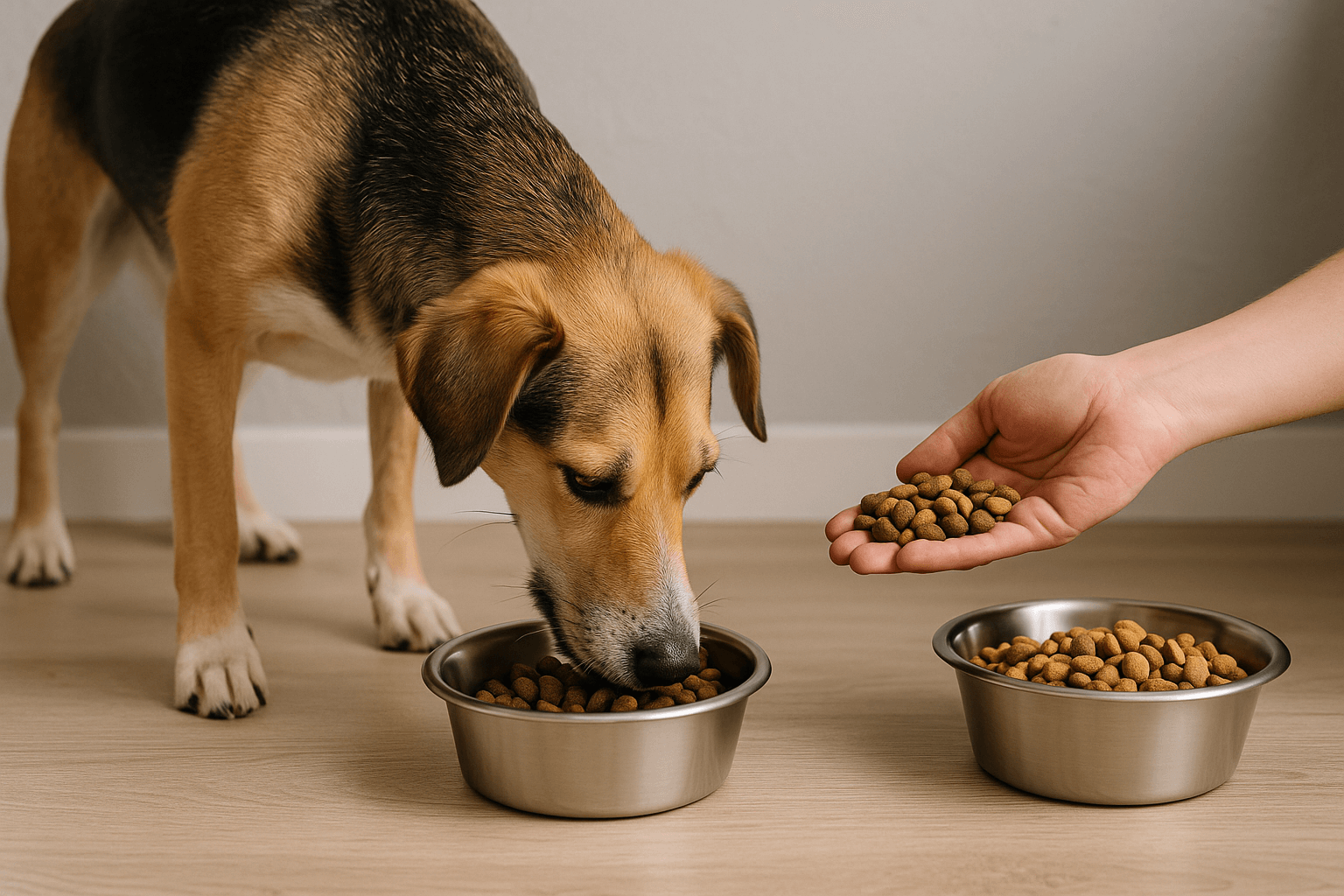
  • Hand-Feed the Mix:
    Offering new food from your hand builds positive association and trust.

     
  • Be Patient—Don’t Force:
    If your dog skips a meal, don’t panic. Healthy dogs won’t starve themselves, but avoid offering old food as a backup.

     
  • Rule Out Medical Issues:
    Sudden food refusal can signal pain, nausea, or dental problems—especially in older dogs.


Avoid switching back immediately. Give your dog 2–3 days to adjust. Often, curiosity wins over caution.

“Whenever possible, take at least a week to switch your dog to a new diet. Mix the new and old foods in these ratios: Day 1: 10% new / 90% old… Day 7: 100% new food.” – Jennifer Coates, DVM

Frequently Asked Questions About Dog Food Transitions

How long should a dog food transition take?

For most dogs, 7 days is ideal. Sensitive dogs may need 10–14 days. Never switch in under 3 days.

Yes—just ensure both old and new versions are gradually introduced together if you’re changing both types.

Pause the transition and return to the previous ratio that didn’t cause issues. Resume more slowly after 24–48 hours of normal stools.

Yes. Even minor formula differences (e.g., chicken to lamb) can affect digestion. A 3–5 day mini-transition is wise.

Yes, but feed them separately to ensure each gets their correct ratio. Use slow feeders or timed bowls if needed.

Final Thoughts: Patience Pays Off

Transitioning dog food isn’t just about swapping kibble—it’s about honoring your dog’s biology, respecting their comfort, and setting them up for long-term health. A slow, mindful switch protects their digestion, builds trust, and ensures they thrive on their new diet. Take your time, watch for cues, and celebrate each step forward. After all, a happy belly means a happy pup—and that’s what matters most.

Is Rawhide Bad for Cats? Best 7 Expert Tips!

Is Rawhide Bad for Cats? Best 7 Expert Tips! – Discover the risks, safe alternatives, and expert advice to keep your feline friend healthy and happy.

Is Rawhide Bad for Dogs? Best 7 Expert Tips!

Is Rawhide Bad for Dogs? Best 7 Expert Tips! – Discover the risks, benefits, and safer alternatives to rawhides for your dog’s chewing needs.

Understanding Anorexia in Cats: Best 7 Expert Tips!

Understanding Anorexia in Cats: Best 7 Expert Tips! – Learn why cats stop eating, spot warning signs, and discover how to help your feline regain appetite safely.

Understanding Anorexia in Dogs: Best 7 Expert Tips!

Understanding Anorexia in Dogs: Best 7 Expert Tips! – Learn causes, symptoms, and solutions to help your dog regain appetite and stay healthy.

Leave a Reply

Your email address will not be published. Required fields are marked *