

How Smart Are Cats? Best 7 Expert Tips!

How Smart Are Cats? Best 7 Expert Tips!

How Smart Are Cats? Uncovering the Hidden Intelligence of Our Feline Companions


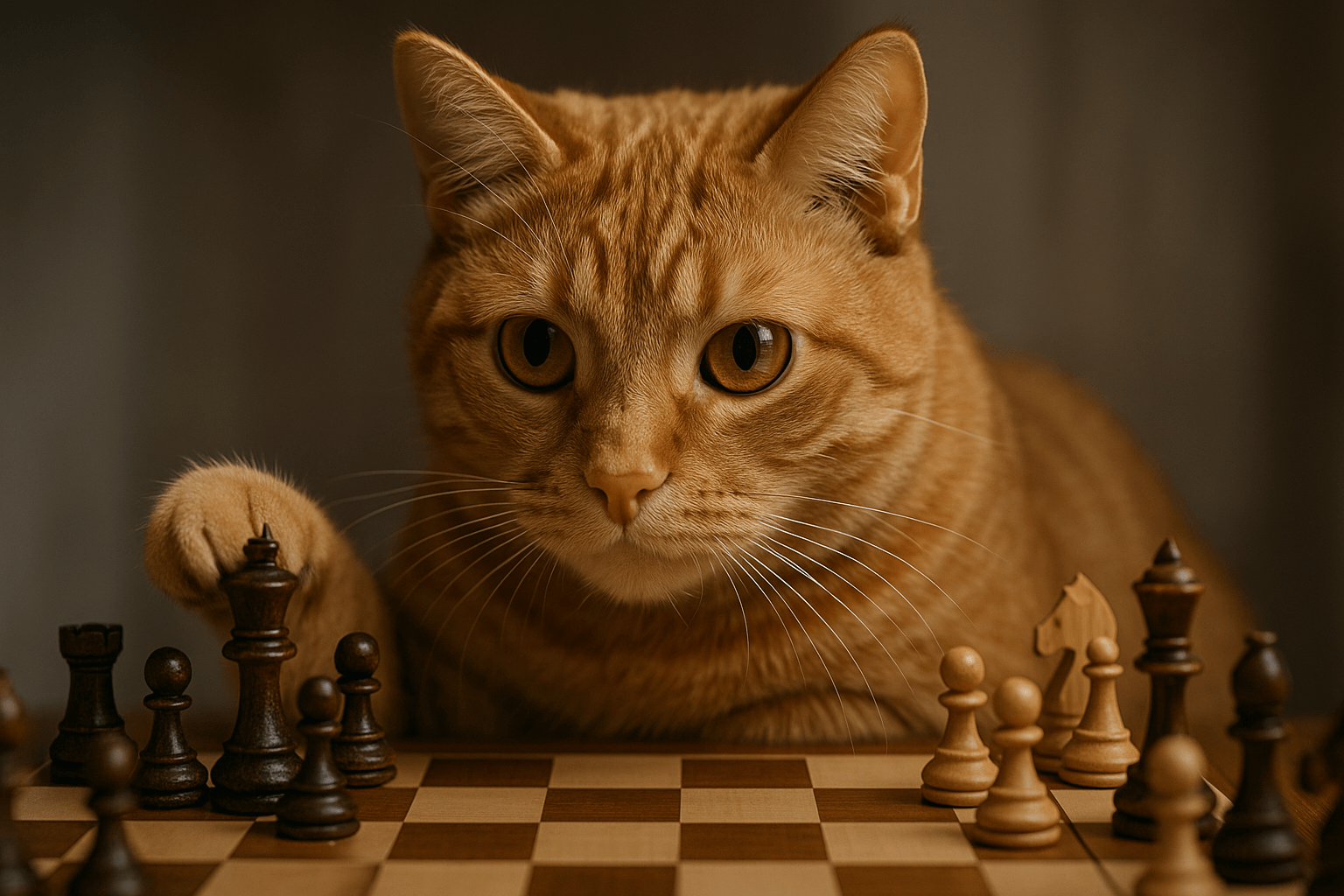
Cats aren’t just cute, aloof, or mysterious—they’re brilliantly intelligent. Their quiet stares, calculated movements, and uncanny ability to anticipate your routine suggest a cognitive depth far beyond common assumptions. Understanding how smart cats really are isn’t just fascinating—it’s essential for building a deeper, more rewarding bond with them.

The Science Behind Feline Intelligence


Modern research has moved far beyond the myth that cats are simple, instinct-driven animals. Their brains are wired for problem-solving, memory retention, and social learning—just in ways that differ from dogs or humans.

 
  • Cats possess a cerebral cortex with more neurons than dogs, with approximately 300 million compared to a dog’s 160 million, suggesting superior processing power for complex tasks.

  • They demonstrate object permanence earlier than many other animals, understanding that an object still exists even when hidden—a cognitive milestone typically reached by human toddlers.

  • Cats learn by observation, often mimicking behaviors they see in humans or other pets, such as opening doors or using switches.

  • Their memory is highly selective and long-lasting, especially for events tied to rewards, threats, or emotional experiences.

  • Cats can recognize their names—not just as a sound, but as a signal tied to themselves, as confirmed by multiple Japanese studies using controlled audio experiments.


This isn’t luck or instinct—it’s intelligence in action. Cats don’t need to please you to prove their smarts; they solve problems on their own terms, and that’s what makes their cognition so uniquely impressive.

How Smart Are Cats? Best 7 Expert Tips!

How Cats Use Intelligence to Navigate Their World


Cats don’t just react to their environment—they actively interpret, predict, and manipulate it. Their intelligence is practical, adaptive, and deeply tied to survival.

 
  • They master spatial mapping with incredible precision, remembering the layout of entire homes—even in unfamiliar environments—with minimal visual cues.

  • Cats time their behaviors strategically, like meowing at the exact moment you wake up or when the kitchen light turns on, showing an understanding of routines and cause-effect relationships.

  • They use vocalizations purposefully—not just to communicate with other cats, but to manipulate human behavior, adjusting pitch and frequency to sound more urgent or kitten-like.

  • They learn from trial and error, quickly abandoning ineffective strategies and refining approaches that yield food, attention, or access to restricted areas.

  • Cats can distinguish between different human voices and emotional tones, responding differently to calm speech versus raised voices, indicating emotional intelligence.


Their intelligence isn’t loud or performative—it’s subtle, patient, and deeply efficient. Every purr, paw tap, or silent stare is a calculated move, not a random act.

Cognitive Ability Real-World Application
Problem-solving skills Opening cabinets, figuring out puzzle feeders, or escaping enclosures.
Memory retention Remembering where food was hidden, who gave treats, or which room is off-limits.
Social learning Copying human actions like turning on lights or using door handles.
Emotional recognition Responding to sadness with cuddles or avoiding someone who yells.
Temporal awareness Knowing exactly when you usually feed them, even without a clock.

Cats vs. Dogs: A Different Kind of Smart


It’s tempting to compare cats and dogs, but doing so misses the point. Cats aren’t “less intelligent” because they don’t obey commands—they’re simply wired differently.

 
  • Dogs evolved to work alongside humans, so their intelligence is cooperative and social—focused on pleasing and following cues.

  • Cats evolved as solitary hunters, so their intelligence is independent and observational—focused on self-reliance and environmental mastery.

  • Cats don’t need external validation to solve problems. They’ll figure out how to open a door because they want to, not because you asked.

  • They learn through patience, not repetition. One successful experience is often enough to teach them a new skill.

  • Their independence is a sign of intelligence, not stubbornness. They choose when to engage—and that’s a trait of high cognitive control.


A dog might fetch a ball because you want it. A cat will figure out how to make the ball roll down the stairs by itself—because they’re curious. That’s not a lack of training. That’s advanced reasoning.

Learning and Memory: How Cats Remember What Matters


Cats have an extraordinary memory—not for every detail, but for what’s meaningful to them. Their recall is selective, powerful, and emotionally anchored.

 
  • They remember people who feed, ignore, or scare them—sometimes for years. A cat who was mistreated may hide from strangers for life.

  • Cats form strong associations between actions and outcomes, like the sound of a treat bag = food, or the sight of a carrier = vet visit.

  • They retain learned behaviors even without reinforcement, meaning once they learn how to open a cabinet, they rarely forget—even months later.

  • Their spatial memory is exceptional, allowing them to navigate complex environments, find their way home over long distances, and recall the location of hidden food.

  • Cats can recall the routines of multiple people in a household, adjusting their behavior based on who’s home, who’s busy, and who’s likely to give in to demands.


This isn’t just memory—it’s strategic retention. Cats don’t waste mental energy on irrelevant details. They remember what helps them survive, thrive, and get what they want.

Communication: The Silent Language of Smart Cats


Cats don’t talk like we do—but they communicate with astonishing nuance. Their intelligence shines in how they convey needs, emotions, and intentions.

 
  • They modify their meows for humans, using higher-pitched, more urgent sounds to trigger our caregiving instincts—something they rarely do with other cats.

  • Tail movements, ear positions, and slow blinks are all deliberate signals. A slow blink means trust. A flicking tail means irritation. They’re fluent in body language.

  • Cats can learn to associate words with objects, such as the names of toys, treats, or even family members, especially if those words are consistently paired with action.

  • They use eye contact strategically, staring to assert dominance, avoiding gaze to show submission, and blinking slowly to bond.

  • Silence is also communication. A cat who stops meowing when you’re distracted has learned that noise doesn’t always work—so they wait.


Their language isn’t spoken—it’s observed. And if you pay attention, you’ll realize your cat has been speaking to you all along.

Play, Problem-Solving, and Mental Stimulation


Cats don’t play just to pass the time. Play is their classroom, their lab, and their workout—all in one.

 
  • Puzzle feeders and treat-dispensing toys challenge their cognitive abilities, requiring them to manipulate objects, remember sequences, and delay gratification.

  • Hunting simulations—like chasing a laser dot or batting a feather toy—activate the same neural pathways as real prey capture, keeping their brains sharp.

  • Cats prefer novelty, and will lose interest in toys after a few days—this isn’t boredom, it’s cognitive saturation. Rotate toys weekly to maintain engagement.

  • They test boundaries by pushing objects off tables, opening drawers, or climbing into boxes—each action is an experiment to understand cause and effect.

  • Interactive play with humans builds trust and mental agility, turning routine interaction into a dynamic learning experience.


A cat who’s mentally stimulated is calm, confident, and less likely to develop destructive habits. Mental enrichment isn’t optional—it’s essential.

Signs Your Cat Is Smarter Than You Think


You might not realize how intelligent your cat is because their brilliance is quiet. But these subtle behaviors reveal hidden depth.

 
  • They wait for you to leave the room before jumping on the counter—they know you’ll scold them, so they time their actions.

  • They bring you “gifts”—a dead bug, a sock, a leaf—not as a nuisance, but as a gesture of sharing, like a wild cat teaching kittens to hunt.

  • They learn to open doors or latches without training, often by watching you or figuring out the mechanism through trial.

  • They respond to their name even when ignoring you—studies prove they recognize it; they’re just choosing whether to acknowledge it.

  • They comfort you when you’re upset, often coming to sit on your lap or purring louder—suggesting emotional empathy.


These aren’t coincidences. They’re evidence of a mind that observes, learns, remembers, and responds—with purpose.

Frequently Asked Questions About Cat Intelligence

 
Are some cat breeds smarter than others?

Intelligence isn’t strictly breed-dependent, but some breeds like Siamese, Bengals, and Abyssinians are known for higher curiosity and problem-solving drive. All cats are capable of learning—just at their own pace.

Yes. Studies show cats respond differently to happy versus angry voices and often seek proximity when their owner is crying, suggesting emotional awareness.

Absolutely. Cats are hyper-aware of human gaze. They’ll pause behavior if they sense you’re watching, proving they understand attention and social consequence.

Yes—if motivated. Cats can learn to sit, high-five, or even fetch using positive reinforcement. They just don’t do it to please you—they do it for the reward.

It’s not defiance—it’s choice. Cats recognize their name but choose whether to respond. This reflects their independent nature, not lack of intelligence.

Embrace the Quiet Genius of Your Cat


Cats don’t need to bark, wag, or obey to prove their intelligence. Their brilliance is in the stillness—the careful glance, the perfectly timed leap, the silent understanding when you’re sad. They don’t perform for applause. They act because they’ve calculated the outcome—and they’ve chosen to act.


To understand how smart cats are is to stop seeing them as pets and start seeing them as partners. They observe your life, learn your rhythms, and adapt their behavior to thrive within it. Their intelligence isn’t loud. It’s quiet. It’s patient. It’s profoundly deep.

Is Rawhide Bad for Cats? Best 7 Expert Tips!

Is Rawhide Bad for Cats? Best 7 Expert Tips! – Discover the risks, safe alternatives, and expert advice to keep your feline friend healthy and happy.

Is Rawhide Bad for Dogs? Best 7 Expert Tips!

Is Rawhide Bad for Dogs? Best 7 Expert Tips! – Discover the risks, benefits, and safer alternatives to rawhides for your dog’s chewing needs.

Understanding Anorexia in Cats: Best 7 Expert Tips!

Understanding Anorexia in Cats: Best 7 Expert Tips! – Learn why cats stop eating, spot warning signs, and discover how to help your feline regain appetite safely.

Understanding Anorexia in Dogs: Best 7 Expert Tips!

Understanding Anorexia in Dogs: Best 7 Expert Tips! – Learn causes, symptoms, and solutions to help your dog regain appetite and stay healthy.

Leave a Reply

Your email address will not be published. Required fields are marked *