
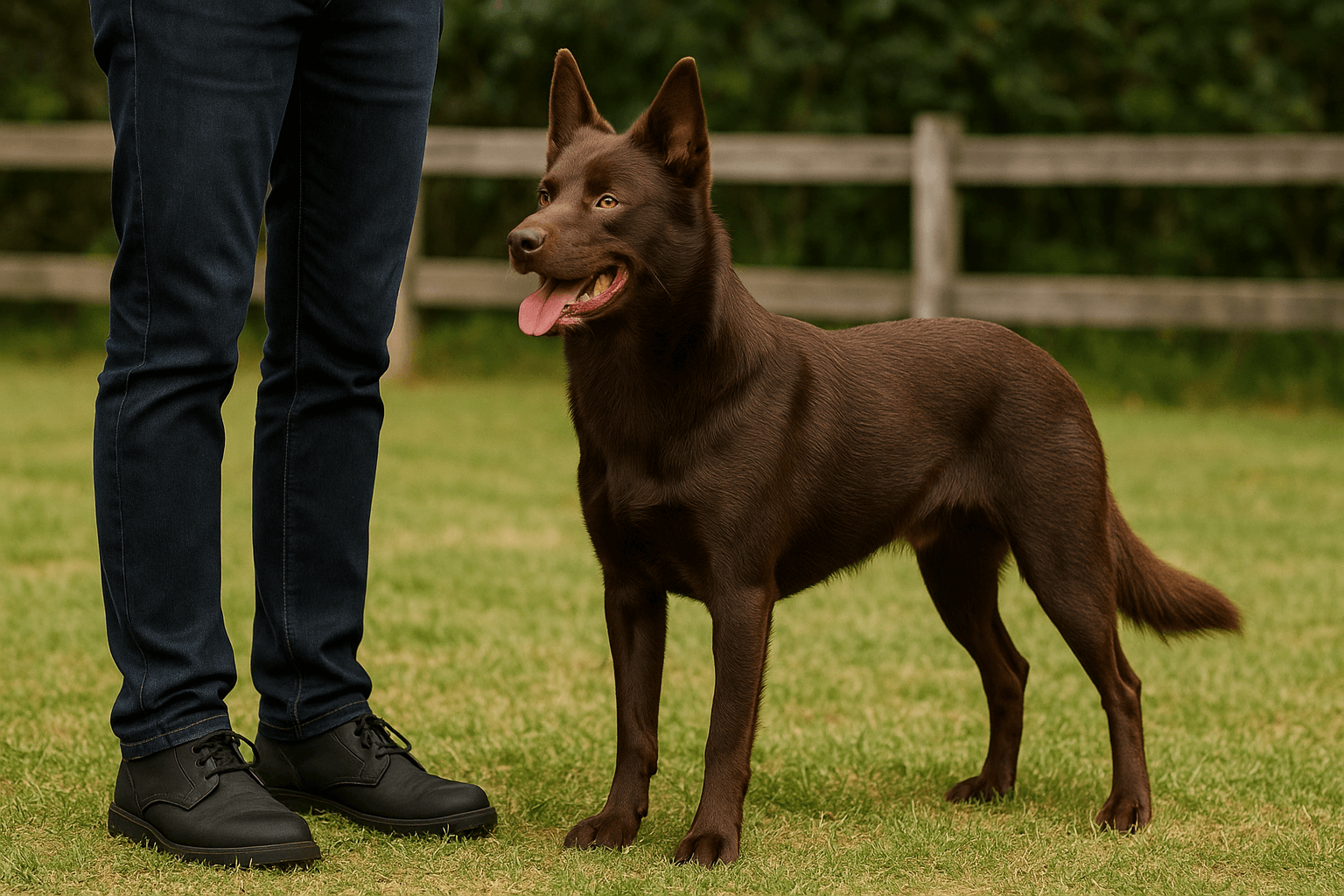
The Australian Kelpie Dog: Size, Strength, and Spirited Intelligence in a Compact Herding Machine
Meet the Australian Kelpie—a lean, agile, and tireless working dog whose compact frame houses boundless energy and sharp intelligence. Bred to manage livestock across vast rural landscapes, this medium-sized herder combines efficiency, endurance, and keen problem-solving skills in a deceptively athletic package. Though never massive, the Kelpie’s size is precisely calibrated for speed, stamina, and agility under the demanding Australian sun. If you admire a dog that’s both physically capable and mentally alert, the Kelpie’s proportions tell a story of purposeful design and unwavering drive.
Origins and Evolution of the Australian Kelpie
Long before becoming an icon of the Outback, the Kelpie emerged from necessity—bred to handle sheep and cattle across the unforgiving terrain of 19th-century Australia. Its size wasn’t arbitrary; every inch evolved to support relentless work without wasted energy.
- Scottish Collie Ancestry:
The Kelpie traces its roots to smooth-coated black Collies imported from Scotland, selected for their herding instinct and adaptability to harsh climates. - Selective Breeding for Efficiency:
Early Australian ranchers prioritized dogs that could work independently all day on minimal food and water—leading to a streamlined, medium-sized build. - Named After Myth and Muscle:
The breed’s name comes from “kelpie,” a shape-shifting water spirit in Celtic folklore—reflecting the dog’s almost supernatural agility and endurance. - Official Recognition and Export:
By the late 1800s, Kelpies were recognized as a distinct Australian breed and soon exported worldwide for their unmatched herding precision. - Genetic Studies and Purity:
Modern DNA research confirms the Kelpie’s unique lineage, separate from Border Collies, with adaptations specifically for Australia’s ecological demands.
Though modest in stature, the Kelpie’s size was engineered by survival itself—forged in red dust and relentless sun to become one of the world’s most efficient herding dogs.
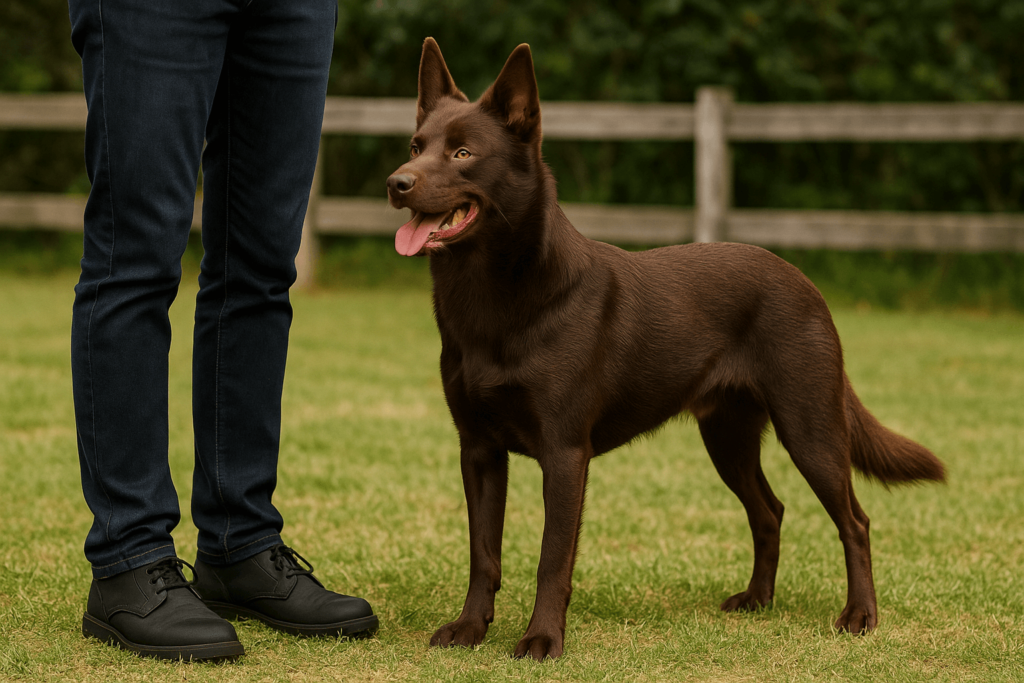
Defining Physical Characteristics: What “Medium” Really Means for a Kelpie
When we say the Australian Kelpie is “medium-sized,” it’s not a vague label—it’s a precise balance of height, weight, and proportion that enables peak performance in the field. Every measurement serves a function.
- Height at the Shoulder:
Males typically stand 19–20 inches (48–51 cm), while females range from 18–19 inches (46–48 cm)—tall enough for visibility, short enough for quick turns. - Ideal Weight Range:
Healthy adults weigh between 25–45 pounds (11–20 kg), with lean muscle mass and minimal body fat to sustain long workdays. - Athletic, Streamlined Build:
A deep chest supports lung capacity, while a tucked abdomen and sloping back enhance running efficiency and jumping ability. - Tail and Limb Proportions:
The tail reaches the hock when relaxed, aiding balance during sharp directional changes; legs are strong but fine-boned for speed, not bulk. - Coat and Climate Adaptation:
Though size is consistent, coat length varies—short or medium—both designed to shed heat efficiently without compromising protection.
This isn’t a dog sized for fashion or cuddling—it’s built like a cross-country runner: light, fast, and endlessly resilient.
Check this guide 👉Chow Chow Dog Size: Best 7 Expert Tips!
Check this guide 👉Basenji Dog Size: Best 7 Expert Tips!
Check this guide 👉Beauceron Dog Size: Best 7 Expert Tips!
| Temperament & Working Drive | Size-Related Care Needs |
|---|---|
| Highly intelligent and self-reliant | Requires space to run—apartments are rarely suitable |
| Intense work ethic; thrives on tasks | Needs 60–90 minutes of vigorous exercise daily |
| Loyal but not overly clingy | Prone to boredom-induced chewing if under-stimulated |
| Reserved with strangers, not aggressive | Sensitive to heat—limit midday activity in summer |
| Natural problem-solver with strong instincts | Ideal weight must be monitored—lean but not underweight |
Growth Timeline: From Kelpie Puppy to Full-Grown Herder
Understanding the Kelpie’s size also means tracking how it develops—from a bouncy pup to a disciplined working adult. Growth is rapid but requires careful nutritional and physical management.
- Birth to 8 Weeks:
Newborns weigh just 8–12 ounces; by 8 weeks, they reach 4–6 pounds, already showing alertness and coordination unusual for their age. - 3 to 6 Months:
This is the fastest growth phase—puppies often double in height and quadruple in weight, reaching 15–20 pounds with lanky limbs. - 6 to 12 Months:
Muscle fills out, and proportions stabilize; most Kelpies reach 90% of adult height by 9 months but continue lean-muscle development. - 12 to 18 Months:
Mental maturity lags behind physical growth—while size is near-final, impulse control and focus are still developing. - 18 to 24 Months:
Full physical and behavioral maturity is achieved; adult weight and muscle tone settle into their efficient, working-dog silhouette.
Patience during this timeline ensures a healthy, structurally sound adult—one whose size reflects strength without strain.
Size Variations: Are There Different Types of Kelpies?
While the Australian Kelpie is a standardized breed, subtle size differences exist based on regional lines and working roles—but never extreme deviations.
- Working Kelpies (Unregistered):
Often slightly larger and more rugged, bred purely for function, with weights up to 46 pounds and greater bone density. - Show (Registered) Kelpies:
Follow strict breed standards; tend to be more refined, with balanced proportions and weights clustered in the 30–40 pound range. - Regional Adaptations:
Kelpies in hotter northern territories may be leaner and smaller to dissipate heat, while southern lines can be marginally stockier. - Color Doesn’t Affect Size:
Whether black, red, chocolate, or fawn, coat color has no correlation with height or weight—genetics and breeding do. - No Official “Mini” Version:
Unlike some breeds, there is no recognized miniature Kelpie; any dog significantly under 18 inches likely has mixed ancestry.
The breed’s consistency in size is a testament to its functional purity—form always follows farm.
Comparing the Kelpie to Other Herding Breeds
The Kelpie’s size places it uniquely among herding dogs—smaller than a German Shepherd, more compact than a Border Collie, yet every bit as capable.
- Vs. Border Collie:
Kelpies are slightly taller at the shoulder on average but leaner, with less coat bulk—making them better suited to extreme heat. - Vs. Australian Shepherd:
Aussies are heavier (40–65 lbs) and stockier; Kelpies are lighter, faster, and built for endurance over short bursts. - Vs. Cattle Dog (Blue Heeler):
Similar weight range, but Kelpies have longer legs and a more aerodynamic frame, while Heelers are lower to the ground and more muscular. - Vs. Shetland Sheepdog:
Shelties are significantly smaller (15–25 lbs) and bred for companionship; Kelpies are working athletes with greater stamina. - Vs. Belgian Malinois:
Malinois are larger (55–65 lbs) and more intense; Kelpies offer comparable drive in a more manageable, medium-sized package.
In the world of herders, the Kelpie strikes a rare balance—large enough to command livestock, small enough to move like lightning.
Impact of Size on Daily Care and Lifestyle Needs
The Kelpie’s dimensions directly influence everything from diet to housing—and overlooking these links can lead to health or behavioral issues.
- Caloric Requirements:
A moderately active 35-pound Kelpie needs 900–1,100 calories daily—but working dogs may require up to 1,500, adjusted for lean mass. - Exercise Space:
Their size demands room: a fenced yard under 1/4 acre is insufficient; daily off-leash running in safe areas is non-negotiable. - Joint and Bone Health:
Though not giant-breed prone, rapid growth in puppyhood can cause developmental issues—avoid high-impact play before 12 months. - Temperature Sensitivity:
Their short coat and lean body offer little insulation; they handle heat better than cold but still need shelter from extremes. - Travel and Transport:
At under 45 pounds, they fit comfortably in car crates or airline-compliant carriers—making them surprisingly portable for a working dog.
Size isn’t just about appearance—it’s the blueprint for how you feed, move, and shelter your Kelpie.
Common Misconceptions About Kelpie Size
Many assume the Kelpie is “just another medium dog,” but this overlooks the precision behind its proportions and the myths that surround it.
- “They’re Small Enough for Apartments”:
False. Their energy and need for space far exceed what urban living typically allows, regardless of weight. - “Bigger Kelpies Are Better Workers”:
Not true. Efficiency matters more than mass—many champion herding Kelpies are on the smaller end of the scale. - “They’ll Stay Puppy-Sized Forever”:
Kelpie puppies mature quickly; by 6 months, their adult frame is evident, though they retain a youthful demeanor. - “Size Determines Trainability”:
No—intelligence and drive are breed traits, not size-dependent. Even the smallest Kelpie can master complex commands. - “They’re Just Like Australian Shepherds, But Smaller”:
A common mix-up, but Kelpies are a distinct breed with different origins, temperament, and physical structure.
Clarifying these myths helps set realistic expectations—and honors the Kelpie’s true nature.
“The Australian Kelpie is a lithe, active dog, capable of untiring work. He is extremely intelligent, alert, and eager with unlimited energy. As a herding dog, the Australian Kelpie is intensely loyal and devoted to duty.”
— American Kennel Club (AKC)
Frequently Asked Questions About Australian Kelpie Size
Is the Australian Kelpie considered a medium or large dog?
It’s firmly classified as medium—typically 18–20 inches tall and 25–45 pounds, built for agility, not bulk.
Do male and female Kelpies differ significantly in size?
Yes, males are usually 1–2 inches taller and 5–10 pounds heavier, though individual variation exists.
Can a Kelpie be too small or too large for its breed standard?
Yes. Dogs under 17 inches or over 21 inches fall outside accepted standards and may indicate mixed breeding or health issues.
Does a Kelpie’s size affect its lifespan?
Generally, medium-sized dogs like Kelpies live 12–15 years; maintaining ideal weight supports longevity and joint health.
Will my Kelpie stop growing at 6 months?
Height growth slows by 6 months, but muscle development and proportional balance continue until 18–24 months.
The Perfect Proportion: Why the Kelpie’s Size Matters
The Australian Kelpie’s size is no accident—it’s the result of over 150 years of refinement in some of the planet’s harshest working conditions. Every inch of height, every pound of weight, serves a purpose: to move swiftly, think clearly, and endure tirelessly. This dog doesn’t just occupy space—it commands it with grace, intelligence, and quiet authority. For those who understand that true capability isn’t measured in bulk but in balance, the Kelpie’s compact power is nothing short of perfection.

Is Rawhide Bad for Cats? Best 7 Expert Tips! – Discover the risks, safe alternatives, and expert advice to keep your feline friend healthy and happy.

Is Rawhide Bad for Dogs? Best 7 Expert Tips! – Discover the risks, benefits, and safer alternatives to rawhides for your dog’s chewing needs.

Understanding Anorexia in Cats: Best 7 Expert Tips! – Learn why cats stop eating, spot warning signs, and discover how to help your feline regain appetite safely.

Understanding Anorexia in Dogs: Best 7 Expert Tips! – Learn causes, symptoms, and solutions to help your dog regain appetite and stay healthy.