

Discover the Laekenois Dog: A Rare, Loyal, and Remarkably Intelligent Herding Breed
Few dog breeds carry the quiet charisma and rustic charm of the Laekenois. With its tousled coat, alert expression, and unwavering loyalty, this Belgian herding dog may be rare—but it’s unforgettable. Once prized for guarding flocks and pulling carts, the Laekenois today is a devoted companion for experienced dog lovers who appreciate intelligence, versatility, and a touch of history. Though often overshadowed by its cousins—the Malinois, Tervuren, and Groenendael—the Laekenois holds its own with a distinctive character and resilient spirit. If you’ve ever wondered about this scruffy guardian from the fields of Belgium, you’re in the right place.
The Origins and History of the Laekenois Dog
The Laekenois is more than just a shaggy herding dog—it’s a living piece of Belgian agricultural heritage. Originally bred in the town of Laeken (now part of Brussels), this breed was developed to guard livestock, pull carts, and serve as a vigilant farmhand.
Farm Guardian Roots:
The Laekenois was specifically tasked with protecting cattle and poultry from predators and thieves—a role that required courage, alertness, and independence.Belgian Herding Quartet:
Alongside the Malinois, Tervuren, and Groenendael, the Laekenois is one of four native Belgian shepherd varieties, differing primarily in coat type and color.Near Extinction:
Both World Wars decimated the breed’s population, and by the mid-20th century, only a handful of Laekenois remained in Europe.Slow Global Recognition:
The breed is still rare outside Belgium and is not fully recognized by the American Kennel Club (listed in the Foundation Stock Service), but it’s gaining admirers among working dog enthusiasts.Working Legacy Lives On:
Today’s Laekenois still excels in herding trials, scent work, and agility—proof that its instincts remain as sharp as ever.
Though small in numbers, the Laekenois carries a legacy of resilience and utility. Its survival is a testament to the dedication of breeders who value function over fashion.
Distinctive Physical Traits of the Laekenois
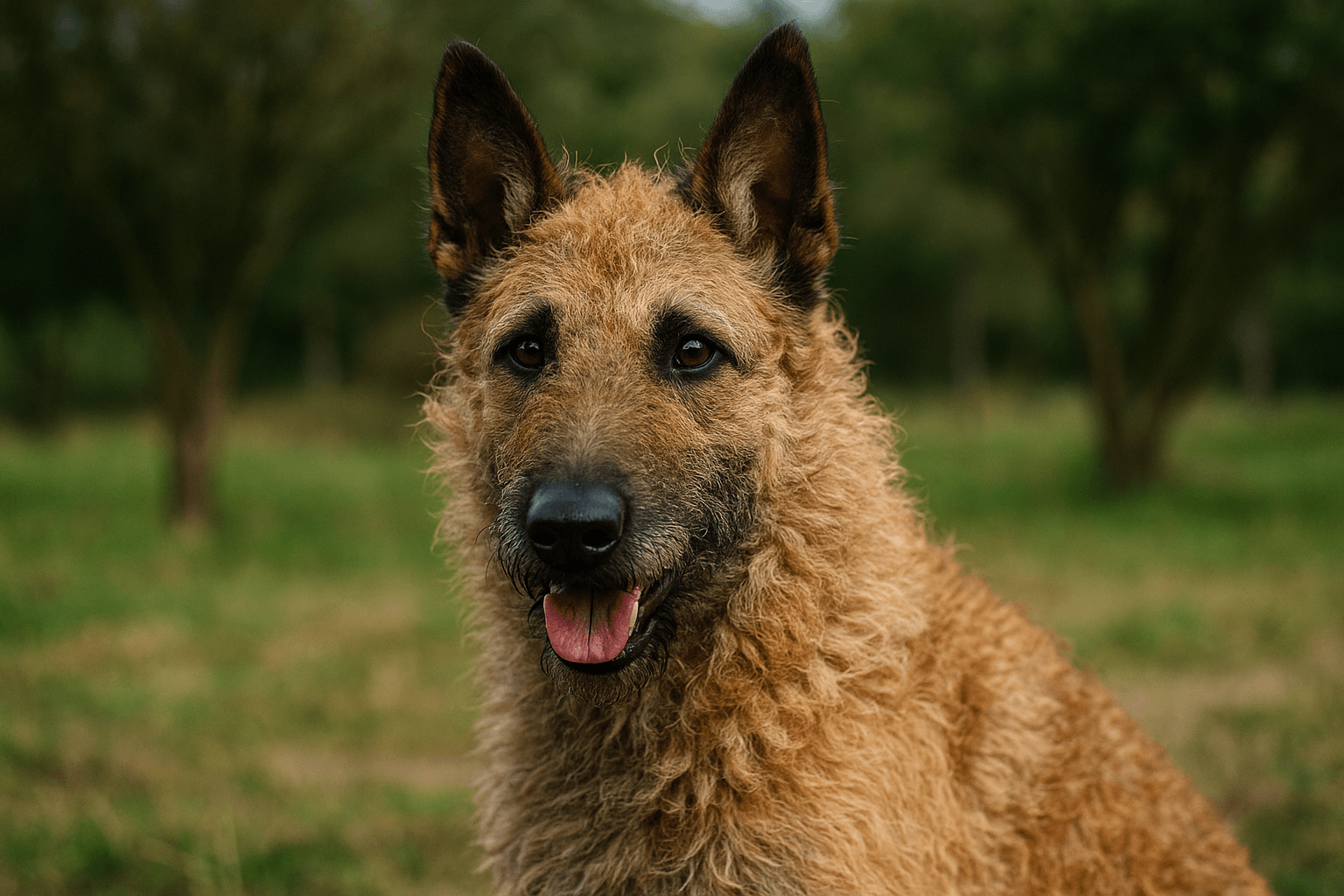
Don’t mistake the Laekenois for a “messy” version of other Belgian shepherds—its wiry, weather-resistant coat and rugged appearance are intentional and functional.
Coat Texture and Color:
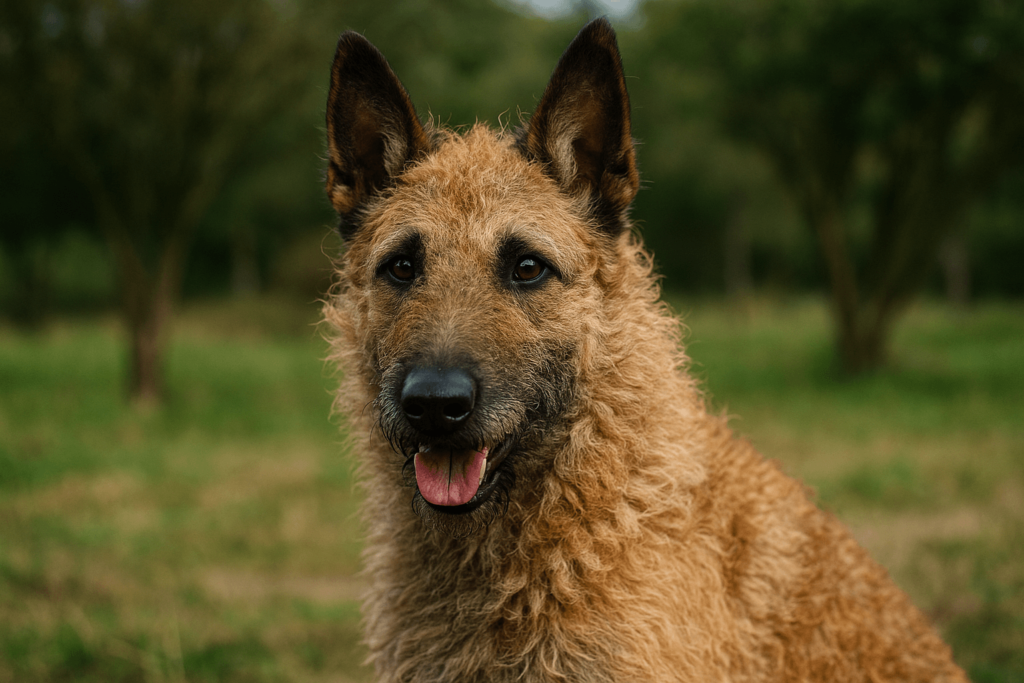
The hallmark of the breed is its tousled, medium-length rough coat, always in shades of fawn to mahogany with limited black overlay—never solid black or white.Facial Charm:
Distinctive beard and mustache give the Laekenois a wise, expressive face, while its erect ears and dark, almond-shaped eyes radiate alertness.Athletic Build:
Lean, muscular, and agile, the Laekenois typically stands 22–26 inches tall and weighs 55–65 pounds—built for endurance, not bulk.Tail Carriage:
The tail is long and carried low with a slight upward curve at rest, never curled over the back.Natural Weather Resistance:
The coarse outer coat and dense undercoat protect against rain, wind, and cold—ideal for outdoor work in harsh conditions.
This isn’t a show-dog glamour breed; every physical trait serves a purpose rooted in its working past. The Laekenois looks like a dog that’s ready to work—and it is.
Check this guide 👉Saint Bernard Malinois Mix: Best 7 Expert Tips!
Check this guide 👉Cane Corso vs Belgian Malinois: Best 7 Expert Tips!
Check this guide 👉Belgian Malinois Chow Chow Mix: Best 7 Expert Tips!
| Laekenois Strengths | Potential Challenges |
|---|---|
| Highly intelligent and quick to learn | Needs experienced handling—can be strong-willed |
| Loyal and protective of family | Reserved with strangers; requires early socialization |
| Excellent working and herding drive | Boredom leads to destructive behavior |
| Low-shedding, weather-resistant coat | Requires regular hand-stripping for coat health |
| Healthy with few genetic issues | Rare breed—difficult to find reputable breeders |
Temperament and Personality: What It’s Really Like to Live with a Laekenois
Beneath the scruffy exterior lies a deeply intelligent, observant, and devoted companion—but not for the faint of heart.
Loyal to a Fault:
The Laekenois forms intense bonds with its family and is always attuned to their moods and movements.Naturally Alert and Watchful:
Bred as a guardian, it’s quick to bark at unfamiliar sights or sounds—making it an excellent watchdog.Independent Thinker:
This breed doesn’t obey blindly; it assesses commands and may choose the “best” course of action—sometimes ignoring you.Sensitive Yet Stoic:
Despite its tough appearance, the Laekenois is emotionally sensitive and responds poorly to harsh training methods.Playful with Purpose:
Play often mimics work—chasing, herding, or retrieving—and it thrives on games that engage its mind and body.
Living with a Laekenois is like having a quiet, four-legged strategist by your side—always observing, always ready, never frivolous.
Training and Mental Stimulation Needs
Training a Laekenois is deeply rewarding—but only if you understand its mind. This isn’t a breed that thrives on repetition alone.
Responds to Positive Reinforcement:
Praise, play, and food rewards work best; avoid yelling or punishment, which can cause shutdown or defiance.Early Socialization is Non-Negotiable:
Expose puppies to varied people, sounds, and environments before 16 weeks to prevent shyness or aggression.Thrives in Advanced Dog Sports:
Agility, obedience, tracking, and herding trials channel its energy and satisfy its need for purpose.Needs Daily Mental Challenges:
Puzzle toys, hide-and-seek games, and scent work prevent boredom-related behaviors like digging or barking.Consistency Builds Trust:
The Laekenois respects calm, confident leadership—but will test boundaries if rules are inconsistent.
Without intellectual and physical engagement, even the most well-meaning Laekenois can become frustrated and destructive.
Grooming and Health Considerations
The Laekenois’s rough coat is low-shedding but not low-maintenance—it requires specific care to stay healthy and comfortable.
Hand-Stripping Preferred:
Plucking dead hair (not clipping) preserves coat texture and prevents matting—ideally done every 2–3 months.Minimal Bathing Needed:
The coat is naturally dirt-resistant; bathe only when necessary to avoid drying out the skin.Ear and Dental Hygiene:
Check ears weekly for debris and brush teeth regularly to prevent periodontal disease.Generally Healthy Breed:
Few inherited conditions, but can be prone to hip dysplasia and progressive retinal atrophy (PRA)—screen breeding stock.Longevity:
With proper care, Laekenois dogs commonly live 10–14 years, staying active well into their senior years.
A well-groomed Laekenois isn’t just handsome—it’s healthier, more comfortable, and less prone to skin issues.
Is the Laekenois Right for Your Lifestyle?
This breed isn’t for everyone—but for the right person, it’s the perfect partner. Consider these factors before bringing one home.
Active Households Only:
Joggers, hikers, or farm families are ideal; apartment living is possible only with rigorous daily exercise.Not for First-Time Owners:
Its intelligence and independence demand experience in reading dog behavior and managing strong drives.Thrives with a Job:
Whether it’s herding, search work, or advanced obedience, the Laekenois needs purpose—not just companionship.Best as an Only or Primary Dog:
Can coexist with other pets if raised together, but may try to “herd” smaller animals or children.Commitment to Rarity:
Finding a healthy, ethically bred puppy may take months or even years—and require travel.
If you seek a dog that’s both a working partner and a loyal guardian, the Laekenois may be your perfect match.
Finding a Reputable Laekenois Breeder or Rescue
Due to its rarity, acquiring a Laekenois requires patience, research, and ethical consideration.
Avoid Puppy Mills and Pet Stores:
These sources often prioritize profit over health and temperament—never buy from them.Seek Health-Certified Breeders:
Reputable breeders test for hips, eyes, and genetic conditions and welcome questions about their program.Join Breed Clubs:
Organizations like the Belgian Laekenois Club of America (BLCA) maintain breeder referrals and waiting lists.Consider Import Options:
Many quality puppies come from Europe, especially Belgium and the Netherlands—be prepared for logistics and costs.Rescue Is Rare but Possible:
While purebred Laekenois rescues are uncommon, mixed herding breeds with similar traits may be available through shepherd-specific rescues.
Patience pays off: a well-bred Laekenois is a once-in-a-lifetime dog.
“Strong, agile and full of life, the Belgian Laekenois is one of four native dogs of Belgium. Although similar in body and temperament to the Malinois, Shepherd and Tervuren, the Laekenois differs in coat color, texture and length, as well as region of origin.”
Frequently Asked Questions About the Laekenois Dog
What does “Laekenois” mean?
It’s named after the town of Laeken in Belgium, where the breed was first developed in the late 19th century.
Is the Laekenois the same as a Belgian Malinois?
No—they’re separate varieties of the Belgian Shepherd. The Laekenois has a rough coat and fawn color; the Malinois has a short coat and mahogany with black mask.
Does the Laekenois shed a lot?
It’s considered low-shedding, but the undercoat blows seasonally. Regular grooming manages loose hair effectively.
Are Laekenois good with kids?
With proper socialization, yes—but their herding instinct may lead to nipping or chasing running children. Supervision is key.
Can a Laekenois live in an apartment?
Only if the owner provides 1–2 hours of vigorous daily exercise and mental stimulation. Without it, they become restless and vocal.
Embrace the Rarity, Honor the Legacy
The Laekenois dog is not a trend—it’s a tradition. In a world of popular designer mixes and show-ring favorites, this rugged Belgian shepherd stands apart as a symbol of working integrity, quiet loyalty, and resilient spirit. Choosing a Laekenois means signing up for a partnership, not just pet ownership. It demands your time, your respect, and your commitment—but in return, it offers unwavering devotion, brilliant companionship, and a living connection to centuries of herding heritage. If you’re ready for a dog that thinks, feels, and works as hard as you do… the Laekenois might just be waiting for you.
Is Rawhide Bad for Cats? Best 7 Expert Tips! – Discover the risks, safe alternatives, and expert advice to keep your feline friend healthy and happy.

Is Rawhide Bad for Dogs? Best 7 Expert Tips! – Discover the risks, benefits, and safer alternatives to rawhides for your dog’s chewing needs.

Understanding Anorexia in Cats: Best 7 Expert Tips! – Learn why cats stop eating, spot warning signs, and discover how to help your feline regain appetite safely.

Understanding Anorexia in Dogs: Best 7 Expert Tips! – Learn causes, symptoms, and solutions to help your dog regain appetite and stay healthy.