
Why Is Chocolate Bad for Cats?
Chocolate may be a beloved treat for humans, but it’s dangerously toxic to cats. Even small amounts can lead to serious health problems because cats lack the ability to metabolize certain compounds found in cocoa. The darker and more concentrated the chocolate, the greater the risk—posing a silent threat in many households. Understanding why chocolate is harmful helps cat owners act quickly and prevent accidental poisoning. While cats are less likely than dogs to seek out sweets, their curiosity or a well-meaning guest could still put them in danger. Vigilance and awareness are your best tools for keeping your feline friend safe.
Toxic Components in Chocolate That Harm Cats
Chocolate contains natural substances that are harmless to people but highly toxic to cats. These compounds affect the nervous and cardiovascular systems, and even a tiny bite can trigger symptoms within hours. Knowing what makes chocolate dangerous is the first step toward prevention:
- Theobromine:
This bitter alkaloid is the primary toxin in chocolate for cats. Their bodies process it extremely slowly, allowing it to build up to dangerous levels. - Caffeine:
Often present alongside theobromine, caffeine amplifies the stimulant effects, increasing heart rate and nervous system overactivity. - Methylxanthines:
A class of compounds that includes both theobromine and caffeine, methylxanthines disrupt normal cellular function in feline organs. - High Sugar and Fat Content:
While not directly toxic, these can cause pancreatitis or digestive upset in cats, whose systems aren’t designed for rich human foods. - Artificial Additives:
Some chocolates contain xylitol (in sugar-free varieties) or nuts, which introduce additional risks like liver damage or choking.
Because cats can’t break down these substances efficiently, even a small piece of chocolate can become a medical emergency.
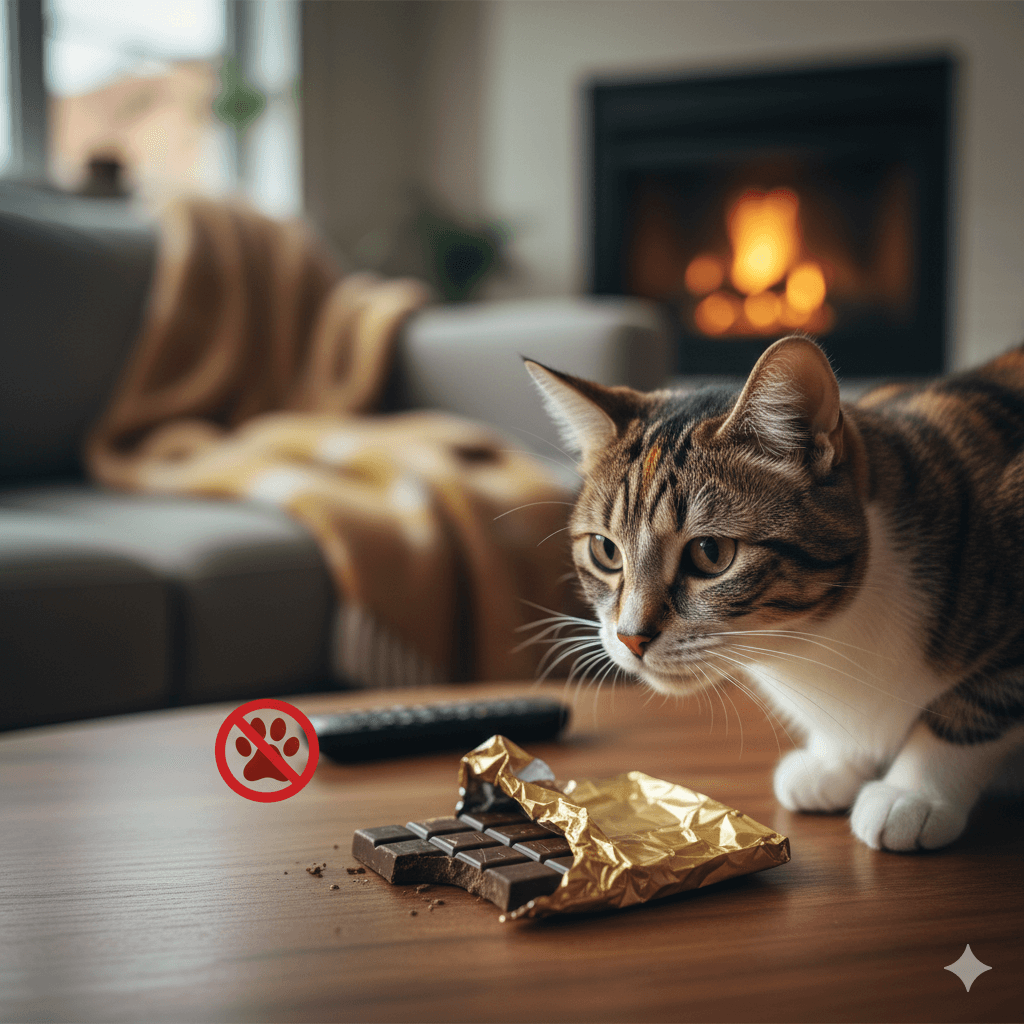
Symptoms of Chocolate Poisoning in Cats
If your cat ingests chocolate, symptoms may appear within 2 to 12 hours and can escalate quickly. Early recognition is critical—delayed treatment increases the risk of seizures or cardiac complications. Watch closely for these warning signs:
- Restlessness or Hyperactivity:
Your cat may pace, seem unusually agitated, or be unable to settle—classic signs of nervous system stimulation. - Rapid Breathing or Panting:
Increased respiratory rate can indicate cardiovascular stress or oxygen imbalance due to toxin effects. - Vomiting or Diarrhea:
Gastrointestinal upset is often one of the first responses as the body tries to expel the toxin. - Elevated Heart Rate:
A racing pulse (over 200 bpm in cats) is a serious red flag that requires immediate veterinary attention. - Tremors or Seizures:
In severe cases, neurological symptoms like muscle twitching or full-body seizures can occur within hours.
If you suspect your cat has eaten chocolate—even if symptoms haven’t appeared yet—contact your vet or a pet poison helpline immediately.
Check this guide 👉Can Cats Eat Chocolate Ice Cream? Best 7 Health Tips!
Check this guide 👉My Cat Ate Chocolate and Is Fine: Best 7 Health Tips!
Check this guide 👉Can Cats Eat Pear? Best 7 Expert Tips!
Early Warning Signs | Severe Toxicity Indicators |
|---|---|
Mild vomiting or drooling | Persistent vomiting with bile or blood |
Slight restlessness | Inability to stand or severe wobbliness |
Increased thirst | Rapid, labored breathing |
Dilated pupils | Heart rate over 200 beats per minute |
Licking lips repeatedly | Full-body tremors or seizures |
Types of Chocolate and Relative Risk Levels
Not all chocolate is equally dangerous—but no chocolate is safe for cats. The toxicity level depends on the type, amount ingested, and your cat’s weight. Generally, the darker and more bitter the chocolate, the higher the theobromine concentration:
- Baking Chocolate (Unsweetened):
Extremely toxic—even a small square can be life-threatening due to very high theobromine content (up to 450 mg per ounce). - Dark Chocolate:
Contains significant theobromine (130–450 mg/oz); a few small pieces can cause moderate to severe poisoning in cats. - Milk Chocolate:
Less concentrated (44–60 mg/oz), but still dangerous—especially for small or young cats. A standard candy bar may contain a toxic dose. - White Chocolate:
Contains minimal theobromine but is high in fat and sugar, which can still cause pancreatitis or gastrointestinal distress. - Chocolate-Flavored Products:
Items like cookies, brownies, or hot cocoa mix may have lower cocoa content but often include other harmful ingredients (e.g., raisins, xylitol).
When in doubt, always assume any chocolate exposure is an emergency for your cat.
What to Do If Your Cat Eats Chocolate
Immediate action can make all the difference in a chocolate poisoning case. Don’t wait for symptoms to appear—by then, the toxin may already be circulating. Follow these steps calmly and quickly:
- Remove Remaining Chocolate:
Secure any leftover chocolate to prevent further ingestion and note the type and estimated amount consumed. - Call Your Veterinarian or Pet Poison Control:
Provide details (brand, chocolate type, time of ingestion) to get tailored advice—many clinics offer emergency guidance over the phone. - Do Not Induce Vomiting Unless Instructed:
Home remedies like hydrogen peroxide can be dangerous in cats; only induce vomiting under direct veterinary supervision. - Prepare for an Emergency Visit:
Bring the chocolate packaging if possible—this helps the vet calculate toxin exposure and determine treatment urgency. - Monitor Closely During Transport:
Keep your cat calm and warm in a carrier, and watch for breathing changes, seizures, or collapse en route to the clinic.
Prompt veterinary care—often involving activated charcoal, IV fluids, and medications—can prevent fatal outcomes.
Prevention Tips to Keep Your Cat Safe
The best treatment for chocolate poisoning is prevention. Since cats don’t naturally crave sweets, most exposures happen accidentally. A few proactive habits can eliminate this risk entirely:
- Store Chocolate Securely:
Keep all chocolate products in sealed containers inside cabinets—not on countertops or in low drawers a curious cat can open. - Educate Household Members and Guests:
Remind everyone (especially children) never to share food with cats, even “just a tiny bite.” - Avoid Chocolate Decorations During Holidays:
Easter baskets, Valentine’s gifts, or holiday treats left out can tempt or accidentally spill—opt for pet-safe alternatives. - Be Cautious with Baking:
Clean up cocoa powder spills immediately, and never leave melted chocolate unattended on stoves or tables. - Know Your Emergency Contacts:
Save your vet’s number and the ASPCA Animal Poison Control Center (888-426-4435) in your phone for instant access.
A little foresight ensures your home remains a safe haven, free from hidden dangers like chocolate.
Special Considerations for Kittens and Vulnerable Cats
Kittens, senior cats, or those with preexisting health conditions face even greater risks from chocolate exposure. Their smaller size or reduced organ function means toxins affect them more rapidly and severely:
- Kittens Under 6 Months:
Their immature livers can’t process toxins at all—ingestion, even of milk chocolate, can be fatal within hours. - Cats with Heart or Kidney Disease:
Theobromine places extra strain on compromised organs, potentially triggering acute decompensation or organ failure. - Outdoor or Curious Cats:
Those who explore neighbors’ yards or garages may encounter discarded candy wrappers or baking waste. - Cats on Medications:
Certain drugs can interact dangerously with methylxanthines, increasing toxicity or reducing treatment effectiveness. - Multi-Cat Households:
One cat may steal chocolate and share it—or another may eat remnants unnoticed—so monitor all pets after any exposure.
For these vulnerable groups, prevention isn’t just wise—it’s essential for survival.
Additional Safety Measures Every Cat Owner Should Know
Beyond avoiding chocolate, there are several proactive steps you can take to protect your cat from everyday household hazards. Many toxic substances hide in plain sight, and awareness is your strongest defense. Implementing these simple practices creates a safer environment and gives you greater peace of mind:
- Secure All Human Medications:
Store pills, supplements, and liquid medicines in locked cabinets—cats can chew through plastic bottles or knock over open containers. - Keep Houseplants Out of Reach:
Many popular plants like lilies, pothos, and philodendrons are highly toxic to cats; replace them with cat-safe options like spider plants or catnip. - Use Pet-Safe Cleaning Products:
Avoid cleaners containing phenols, bleach, or ammonia; opt for enzymatic or vinegar-based formulas labeled safe for pets. - Never Leave Open Food Unattended:
Chocolate isn’t the only risk—onions, garlic, grapes, and xylitol (in sugar-free gum) are also deadly to cats and may be left on countertops. - Install Child Safety Locks on Cabinets:
Curious paws can open low cabinets storing cocoa powder, baking chocolate, or other pantry dangers—simple locks add a crucial barrier.
Creating a feline-safe home isn’t about restriction—it’s about thoughtful design that lets your cat explore freely without hidden threats.
“Chocolate toxicosis results from ingestion of excessive amounts of methylxanthine-containing chocolate products. Clinical effects include vomiting, restlessness, agitation, hyperthermia, tachycardia, and, in severe cases, seizures.”
— Cristine Hayes, DVM
Frequently Asked Questions About Chocolate and Cats
Can a tiny lick of chocolate hurt my cat?
Yes—even minimal exposure can cause symptoms in small or sensitive cats. Never assume “a little won’t hurt.”
What if my cat licked chocolate ice cream?
While lower in theobromine, it still contains caffeine and sugar. Monitor for vomiting or restlessness and call your vet for advice.
Why don’t cats usually seek out chocolate?
Cats lack sweet taste receptors, so they’re not attracted to sugary foods—but they may nibble out of curiosity or mimicry.
How long does chocolate stay toxic in a cat’s system?
Theobromine can remain active for up to 24–72 hours in cats due to slow metabolism—ongoing monitoring is crucial.
Is there any chocolate safe for cats?
No. No form of real chocolate is safe. Only use treats specifically formulated for feline consumption.
Keeping Your Feline Friend Safe from Hidden Dangers
Your cat trusts you to keep their world safe—even from treats that seem harmless to humans. Chocolate may be a simple indulgence in your life, but for your feline companion, it’s a serious threat that demands your attention and care. By understanding the risks, acting fast in emergencies, and taking simple steps to prevent exposure, you protect not just their health but their joyful presence in your daily life. Remember, a curious nose and a moment of distraction are all it takes—so store wisely, stay informed, and always put your cat’s well-being first. In the end, the sweetest treat you can give your cat is a long, safe, and loving life by your side.

Is Rawhide Bad for Cats? Best 7 Expert Tips! – Discover the risks, safe alternatives, and expert advice to keep your feline friend healthy and happy.

Is Rawhide Bad for Dogs? Best 7 Expert Tips! – Discover the risks, benefits, and safer alternatives to rawhides for your dog’s chewing needs.

Understanding Anorexia in Cats: Best 7 Expert Tips! – Learn why cats stop eating, spot warning signs, and discover how to help your feline regain appetite safely.

Understanding Anorexia in Dogs: Best 7 Expert Tips! – Learn causes, symptoms, and solutions to help your dog regain appetite and stay healthy.