

Why Did My Cat Stop Pooping in the Litter Box? Best 7 Tips!

Why Did My Cat Stop Pooping in the Litter Box? Best 7 Tips!

Why Did My Cat Stop Pooping in the Litter Box?


Cats are known for their cleanliness and preference for using a litter box, so when your feline friend suddenly stops pooping in it, it can be both frustrating and concerning. This behavior could stem from a variety of causes, ranging from health issues to environmental changes or even stress. Understanding why your cat has stopped using the litter box is the first step toward resolving the issue. In this blog post, we’ll explore the possible reasons behind this behavior, actionable solutions to encourage proper litter box use, and tips to strengthen your bond with your furry companion.

Expert Insight: Understanding Litter Box Avoidance

“When a cat goes potty outside the litter box, it’s not an act of misbehaving or trying to annoy you. Your cat is trying to tell you something, and the reasons for the behavior vary from an unclean litter box to a medical issue.”

Dr. Lauren Demos (DVM)

Common Reasons Why Cats Stop Using the Litter Box


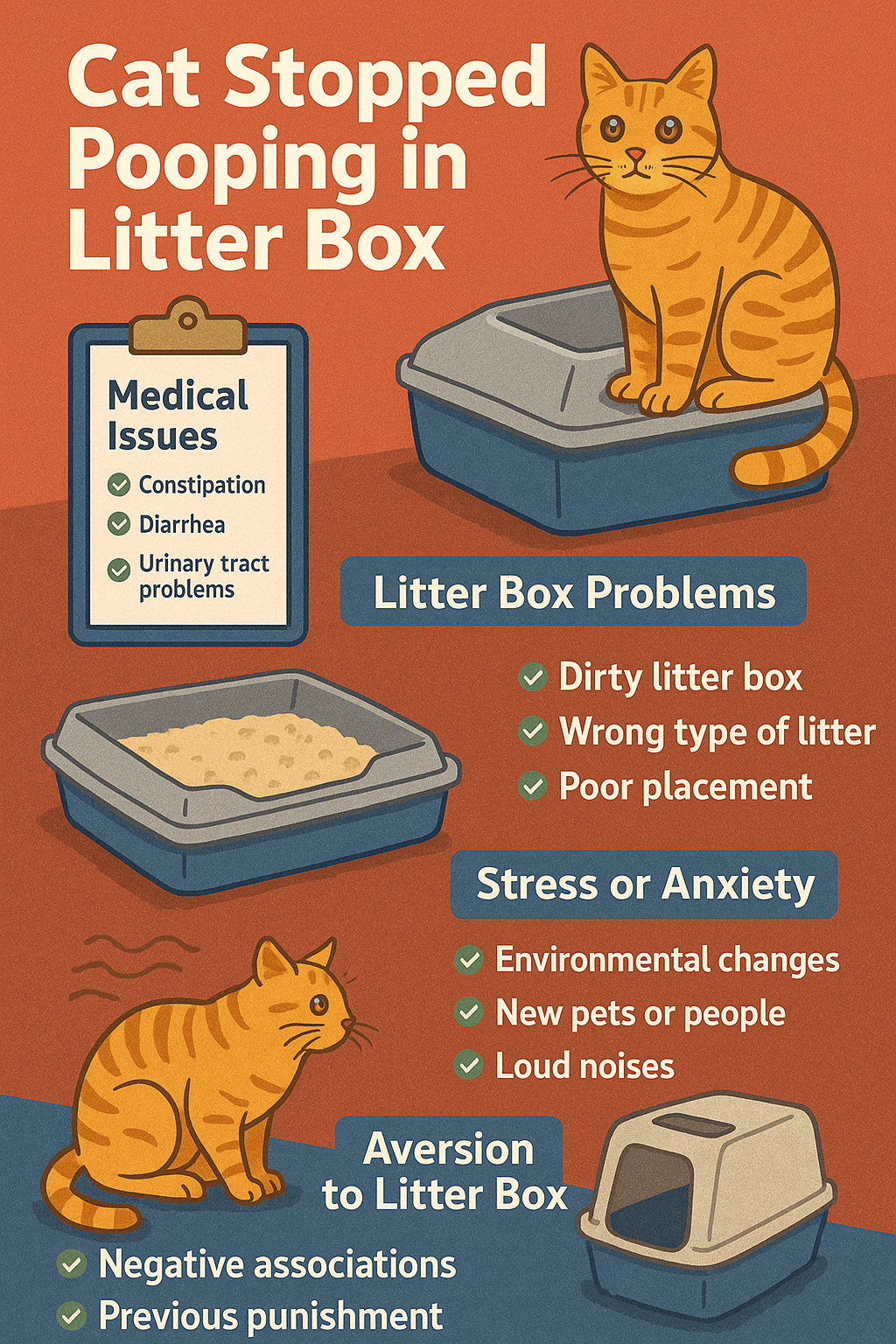
If your cat has stopped pooping in the litter box, identifying the root cause is essential for addressing the problem effectively. Here are some common reasons why this might happen:

 
  • Medical Issues:
    Conditions like constipation, urinary tract infections, or gastrointestinal problems can make it painful or difficult for your cat to use the litter box.

  • Dirty Litter Box:
    Cats are naturally clean animals and may avoid a litter box that hasn’t been cleaned regularly.

  • Stress or Anxiety:
    Changes in the household, such as moving, new pets, or loud noises, can cause stress and lead to avoidance behaviors.

  • Litter Preference:
    Some cats are particular about the type of litter they use. A sudden change in texture or scent can deter them from the box.

  • Location of the Litter Box:
    If the litter box is placed in a high-traffic or noisy area, your cat may feel unsafe using it.


Addressing these potential causes can help you pinpoint the issue and take steps to resolve it.

Why Did My Cat Stop Pooping in the Litter Box? Best 7 Tips!

Signs Your Cat May Be Experiencing Health Problems


When a cat stops pooping in the litter box, it’s crucial to rule out underlying medical conditions. Look for these signs that indicate your cat may need veterinary attention:

 
  • Straining in the Litter Box:
    If your cat spends a long time in the litter box but produces little to no waste, they may be constipated or experiencing a blockage.

  • Changes in Behavior:
    Increased hiding, lethargy, or irritability can signal discomfort or pain related to digestive issues.

  • Loss of Appetite:
    A sudden decrease in food consumption may indicate an underlying health problem affecting their digestion.

  • Vomiting or Diarrhea:
    These symptoms often accompany gastrointestinal issues and should not be ignored.

  • Visible Discomfort:
    If your cat seems uncomfortable when walking or lying down, it could point to abdominal pain.


Recognizing these signs early ensures your cat receives the care they need and prevents further complications.

Preventive Measures
Immediate Solutions
Clean the litter box daily
Consult a veterinarian for persistent issues
Use unscented, soft-textured litter
Provide multiple litter boxes in different locations
Place the litter box in a quiet area
Gradually reintroduce preferred litter types
Minimize household stressors
Create a calm environment with familiar scents
Monitor your cat’s diet and hydration
Reward positive litter box behavior with treats

How to Encourage Proper Litter Box Use


Encouraging your cat to return to the litter box requires patience and consistency. Here are some strategies to help guide them back to proper habits:

 
  • Provide Multiple Boxes:
    Having more than one litter box, especially in multi-cat households, reduces competition and increases accessibility.

  • Experiment with Litter Types:
    Try different textures (clumping, non-clumping) or materials (clay, silica) to find what your cat prefers.

  • Maintain Privacy:
    Ensure the litter box is placed in a quiet, low-traffic area where your cat feels safe and undisturbed.

  • Use Positive Reinforcement:
    Reward your cat with treats, praise, or playtime whenever they successfully use the litter box.

  • Gradual Reintroduction:
    If you’ve changed the litter or box location, transition slowly to avoid overwhelming your cat.


Implementing these strategies can help restore your cat’s confidence in using the litter box.

Tips for Managing Multi-Cat Households


In homes with multiple cats, litter box issues can become more complex. These tips can help manage the situation and reduce conflicts:

 
  • Follow the “One Plus” Rule:
    Provide one litter box per cat, plus an additional one to ensure all cats have access.

  • Observe Interactions:
    Watch for bullying or territorial behavior around the litter box, as this can discourage certain cats from using it.

  • Separate Resources:
    Place litter boxes in different areas of the house to prevent overcrowding and competition.

  • Monitor Individual Health:
    Keep track of each cat’s bathroom habits to identify if one specific cat is causing the issue.

  • Create Safe Spaces:
    Designate quiet zones where timid cats can use the litter box without feeling threatened.


By addressing the unique dynamics of a multi-cat household, you can minimize litter box avoidance.

Common Mistakes to Avoid

Avoiding common mistakes can help you address litter box issues more effectively. Here are some pitfalls to steer clear of:

 
  • Ignoring Medical Signs:
    Assuming the issue is purely behavioral without ruling out health problems can delay necessary treatment.

  • Using Strong-Scented Cleaners:
    Harsh chemicals or strong odors near the litter box can repel your cat. Opt for pet-safe, unscented cleaners instead.

  • Placing Boxes Near Food or Water:
    Cats prefer not to eliminate near their eating or drinking areas, so keep the litter box separate.

  • Changing Everything at Once:
    Sudden changes to litter type, box design, or location can confuse your cat. Make adjustments gradually.

  • Forcing Your Cat into the Box:
    Forcing your cat to use the litter box can create negative associations and worsen the problem.


Avoiding these mistakes sets the stage for a smoother resolution process.

Environmental Enrichment for Stress Reduction

Reducing stress through environmental enrichment can help prevent litter box avoidance. These strategies create a calming atmosphere for your cat:

 
  • Provide Vertical Space:
    Adding cat trees or shelves gives your cat a sense of security and a vantage point to observe their surroundings.

  • Offer Hiding Spots:
    Boxes, tunnels, or cozy beds provide safe spaces where your cat can retreat when feeling overwhelmed.

  • Introduce Interactive Toys:
    Engaging toys and activities distract your cat from stressors and promote mental stimulation.

  • Play Calming Music:
    Soft, soothing music designed for pets can help reduce anxiety in noisy environments.

  • Use Pheromone Diffusers:
    Products like Feliway mimic natural feline pheromones, creating a calming effect.


By enriching your cat’s environment, you can alleviate stress and encourage positive behaviors.

Dietary Adjustments to Support Digestive Health

Sometimes, dietary changes can improve your cat’s bathroom habits and reduce litter box issues. Consider these adjustments to support their digestive system:

 
  • Increase Fiber Intake:
    Adding fiber-rich foods or supplements can help regulate bowel movements and prevent constipation.

  • Ensure Adequate Hydration:
    Encourage water intake by providing fresh water or investing in a cat water fountain. Wet food can also boost hydration.

  • Switch to High-Quality Food:
    Premium cat food with balanced nutrients supports overall health and minimizes digestive upset.

  • Monitor Portion Sizes:
    Overfeeding or underfeeding can disrupt digestion. Follow feeding guidelines based on your cat’s age, weight, and activity level.

  • Consult Your Vet About Special Diets:
    In cases of chronic issues, your vet may recommend prescription diets tailored to your cat’s needs.


Making thoughtful dietary changes can improve your cat’s digestive health and encourage regular litter box use.

Frequently Asked Questions About Litter Box Issues

 
Why is my cat pooping outside the litter box?

This behavior can result from medical issues, stress, or dissatisfaction with the litter box setup.

Ideally, scoop the litter box daily and replace the litter completely once a week.

Yes, stress from changes in routine, environment, or social dynamics can lead to avoidance behaviors.

Start by consulting a vet to rule out medical issues, then evaluate and adjust the litter box setup.

No, punishment can increase anxiety and worsen the problem. Focus on positive reinforcement instead.

Restoring Harmony with Your Cat and the Litter Box


Dealing with a cat who has stopped pooping in the litter box can be stressful, but understanding the causes and implementing practical solutions can make a significant difference. Whether the issue stems from health concerns, environmental factors, or behavioral changes, patience and consistency are key. By prioritizing your cat’s comfort and well-being, you can rebuild trust and encourage proper litter box habits. Remember, every cat is unique, and finding the right approach may take time—but the effort will strengthen your bond and create a happier home for everyone.

Pemphigus Erythematosus in Cats: Best 7 Expert Tips!

Pemphigus Erythematosus in Cats: Best 7 Expert Tips! – Learn to recognize symptoms, manage flare-ups, and improve your cat’s quality of life.

Pemphigus Erythematosus in Dogs: Best 7 Expert Tips!

Pemphigus Erythematosus in Dogs: Best 7 Expert Tips! – Discover causes, symptoms, and treatment options to manage this autoimmune skin condition effectively.

Cat Tympanic Membrane: Best 7 Expert Tips!

Cat Tympanic Membrane: Best 7 Expert Tips! – Learn how to protect your cat’s eardrum, spot issues early, and ensure lifelong auditory health.

Dog Tympanic Membrane: Best 7 Expert Tips!

Dog Tympanic Membrane: Best 7 Expert Tips! – Learn how to protect your dog’s eardrum, spot issues early, and ensure lifelong ear health with expert advice.

Leave a Reply

Your email address will not be published. Required fields are marked *

Post Category


