
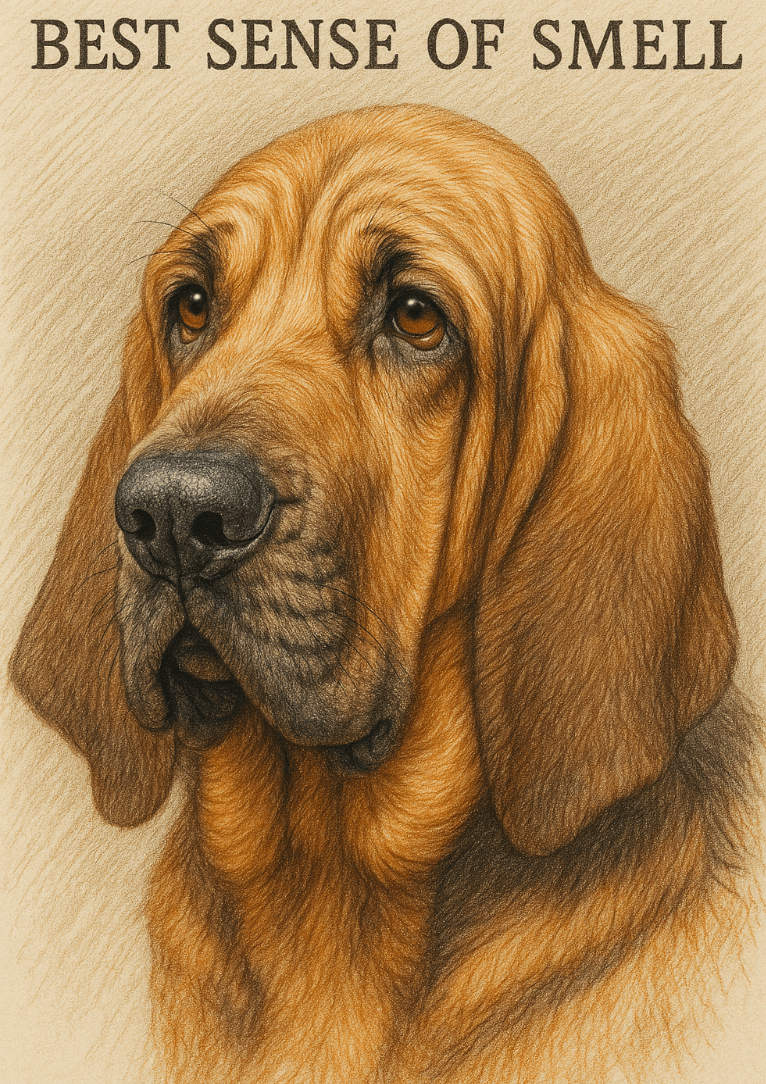

Which Dog Has the Best Sense of Smell?
Dogs have long been celebrated for their incredible sense of smell, which far surpasses that of humans. While all dogs possess an extraordinary olfactory ability, some breeds stand out as true scent superstars. These canine detectives are often employed in critical roles such as search and rescue, drug detection, and even medical alert work. But which dog truly has the best sense of smell? The answer lies in understanding the biology behind their noses, the unique traits of specific breeds, and how these remarkable animals use their sniffing skills to make a difference. In this blog post, we’ll explore the top contenders, their abilities, and what makes them so exceptional.
Breeds with Exceptional Scent Abilities
When it comes to detecting scents, certain dog breeds rise above the rest. These breeds are known for their unparalleled olfactory prowess and are often chosen for specialized tasks requiring precision and reliability.
Bloodhound:
Renowned as the ultimate scent hound, Bloodhounds have up to 300 million scent receptors, making them masters at tracking scents over long distances.German Shepherd:
Often used in police and military work, German Shepherds combine intelligence and a powerful sense of smell to excel in detection tasks.Beagle:
Compact yet mighty, Beagles are frequently employed by customs and quarantine services due to their keen nose and determination.Labrador Retriever:
Known for their friendly nature, Labradors also shine in scent work, particularly in medical detection and explosive identification.Basset Hound:
With droopy ears and loose skin that traps scents, Basset Hounds are natural-born trackers capable of following trails with impressive accuracy.
These breeds showcase the diversity and specialization within the canine world, proving that a strong sense of smell is more than just a biological trait—it’s a skill honed through centuries of breeding and training.
How a Dog’s Nose Works: The Science Behind Their Sense of Smell
A dog’s sense of smell is nothing short of extraordinary, thanks to their highly evolved nasal anatomy. Understanding how their noses function highlights why they are so effective at scent detection.
Scent Receptors vs. Humans:
Dogs can have up to 300 million scent receptors, compared to a human’s mere 5-6 million, giving them an immense advantage in detecting odors.Jacobson’s Organ (Vomeronasal Organ):
This specialized organ allows dogs to detect pheromones and other chemical signals, enhancing their ability to interpret scents.Wet Noses Enhance Smell:
A moist nose helps trap scent particles, improving a dog’s ability to analyze and identify smells in their environment.Separate Airflow Pathways:
Dogs have separate pathways for breathing and analyzing scents, allowing them to process odors without interruption.Brain Processing Power:
The part of a dog’s brain dedicated to processing smells is about 40 times larger than that of humans, enabling them to interpret complex scent information.
This intricate system explains why dogs are considered nature’s finest scent detectives, capable of feats that seem almost superhuman.
Check this guide 👉How Far Can a Dog Smell Its Owner? Best 7 Health Tips!
Check this guide 👉Can a Dog Smell Through a Vacuum-Sealed Bag? Best 7 Tips!
Check this guide 👉How to Get Dog Smell Out of Couch: Best 7 Expert Tips!
Top Scent Detection Breeds | Common Uses for Their Skills |
|---|---|
Bloodhound | Search and rescue, missing persons |
German Shepherd | Police work, bomb and drug detection |
Beagle | Airport security, pest control |
Labrador Retriever | Medical alert, service dog roles |
Basset Hound | Trailing, hunting small game |
Training Dogs for Scent Work
Harnessing a dog’s natural scent abilities requires careful training and patience. Whether you’re preparing a working dog or teaching your pet new tricks, here are some tips to guide you.
Start with Basic Obedience:
A well-trained dog is easier to work with during scent exercises; focus on commands like “sit,” “stay,” and “come.”Use Positive Reinforcement:
Reward your dog with treats, praise, or toys every time they successfully locate a target scent to reinforce their behavior.Introduce Scent Games:
Begin with simple games like hiding treats around the house to encourage your dog to use their nose actively.Gradually Increase Difficulty:
Once your dog masters basic scent tasks, introduce more challenging scenarios, such as outdoor searches or multiple targets.Seek Professional Guidance:
Enroll in scent work classes or consult experts to refine your dog’s skills and ensure proper technique.
With consistent practice and encouragement, any dog can develop their scent-detection abilities, whether for fun or professional purposes.
Real-Life Applications of Dogs’ Scent Abilities
The exceptional sense of smell possessed by certain breeds has led to their widespread use in real-world applications. Here are some examples of how these talented dogs contribute to society.
Search and Rescue Operations:
Dogs like Bloodhounds and German Shepherds locate missing persons in disaster zones, wilderness areas, and urban settings.Explosive and Drug Detection:
Highly trained detection dogs help law enforcement agencies identify illegal substances and dangerous materials in airports, borders, and public spaces.Medical Alert Dogs:
Some dogs can detect changes in blood sugar levels, seizures, or even cancer, providing life-saving alerts to their handlers.Conservation Efforts:
Specially trained dogs assist researchers in tracking endangered species or locating invasive plants and animals to protect ecosystems.Agricultural Inspections:
Beagles and similar breeds are often seen sniffing luggage at airports to prevent the spread of harmful pests or diseases.
These applications demonstrate the invaluable role dogs play in safeguarding lives, protecting communities, and advancing scientific research.
Fun Facts About Dogs’ Sense of Smell
Dogs’ olfactory abilities never cease to fascinate us. Here are some intriguing facts that highlight just how amazing their sense of smell really is.
They Can Smell Emotions:
Dogs can detect changes in human sweat and hormones, allowing them to sense emotions like fear or stress.Directional Sniffing:
Unlike humans, dogs can determine the direction of a scent, helping them pinpoint its source quickly.Smelling Underwater Scents:
Certain water-loving breeds, like Newfoundlands, can pick up scents carried by air bubbles rising from underwater sources.Detecting Time Through Smell:
Dogs can interpret the strength of a scent to estimate how recently something occurred, acting as living “timelines.”Individual Scent Identification:
Every person has a unique scent profile, much like fingerprints, and dogs can distinguish between hundreds of individual scents.
These fascinating facts remind us why dogs’ noses are truly one of nature’s wonders.
Challenges in Utilizing Dogs’ Scent Abilities
While dogs are incredibly skilled at scent work, there are challenges associated with harnessing their abilities effectively. Addressing these obstacles ensures success in various applications.
Environmental Factors:
Weather conditions like rain or wind can interfere with scent trails, complicating search efforts.Overworking the Dog:
Pushing a dog too hard during scent tasks can lead to exhaustion or decreased performance over time.Handler Influence:
Handlers must remain neutral to avoid unintentionally guiding the dog toward incorrect conclusions.Health Concerns:
Regular vet check-ups are crucial to ensure the dog remains physically fit for demanding scent work.Legal Restrictions:
In some regions, regulations limit the use of detection dogs in specific scenarios, requiring compliance with local laws.
By acknowledging these challenges, trainers and handlers can maximize the effectiveness of their canine partners.
How to Test Your Dog’s Sense of Smell at Home
If you’re curious about your dog’s scent-detection abilities, there are simple ways to test their skills in a fun and engaging manner.
Hide-and-Seek with Treats:
Hide treats around the house and encourage your dog to find them using only their nose.Scent Discrimination Game:
Place different scented items (like cloths rubbed with vanilla or lavender) in containers and see if your dog can identify a specific smell.Outdoor Treasure Hunt:
Bury a toy or treat in the yard and let your dog search for it, observing how quickly they locate it.Blindfold Challenge:
Temporarily blindfold your dog (under supervision) and observe how well they navigate familiar spaces using only their sense of smell.Track a Trail:
Create a scent trail by dragging a scented item along the ground and see if your dog can follow it.
These activities not only entertain your dog but also strengthen your bond while showcasing their natural talents.
Frequently Asked Questions About Dogs’ Sense of Smell
Which breed has the strongest sense of smell?
The Bloodhound is widely regarded as having the best sense of smell among all dog breeds.
Can all dogs be trained for scent work?
Yes, while some breeds excel naturally, most dogs can learn scent-detection skills with proper training.
How far can a dog track a scent?
Depending on conditions and the breed, dogs can follow a scent trail for miles, sometimes spanning several days.
Do puppies inherit their parents’ scent abilities?
Genetics play a significant role, but environmental factors and training also influence a dog’s scent capabilities.
Why do dogs sniff each other?
Sniffing is a form of communication that provides information about another dog’s identity, health, and emotional state.
Celebrating the Incredible Sense of Smell in Dogs
Dogs’ extraordinary sense of smell is a testament to their unique bond with humans and their ability to adapt to diverse roles. From tracking lost individuals to detecting illnesses, these remarkable animals continue to amaze us with their capabilities. By understanding which breeds excel in scent work and how their noses function, we gain a deeper respect for their contributions to our lives. Whether you’re admiring a Bloodhound’s legendary tracking skills or marveling at a Labrador’s medical detection abilities, one thing is clear: dogs truly are man’s best friend—and perhaps our greatest scent detectives.
Dog Flu Shot Side Effects: Best 7 Expert Tips! – Learn about common reactions, rare risks, and how to keep your dog safe after vaccination.
Rhodesian Ridgeback Dog Temperament: Best 7 Expert Tips! – Discover their loyal, intelligent, and energetic nature, plus expert advice on training and care.
Cat Food Intolerance: Best 7 Expert Tips! – Learn to spot symptoms, identify trigger foods, and manage your cat’s diet for optimal health and comfort.
Homemade Dog Food Recipes for Pitbulls: Best 7 Expert Tips! – Discover nutritious recipes, key ingredients, and expert advice to fuel your Pitbull’s health and energy naturally.


