
What Is MSM in Cat Supplements: Best 7 Expert Tips!
If you’ve ever browsed feline joint or skin supplements, you’ve likely seen “MSM” listed among the ingredients—but what exactly is it, and why is it included? Methylsulfonylmethane (MSM) is a naturally occurring sulfur compound prized for its anti-inflammatory and tissue-supporting properties. While commonly used in human and canine wellness, its role in cat supplements is growing as owners seek gentle, natural ways to support mobility, coat health, and overall comfort—especially in aging or sensitive cats. Understanding what MSM is, how it works, and when it’s appropriate can help you make informed choices for your feline friend’s long-term well-being.
Origins and Role of MSM in Feline Nutrition
MSM isn’t a synthetic lab creation—it’s a bioavailable form of sulfur found in plants, animals, and even the human body. In cat supplements, it’s typically derived from purified, pharmaceutical-grade sources to ensure safety and consistency. Though cats don’t produce MSM naturally in significant amounts, this compound plays a vital supporting role in connective tissue integrity and cellular function when given in controlled doses:
- Natural Sulfur Source:
Sulfur is essential for collagen, keratin, and glutathione production—key for healthy joints, skin, fur, and detoxification pathways in cats. - Anti-Inflammatory Properties:
MSM helps modulate inflammatory responses, potentially easing discomfort in cats with arthritis or soft tissue strain. - Joint and Cartilage Support:
By contributing to cartilage matrix formation, MSM may help maintain joint flexibility and slow age-related wear. - Skin and Coat Enhancement:
Sulfur from MSM supports keratin synthesis, which can lead to a shinier coat and reduced dryness or flakiness. - Synergy with Other Nutrients:
MSM is often paired with glucosamine, chondroitin, or omega-3s in cat supplements to amplify benefits through complementary action.
While not a cure-all, MSM serves as a valuable supportive ingredient when used as part of a balanced, vet-guided wellness plan for cats.
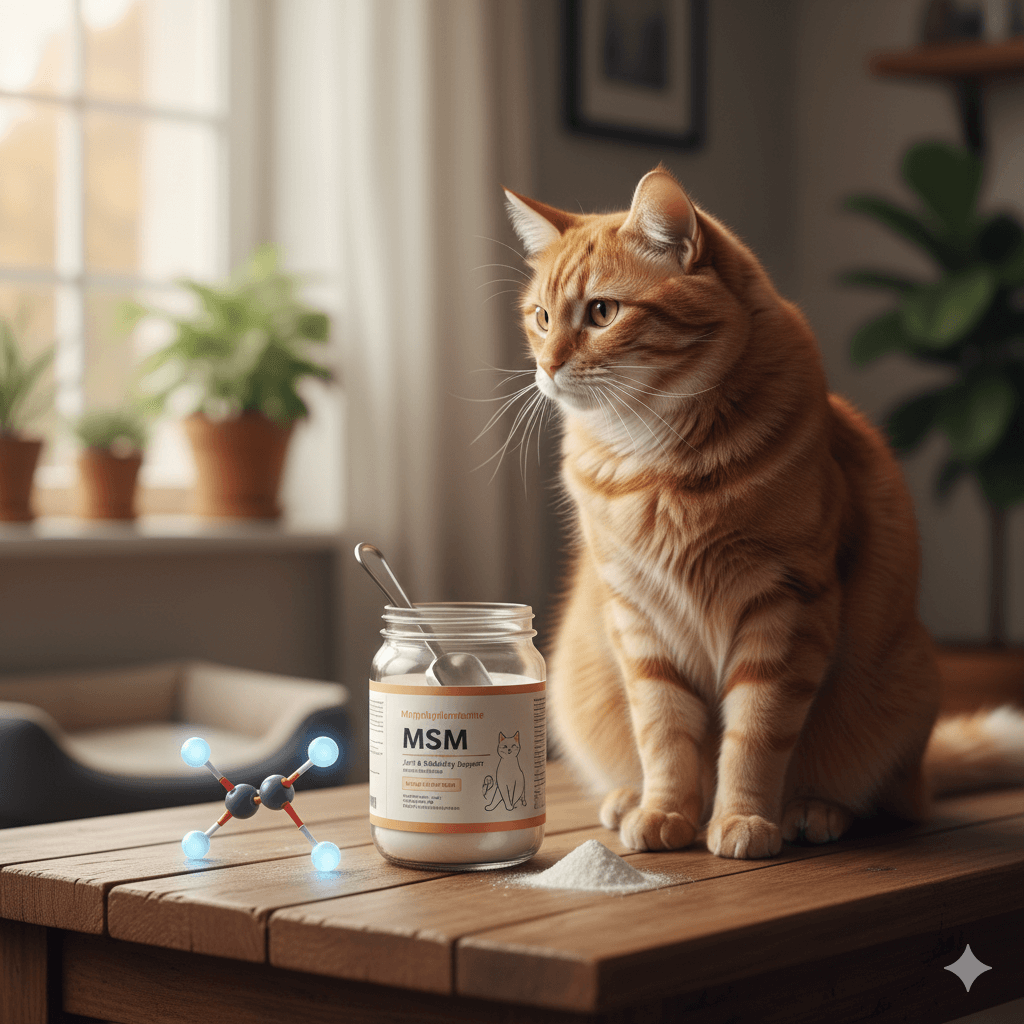
How MSM Works in a Cat’s Body
Unlike medications that target specific symptoms, MSM works at the cellular level to support fundamental biological processes. Its small molecular size allows for easy absorption, and it’s generally well-tolerated by cats when dosed appropriately. Understanding its mechanism helps clarify why it appears in so many quality feline supplements:
- Boosts Cellular Flexibility:
MSM helps maintain the permeability of cell membranes, aiding nutrient uptake and waste removal—critical for aging cats. - Supports Antioxidant Defenses:
It contributes to glutathione production, one of the body’s master antioxidants, helping protect cells from oxidative stress. - Reduces Oxidative Joint Damage:
By lowering free radical activity in joint tissues, MSM may help preserve cartilage and reduce stiffness. - Promotes Tissue Repair:
Sulfur from MSM is used to rebuild connective tissues after injury, surgery, or chronic strain. - Enhances Detoxification Pathways:
MSM supports liver function by aiding in the binding and elimination of certain toxins and metabolic byproducts.
These effects are subtle but cumulative—making MSM best suited for long-term maintenance rather than acute crisis management.
Check this guide 👉Understanding Bone Supplement for Cats: Best 7 Expert Tips!
Check this guide 👉The Role of Cat Vitamins in Feline Health: Best 7 Tips!
Check this guide 👉Can Cats Eat Vitamin E Oil? Best 7 Expert Tips!
Key Benefits of MSM for Cats | Important Usage Considerations |
|---|---|
Supports joint mobility and comfort | Always choose feline-formulated supplements |
Promotes healthy skin and shiny coat | Never use human MSM products—dosing differs |
May reduce inflammation naturally | Start with low doses and monitor closely |
Aids cellular health and detox | Avoid in cats with severe kidney disease |
Works well with glucosamine & omega-3s | Consult your vet before combining with meds |
Common Forms of MSM in Cat Supplements
MSM is available in several delivery formats, each designed to suit different feline preferences and health needs. The right form can mean the difference between acceptance and refusal—especially for picky eaters:
- Powder Form:
Easily mixed into wet food; odorless and tasteless, making it ideal for discreet daily use. - Capsules (Opened or Whole):
Some owners open capsules to sprinkle contents on food; others train cats to swallow small capsules with treats. - Chewable Soft Gels or Bites:
Flavored with chicken or tuna, these are palatable but must be specifically made for cats—never use dog versions. - Liquid Drops:
Added to water or food; useful for precise dosing but may be rejected if the flavor is off-putting. - Combination Formulas:
Most common—MSM is blended with other joint or skin-supporting ingredients in tablets, powders, or chews.
Always verify that the product is labeled for feline use and manufactured under quality-controlled conditions to avoid contaminants.
Safety and Potential Side Effects of MSM for Cats
While generally safe, MSM isn’t risk-free—especially when misused. Cats are more sensitive than dogs or humans to certain compounds, so caution is essential. Most side effects are mild and dose-dependent, but awareness helps prevent complications:
- Gastrointestinal Upset:
High doses may cause soft stool, gas, or mild nausea—usually resolved by reducing the amount. - Allergic Reactions (Rare):
Watch for itching, swelling, or vomiting after first use—discontinue immediately if seen. - Kidney and Liver Considerations:
Since MSM is metabolized and excreted through these organs, avoid in cats with advanced kidney or liver disease. - Drug Interactions:
May interact with blood thinners or anti-inflammatory drugs; always disclose all supplements to your vet. - Over-Supplementation Risk:
More isn’t better—excess sulfur can disrupt gut flora or cause cellular stress over time.
When introduced gradually and used responsibly, MSM is well-tolerated by most healthy adult cats.
When to Consider MSM for Your Cat
Not every cat needs MSM—but certain life stages or health conditions make it a worthwhile addition under veterinary supervision. Timing and context matter greatly in determining its value:
- Senior Cats (7+ Years):
Age-related stiffness or reluctance to jump may improve with consistent MSM supplementation. - Cats with Osteoarthritis:
As part of a multimodal plan, MSM can help maintain comfort and mobility alongside pain management. - Post-Surgery or Injury Recovery:
Supports tissue healing and reduces inflammation during rehabilitation. - Chronic Skin or Coat Issues:
Dry, flaky skin or dull fur may respond to MSM’s role in keratin and cell membrane health. - Active or Athletic Cats:
Rare, but cats who engage in frequent climbing or agility may benefit from joint support.
Use MSM as a supportive tool—not a replacement—for proper diagnosis and veterinary care.
What to Look for in a Quality MSM Supplement for Cats
The market is flooded with pet supplements, but not all are created equal. Choosing a reputable product ensures safety, efficacy, and peace of mind. Focus on these key indicators when shopping:
- Third-Party Testing:
Look for brands that provide Certificates of Analysis (COA) from independent labs for purity and potency. - Feline-Specific Formulation:
Avoid “multi-species” products—cats have unique metabolic needs that require tailored dosing. - Transparent Ingredient List:
The label should clearly state MSM amount per serving and list all other ingredients without vague terms like “proprietary blend.” - Veterinary-Recommended Brands:
Supplements sold through clinics or trusted pet health companies often meet higher quality standards. - No Harmful Additives:
Steer clear of products with xylitol, artificial colors, or unnecessary fillers that could harm your cat.
Investing in a high-quality supplement minimizes risks and maximizes the potential benefits of MSM.
Why MSM Stands Out Among Feline Joint and Skin Supplements
Among the many ingredients used in cat wellness formulas, MSM holds a unique place due to its dual action on both structural and metabolic levels. Unlike single-purpose additives, it supports multiple systems simultaneously—making it a favorite in holistic and integrative feline care. Here’s why many veterinarians and informed pet owners consider MSM a standout choice:
- Natural and Biocompatible:
MSM is a bioavailable form of sulfur already present in small amounts in living organisms, making it easily recognized and utilized by a cat’s body. - Gentler Than NSAIDs:
For cats who can’t tolerate conventional anti-inflammatories (which are often unsafe for felines), MSM offers a mild, natural alternative for managing discomfort. - Supports Multiple Body Systems:
Beyond joints, MSM contributes to skin elasticity, fur quality, liver detox pathways, and even respiratory mucosal health. - Backed by Anecdotal and Emerging Science:
While large-scale feline studies are limited, decades of use in veterinary practice and positive owner feedback support its role in long-term maintenance. - Complements Holistic Protocols:
MSM integrates seamlessly with acupuncture, physical therapy, or dietary changes for senior or rehabilitating cats—enhancing overall outcomes.
When used thoughtfully and in the right context, MSM isn’t just another supplement—it’s a quiet, consistent ally in your cat’s journey toward graceful aging and everyday comfort.
“MSM is a naturally occurring supplement used primarily as an anti-inflammatory and antioxidant for conditions such as arthritis and some cancers. MSM is used most often in dogs and horses, although cats may benefit as well.” – Alison Hamilton, DVM
Frequently Asked Questions About MSM in Cat Supplements
Is MSM safe for cats?
Yes—when used in appropriate, feline-specific doses and under veterinary guidance. Human MSM products should never be given to cats.
Can MSM cure my cat’s arthritis?
No. MSM supports joint health but doesn’t reverse arthritis. It works best as part of a comprehensive management plan.
How long does it take to see results from MSM?
Most owners notice subtle improvements in mobility or coat quality within 4–8 weeks of consistent use.
Can I give my cat MSM with other supplements?
Usually yes—especially with glucosamine or omega-3s—but always check with your vet to avoid interactions.
Do kittens need MSM?
Generally no. MSM is intended for adult or senior cats with specific health needs, not growing kittens.
Supporting Your Cat’s Wellness with Informed Choices
Integrating supplements like MSM into your cat’s routine reflects your deep care and proactive approach to their health. While it’s not a miracle compound, MSM offers gentle, science-backed support for joints, skin, and cellular resilience—especially as your cat ages. The key lies in choosing quality products, respecting proper dosing, and partnering with your veterinarian to ensure safety and relevance. By staying informed and attentive, you honor your cat’s unique needs and help them thrive in comfort and vitality for years to come.

Is Rawhide Bad for Cats? Best 7 Expert Tips! – Discover the risks, safe alternatives, and expert advice to keep your feline friend healthy and happy.

Is Rawhide Bad for Dogs? Best 7 Expert Tips! – Discover the risks, benefits, and safer alternatives to rawhides for your dog’s chewing needs.

Understanding Anorexia in Cats: Best 7 Expert Tips! – Learn why cats stop eating, spot warning signs, and discover how to help your feline regain appetite safely.

Understanding Anorexia in Dogs: Best 7 Expert Tips! – Learn causes, symptoms, and solutions to help your dog regain appetite and stay healthy.