

What Is a Cat Scratch Fever Test? Best 7 Expert Tips!

What Is a Cat Scratch Fever Test? Best 7 Expert Tips!

What Is a Cat Scratch Fever Test?

Cat scratch fever—also known as cat scratch disease (CSD)—is a bacterial infection caused by Bartonella henselae. While often mild, it can lead to serious complications, especially in children or immunocompromised individuals. If you or someone in your household develops symptoms after a cat scratch or bite, a cat scratch fever test may be necessary to confirm diagnosis and guide treatment. Early detection ensures timely care and peace of mind for both families and feline companions.

Understanding Cat Scratch Fever: Causes and Transmission

Cat scratch fever is not caused by the scratch itself but by bacteria transferred through a cat’s saliva—often via a scratch, bite, or even a lick on broken skin. Kittens under one year are more likely to carry and transmit the bacteria, especially if they have fleas. Recognizing how the infection spreads is the first step toward prevention and informed testing decisions.

 
  • Flea Connection:
    Fleas carry Bartonella and infect cats when they groom or scratch flea bites—making flea control essential.

  • Kitten Risk:
    Young cats are more playful and prone to scratching, and their immature immune systems allow higher bacterial loads.

  • Saliva Transfer:
    Even a gentle lick on a cut or eye can introduce the bacteria into the human body.

  • No Cat-to-Human Air Transmission:
    You cannot catch cat scratch fever from being near an infected cat—it requires direct contact with saliva or contaminated claws.

  • Rare But Real:
    Though most cases resolve on their own, serious complications like encephalitis or Parinaud’s oculoglandular syndrome can occur.


Understanding transmission helps reduce fear while encouraging proactive hygiene and veterinary care. It’s not about blaming your cat—it’s about managing risk intelligently.

 
What Is a Cat Scratch Fever Test? Best 7 Expert Tips!

When Should You Consider a Cat Scratch Fever Test?

Not every scratch warrants medical testing. However, certain symptoms and circumstances signal that a cat scratch fever test may be needed to rule out or confirm Bartonella infection.

 
  • Persistent Swollen Lymph Nodes:
    Swelling near the scratch site that lasts more than 2–3 weeks is a classic sign.

  • Fever Without Clear Cause:
    Unexplained low-grade fever, fatigue, or headache following a cat scratch.

  • Redness or Pus at Scratch Site:
    Signs of local infection that don’t improve with basic wound care.

  • Immunocompromised Status:
    People with weakened immune systems (e.g., due to HIV, chemotherapy, or transplants) face higher risks.

  • Multiple Cat Exposures:
    Living with several cats, especially strays or outdoor kittens, increases exposure likelihood.


If any of these apply, consult a healthcare provider. Early testing prevents unnecessary worry and guides appropriate care.

Common Symptoms of Cat Scratch Fever When to Seek Testing
Swollen lymph nodes near scratch site Swelling lasts longer than 3 weeks
Mild fever (100–102°F) Fever persists beyond a few days
Fatigue or loss of appetite Symptoms interfere with daily life
Red bump or blister at scratch site Wound worsens or shows pus
Headache or mild confusion (rare) Neurological symptoms appear

Types of Cat Scratch Fever Tests Available

Diagnosing cat scratch disease isn’t always straightforward, as symptoms mimic other illnesses. Doctors use a combination of clinical history and lab tests to confirm Bartonella henselae infection.

 
  • Serology (Antibody Test):
    Measures IgG and IgM antibodies in the blood—most common and reliable for recent or past exposure.

  • PCR (Polymerase Chain Reaction):
    Detects bacterial DNA in blood or tissue samples; highly specific but not always available.

  • Lymph Node Biopsy:
    In rare cases, a swollen lymph node may be sampled to look for characteristic granulomas or bacteria.

  • IFA (Indirect Fluorescent Antibody):
    A specialized antibody test used in reference labs for definitive diagnosis.

  • Complete Blood Count (CBC):
    Not diagnostic alone, but may show elevated white blood cells or atypical lymphocytes.


No single test is perfect—doctors often combine results with symptom history. Fortunately, most cases are diagnosed clinically without invasive procedures.

What to Expect During the Testing Process

If your doctor suspects cat scratch fever, the testing process is typically quick, non-invasive, and low-risk.

 
  • Medical History Review:
    Your provider will ask about recent cat contact, scratch/bite details, and symptom timeline.

  • Blood Draw:
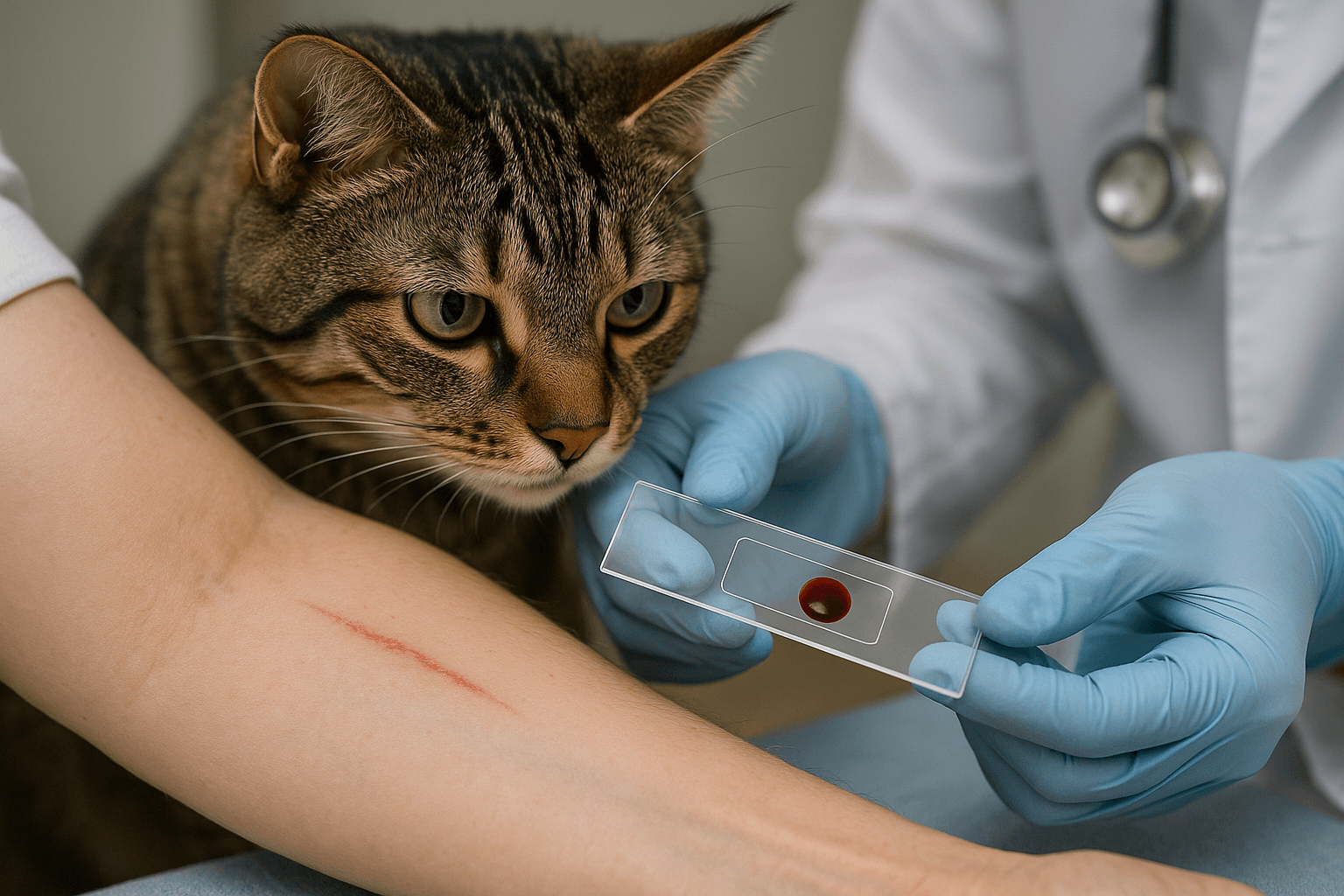
    A small blood sample is taken—usually from your arm—for serology or PCR testing.

  • Waiting Period:
    Results may take 2–5 days, depending on the lab and test type.

  • Follow-Up Visit:
    Your doctor will explain results and recommend treatment if needed.

  • No Immediate Isolation Needed:
    Cat scratch fever is not contagious between people, so you don’t need to quarantine.


The process is straightforward and designed to provide clarity—not cause stress. Most people recover fully with or without treatment.

Interpreting Your Cat Scratch Fever Test Results

Understanding your results helps you make informed decisions about next steps and future prevention.

 
  • Positive IgG, Negative IgM:
    Indicates past exposure—your body fought off the infection long ago.

  • Positive IgM (with or without IgG):
    Suggests recent or active infection, especially if symptoms align.

  • Negative Antibodies:
    Makes cat scratch fever unlikely, though very early infection might not yet show antibodies.

  • PCR Positive:
    Confirms active Bartonella presence—used in complex or severe cases.

  • Inconclusive Results:
    May require repeat testing in 1–2 weeks to monitor antibody changes.


Always discuss results with your healthcare provider. False positives or negatives can occur, so context matters.


Preventing Cat Scratch Fever: Practical Tips for Pet Owners

Prevention is far easier than treatment—and it starts with responsible cat care and hygiene habits.

 
  • Flea Control Is Non-Negotiable:
    Use veterinarian-approved flea prevention year-round to break the transmission cycle.

  • Avoid Rough Play with Kittens:
    Use toys instead of hands to prevent accidental scratches.

  • Wash Scratches Immediately:
    Clean any cat-inflicted wound with soap and running water for at least 30 seconds.

  • Keep Cats Indoors:
    Indoor cats have far lower exposure to fleas and Bartonella.

  • Trim Claws Regularly:
    Reduces scratch depth and potential for skin breakage.


These simple steps drastically lower risk without restricting your bond with your cat. Remember: your cat isn’t “dirty” or “dangerous”—they’re just being a cat.

Caring for Your Cat After a Human Diagnosis

If someone in your home is diagnosed with cat scratch fever, your cat doesn’t need to be rehomed or punished—but they do need a veterinary check.

 
  • Schedule a Vet Visit:
    Ask for a Bartonella screening, especially if your cat has fleas or outdoor access.

  • Flea Treatment Immediately:
    Even if no fleas are visible, treat your cat and your home environment.

  • Avoid Stress During Care:
    Don’t bathe your cat excessively or use harsh disinfectants—they won’t eliminate Bartonella and may cause anxiety.

  • Monitor for Illness (Rare):
    Cats rarely show symptoms, but watch for fever, lethargy, or gum inflammation.

  • Continue Loving Interaction:
    The emotional bond remains safe—just practice gentle handling and hygiene.


Your cat is a victim of flea ecology, not a source of blame. With proper care, both you and your feline companion can stay healthy.

Frequently Asked Questions About Cat Scratch Fever Test

What is a cat scratch fever test?

It’s a blood test (usually serology) that checks for antibodies to Bartonella henselae, the bacteria causing cat scratch disease.

No. Testing is only needed if symptoms like prolonged swollen lymph nodes, fever, or fatigue develop.

Yes—but routine testing isn’t recommended unless they’re symptomatic or part of an outbreak investigation.

Antibody tests are 85–95% accurate when interpreted alongside clinical signs. PCR is more specific but less commonly used.

No. It only spreads from cats (via fleas) to humans—not person to person.


Final Thoughts: Knowledge Over Fear

A cat scratch fever test isn’t a reason to fear your feline friend—it’s a tool for responsible pet ownership. With proper flea control, gentle handling, and basic hygiene, the risk of infection is minimal. And if symptoms do arise, modern diagnostics offer quick answers and effective solutions. By understanding the facts, you protect your family while honoring the joyful, purring companion who shares your home. After all, cats don’t give us fever—they give us comfort, curiosity, and connection. And that’s worth safeguarding, paws and all.

Understanding Bone Supplement for Cats: Best 7 Expert Tips!

Understanding Bone Supplement for Cats: Best 7 Expert Tips! – Safe, vet-approved guidance for strong feline bones & balanced nutrition.

Bone Supplement for Dogs: Best 7 Expert Tips!

Bone Supplement for Dogs: Best 7 Expert Tips! – Expert guide to calcium, collagen & bone health for every life stage.

Understanding Can Cats Get Sunburn: Best 7 Expert Tips!

Understanding Can Cats Get Sunburn: Best 7 Expert Tips! – Protect your feline from UV damage with vet-backed prevention strategies.

How to Train a Seizure Alert Dog: Best 7 Expert Tips!

How to Train a Seizure Alert Dog: Best 7 Expert Tips! – Learn expert-backed steps to nurture natural instincts into reliable, life-saving seizure alerts.

Leave a Reply

Your email address will not be published. Required fields are marked *


