

What Can a Baby Cat Eat? Best 7 Expert Tips!

What Can a Baby Cat Eat? Best 7 Expert Tips!

What Can a Baby Cat Eat? A Guide to Feeding Kittens


Feeding a baby cat is both a joy and a responsibility. Whether you’ve adopted a tiny kitten or are caring for a stray, understanding their dietary needs is crucial for their growth and development. Unlike adult cats, baby cats require specific nutrients to support their rapid physical and mental growth. From milk formulas to solid foods, their diet evolves as they mature. This guide will walk you through everything you need to know about what a baby cat can eat, ensuring your furry friend grows up healthy and happy.

Expert Insight: The Importance of Proper Nutrition for Kittens

“Kittens at this critical stage should be fed a high-quality liquid milk replacer. Ensure you follow the instructions carefully, so your formula is the correct concentration, and your kitten receives enough nutrition.”

Dr. Ashley Darby

Essential Foods for Baby Cats


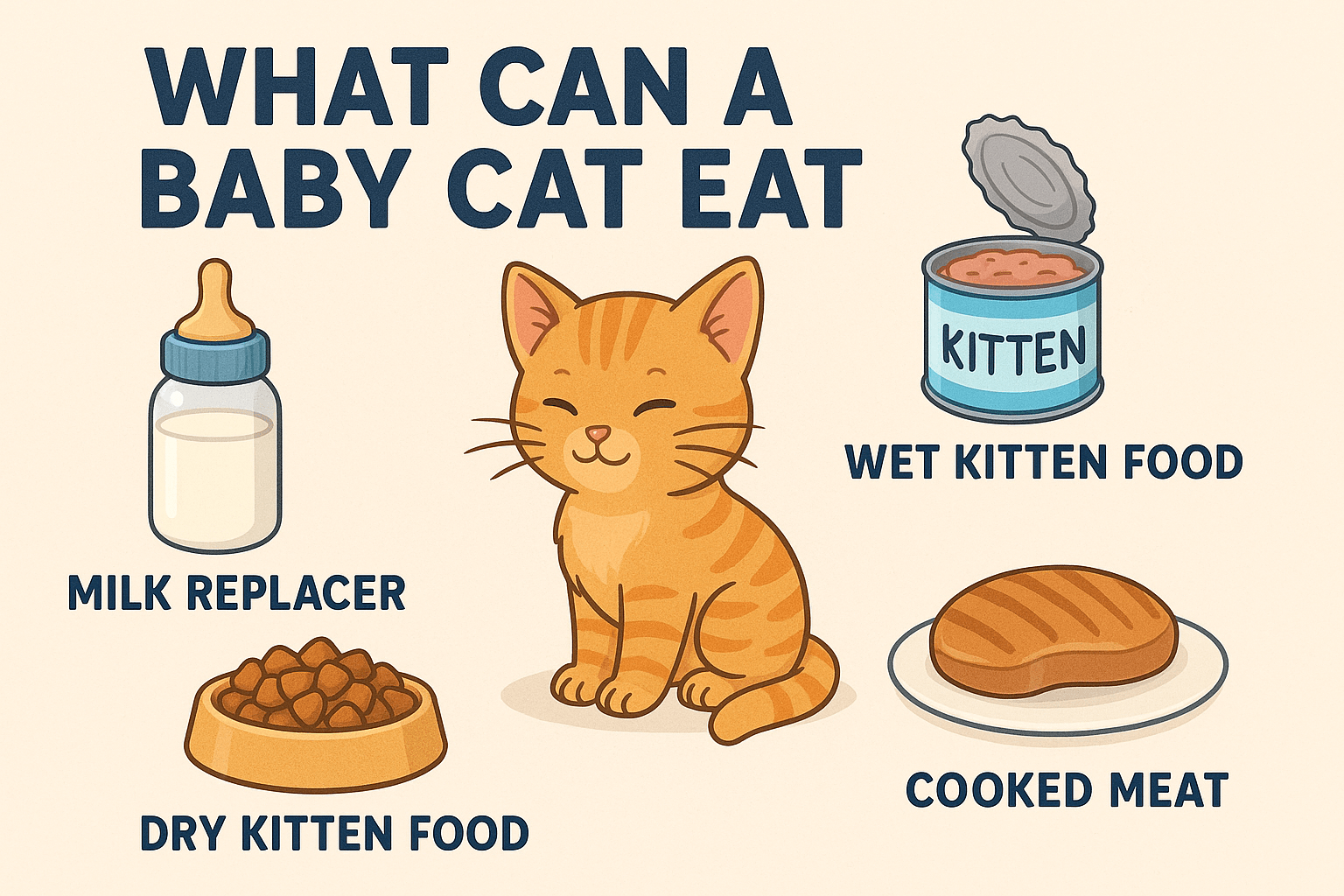
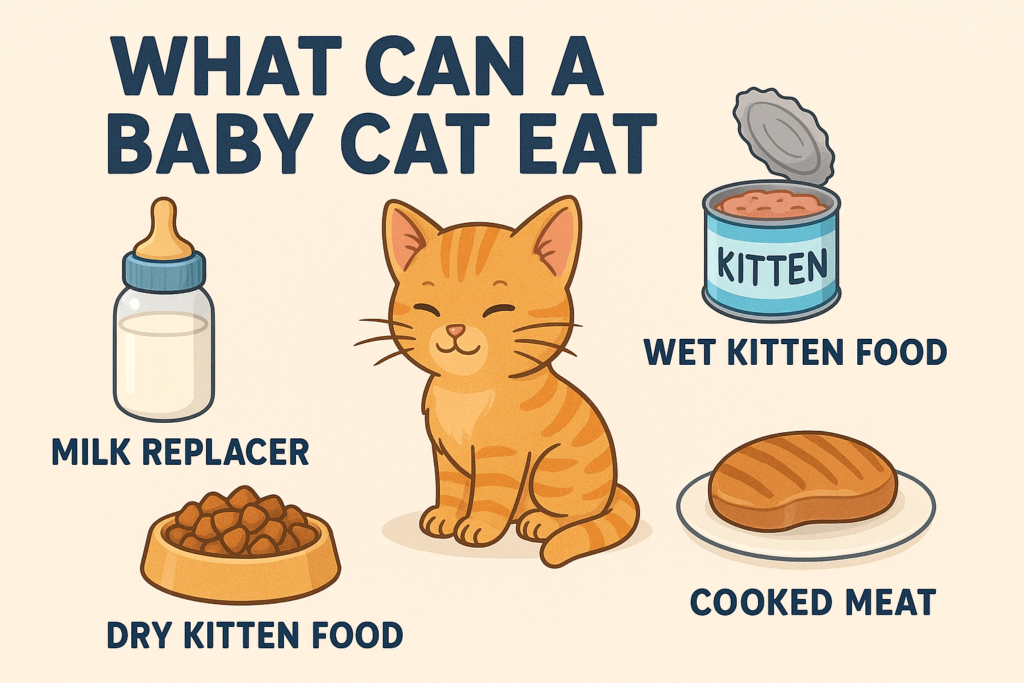
Baby cats, also known as kittens, have unique nutritional requirements that differ from those of adult cats. Providing the right foods at the right stages ensures they thrive during their early months. Here’s a breakdown of what a baby cat can eat:

 
  • Kitten Formula Milk:
    Never feed cow’s milk to a baby cat—it can cause digestive upset. Instead, use a specially formulated kitten milk replacer if the mother isn’t available.

  • High-Quality Wet Kitten Food:
    Once kittens are ready for solids (around 4 weeks old), introduce wet kitten food. It’s rich in moisture and easier to digest than dry food.

  • Dry Kitten Kibble:
    Gradually introduce small amounts of dry kibble soaked in warm water to soften it. This helps transition them to harder textures.

  • Cooked Meat (Plain):
    As they grow, you can offer small bits of plain, cooked chicken or turkey. Avoid seasoning or adding oils.

  • Fresh Water:
    Always provide fresh, clean water alongside their meals, even if they’re still drinking milk.


By offering these foods in appropriate portions and at the right times, you’ll set the foundation for a balanced and nutritious diet.

What Can a Baby Cat Eat? Best 7 Expert Tips!

Foods to Avoid Giving Baby Cats


While knowing what to feed a baby cat is important, it’s equally vital to understand what not to give them. Certain foods can be harmful or even toxic to kittens.

 
  • Cow’s Milk and Dairy Products:
    Despite popular belief, most cats are lactose intolerant, and dairy can upset their stomachs. Stick to kitten formula instead.

  • Raw Meat or Fish:
    Raw foods carry the risk of bacteria like salmonella or parasites, which can harm a kitten’s developing immune system.

  • Onions, Garlic, and Chives:
    These ingredients can damage a kitten’s red blood cells, leading to anemia. Avoid them entirely.

  • Chocolate and Caffeinated Drinks:
    Toxic to cats, these contain theobromine and caffeine, which can cause serious health issues.

  • Processed Human Foods:
    Chips, cookies, or any salty/sugary snacks lack nutritional value and can upset a kitten’s delicate digestive system.


Steering clear of these foods ensures your kitten stays safe and healthy as they grow.

Safe Foods for Baby Cats
Foods to Avoid for Baby Cats
Kitten formula milk
Cow’s milk and dairy products
High-quality wet kitten food
Raw meat or fish
Cooked, unseasoned chicken or turkey
Onions, garlic, and chives
Dry kitten kibble (soaked initially)
Chocolate and caffeinated beverages
Fresh, clean water
Processed human snacks

How to Transition a Baby Cat to Solid Food


Transitioning a baby cat from milk to solid food is a gradual process that requires patience and care. Follow these steps to ensure a smooth shift.

 
  • Start Around 4 Weeks Old:
    Begin introducing soft, wet kitten food mixed with kitten formula around this age. Use a shallow dish for easy access.

  • Blend Textures Gradually:
    Mix wet food with softened kibble to help them adjust to different textures over time.

  • Encourage Exploration:
    Allow the kitten to sniff and taste the new food without forcing them to eat it immediately.

  • Monitor Their Reaction:
    Watch for signs of digestive upset, such as diarrhea or vomiting, and adjust accordingly.

  • Be Patient During the Process:
    Some kittens take longer than others to adapt. Celebrate small victories along the way.


A slow and steady approach ensures your kitten transitions comfortably to solid foods.

Signs Your Baby Cat Is Eating Properly


Monitoring your kitten’s eating habits helps you gauge whether they’re receiving adequate nutrition. Look for these positive signs that indicate they’re thriving.

 
  • Healthy Weight Gain:
    A growing kitten should steadily gain weight each week. Consult your vet for guidance on ideal growth rates.

  • Playful Energy Levels:
    Well-fed kittens are active and curious, exploring their surroundings with enthusiasm.

  • Shiny Coat and Clear Eyes:
    Proper nutrition supports a glossy coat and bright, clear eyes free of discharge.

  • Regular Bowel Movements:
    Healthy kittens produce firm stools consistently, indicating good digestion.

  • Eager Appetite:
    A hungry kitten eagerly approaches mealtime, showing interest in their food.


These indicators confirm that your kitten is getting the nutrients they need to flourish.

Common Mistakes to Avoid When Feeding Baby Cats

Even well-meaning cat owners can make mistakes when feeding baby cats. Being aware of these pitfalls helps prevent potential health issues down the line.

 
  • Overfeeding or Underfeeding:
    Too much food can lead to obesity, while too little stunts growth. Follow portion guidelines based on age and weight.

  • Switching Foods Abruptly:
    Sudden changes in diet can upset a kitten’s sensitive stomach. Introduce new foods gradually over several days.

  • Ignoring Hydration Needs:
    Even with wet food, always provide fresh water to keep your kitten hydrated.

  • Using Adult Cat Food:
    Adult formulas lack the higher protein and fat levels kittens need for optimal growth. Stick to kitten-specific options.

  • Neglecting Regular Vet Check-Ups:
    Routine visits ensure your kitten’s diet aligns with their developmental milestones.


Avoiding these mistakes ensures your kitten receives the best possible start in life.

Nutritional Supplements for Baby Cats

In some cases, supplements may enhance a baby cat’s diet, especially if they’re struggling to meet their nutritional needs. However, proceed with caution and consult your vet first.

 
  • Taurine Supplements:
    Essential for heart and eye health, taurine is critical for kittens. Most commercial kitten foods already include sufficient amounts.

  • Probiotics:
    Probiotics support gut health and improve digestion, particularly after antibiotic treatments.

  • Omega-3 Fatty Acids:
    Found in fish oil, omega-3s promote brain development and a shiny coat.

  • Calcium Powder:
    If feeding a homemade diet, calcium powder may be necessary to balance phosphorus levels.

  • Vitamin D Drops:
    Helps with bone development, though excessive amounts can be toxic.


Supplements should complement—not replace—a balanced diet tailored to your kitten’s needs.

Tips for Feeding Orphaned Baby Cats

Caring for orphaned baby cats requires extra attention to detail, as they lack maternal care. These tips help you provide the nourishment and comfort they need.

 
  • Use a Bottle Feeder for Milk Replacement:
    Specialized bottles mimic nursing and allow precise control over feeding amounts.

  • Feed Every 2-3 Hours Initially:
    Newborn kittens need frequent feedings to sustain energy levels and growth.

  • Burp After Each Feeding:
    Gently pat their back to release trapped air, just like you would with a human baby.

  • Stimulate Elimination:
    After feeding, use a warm, damp cloth to gently rub their genital area, encouraging urination and defecation.

  • Keep Them Warm:
    Orphaned kittens struggle to regulate body temperature. Provide a cozy, heated space using a heating pad or blanket.


With dedication and care, you can successfully raise an orphaned kitten and watch them thrive.

Frequently Asked Questions About Feeding Baby Cats

 
When can I stop feeding my kitten milk?

You can gradually wean them off milk by 8-10 weeks old, transitioning fully to solid food.

Kittens under 6 months old typically need 3-4 small meals per day to fuel their growth.

Yes, but consult your vet to ensure the recipe meets all their nutritional needs.

Contact your veterinarian promptly, as refusal to eat could signal an underlying health issue.

Both have benefits; wet food provides hydration, while dry food promotes dental health. A mix of both is ideal.

Nurturing Your Baby Cat Through Nutrition


Feeding a baby cat is more than just providing food—it’s about nurturing their growth and building a foundation for lifelong health. By understanding what a baby cat can eat, avoiding harmful foods, and monitoring their progress, you play a vital role in shaping their future. Remember, every kitten is unique, and consulting your veterinarian ensures personalized care tailored to their needs. With love, patience, and proper nutrition, your baby cat will grow into a strong, vibrant companion ready to share countless memories with you.

Is Rawhide Bad for Cats? Best 7 Expert Tips!

Is Rawhide Bad for Cats? Best 7 Expert Tips! – Discover the risks, safe alternatives, and expert advice to keep your feline friend healthy and happy.

Is Rawhide Bad for Dogs? Best 7 Expert Tips!

Is Rawhide Bad for Dogs? Best 7 Expert Tips! – Discover the risks, benefits, and safer alternatives to rawhides for your dog’s chewing needs.

Understanding Anorexia in Cats: Best 7 Expert Tips!

Understanding Anorexia in Cats: Best 7 Expert Tips! – Learn why cats stop eating, spot warning signs, and discover how to help your feline regain appetite safely.

Understanding Anorexia in Dogs: Best 7 Expert Tips!

Understanding Anorexia in Dogs: Best 7 Expert Tips! – Learn causes, symptoms, and solutions to help your dog regain appetite and stay healthy.

Leave a Reply

Your email address will not be published. Required fields are marked *