
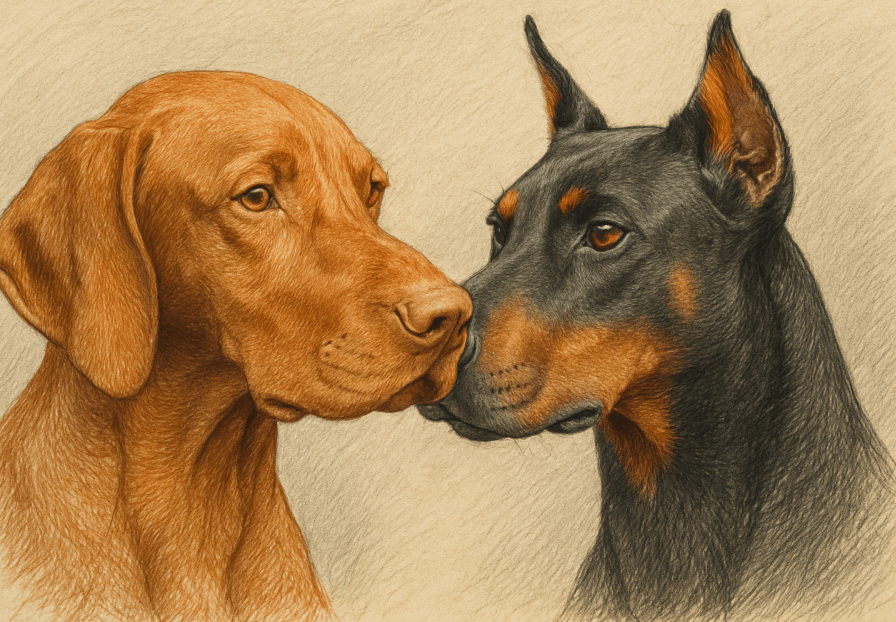

Vizsla vs Doberman: Which Breed is Right for You?
Choosing the right dog breed can be a challenging decision, especially when comparing two remarkable breeds like the Vizsla and the Doberman Pinscher. Both are intelligent, energetic, and loyal companions, but they have distinct personalities, physical traits, and care requirements that make them unique. Whether you’re looking for a family-friendly pet or a working dog, understanding the differences between these breeds will help you make an informed choice. In this blog post, we’ll explore everything from their temperaments to their exercise needs, ensuring you find the perfect match for your lifestyle.
Key Differences Between Vizslas and Dobermans
While both breeds share some similarities, such as their high energy levels and trainability, there are several key differences that set them apart. These distinctions can influence which breed aligns better with your preferences and living situation.
Size and Build:
Vizslas are medium-sized dogs with a lean, athletic build, typically weighing 40-65 pounds. Dobermans, on the other hand, are larger and more muscular, weighing 60-100 pounds.Coat Type and Grooming Needs:
Vizslas have short, smooth coats that require minimal grooming, while Dobermans also have sleek coats but may need occasional brushing to reduce shedding.Temperament:
Vizslas are known for their friendly, affectionate nature, often referred to as “Velcro dogs” due to their attachment to their owners. Dobermans are loyal and protective, often excelling as guard dogs.Energy Levels:
Both breeds are highly active, but Vizslas tend to be slightly more playful and energetic, requiring extensive daily exercise to stay happy.Lifespan:
Vizslas generally live 12-14 years, while Dobermans have a slightly shorter lifespan of 10-12 years, partly due to breed-specific health concerns.
These differences highlight the unique qualities of each breed, helping you decide which one suits your home and personality best.
Temperament and Personality Traits
The temperament of a dog plays a crucial role in determining compatibility with your household. Let’s compare the personality traits of Vizslas and Dobermans to see how they differ in behavior and interaction.
Vizslas: Family-Oriented Companions:
Vizslas thrive on human connection and are excellent with children, making them ideal for active families.Dobermans: Loyal Protectors:
Known for their protective instincts, Dobermans are vigilant watchdogs who form strong bonds with their families.Socialization Needs:
Vizslas are naturally outgoing but still benefit from early socialization to prevent shyness. Dobermans require consistent exposure to strangers and other animals to curb territorial behavior.Trainability:
Both breeds are highly intelligent and eager to please, but Vizslas may respond better to positive reinforcement, while Dobermans excel in structured obedience training.Independence Levels:
Vizslas dislike being left alone and can develop separation anxiety. Dobermans are more independent but still crave attention and companionship.
Understanding these personality traits ensures you choose a breed whose temperament aligns with your expectations and lifestyle.
Check this guide 👉Giant Schnauzer vs Doberman: Best 7 Expert Tips!
Check this guide 👉Cane Corso vs Doberman: Best 7 Expert Tips!
Check this guide 👉Great Dane vs Doberman: Best 7 Expert Tips!
Vizsla Characteristics | Doberman Characteristics |
|---|---|
Medium-sized, athletic build | Large, muscular frame |
Short, low-maintenance coat | Sleek coat with moderate shedding |
Friendly, affectionate demeanor | Loyal, protective nature |
High energy, requires lots of exercise | Energetic but slightly calmer than Vizslas |
Lifespan: 12-14 years | Lifespan: 10-12 years |
Exercise and Activity Requirements
Both Vizslas and Dobermans are high-energy breeds, but their exercise needs vary slightly. Understanding these requirements is essential for keeping them physically and mentally stimulated.
Daily Exercise for Vizslas:
Vizslas need at least 1-2 hours of vigorous activity daily, including running, hiking, or playing fetch.Doberman Energy Levels:
Dobermans also require significant exercise, though they may be content with slightly less intense activities like brisk walks or agility training.Mental Stimulation:
Puzzle toys, scent games, and advanced commands keep both breeds engaged and prevent boredom-related behaviors.Space Requirements:
Vizslas adapt well to smaller homes if exercised sufficiently, while Dobermans prefer more space due to their larger size.Supervision During Play:
Both breeds can become overly excited during play, so supervision is necessary to prevent accidental injuries or destructive behavior.
Meeting their exercise needs ensures a calm, happy companion who thrives in your care.
Health Considerations for Vizslas and Dobermans
Like all breeds, Vizslas and Dobermans are prone to certain health issues. Being aware of these risks allows you to take preventive measures and ensure a long, healthy life for your pet.
Common Vizsla Health Issues:
Hip dysplasia, epilepsy, and autoimmune disorders are prevalent in Vizslas. Regular vet check-ups help detect problems early.Doberman Health Concerns:
Dobermans are susceptible to dilated cardiomyopathy (DCM), von Willebrand’s disease, and hypothyroidism. Genetic testing can identify predispositions.Dietary Needs:
Both breeds benefit from high-quality diets tailored to their activity levels and age. Avoid overfeeding to prevent obesity.Grooming and Hygiene:
While both have low-maintenance coats, regular ear cleaning and dental care are essential to prevent infections.Lifespan Expectancy:
Vizslas generally outlive Dobermans by a couple of years, but proper care can maximize their quality of life regardless of breed.
Proactive healthcare ensures your furry friend remains healthy and vibrant throughout their life.
Training Tips for Vizslas and Dobermans
Training is a vital aspect of raising either breed, as both are intelligent and eager to learn. Here are some tips to ensure successful training sessions.
Start Early:
Begin obedience training and socialization during puppyhood to establish good habits and prevent behavioral issues.Use Positive Reinforcement:
Reward-based methods, such as treats, praise, and playtime, work best for both Vizslas and Dobermans.Focus on Consistency:
Maintain a regular training schedule and enforce rules consistently to avoid confusion.Challenge Their Minds:
Incorporate advanced commands, agility courses, or scent work to keep their sharp minds engaged.Address Separation Anxiety:
Both breeds can struggle with being left alone; crate training and gradual desensitization help ease anxiety.
With patience and persistence, training becomes a rewarding experience for both you and your dog.
Living with a Vizsla or Doberman: What to Expect
Bringing a Vizsla or Doberman into your home requires careful consideration of their needs and how they fit into your daily routine. Here’s what to expect when living with either breed.
High Energy Demands:
Both breeds require significant physical and mental stimulation to prevent boredom and destructive behaviors.Attachment to Owners:
Vizslas are notorious for their clingy nature, while Dobermans form deep bonds but tolerate brief periods of independence better.Compatibility with Other Pets:
Proper socialization ensures harmony with other animals, though Dobermans may display dominance toward smaller pets.Noise Levels:
Neither breed is particularly vocal, but Dobermans may bark as part of their guarding duties.Adaptability to Change:
Vizslas adapt quickly to new environments, while Dobermans may take longer to adjust due to their protective instincts.
Understanding these dynamics helps create a harmonious living environment for everyone involved.
Fun Activities to Enjoy with Your Vizsla or Doberman
Living with a high-energy breed means embracing an active lifestyle. These fun activities will strengthen your bond while keeping your dog physically and mentally stimulated.
Agility Training:
Set up obstacle courses in your backyard or enroll in classes to channel their athleticism and focus.Long Hikes or Runs:
Explore trails together, allowing them to sniff, run, and burn off excess energy in a natural setting.Fetch and Frisbee Games:
These classic activities provide endless entertainment and exercise for both breeds.Scent Work and Tracking:
Engage their keen sense of smell with hide-and-seek games or professional tracking training.Interactive Toys:
Puzzle feeders, treat-dispensing balls, and chew toys keep them entertained when you’re busy.
Engaging in these activities ensures a fulfilling life for your adventurous companion.
Frequently Asked Questions About Vizslas and Dobermans
Are Vizslas good with kids?
Yes, Vizslas are gentle, affectionate, and excellent companions for active families with children.
Do Dobermans make good guard dogs?
Absolutely! Dobermans are naturally protective and alert, making them outstanding guard dogs.
How much grooming do they need?
Both breeds have short coats requiring minimal grooming, though Dobermans may shed slightly more.
Can they live in apartments?
Vizslas can adapt to apartment living with sufficient exercise, while Dobermans may feel cramped without ample space.
Which breed is easier to train?
Both are highly trainable, but Vizslas tend to respond faster to positive reinforcement, while Dobermans thrive in structured environments.
Choosing Between a Vizsla and a Doberman
Deciding between a Vizsla and a Doberman ultimately comes down to your lifestyle, preferences, and ability to meet their needs. Both breeds offer unwavering loyalty, boundless energy, and a loving nature, but their unique traits cater to different types of households. Whether you opt for the playful, family-friendly Vizsla or the protective, regal Doberman, you’ll gain a devoted companion who enriches your life in countless ways. Take the time to evaluate your circumstances, consult experts, and consider fostering before committing to ensure a harmonious match.
Cat Anaphylactic Shock Treatment Costs: Best 7 Expert Tips! – Learn about costs, treatments, and financial aid options to save your cat’s life.
Exocrine Pancreatic Insufficiency in Cats: Best 7 Tips! – Learn to spot symptoms, manage EPI effectively, and improve your cat’s quality of life with expert advice.
Cost of Dog Anaphylactic Shock Treatment: Best 7 Tips! – Learn about emergency costs, financial planning, and ways to manage expenses for your dog’s care.
Exocrine Pancreatic Insufficiency in Dogs: Best 7 Tips! – Learn to spot symptoms, manage EPI effectively, and improve your dog’s quality of life with expert guidance.


