

Understanding Vitiligo in Dogs
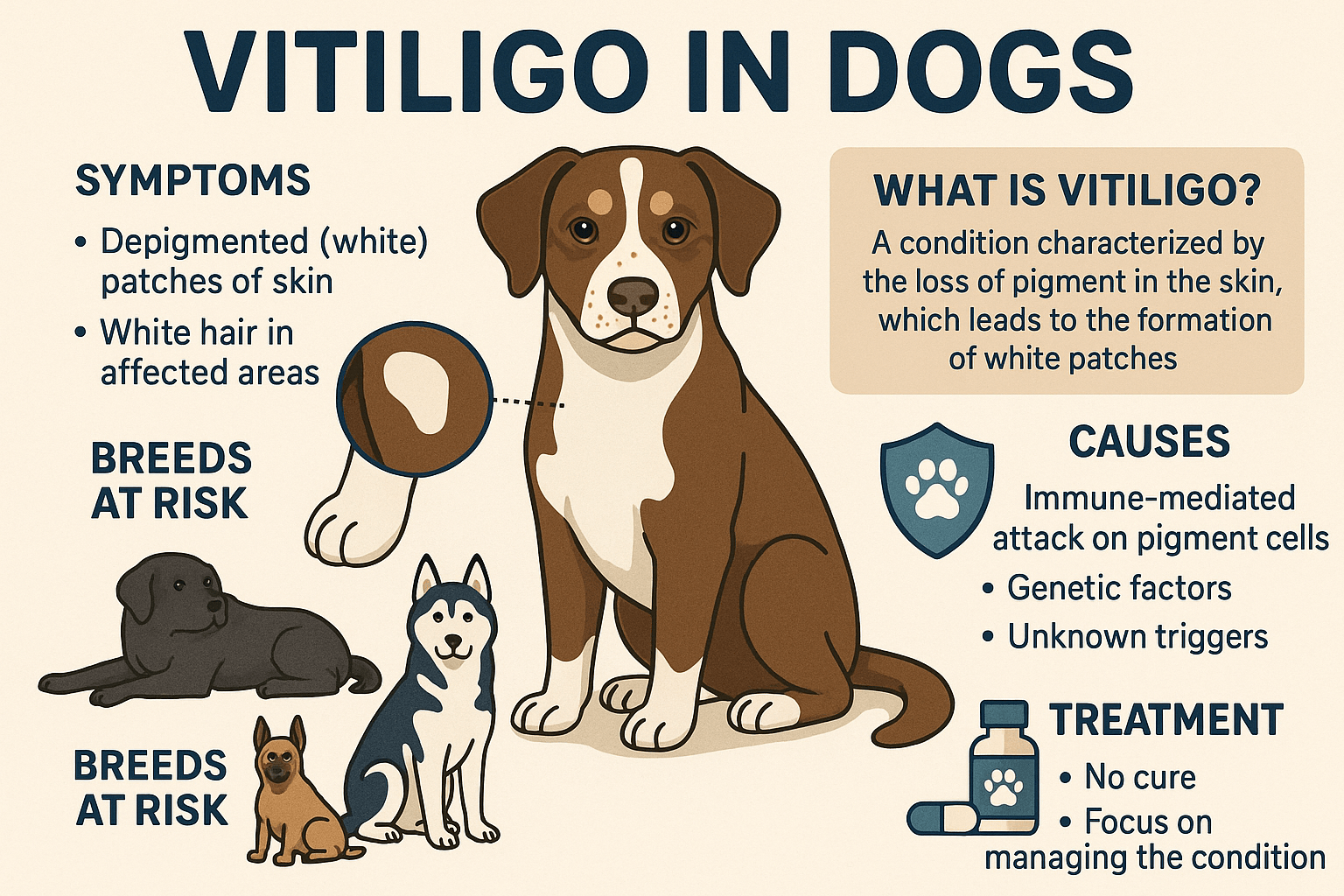
Vitiligo is a condition that affects the pigmentation of a dog’s skin, leading to patches of depigmented or white fur. While it may raise concerns for pet owners, vitiligo is generally harmless and not painful for dogs. This unique condition occurs when melanin-producing cells (melanocytes) stop functioning properly, resulting in a loss of color. Understanding vitiligo in dogs can help you recognize its signs, manage its progression, and ensure your furry friend remains happy and healthy. In this blog post, we’ll explore the causes, symptoms, and treatment options for vitiligo, as well as tips for supporting your dog through this change.
Common Symptoms of Vitiligo in Dogs
Recognizing the signs of vitiligo is the first step in understanding whether your dog is experiencing this condition. These symptoms typically develop gradually and are purely cosmetic, posing no threat to your dog’s overall health.
White Patches on the Skin:
The most noticeable symptom is the appearance of white or light-colored patches on the skin, often starting around the face, nose, or paws.Loss of Fur Pigmentation:
Areas affected by vitiligo may also show a change in fur color, turning white or gray in patches.Symmetrical Patterns:
In some cases, vitiligo appears symmetrically on both sides of the body, such as on both ears or legs.No Itching or Irritation:
Unlike other skin conditions, vitiligo does not cause itching, redness, or discomfort for your dog.Progressive Changes:
The depigmentation may spread over time, but the rate of progression varies from dog to dog.
By identifying these symptoms early, you can rule out other potential skin issues and focus on managing vitiligo effectively.
Potential Causes of Vitiligo in Dogs
While the exact cause of vitiligo in dogs is not always clear, several factors are believed to contribute to this condition. Understanding these causes can provide insight into why your dog may be experiencing changes in their pigmentation.
Genetic Predisposition:
Certain breeds, such as Rottweilers, German Shepherds, and Dachshunds, are more prone to developing vitiligo due to genetic factors.Autoimmune Disorders:
In some cases, vitiligo results from an autoimmune response where the body attacks its own melanocytes.Stress or Trauma:
Physical or emotional stress, including injuries or significant life changes, may trigger vitiligo in susceptible dogs.Environmental Factors:
Exposure to toxins or harsh chemicals can sometimes play a role in disrupting pigmentation.Age-Related Changes:
Older dogs may experience pigment changes as part of the natural aging process, though this is distinct from true vitiligo.
While the causes vary, vitiligo is generally considered a benign condition that does not require aggressive treatment.
Check this guide 👉Worm Under Dog Skin: Best 7 Expert Tips!
Check this guide 👉How to Apply Coconut Oil to Dog Skin: Best 7 Expert Tips!
Check this guide 👉Black Skin Disease in Dogs: Best 7 Expert Tips!
Breeds Prone to Vitiligo | Signs Your Dog May Have Vitiligo |
|---|---|
Rottweilers | White patches on the nose or face |
German Shepherds | Loss of fur pigmentation |
Dachshunds | Symmetrical depigmentation patterns |
Belgian Tervurens | No itching or irritation |
Siberian Huskies | Gradual progression of color changes |
Managing Vitiligo in Dogs: Tips for Owners
While vitiligo itself is not harmful, there are steps you can take to support your dog and monitor their condition effectively. Here are some practical tips for managing vitiligo at home.
Regular Skin Checks:
Examine your dog’s skin regularly to track any changes in pigmentation and ensure no secondary issues arise.Protect Sensitive Skin:
Depigmented areas may be more sensitive to sun exposure. Use pet-safe sunscreen to protect your dog’s skin during outdoor activities.Maintain a Healthy Diet:
A balanced diet rich in vitamins and antioxidants can support overall skin and coat health, even if it doesn’t reverse vitiligo.Consult Your Veterinarian:
If you notice rapid or unusual changes, consult your vet to rule out other underlying conditions like allergies or infections.Embrace Their Unique Appearance:
Vitiligo gives your dog a distinctive look—celebrate their individuality and reassure them with love and attention.
With proper care and monitoring, your dog can live comfortably despite vitiligo.
When to See a Veterinarian About Vitiligo
While vitiligo is typically harmless, certain situations warrant a visit to the veterinarian to ensure your dog’s health isn’t compromised. Here’s when you should seek professional advice.
Rapid Spread of Depigmentation:
If the white patches spread quickly or cover large areas, it’s worth consulting your vet to rule out other causes.Itching or Redness:
True vitiligo doesn’t cause irritation, so itching or redness may indicate an unrelated skin condition requiring treatment.Behavioral Changes:
If your dog seems unusually lethargic or unwell alongside changes in pigmentation, a vet visit is essential.Other Symptoms Present:
Hair loss, scabs, or flaky skin accompanying vitiligo-like symptoms could signal an infection or allergy.Concerns About Underlying Conditions:
If you’re worried about autoimmune diseases or other systemic issues, your vet can perform tests to provide clarity.
A professional evaluation ensures peace of mind and helps address any additional concerns about your dog’s health.
Breeds Commonly Affected by Vitiligo
Certain dog breeds are more likely to develop vitiligo due to genetic predispositions. Knowing which breeds are prone to this condition can help owners recognize and address it early.
Rottweilers:
Known for their striking black-and-tan coats, Rottweilers often experience vitiligo around the face and nose.German Shepherds:
This breed may develop depigmentation on their ears, paws, or tail.Dachshunds:
Dachshunds frequently exhibit vitiligo on their noses and muzzles.Belgian Tervurens:
These active herding dogs sometimes show symmetrical patches of depigmentation.Siberian Huskies:
Huskies may experience pigment changes in their facial markings as they age.
Understanding breed-specific tendencies can aid in early detection and management of vitiligo.
How Vitiligo Differs from Other Skin Conditions
It’s important to differentiate vitiligo from other skin issues that may present similar symptoms. Misdiagnosis can lead to unnecessary treatments, so here’s how vitiligo stands apart.
No Itching or Pain:
Unlike allergies or infections, vitiligo does not cause itching, redness, or discomfort.Purely Cosmetic Changes:
Vitiligo only affects pigmentation and does not harm the skin or fur structure.Gradual Progression:
Most cases of vitiligo develop slowly over time, unlike sudden reactions seen in allergic responses.No Crusting or Scabbing:
Conditions like mange or ringworm often cause crusting or scabs, which are absent in vitiligo.Breed-Specific Patterns:
Vitiligo tends to occur in specific breeds and follow predictable patterns, unlike random skin irritations.
By understanding these differences, you can better identify and manage vitiligo in your dog.
Supporting Your Dog Emotionally During Vitiligo
While vitiligo is physically harmless, some dogs may feel self-conscious or act differently due to changes in their appearance. Supporting their emotional well-being is just as important as addressing their physical needs.
Reassurance Through Affection:
Spend extra time cuddling or playing with your dog to remind them they’re loved regardless of their appearance.Avoid Overlooking Behavioral Changes:
Monitor your dog for signs of anxiety or withdrawal, which may indicate emotional distress.Positive Reinforcement:
Reward your dog with treats, praise, or toys to reinforce confidence and happiness.Maintain Routine:
Keeping a consistent daily routine provides stability and reassurance during times of change.Socialization Opportunities:
Allow your dog to interact with other pets and people to boost their mood and confidence.
By focusing on emotional support, you can ensure your dog feels secure and valued throughout their journey with vitiligo.
Frequently Asked Questions About Vitiligo in Dogs
Is vitiligo painful for dogs?
No, vitiligo is purely cosmetic and does not cause pain or discomfort for dogs.
Can vitiligo be cured?
Unfortunately, there is no cure for vitiligo, but it is manageable and does not affect your dog’s quality of life.
Does vitiligo spread quickly?
The rate of spread varies; some dogs experience slow progression, while others see faster changes.
Can diet improve vitiligo?
While diet won’t reverse vitiligo, a nutritious diet supports overall skin and coat health.
Should I avoid sunlight for my dog with vitiligo?
Moderate sun exposure is fine, but protect depigmented areas with pet-safe sunscreen to prevent sunburn.
Celebrating Your Dog’s Unique Beauty
Vitiligo in dogs may change their appearance, but it doesn’t diminish their charm or vitality. By understanding the condition and taking proactive steps to care for your dog, you can ensure they remain healthy and happy despite their changing pigmentation. Embrace your dog’s individuality and continue to shower them with love—they’re still the same loyal companion who brings joy to your life every day. With knowledge and compassion, you can navigate vitiligo confidently and celebrate the beauty of your one-of-a-kind pup.
Pemphigus Erythematosus in Cats: Best 7 Expert Tips! – Learn to recognize symptoms, manage flare-ups, and improve your cat’s quality of life.
Pemphigus Erythematosus in Dogs: Best 7 Expert Tips! – Discover causes, symptoms, and treatment options to manage this autoimmune skin condition effectively.
Cat Tympanic Membrane: Best 7 Expert Tips! – Learn how to protect your cat’s eardrum, spot issues early, and ensure lifelong auditory health.
Dog Tympanic Membrane: Best 7 Expert Tips! – Learn how to protect your dog’s eardrum, spot issues early, and ensure lifelong ear health with expert advice.


