
Understanding the Akbash Dog: Best 7 Expert Tips!
Originating from the rugged landscapes of Turkey, the Akbash dog is a majestic, white-coated guardian bred for centuries to protect livestock from predators. Known for its intelligence, independence, and unwavering loyalty, this ancient breed combines grace with formidable protective instincts. While not as common in urban homes, the Akbash thrives in spacious, rural environments where its natural talents shine. Whether you’re considering adoption or simply curious about this noble breed, understanding its core traits is essential. With the right approach, the Akbash can be a devoted and serene companion for experienced dog owners.
Origins and History of the Akbash Dog
The Akbash dog’s lineage stretches back thousands of years in western Turkey, where shepherds relied on its vigilance to safeguard flocks from wolves and bears. Bred for both brains and bravery, this livestock guardian evolved to work autonomously—a trait that still defines the breed today. Its development remained remarkably pure due to geographic isolation and strict functional demands. Here’s a closer look at its rich heritage:
- Ancient Anatolian Roots:
Archaeological and genetic evidence suggests the Akbash is among Turkey’s oldest native breeds, possibly descending from mastiff-type dogs of Central Asia. - Purpose-Bred for Protection:
Unlike herding dogs, Akbash dogs were never meant to move livestock—they were selected to stand their ground and deter threats silently and decisively. - Distinct from the Kangal:
Though often confused, the Akbash is leaner, taller, and more agile than the Kangal, with a signature white coat and almond-shaped eyes that convey alertness. - Name Meaning “White Head”:
“Akbash” (pronounced “AHK-bosh”) translates literally from Turkish, reflecting the breed’s defining snowy appearance and clean, noble expression. - Rare Outside Turkey Until Recently:
International interest grew in the 1980s, leading to breed recognition in the U.S. and Europe, though it remains uncommon and primarily used in working roles.
This deep historical background explains why the Akbash thinks and behaves so differently from typical companion breeds—it was never designed to follow commands blindly, but to make life-or-death decisions alone.
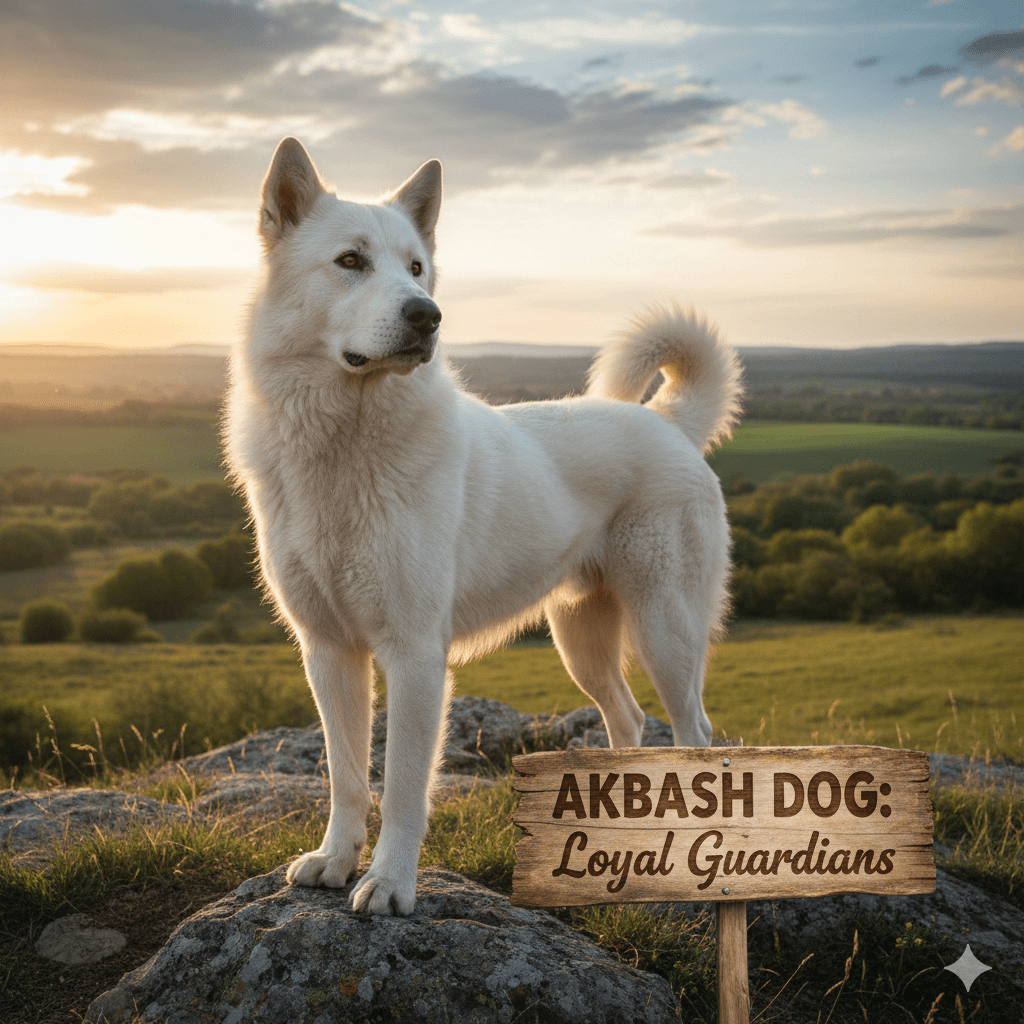
Distinctive Physical Traits
The Akbash’s appearance is both striking and functional, shaped by centuries of natural and human selection for survival in harsh terrain. Its all-white coat isn’t just beautiful—it helps shepherds distinguish the dog from predators at night. Every physical feature serves a purpose, from speed to endurance to silent movement:
- Large, Athletic Build:
Males stand 30–34 inches tall and weigh 90–130 lbs; females are slightly smaller but equally powerful, built for stamina over bursts of speed. - Pure White Double Coat:
The weather-resistant coat comes in both short and medium lengths, shedding heavily seasonally but requiring minimal grooming otherwise. - Elegant, Wedge-Shaped Head:
With a slightly domed skull and moderate stop, the head balances strength and refinement, avoiding the bulk seen in molosser breeds. - Dark, Almond-Shaped Eyes:
Typically light brown to hazel, the eyes convey intelligence and calm—never aggression—and are rimmed with dark pigment for sun protection. - Low-Set, Hanging Tail:
The tail reaches the hock and curls slightly when alert, acting as both counterbalance during sharp turns and a communication tool.
These traits combine to create a dog that is both imposing to predators and graceful in motion—true form following function.
Check this guide 👉Understanding Dominican Dog Breeds: Best 7 Expert Tips!
Check this guide 👉Cuban Dog Breeds: Best 7 Expert Tips!
Check this guide 👉Understanding Dominican Dog Breeds: Best 7 Expert Tips!
Temperament Highlights | Care Considerations |
|---|---|
Deeply loyal to family | Needs large, securely fenced acreage |
Naturally suspicious of strangers | Early socialization is non-negotiable |
Independent thinker | Not suited for obedience-only training |
Calm and quiet indoors | Prone to boredom (and digging) in small yards |
Protective without aggression | Requires experienced handler |
Training and Socialization Needs
Training an Akbash demands patience, consistency, and deep respect for its guardian instincts. This is not a breed that thrives on repetitive drills or harsh corrections; instead, it responds to confident, calm leadership and purpose-driven activities. Because of its independent nature, early and ongoing socialization is critical to prevent overprotectiveness:
- Start Socialization Early:
Expose your Akbash puppy to diverse people, sounds, animals, and environments before 16 weeks to build confidence and reduce fear-based reactions. - Use Positive, Respectful Methods:
Harsh punishment backfires with this sensitive breed—reward cooperation with praise, play, or food, and avoid dominance-based techniques. - Focus on Real-Life Scenarios:
Teach your dog how to behave around visitors, delivery people, or livestock through controlled, repeated practice—not just sit/stay in isolation. - Manage, Don’t Suppress, Instincts:
Rather than trying to eliminate guarding behavior, channel it appropriately—e.g., teach a “quiet” command instead of punishing barking. - Consistency Across All Family Members:
Mixed signals confuse the Akbash; ensure everyone uses the same commands and boundaries to build trust and clarity.
With thoughtful guidance, the Akbash becomes a discerning, reliable guardian who knows when to act—and when to rest.
Exercise and Mental Stimulation
Despite its calm demeanor at home, the Akbash is a high-endurance working dog that needs both physical outlet and mental engagement. Boredom can lead to fence-jumping, digging, or excessive vocalization—signs of an underutilized mind and body:
- Daily Long Walks or Property Patrols:
Aim for 60–90 minutes of activity daily, ideally off-leash in a safe area or on a long line where the dog can roam and scan. - Livestock Guardianship (Ideal Outlet):
If you have livestock, the Akbash will thrive fulfilling its original role—patrolling, observing, and protecting with minimal direction. - Scent and Tracking Games:
Hide treats or toys and encourage your dog to find them, tapping into natural tracking instincts honed over generations. - Avoid High-Impact Dog Sports:
Agility or flyball may be too jarring for their large frame; instead, try barn hunt, nose work, or simple recall games in open fields. - Rotate Toys and Challenges:
Introduce new puzzles or chew items weekly to prevent monotony, especially if your dog spends time alone outdoors.
This breed doesn’t need frantic exercise—but it does need purpose, space, and variety to stay balanced.
Grooming and Health Considerations
The Akbash’s white coat is relatively low-maintenance but requires seasonal attention, and its large size brings specific health factors to monitor throughout life. Proactive care prevents common issues and ensures longevity—many Akbash dogs live 10–12 healthy years with proper support:
- Brush Weekly, Daily During Shedding:
Use a slicker brush or undercoat rake in spring and fall when the dog “blows” its coat; otherwise, weekly brushing removes loose hair. - Check Ears and Eyes Regularly:
Their drop ears trap moisture (risk for infection), and light eyes can be sensitive to sun—watch for redness, discharge, or squinting. - Monitor for Hip and Elbow Dysplasia:
As with many large breeds, joint health is key; feed puppy-specific large-breed food and avoid excessive jumping until maturity. - Watch for Bloat (GDV):
Feed multiple small meals, avoid exercise right after eating, and learn the signs of this life-threatening emergency: restlessness, drooling, distended belly. - Use Sun Protection in Summer:
White coats offer little UV defense—apply pet-safe sunscreen to ears and nose if your dog spends long hours in direct sun.
Preventive vet visits, dental care, and parasite control round out a solid wellness plan for this hardy but not invincible breed.
Living With an Akbash: Ideal Home Environment
The Akbash is not a one-size-fits-all pet—it thrives only in specific living situations that honor its instincts, size, and independence. Urban apartments or small suburban yards are unsuitable; this dog needs room to roam, observe, and fulfill its innate role as a sentinel:
- Rural or Farm Settings Are Ideal:
With access to livestock or open land, the Akbash finds natural purpose and contentment, often choosing a high vantage point to survey its domain. - Secure Fencing Is Non-Negotiable:
A minimum 6-foot fence (preferably buried or with an inward lean) is essential—Akbash dogs can easily clear lower barriers if they spot a “threat.” - Experienced, Calm Owners Only:
First-time dog owners may struggle with the breed’s autonomy; success requires someone who leads with quiet confidence, not force. - Not a High-Affection “Velcro” Dog:
While deeply bonded, the Akbash shows love through presence and vigilance—not constant cuddling or neediness. Respect its quiet dignity. - Compatibility with Other Pets Varies:
Raised with cats or dogs, it may tolerate them—but never assume it will accept unfamiliar animals, especially those that run or act erratically.
In the right environment, the Akbash is serene, trustworthy, and profoundly devoted—a silent guardian who asks for little but gives everything.
Why the Akbash Dog Stands Out Among Guardian Breeds
While many livestock guardian breeds share traits like loyalty and size, the Akbash possesses unique qualities that distinguish it from its peers—particularly in temperament, appearance, and working style. Its blend of speed, subtlety, and independence makes it especially effective in rugged, open terrain. For those comparing guardian breeds, these key differences often tip the scale:
- Lighter and More Agile Than Most Guardians:
Unlike heavier breeds like the Anatolian Shepherd or Caucasian Ovcharka, the Akbash is built for endurance and quick response, allowing it to cover large pastures efficiently. - Quieter Protective Style:
Rather than barking at every movement, the Akbash often uses silent observation and strategic positioning to deter predators—making it ideal for noise-sensitive rural areas. - Striking All-White Coat for Night Visibility:
The pure white fur isn’t just aesthetic—it helps farmers distinguish their dog from wolves or coyotes during nighttime patrols, a critical safety feature. - Stronger Prey Restraint with Livestock:
Bred specifically to live among sheep or goats without chasing them, the Akbash exhibits exceptional impulse control around herds it’s raised with. - Deep Independence Without Aggression:
While fiercely protective, the Akbash rarely displays unprovoked aggression—its defense is measured, intelligent, and based on real threat assessment.
These distinctions make the Akbash not just a guardian, but a thoughtful, strategic partner in livestock protection—one whose quiet vigilance speaks volumes.
„The Akbash Dog is loyal, gentle, and quietly affectionate with its own family, including children and family pets, but remains aloof and suspicious toward strangers.”
— United Kennel Club (UKC)
Frequently Asked Questions About the Akbash Dog
Is the Akbash dog aggressive?
No—it’s naturally reserved and protective, not aggressive. Proper socialization ensures it distinguishes real threats from everyday situations.
How much does an Akbash puppy cost?
Reputable breeders typically charge $1,000–$2,000, often requiring proof of secure fencing, livestock, or relevant experience.
Are Akbash dogs good with children?
They can be gentle with kids they’re raised alongside but may be aloof with strangers’ children due to protective instincts. Supervision is always advised.
Do Akbash dogs bark a lot?
They’re generally quiet unless alerting to something unusual—barking is purposeful, not nuisance-driven.
Can an Akbash live in an apartment?
No. This breed requires significant outdoor space and a job; confinement leads to frustration, destruction, or escape attempts.
Embracing the Noble Guardian Spirit
The Akbash dog is more than a pet—it’s a living piece of pastoral history, a silent sentinel whose loyalty runs as deep as its instincts. Choosing this breed isn’t a casual decision; it’s a commitment to understanding, respecting, and providing for a dog that thinks for itself and guards with its whole heart. In return, you gain a calm, courageous companion who blends seamlessly into the rhythm of rural life. Though rare and demanding, the Akbash rewards those who honor its nature with unwavering devotion and quiet dignity. For the right owner, there’s no greater honor than earning the trust of this ancient white guardian.

Is Rawhide Bad for Cats? Best 7 Expert Tips! – Discover the risks, safe alternatives, and expert advice to keep your feline friend healthy and happy.

Is Rawhide Bad for Dogs? Best 7 Expert Tips! – Discover the risks, benefits, and safer alternatives to rawhides for your dog’s chewing needs.

Understanding Anorexia in Cats: Best 7 Expert Tips! – Learn why cats stop eating, spot warning signs, and discover how to help your feline regain appetite safely.

Understanding Anorexia in Dogs: Best 7 Expert Tips! – Learn causes, symptoms, and solutions to help your dog regain appetite and stay healthy.