
Understanding Rapamycin for Dogs: Best 7 Expert Tips!
Rapamycin, once known only as an immunosuppressant, is now gaining attention in veterinary medicine for its potential anti-aging and longevity benefits in dogs. Originally used to prevent organ transplant rejection, emerging research suggests it may support heart health, cognitive function, and even extend healthy lifespan in canines. While promising, its use requires careful dosing, veterinary oversight, and a clear understanding of risks versus rewards. If you’ve heard about rapamycin for dogs and are curious whether it’s right for your furry companion, this guide offers science-backed insights and practical advice to help you make informed decisions.
Origins and Scientific Background of Rapamycin
Rapamycin—also known as sirolimus—was first discovered in soil bacteria on Easter Island (Rapa Nui) in the 1970s. Initially developed to prevent kidney transplant rejection in humans, it later revealed surprising effects on cellular aging pathways. In dogs, early studies led by institutions like the University of Washington’s Dog Aging Project have sparked interest in its role beyond immunosuppression.
- Discovery and Early Use:
Isolated from Streptomyces hygroscopicus in 1972, rapamycin was first used clinically in humans to suppress immune response after transplants. - Link to Longevity Research:
Scientists found rapamycin activates the mTOR pathway—a key regulator of cell growth, metabolism, and aging—leading to interest in lifespan extension. - Canine Clinical Trials Begin:
The Dog Aging Project launched the first large-scale trial in 2015, testing low-dose rapamycin in healthy dogs to assess heart function and mobility improvements. - Shift from Immunosuppressant to Geroprotector:
At low, intermittent doses, rapamycin appears to support health without significant immune suppression—redefining its therapeutic potential. - Growing Veterinary Interest:
While not yet FDA-approved for anti-aging use in dogs, many veterinarians now consider it an emerging tool for senior dog wellness under strict protocols.
Though still in the research phase for longevity, rapamycin’s journey from soil sample to potential “healthspan” enhancer represents a fascinating frontier in veterinary science.
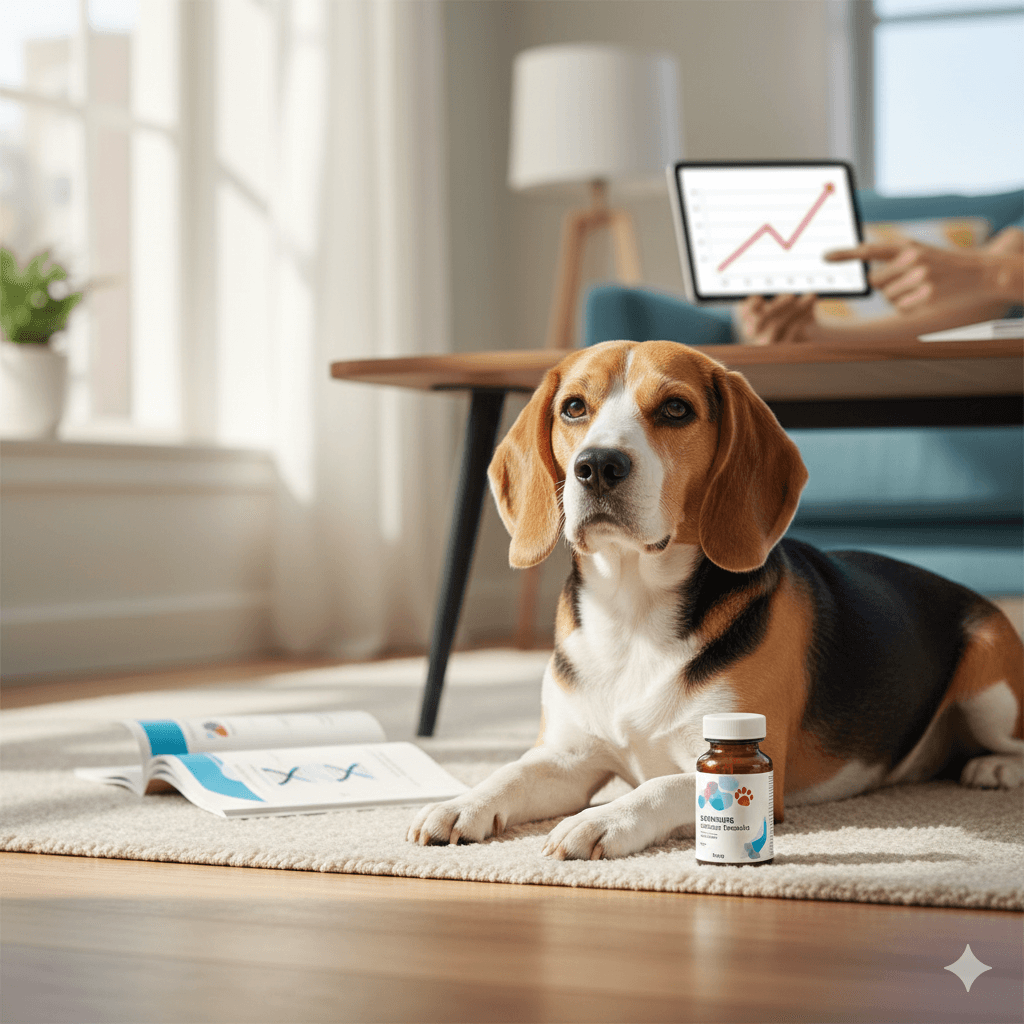
How Rapamycin Works in a Dog’s Body
Rapamycin exerts its effects primarily by modulating the mTOR (mechanistic target of rapamycin) pathway, which influences how cells respond to nutrients, stress, and growth signals. In dogs, this can translate to measurable improvements in organ function and resilience—especially in aging individuals.
- mTOR Pathway Inhibition:
By gently inhibiting mTOR, rapamycin mimics aspects of caloric restriction, a known longevity trigger, without requiring diet changes. - Improved Cardiac Function:
Studies show dogs on low-dose rapamycin often exhibit better heart contractility and reduced age-related heart stiffness. - Enhanced Cellular Cleanup (Autophagy):
Rapamycin boosts autophagy—the process by which cells remove damaged components—potentially slowing age-related decline. - Anti-Inflammatory Effects:
Chronic inflammation drives many age-related diseases; rapamycin helps modulate immune responses to reduce this “inflammaging.” - Neuroprotective Potential:
Early data suggest possible cognitive benefits, including better memory and reduced brain inflammation in older dogs.
These mechanisms don’t reverse aging—but they may help dogs stay healthier, more active, and more comfortable in their golden years.
Check this guide 👉Understanding Pemphigus in Dogs: Best 7 Expert Tips!
Check this guide 👉Understanding Coccidia in Dogs: Best 7 Expert Tips!
Check this guide 👉Mitral Valve Disease in Dogs: Best 7 Expert Tips!
Potential Benefits | Important Considerations |
|---|---|
Supports heart health in senior dogs | Must be dosed precisely—too high causes side effects |
May improve mobility and energy | Requires veterinary supervision and blood monitoring |
Enhances cellular repair processes | Not recommended for dogs with active infections |
Shows promise for cognitive aging | Effects are subtle and build over months |
Low-dose protocols are generally safe | Not a substitute for diet, exercise, or preventive care |
Common Uses of Rapamycin in Veterinary Practice
While rapamycin’s anti-aging use is still considered off-label, veterinarians increasingly apply it in specific clinical contexts—always with informed owner consent and tailored protocols.
- Cardiac Support in Aging Dogs:
Used to improve heart function in dogs with early signs of age-related cardiac decline, even without diagnosed heart disease. - Cancer Adjunct Therapy:
Some oncologists use rapamycin alongside conventional treatments to target tumor growth pathways, though evidence is still evolving. - Immune-Mediated Conditions:
At higher doses (less common now), it can suppress overactive immune responses in diseases like pemphigus or severe allergies. - Longevity and Healthspan Optimization:
In otherwise healthy senior dogs, low-dose rapamycin is explored as a preventive strategy to delay age-related decline. - Research Participation:
Many dogs receive rapamycin through structured studies like the Dog Aging Project, contributing valuable data to the field.
Its application is highly individualized—never a one-size-fits-all solution, but a carefully calibrated tool in integrative veterinary care.
Dosage, Administration, and Safety Protocols
Getting rapamycin right for dogs hinges on precision. Unlike supplements, it’s a potent compound where small dosing errors can lead to side effects. Most protocols use microgram-per-kilogram calculations and intermittent schedules (e.g., once weekly).
- Low-Dose Regimens Are Standard:
Typical longevity doses range from 0.05 to 0.1 mg per kg, given orally once weekly—far below transplant-level dosing. - Compounded Formulations Preferred:
Liquid or capsule forms from veterinary compounding pharmacies ensure accurate, dog-friendly dosing. - Fasting May Enhance Absorption:
Some vets recommend giving rapamycin on an empty stomach for better bioavailability, though this varies by formulation. - Blood Monitoring Recommended:
Periodic checks of liver enzymes, kidney values, and white blood cell counts help catch rare adverse effects early. - Never Self-Prescribe:
Human rapamycin tablets are not appropriate for dogs due to fillers, dosing inaccuracies, and lack of veterinary oversight.
When used correctly under guidance, rapamycin has shown an excellent safety profile in dogs over multiple years of observation.
Potential Side Effects and Risk Mitigation
While low-dose rapamycin is generally well-tolerated, side effects can occur—especially if dosing is too aggressive or the dog has underlying health issues. Vigilance and communication with your vet are essential.
- Gastrointestinal Upset:
Mild vomiting or soft stool may occur initially but often resolves as the dog adjusts; giving with a small bite of food can help. - Mouth Sores (Rare):
Oral ulcers are uncommon at low doses but warrant immediate dose pause and vet consultation if they appear. - Increased Infection Risk (at High Doses):
Immunosuppression is dose-dependent—low intermittent dosing in healthy dogs rarely causes this, but caution is needed in sick pets. - Lethargy or Appetite Changes:
Temporary dip in energy or interest in food may occur; persistent changes require evaluation. - Drug Interactions:
Rapamycin interacts with antifungals, certain antibiotics, and seizure meds—always disclose all medications to your vet.
Most side effects are mild and reversible—highlighting why starting low, going slow, and maintaining vet communication are critical.
Who Should (and Shouldn’t) Consider Rapamycin for Their Dog
Rapamycin isn’t for every dog. Ideal candidates are typically healthy seniors with no major active illnesses, while others should avoid it altogether. A thorough vet assessment is the essential first step.
- Ideal Candidates:
Healthy dogs over age 7 with good organ function, interested owners, and no history of serious immune or metabolic disease. - Not Recommended for Puppies or Young Adults:
mTOR plays vital roles in growth and development—rapamycin is inappropriate during these life stages. - Caution with Chronic Conditions:
Dogs with diabetes, active cancer, kidney disease, or ongoing infections may face higher risks and need case-by-case evaluation. - Requires Committed Ownership:
Success depends on consistent dosing, follow-up visits, and willingness to monitor for subtle changes. - Not a Magic Pill:
Rapamycin works best alongside excellent nutrition, mental stimulation, preventive care, and loving attention.
Choosing rapamycin should be a collaborative decision—one rooted in science, compassion, and realistic expectations.
What Current Research Says—and What’s Still Unknown
The science behind rapamycin in dogs is promising but still unfolding. While early results are encouraging, long-term data and large-scale outcomes are needed to fully understand its role in canine health.
- Dog Aging Project Findings:
Initial trials showed improved heart function and activity levels after just 10 weeks of low-dose rapamycin, with no serious adverse events. - Ongoing Longevity Studies:
Researchers are now tracking dogs over years to see if rapamycin delays onset of age-related diseases or extends healthy lifespan. - Limited Data on Cognitive Effects:
Anecdotal reports suggest sharper behavior in senior dogs, but controlled studies on dementia or cognitive decline are still pending. - Unknown Long-Term Immune Impact:
Even at low doses, the cumulative effect on immune surveillance over a decade remains under investigation. - Need for Standardized Protocols:
Dosage, frequency, and formulation aren’t yet universally agreed upon—highlighting the need for vet-guided use.
Science moves carefully for good reason: to ensure that hope doesn’t outpace evidence when your dog’s well-being is at stake.
Frequently Asked Questions About Rapamycin for Dogs
Is rapamycin approved by the FDA for use in dogs?
No—it’s FDA-approved for human transplant patients, but its use in dogs for longevity or heart support is considered off-label and research-based.
How soon will I see results in my dog?
Subtle improvements in energy or mobility may appear in 4–8 weeks, but full benefits can take several months of consistent use.
Can I buy rapamycin online for my dog?
Never use human formulations or unregulated sources. Only veterinary-compounded rapamycin, prescribed by a licensed vet, should be used.
Does rapamycin extend a dog’s lifespan?
While it may extend “healthspan” (years of healthy life), definitive proof of lifespan extension in dogs is still being studied.
Are there natural alternatives to rapamycin?
Some supplements (like resveratrol or spermidine) also influence mTOR, but none replicate rapamycin’s potency or research backing in dogs.
Supporting Your Dog’s Golden Years with Wisdom and Care
Rapamycin represents more than a molecule—it’s a symbol of how far veterinary science has come in reimagining aging itself. While it’s not a fountain of youth, it offers a scientifically grounded way to help our dogs live not just longer, but better. The key lies in balance: embracing innovation without abandoning fundamentals like nutrition, movement, and emotional connection. If you’re considering rapamycin, do so with eyes wide open, a trusted veterinarian by your side, and your dog’s unique needs at the center. After all, the greatest gift we can give our aging companions isn’t just more time—but more good days filled with comfort, joy, and wagging tails.

Is Rawhide Bad for Cats? Best 7 Expert Tips! – Discover the risks, safe alternatives, and expert advice to keep your feline friend healthy and happy.

Is Rawhide Bad for Dogs? Best 7 Expert Tips! – Discover the risks, benefits, and safer alternatives to rawhides for your dog’s chewing needs.

Understanding Anorexia in Cats: Best 7 Expert Tips! – Learn why cats stop eating, spot warning signs, and discover how to help your feline regain appetite safely.

Understanding Anorexia in Dogs: Best 7 Expert Tips! – Learn causes, symptoms, and solutions to help your dog regain appetite and stay healthy.