
Understanding Dominican Dog Breeds
The Dominican Republic may not be widely known for producing globally recognized purebred dogs, but its canine companions reflect a rich blend of history, resilience, and local adaptation. From street-savvy village dogs to rare native types, Dominican dogs often embody strength, loyalty, and warmth shaped by island life. While the country lacks officially standardized native breeds recognized by major kennel clubs, several distinct landraces and regional types have evolved over centuries. Exploring these dogs offers insight into cultural heritage, survival instincts, and the deep bond between Dominicans and their four-legged friends.
Historical Roots of Dogs in the Dominican Republic
Dogs have walked alongside people in the Dominican Republic since before the colonial era, evolving through a mix of indigenous, European, and Caribbean influences. Their development wasn’t driven by show rings or breed standards—but by function, climate, and community needs.
- Pre-Columbian Canine Presence:
Archaeological evidence suggests Indigenous Taíno people kept small, mute dogs called “Alcos,” used for warmth and possibly ritual purposes—though this lineage is now extinct. - Spanish Colonial Influence:
European settlers brought mastiffs, terriers, and herding dogs in the 15th–16th centuries, which interbred with local populations, shaping the foundation of today’s Dominican village dogs. - Caribbean Crossbreeding:
Trade and migration across the Greater Antilles led to genetic mixing with Cuban, Puerto Rican, and Haitian dogs, creating regionally adapted types with shared traits. - Role in Rural Life:
In the countryside, dogs served as hunters, livestock guardians, and night watchmen—traits that still appear in the temperament of many local dogs today. - Absence of Formal Breed Recognition:
Unlike Europe or North America, the DR never developed kennel clubs focused on standardizing native types, so most Dominican dogs remain unregistered landraces.
Though not “breeds” in the technical sense, these dogs represent a living cultural legacy shaped by necessity and environment.
Common Types of Dominican Village Dogs
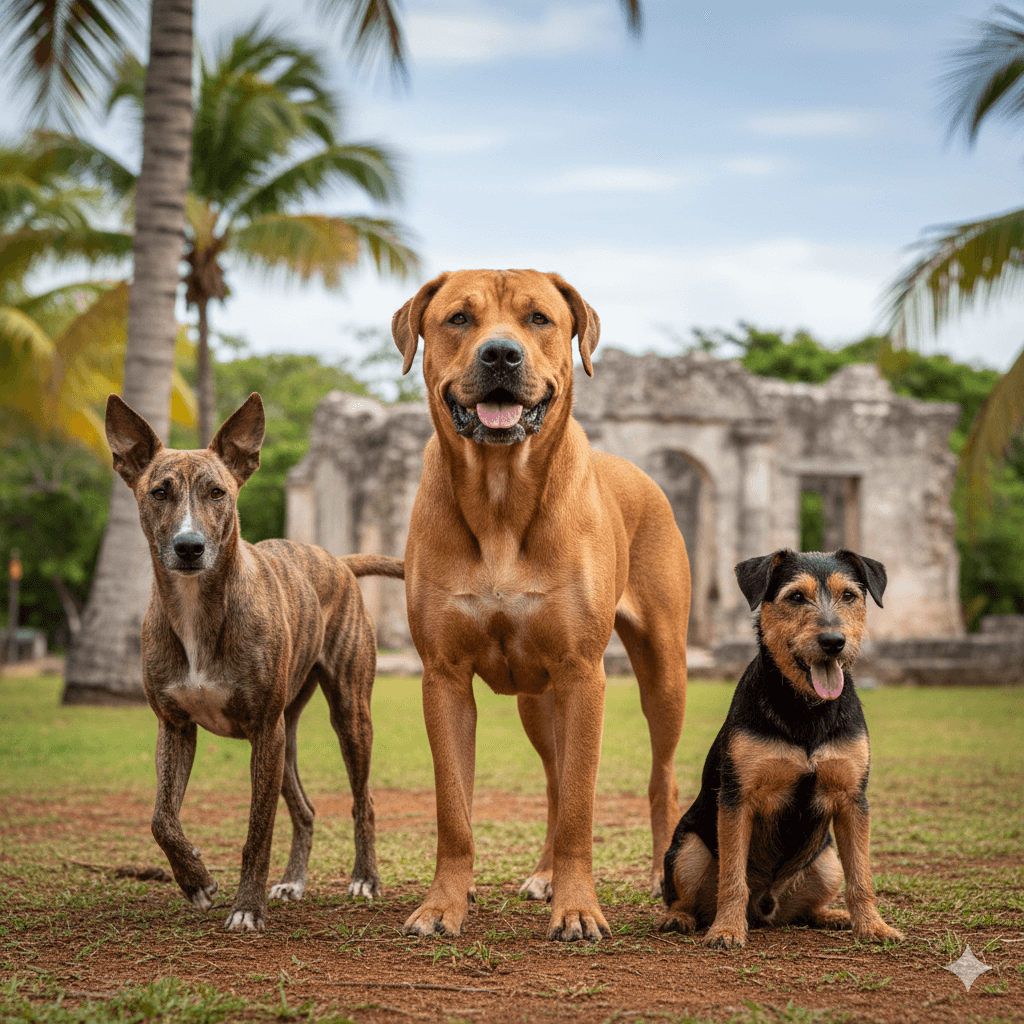
While not purebred, Dominican street and farm dogs often fall into recognizable physical and behavioral categories shaped by geography and ancestry. These landraces are intelligent, hardy, and uniquely suited to island living.
- The “Perro Fino” (Fine Dog):
Sleek, agile, and alert—often medium-sized with short coats, pointy ears, and a lean build. Used for hunting small game and guarding homes in rural areas. - The “Perro de Pelea” (Historical Fighting Type):
Though dog fighting is illegal and culturally declining, some muscular, broad-headed dogs with pit bull or bulldog ancestry persist—now mostly rehomed as loyal family companions. - Mountain Village Dogs:
Found in the Cordillera Central, these dogs tend to be thicker-coated, more reserved, and highly territorial—adapted to cooler highland climates and rugged terrain. - Beach and Coastal Dogs:
Leaner, lighter-colored, and heat-tolerant, these dogs roam coastal towns and fishing villages, often friendly and accustomed to human interaction. - Urban Street Dogs (Satos):
Resilient, clever, and social, Dominican “satos” navigate city life with remarkable adaptability—many are now rescued and rehomed locally and abroad.
These types aren’t breeds per se, but they reflect centuries of natural selection and human coexistence across the island’s diverse landscapes.
Check this guide 👉Nordic Dog Breeds: Best 7 Expert Tips!
Check this guide 👉African Dog Breeds: Best 7 Expert Tips!
Check this guide 👉Red Hound Dog Breeds: Best 7 Expert Tips!
Common Traits of Dominican Landraces | Key Care Considerations |
|---|---|
High intelligence and problem-solving skills | Need mental stimulation to prevent boredom |
Natural disease resistance from street life | Still require vaccines, deworming, and vet care |
Strong bond with chosen humans | Benefit from early socialization and trust-building |
Moderate to high energy levels | Daily exercise prevents destructive behaviors |
Short to medium coat, low grooming needs | Check ears and paws regularly—prone to parasites in tropics |
Temperament and Behavior of Native Dominican Dogs
Dominican village dogs are known for their emotional intelligence and situational awareness. Their behavior often reflects generations of survival—but also deep loyalty to those who earn their trust.
- Loyal to Family, Wary of Strangers:
Many form intense bonds with one or two people and may be reserved or aloof with unfamiliar visitors—making them excellent watchdogs. - Highly Alert and Observant:
They notice subtle changes in routine, sounds, or body language, often barking to alert owners of anything unusual. - Independent Yet Affectionate:
While not clingy, they enjoy proximity—often sitting nearby or following their person from room to room without demanding constant attention. - Natural Hunters and Scavengers:
Their instincts remain strong; many will chase birds, lizards, or insects if off-leash in unsecured areas. - Resilient and Adaptable:
Having survived heat, limited food, and street hazards, they often adjust well to home life once given safety and consistency.
With patience and positive reinforcement, these dogs thrive as devoted, intuitive companions who read their humans with remarkable accuracy.
Health and Wellness of Dominican Landrace Dogs
Thanks to generations of natural selection, many Dominican village dogs possess robust immune systems and fewer inherited disorders than purebreds. However, they still face common tropical health challenges.
- Parasite Vulnerability:
Ticks, fleas, heartworm, and intestinal worms are prevalent—monthly prevention is essential, especially in humid regions. - Skin Infections from Humidity:
Hot, moist conditions can lead to yeast or bacterial dermatitis, particularly in skin folds or under the belly. - Dental Disease:
Like all dogs, they benefit from chew toys and occasional brushing—though many maintain decent dental health through scavenging and chewing. - Heat Sensitivity:
Despite acclimation, extreme midday heat can cause overheating; always provide shade and fresh water. - Vaccination Gaps:
Many street dogs lack core vaccines (rabies, distemper, parvo); rescued dogs should be fully vaccinated upon adoption.
Proactive, preventive care dramatically improves lifespan—many healthy Dominican dogs live 12–16 years with proper support.
Adoption and Ethical Considerations
Adopting a Dominican village dog—whether locally or through international rescue—is deeply rewarding but requires cultural and ethical awareness.
- Support Local Shelters:
Groups like Patitas de la Calle and Sato Project DR rescue, rehabilitate, and rehome street dogs with compassion and medical care. - Avoid “Voluntourism” Pitfalls:
Short-term volunteering can disrupt dog routines; long-term support or donations often help more than brief visits. - Understand the “Sato” Identity:
“Sato” is a cultural term—not derogatory in context—but these dogs deserve dignity, not pity. They’re survivors, not victims. - Prepare for Behavioral Nuances:
Many have never walked on a leash or been inside a house; patience during transition is key to building trust. - Spay/Neuter Advocacy:
Overpopulation remains a challenge; supporting or participating in spay/neuter clinics helps reduce future street dog suffering.
Choosing to adopt a Dominican dog means honoring its history while giving it a new chapter built on safety and respect.
Dietary Needs and Feeding Guidelines for Dominican Dogs
Whether you’ve adopted a rescued “sato” or live with a rural village dog in the Dominican Republic, nutrition plays a vital role in restoring health and maintaining energy. These dogs often come from inconsistent feeding backgrounds, so a thoughtful diet can make a profound difference in their coat, digestion, and overall vitality.
- High-Quality Protein Is Essential:
Choose foods with real meat as the first ingredient to support lean muscle, especially important for active or recovering dogs. - Avoid Sudden Diet Changes:
Their digestive systems may be sensitive; transition to new food gradually over 5–7 days to prevent upset. - Limit Table Scraps and Local Street Food:
While common in local culture, human food like fried snacks or seasoned meats can cause pancreatitis or obesity. - Hydration in Tropical Climates:
Fresh, clean water must be available at all times—heat and humidity increase fluid loss significantly. - Consider Probiotics for Gut Health:
Many rescued dogs have imbalanced gut flora; a vet-approved probiotic can ease digestion and improve stool quality.
A balanced, consistent diet not only fuels daily life but also signals safety and stability to a dog learning to trust again.
Behavioral Training and Trust-Building Strategies
Dominican landrace dogs are intelligent and observant, but many lack early socialization or basic obedience exposure. Building trust comes before formal commands—and patience is your most powerful tool.
- Use Positive, Reward-Based Methods:
Harsh corrections shut down learning; instead, reward calm behavior with treats, soft praise, or gentle petting. - Start with Basic Cues Like “Sit” and “Stay”:
These build confidence and create a shared language between you and your dog. - Respect Their Past Trauma:
A dog that flinches at raised hands or loud voices needs time—never force interaction or punish fear-based reactions. - Create Predictable Routines:
Feeding, walks, and quiet time at consistent hours help your dog feel secure in their new environment. - Leash Training Takes Patience:
Many street dogs have never worn a collar; begin indoors with a harness and short, positive sessions to build comfort.
With empathy and consistency, even the most guarded Dominican dog can blossom into a joyful, responsive companion.
Frequently Asked Questions About Dominican Dog Breeds
Are there any officially recognized Dominican dog breeds?
No—there are no native Dominican breeds formally recognized by major kennel clubs like the AKC or FCI, though distinct landrace types exist.
What does “sato” mean in the Dominican Republic?
“Sato” is the local term for a mixed-breed street dog—often used with affection and cultural familiarity, not as an insult.
Can I adopt a Dominican dog and bring it abroad?
Yes—many rescues facilitate international adoptions, but strict health, vaccination, and quarantine rules apply depending on your country.
Do Dominican village dogs get along with children?
Many do, especially if raised with respectful, calm kids—but early socialization and supervised interactions are essential.
Are Dominican dogs hypoallergenic?
No dog is truly hypoallergenic, but most Dominican landraces have short coats and moderate shedding, which some allergy sufferers tolerate well.
Celebrating the Spirit of the Dominican Canine
Dominican dogs may not wear ribbons or pedigree papers, but they carry something far more valuable: the quiet dignity of survival, the spark of street-smart intelligence, and the deep capacity for love when given a second chance. Whether guarding a hillside farm, napping in a Santo Domingo doorway, or curled up in a forever home abroad, these dogs embody the soul of the island—resilient, warm, and impossible to ignore. By understanding, respecting, and supporting them, we honor not just their legacy, but the timeless bond between humans and dogs in one of the Caribbean’s most vibrant cultures.

Is Rawhide Bad for Cats? Best 7 Expert Tips! – Discover the risks, safe alternatives, and expert advice to keep your feline friend healthy and happy.

Is Rawhide Bad for Dogs? Best 7 Expert Tips! – Discover the risks, benefits, and safer alternatives to rawhides for your dog’s chewing needs.

Understanding Anorexia in Cats: Best 7 Expert Tips! – Learn why cats stop eating, spot warning signs, and discover how to help your feline regain appetite safely.

Understanding Anorexia in Dogs: Best 7 Expert Tips! – Learn causes, symptoms, and solutions to help your dog regain appetite and stay healthy.