
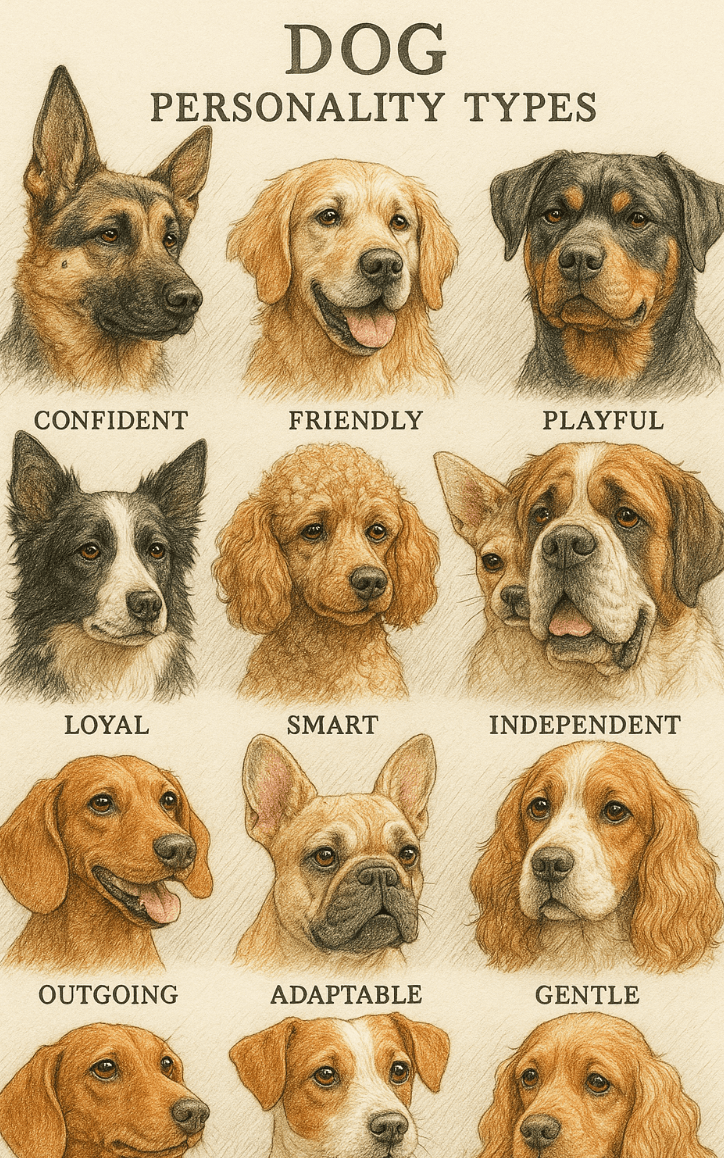

Understanding Dog Personality Types
Just like humans, dogs have unique personalities that shape how they interact with the world and their human companions. Understanding your dog’s personality type can help you build a stronger bond, tailor training methods, and ensure their emotional and physical needs are met. From playful and energetic pups to calm and independent souls, every dog has a distinct temperament influenced by breed traits, upbringing, and individual quirks. In this blog post, we’ll explore the fascinating world of dog personality types, offering insights into how to identify and nurture your furry friend’s unique character.
Common Dog Personality Types
While every dog is an individual, certain personality types tend to emerge across breeds and temperaments. Recognizing these categories can help you better understand your dog’s behavior and preferences.
The Playful Pup:
Always ready for a game or adventure, this type thrives on interaction and fun activities. They’re great companions for active families.The Loyal Guardian:
Protective and watchful, these dogs prioritize their family’s safety and often excel as watchdogs or service animals.The Social Butterfly:
Outgoing and friendly, this type loves meeting new people and pets, making them perfect for social households.The Independent Thinker:
Self-reliant and sometimes stubborn, these dogs value their alone time but form deep bonds with patient owners.The Gentle Soul:
Calm and affectionate, this type prefers quiet moments and gentle interactions, often excelling as therapy dogs.
Identifying your dog’s personality type allows you to cater to their specific needs and create a harmonious home environment.
How to Identify Your Dog’s Personality Type
Understanding your dog’s personality starts with observing their behaviors and reactions in different situations. Here are some key indicators to guide you.
Energy Levels:
High-energy dogs are often playful and need plenty of exercise, while low-energy dogs may prefer lounging around.Social Interactions:
Watch how your dog reacts to strangers, other animals, and new environments—this reveals whether they’re outgoing or reserved.Response to Training:
Eager learners typically enjoy pleasing their owners, while independent thinkers may require more patience and creativity during training.Comfort with Alone Time:
Some dogs handle solitude well, while others experience anxiety when left alone for extended periods.Play Preferences:
Does your dog love fetch, tug-of-war, or simply cuddling? Their favorite activities offer clues about their personality.
By paying attention to these behaviors, you’ll gain valuable insights into what makes your dog tick.
Check this guide 👉Kangal Dog Characteristics: Best 7 Expert Tips!
Check this guide 👉Why Does My Dog Always Look Sad? Best 7 Expert Tips!
Check this guide 👉Happy Dog Breeds: Best 7 Expert Tips!
Dog Personality Traits | Ideal Activities for Each Type |
|---|---|
Playful and energetic | Fetch, agility courses, long walks |
Protective and loyal | Guard duty simulations, obedience drills |
Social and friendly | Dog park visits, playdates, group walks |
Independent and self-reliant | Puzzle toys, solo exploration time |
Calm and affectionate | Cuddling, short strolls, relaxation |
Tailoring Training Methods to Personality Types
Different personality types respond best to specific training approaches. Adapting your techniques ensures effective learning and strengthens your bond with your dog.
For Playful Dogs:
Incorporate games and rewards to keep sessions engaging and fun.For Loyal Guardians:
Focus on commands related to protection and responsibility, such as “stay” or “alert.”For Social Butterflies:
Use group classes or involve friends and family to make training a social experience.For Independent Thinkers:
Offer choices and avoid repetitive tasks to maintain their interest and motivation.For Gentle Souls:
Keep sessions short and positive, using soft tones and gentle encouragement.
Customizing your approach helps each dog succeed at their own pace.
Challenges of Each Dog Personality Type
While every personality type has its strengths, they also come with unique challenges. Being aware of these potential hurdles allows you to address them proactively.
Playful Pups:
Their boundless energy can lead to destructive behavior if not properly channeled.Loyal Guardians:
Overprotectiveness may result in aggression toward strangers or other animals.Social Butterflies:
They may struggle with separation anxiety when left alone for too long.Independent Thinkers:
Stubbornness can make training difficult without consistent reinforcement.Gentle Souls:
Shyness or sensitivity can cause stress in loud or chaotic environments.
Recognizing these challenges empowers you to provide the support your dog needs to thrive.
Tips for Bonding with Different Personality Types
Building a strong connection with your dog requires adapting to their unique personality. These tips will help you strengthen your relationship regardless of their type.
For Playful Dogs:
Engage in high-energy games like fetch or frisbee to burn off steam and deepen trust.For Loyal Guardians:
Show appreciation for their protective instincts through praise and affection.For Social Butterflies:
Take them to dog-friendly events or invite friends over to satisfy their need for companionship.For Independent Thinkers:
Respect their need for space while offering occasional interactive toys to engage their curiosity.For Gentle Souls:
Spend quality time cuddling or reading nearby to create a sense of security and comfort.
Tailoring your interactions fosters a deeper connection with your dog.
Signs Your Dog’s Personality May Be Changing
A dog’s personality isn’t static—it can evolve due to age, health, or environmental changes. Here’s what to look out for.
Increased Anxiety:
Once-confident dogs may become fearful or clingy due to illness or traumatic events.Sudden Aggression:
Pain or discomfort could manifest as uncharacteristic growling or biting.Loss of Interest in Play:
A formerly playful pup might lose enthusiasm if bored or dealing with underlying health issues.Changes in Sleep Patterns:
Excessive sleeping or restlessness may signal physical or emotional distress.Altered Appetite:
Eating less or refusing food altogether can indicate stress or medical concerns.
Noticing these shifts early enables you to address potential problems promptly.
Fun Ways to Celebrate Your Dog’s Personality
Embracing your dog’s unique traits adds joy to your shared journey. Try these creative ideas to celebrate their individuality.
Host a Themed Photoshoot:
Capture their playful spirit or regal demeanor with themed outfits or props.Create a Custom Playlist:
Choose music that matches their vibe—energetic beats for playful pups or soothing melodies for gentle souls.Plan a Special Day Out:
Visit dog parks, beaches, or hiking trails that cater to their favorite activities.Make a Signature Toy Box:
Fill it with toys that suit their play style, whether chew toys for tough cookies or plushies for snugglers.Write a Tribute Letter:
Pen a heartfelt note celebrating all the quirks and qualities that make your dog unforgettable.
Celebrating your dog’s personality creates lasting memories and strengthens your bond.
Frequently Asked Questions About Dog Personality Types
Can a dog have traits from multiple personality types?
Yes, many dogs exhibit characteristics of several types, depending on the situation or environment.
Do breed traits influence personality types?
Absolutely—breed tendencies often play a significant role in shaping a dog’s overall temperament.
Is it possible to change a dog’s personality type?
While core traits remain consistent, training and experiences can modify certain behaviors over time.
How do I know if my dog is happy with their lifestyle?
Look for signs like enthusiasm during activities, relaxed body language, and a healthy appetite.
What should I do if my dog’s personality clashes with my lifestyle?
Adjust routines, seek professional guidance, or consider ways to align their needs with your daily life.
Celebrating Your Dog’s Unique Personality
Every dog brings something special to our lives, whether it’s their playful antics, unwavering loyalty, or calming presence. By understanding and embracing your dog’s personality type, you can create a fulfilling and enriching life together. Remember, there’s no “perfect” personality—just the perfect match between you and your furry companion. With patience, love, and a little effort to meet their individual needs, you’ll build a lifelong bond that celebrates everything that makes your dog one of a kind.
Is Rawhide Bad for Cats? Best 7 Expert Tips! – Discover the risks, safe alternatives, and expert advice to keep your feline friend healthy and happy.

Is Rawhide Bad for Dogs? Best 7 Expert Tips! – Discover the risks, benefits, and safer alternatives to rawhides for your dog’s chewing needs.

Understanding Anorexia in Cats: Best 7 Expert Tips! – Learn why cats stop eating, spot warning signs, and discover how to help your feline regain appetite safely.

Understanding Anorexia in Dogs: Best 7 Expert Tips! – Learn causes, symptoms, and solutions to help your dog regain appetite and stay healthy.