
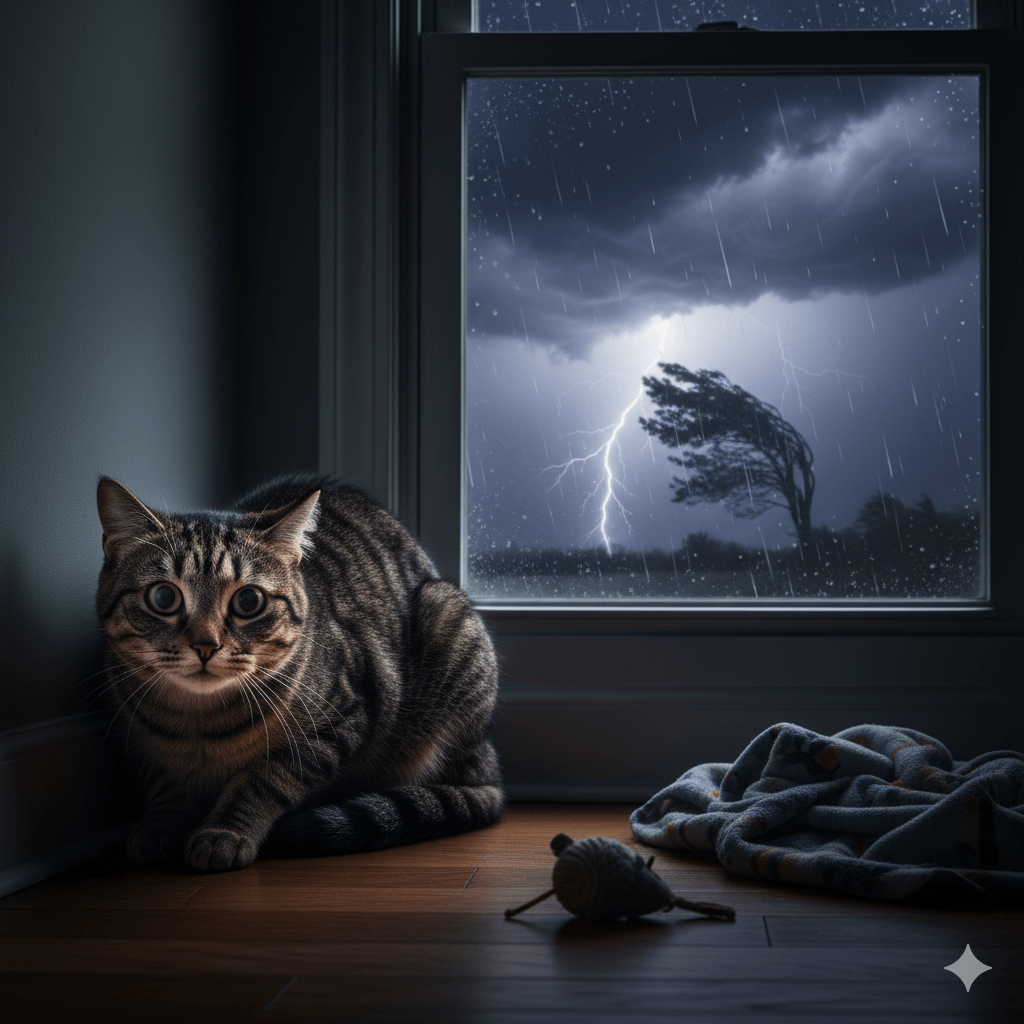

Understanding Cat Storm Anxiety: Best 7 Expert Tips!

Understanding Cat Storm Anxiety: Best 7 Expert Tips!

Understanding Cat Storm Anxiety

Thunderstorms can turn your calm, confident cat into a trembling shadow of themselves—hiding under furniture, panting, or even losing control of their bladder. While dogs are often associated with noise phobias, cats experience storm anxiety too, sometimes silently and in ways owners easily miss. Unlike dogs, cats rarely vocalize fear outwardly; instead, they retreat, freeze, or overgroom. Recognizing subtle signs and responding with empathy is key to helping your feline feel safe. With thoughtful preparation and gentle support, you can significantly reduce your cat’s distress during even the fiercest downpour.

Common Signs Your Cat Is Suffering from Storm Anxiety

Cats don’t always howl or pace when afraid—many internalize their fear, making storm anxiety easy to overlook. Watch for these behavioral and physical clues before, during, and after storms:

 
  • Hiding in Unusual Places:
    Your cat may vanish into closets, behind appliances, or under beds hours before a storm even begins, reacting to changes in barometric pressure.
     
  • Excessive Grooming or Licking:
    Stress often manifests as overgrooming—especially on paws, belly, or tail—which can lead to bald patches or skin irritation over time.
     
  • Dilated Pupils and Flattened Ears:
    Even in dim light, wide eyes and ears pinned back signal acute fear, especially when paired with a rigid or crouched posture.
     
  • Loss of Litter Box Control:
    An anxious cat may urinate or defecate outside the box during a storm, not out of spite but from panic-induced loss of bladder/bowel control.
     
  • Refusing Food or Treats:
    Even favorite snacks may be ignored as anxiety overrides hunger—a clear sign your cat is in distress.
 

These signs often begin before thunder is audible, as cats detect subtle environmental shifts humans can’t perceive. Early recognition allows you to intervene before fear escalates.

Understanding Cat Storm Anxiety: Best 7 Expert Tips!

Triggers Behind Your Cat’s Storm-Related Fear

Cats’ storm anxiety rarely stems from just one factor. Instead, it’s usually a mix of sensory overload, past trauma, and instinctive responses to environmental cues:

 
  • Barometric Pressure Changes:
    Cats sense drops in air pressure before storms hit, which can trigger unease long before humans notice weather changes.
     
  • Static Electricity Buildup:
    Some experts believe static shocks from synthetic carpets or blankets during storms cause discomfort that cats associate with danger.
     
  • Loud or Low-Frequency Sounds:
    Thunder’s deep rumble travels through walls and floors, creating vibrations that feel threatening to sensitive feline ears and paws.
     
  • Flashing Lightning:
    Sudden bursts of light can startle cats, especially at night, disrupting their sense of safety in familiar spaces.
     
  • Past Negative Experiences:
    A cat abandoned or injured during a storm may develop lasting trauma, linking storms with life-threatening events.
 

Understanding these triggers helps you create a more effective, compassionate response tailored to your cat’s specific sensitivities.

Early Anxiety Cues
High-Stress Emergency Signs
Seeking quiet corners
Trembling or shaking visibly
Increased clinginess
Hiding in inaccessible places (e.g., inside walls)
Pacing near windows
Panting or open-mouth breathing
Ears rotating backward
Refusing to move or eat for hours
Wide-eyed staring at sky
Urinating/defecating in bed or on owner’s lap

Creating a Safe Haven for Storm-Soaked Stress

A dedicated “storm sanctuary” can dramatically reduce your cat’s anxiety by offering predictability and control during chaotic weather. This space should feel secure, sound-muffled, and entirely under your cat’s terms:

 
  • Choose a Quiet, Interior Room:
    Basements or windowless bathrooms minimize noise and light—place bedding, toys, and a covered litter box inside well before storms hit.
     
  • Use Calming Scents Sparingly:
    Feliway diffusers (synthetic feline pheromones) may help, but avoid essential oils—many are toxic to cats even in small amounts.
     
  • Add Soft Barriers:
    Cover crates or hide boxes with thick blankets to muffle sound; provide multiple entry/exit points so your cat never feels trapped.
     
  • Maintain Routine Access:
    Keep the safe room open 24/7 during storm season so your cat can enter voluntarily—forcing them in increases fear.
     
  • Include Familiar Comforts:
    A worn T-shirt with your scent, favorite blanket, or a ticking clock (mimicking a heartbeat) can provide deep reassurance.
 

The goal isn’t to “fix” your cat’s fear in the moment but to offer a consistent refuge they learn to trust over time.

Natural and Veterinary Support Options

When environmental modifications aren’t enough, vet-approved tools can ease severe storm anxiety without sedation or side effects:

 
  • Thundershirts for Cats:
    Snug, breathable wraps apply gentle pressure that may calm the nervous system—though effectiveness varies by individual.
     
  • Prescription Anti-Anxiety Meds:
    For extreme cases, vets may prescribe short-acting medications like gabapentin or trazodone to be given 1–2 hours before expected storms.
     
  • Calming Supplements:
    Ingredients like L-theanine, alpha-casozepine, or colostrum calming complex are available in chews or powders—always consult your vet first.
     
  • White Noise or Soothing Music:
    Low-volume classical music or nature sounds can mask thunder rumbles; test volume levels to ensure they don’t add stress.
     
  • Behavioral Desensitization:
    Under veterinary guidance, playing recorded storm sounds at very low volume during calm times can gradually reduce fear over weeks.
 

Never give human anti-anxiety meds—many are fatal to cats. Always partner with your vet to choose safe, species-appropriate support.

Prevention and Long-Term Management Strategies

Reducing storm anxiety isn’t just about surviving the next thunderclap—it’s about building your cat’s overall emotional resilience:

 
  • Year-Round Enrichment:
    Daily puzzle feeders, vertical spaces, and interactive play boost confidence and reduce baseline stress, making storms less overwhelming.
     
  • Avoid Reinforcing Fear:
    While comforting your cat is kind, overly soothing (“It’s okay, baby!” in a high-pitched tone) can signal that danger is real—stay calm and neutral.
     
  • Keep Windows Covered:
    Blackout curtains block lightning flashes and reduce visual stimulation that heightens anxiety during storms.
     
  • Maintain a Consistent Schedule:
    Cats thrive on predictability; regular feeding, play, and sleep times create a sense of safety that buffers against external chaos.
     
  • Track Weather and Prepare Early:
    Use storm-tracking apps to set up your safe room, administer meds (if prescribed), and reduce household noise before anxiety peaks.
 

Consistency and proactive planning turn storm season from a crisis into a manageable routine for your sensitive feline.

Special Considerations for Kittens, Seniors, and Traumatized Cats

Vulnerable cats need extra care during storms—kittens lack coping skills, seniors may have sensory decline, and rescued cats often carry hidden trauma:

 
  • Kittens Under One Year:
    Early positive exposure to household sounds (including gentle storm recordings) can prevent lifelong phobias—never force exposure.
     
  • Senior Cats with Cognitive Decline:
    Dementia (feline cognitive dysfunction) can amplify confusion during storms; keep them in familiar, well-lit safe zones with easy litter access.
     
  • Former Strays or Shelter Cats:
    Unpredictable pasts heighten storm fear; prioritize choice and control—never pull them from hiding, as this deepens mistrust.
     
  • Cats with Medical Conditions:
    Pain from arthritis or hyperthyroidism lowers stress tolerance; ensure pain is managed before addressing anxiety behaviorally.
     
  • Multi-Cat Households:
    Anxious cats may lash out when scared—provide separate safe spaces to prevent redirected aggression during storms.
 

For these cats, patience and individualized care aren’t optional—they’re essential to emotional and physical well-being.


What to Avoid During a Storm Episode

Well-meaning actions can accidentally worsen your cat’s fear. Steer clear of these common mistakes during thunderstorms:

 
  • Forcing Interaction:
    Trying to “comfort” a hiding cat by pulling them out or holding them increases panic and erodes trust.
     
  • Punishing Accidents:
    Scolding for litter box misses reinforces fear—clean accidents with enzymatic cleaners and provide an extra box in the safe room.
     
  • Leaving the Cat Alone Outdoors:
    Even indoor-outdoor cats should be brought inside before storms; getting trapped outside can cause severe trauma.
     
  • Overusing Sedatives:
    Chronic reliance on medication without behavioral support doesn’t teach coping skills and may mask underlying health issues.
     
  • Ignoring Early Signs:
    Waiting until your cat is frozen in terror misses the window for gentle redirection to their safe space.
 

Your calm presence—not intervention—is often the most powerful tool you have during a storm.

Frequently Asked Questions About Cat Storm Anxiety

Do cats grow out of storm anxiety on their own?

Rarely. Without support, storm anxiety often worsens over time as fear generalizes to other loud noises or weather changes.

Not exactly—but gradual desensitization paired with positive associations (like treats during calm storm sounds) can reduce reactivity.

Intensity matters. Low rumbles may go unnoticed, but close lightning strikes or prolonged storms trigger stronger fear responses.

Yes—if that’s their chosen spot. Many cats seek grounded, enclosed spaces like tubs; just ensure they can exit freely and aren’t locked in.

No. High volume adds sensory stress. Instead, use low, steady white noise or soft classical music at background levels.

Helping Your Cat Find Calm in the Chaos

Storm anxiety in cats is real, often silent, and deeply unsettling for both pet and owner—but it’s not hopeless. With patience, observation, and a commitment to your cat’s sense of safety, you can transform storm season from a time of dread into one of quiet resilience. Your role isn’t to eliminate the storm, but to be the steady harbor within it. Every gentle adjustment you make—whether it’s a cozy blanket, a closed curtain, or simply sitting nearby in silence—tells your cat, “You’re not alone.” And in that unspoken promise lies the greatest comfort of all.

Everted Laryngeal Saccules in Dogs: Best 7 Expert Tips!

Everted Laryngeal Saccules in Dogs: Best 7 Expert Tips! – Spot signs, understand surgery, and help your dog breathe easier.

Tetanus Shot After Cat Bite: Best 7 Expert Tips!

Tetanus Shot After Cat Bite: Best 7 Expert Tips! – Learn when you need a booster, how to care for the wound, and prevent serious infection.

Tetanus Shot After Dog Bite: Best 7 Expert Tips!

Tetanus Shot After Dog Bite: Best 7 Expert Tips! – Know when you need a booster, how to clean wounds, and prevent serious infection.

Normal Tear Production in Cats: Best 7 Expert Tips!

Normal Tear Production in Cats: Best 7 Expert Tips! – Learn what healthy eye moisture looks like and when to seek vet care.

Leave a Reply

Your email address will not be published. Required fields are marked *


