

Understanding Cat Oncology: Best 7 Expert Tips!

Understanding Cat Oncology: Best 7 Expert Tips!

Understanding Cat Oncology: A Guide to Feline Cancer Care


Cancer is a devastating diagnosis for any pet owner, and cats are no exception. As our feline companions age, the risk of cancer increases, making it essential to understand the field of cat oncology. This specialized branch of veterinary medicine focuses on diagnosing, treating, and managing cancer in cats. While the thought of cancer can be overwhelming, early detection and proper care can significantly improve outcomes for affected cats. In this blog post, we’ll explore the key aspects of cat oncology, including common types of cancer, treatment options, and how you can support your cat through their journey. With knowledge and compassion, we can provide the best possible care for our beloved pets.

Expert Insight

“Approximately 6 million cats in the United States are diagnosed with cancer each year, and 53 to 83% of tumors in cats are cancerous, or malignant. Survival of cancer in cats depends on the cancer type, whether it’s spread, and a cat’s overall health.”

Common Types of Cancer in Cats


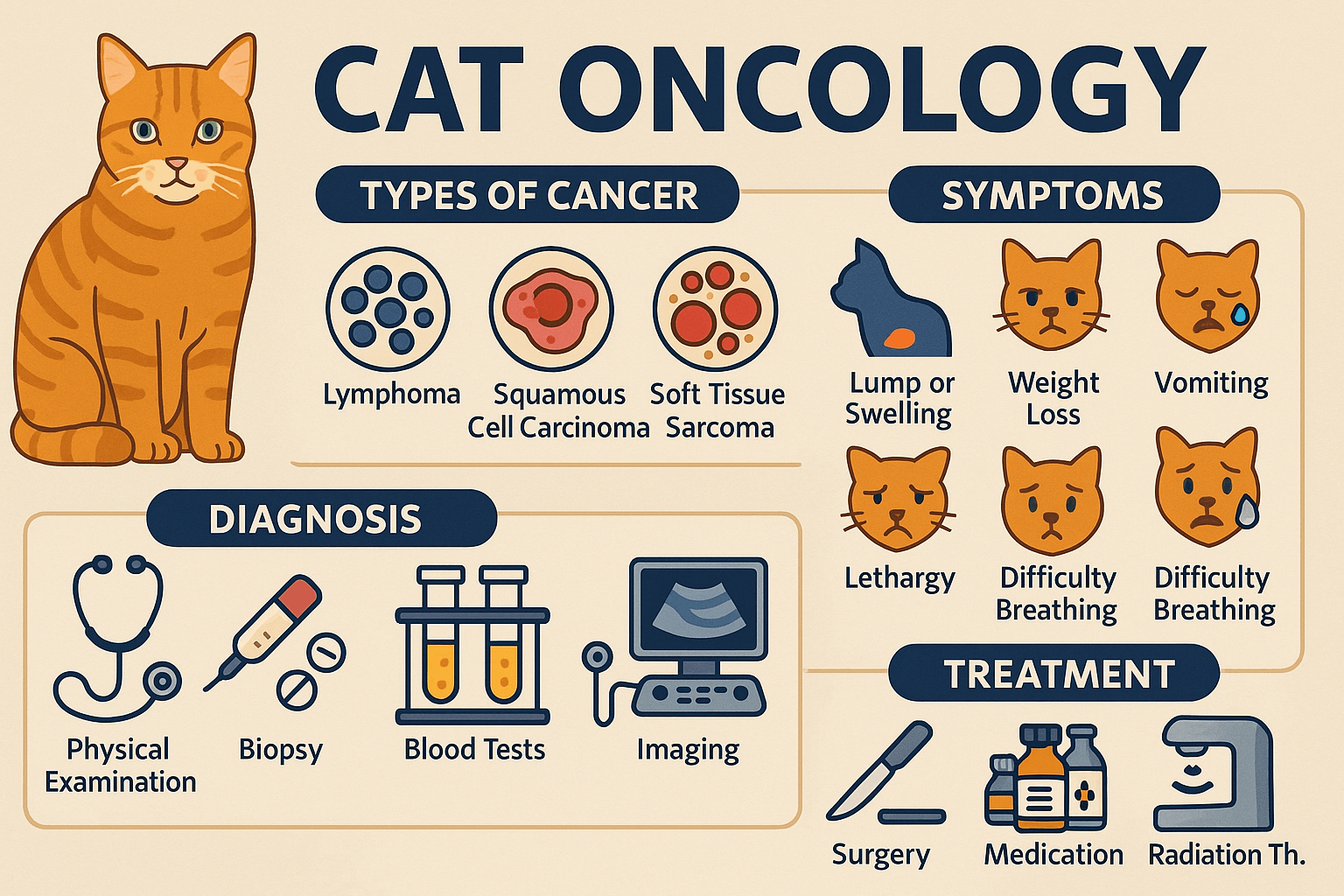
Cats can develop various types of cancer, each with unique characteristics and treatment requirements. Understanding these common forms of feline cancer can help you recognize symptoms and seek timely veterinary care.

 
  • Lymphoma:
    Lymphoma is one of the most prevalent cancers in cats, often affecting the gastrointestinal tract, lymph nodes, or chest. It may be linked to feline leukemia virus (FeLV) in some cases.

  • Squamous Cell Carcinoma:
    This type of skin cancer commonly occurs in white or light-colored cats due to prolonged sun exposure. It typically affects areas like the ears, nose, or eyelids.

  • Mammary Tumors:
    Unspayed female cats are at higher risk of developing mammary tumors, which can be benign or malignant. Early spaying reduces this risk significantly.

  • Fibrosarcoma:
    Fibrosarcoma is an aggressive soft tissue cancer that may develop at injection sites or other areas of trauma. It requires prompt intervention.

  • Oral Tumors:
    Oral cancers, such as squamous cell carcinoma, are challenging to detect early but can cause significant pain and difficulty eating if left untreated.


Recognizing these common cancers empowers cat owners to act quickly when signs arise, improving the chances of successful treatment.

Understanding Cat Oncology: Best 7 Expert Tips!

Signs Your Cat May Have Cancer


Early detection of cancer is crucial for improving prognosis and treatment success. Familiarizing yourself with potential warning signs can make all the difference in your cat’s health journey.

 
  • Unexplained Weight Loss:
    Sudden or gradual weight loss without dietary changes may indicate underlying health issues, including cancer.

  • Lumps or Swellings:
    Abnormal growths beneath the skin should be examined by a veterinarian to rule out malignancy.

  • Changes in Appetite:
    A noticeable decrease or increase in appetite can signal digestive cancers or other systemic conditions.

  • Difficulty Eating or Swallowing:
    Oral cancers often cause discomfort, leading to reluctance to eat or drooling excessively.

  • Lethargy or Weakness:
    Persistent fatigue or reduced activity levels may point to advanced stages of cancer or other serious illnesses.


Being vigilant about these symptoms allows you to seek veterinary advice promptly, ensuring your cat receives the care they need.

Preventive Measures for Feline Cancer
Treatment Options for Feline Cancer
Spay or neuter your cat early
Surgery to remove tumors
Limit sun exposure for light-colored cats
Chemotherapy tailored for felines
Maintain a healthy diet
Radiation therapy for localized cancers
Schedule regular vet check-ups
Pain management and palliative care
Vaccinate against FeLV and FIV
Immunotherapy research and clinical trials

How to Support Your Cat During Cancer Treatment


Caring for a cat undergoing cancer treatment requires patience, empathy, and practical adjustments. Here are some ways to support your furry friend during this challenging time.

 
  • Provide a Comfortable Environment:
    Create a calm, quiet space where your cat can rest and recover without unnecessary stress.

  • Monitor Their Diet Closely:
    Offer nutrient-rich foods that cater to their changing needs, especially if appetite decreases due to treatments.

  • Administer Medications as Directed:
    Follow your veterinarian’s instructions carefully when giving medications or supplements to avoid complications.

  • Maintain Routine Vet Visits:
    Regular follow-ups ensure your cat’s progress is monitored and treatment plans are adjusted as needed.

  • Offer Emotional Support:
    Spend quality time with your cat, providing gentle affection and reassurance throughout their journey.


Supporting your cat holistically enhances their well-being and strengthens the bond you share during this difficult period.

Questions to Ask Your Veterinarian About Cat Oncology


When discussing cancer treatment options with your veterinarian, asking informed questions ensures you fully understand your cat’s condition and care plan.

 
  • What Type of Cancer Does My Cat Have?
    Knowing the specific diagnosis helps you better understand the disease and its progression.

  • What Are the Available Treatment Options?
    Inquire about surgery, chemotherapy, radiation, or alternative therapies suited to your cat’s case.

  • What Are the Potential Side Effects?
    Understand how treatments might affect your cat’s daily life and overall comfort.

  • What Is the Prognosis?
    Discuss the likely outcome and expected timeline based on your cat’s unique circumstances.

  • How Can I Make My Cat More Comfortable?
    Seek advice on pain management, nutrition, and environmental adjustments to improve their quality of life.


Asking these questions equips you with the knowledge to make informed decisions about your cat’s care.

Benefits of Early Detection

Detecting cancer early can dramatically improve your cat’s prognosis and quality of life. Here are some benefits of catching the disease in its initial stages.

 
  • Improved Treatment Success Rates:
    Early-stage cancers are often more responsive to treatments like surgery or chemotherapy.

  • Reduced Treatment Costs:
    Addressing cancer early may require fewer interventions, lowering overall expenses.

  • Minimized Discomfort for Your Cat:
    Treating cancer before it spreads reduces pain and suffering for your feline friend.

  • More Time to Plan:
    Early detection gives you ample time to research treatment options and prepare financially.

  • Better Quality of Life:
    Timely intervention helps preserve your cat’s normal activities and routines for longer.


Early detection not only saves lives but also ensures your cat enjoys a happier, healthier existence.

Coping Strategies for Pet Owners

Dealing with a cat’s cancer diagnosis can be emotionally taxing for pet owners. These coping strategies can help you navigate this difficult chapter.

 
  • Seek Support from Friends or Family:
    Share your feelings with loved ones who understand the bond you share with your cat.

  • Join Online Communities:
    Connect with other pet owners facing similar challenges for advice and encouragement.

  • Practice Self-Care:
    Take breaks, exercise, and engage in activities that help you recharge emotionally.

  • Celebrate Small Wins:
    Acknowledge milestones, such as completing a round of treatment or seeing improvements in your cat’s behavior.

  • Focus on Joyful Moments:
    Spend quality time with your cat, creating cherished memories despite the circumstances.


By prioritizing your mental health, you can better support your cat and yourself during this trying time.

Innovations in Feline Cancer Research

Advancements in veterinary science continue to improve outcomes for cats with cancer. Here are some exciting innovations shaping the future of cat oncology.

 
  • Targeted Therapies:
    Researchers are developing drugs that specifically target cancer cells, minimizing damage to healthy tissues.

  • Immunotherapy Breakthroughs:
    New immunotherapies harness the body’s immune system to fight cancer more effectively.

  • Advanced Imaging Techniques:
    Cutting-edge imaging tools allow veterinarians to diagnose and monitor cancer with greater precision.

  • Personalized Medicine:
    Tailoring treatments to individual cats based on genetic profiles improves efficacy and reduces side effects.

  • Increased Awareness and Funding:
    Growing interest in feline cancer research has led to increased funding and collaboration among scientists.


These innovations offer hope for improved treatments and brighter futures for cats battling cancer.

Frequently Asked Questions About Cat Oncology

 
Can cancer be cured in cats?

Some cancers can be cured with early detection and appropriate treatment, while others can be managed to extend life comfortably.

Yes, chemotherapy protocols for cats are designed to minimize side effects while targeting cancer cells effectively.

Costs vary depending on the type of cancer, treatment plan, and location, ranging from hundreds to thousands of dollars.

A balanced diet supports immune function and helps maintain energy levels during treatment.

Preventive measures include spaying/neutering, vaccinations, limiting sun exposure, and scheduling regular vet visits.

Providing Compassionate Care for Cats with Cancer


Navigating the complexities of cat oncology is undoubtedly challenging, but armed with knowledge and resources, you can make informed decisions that prioritize your cat’s well-being. From recognizing early signs to exploring treatment options and offering unwavering support, every step you take contributes to your cat’s comfort and happiness. Remember, you’re not alone—veterinary professionals are there to guide you through this journey. By staying vigilant, compassionate, and proactive, you can give your feline companion the love and care they deserve, even in the face of cancer.

Is Rawhide Bad for Cats? Best 7 Expert Tips!

Is Rawhide Bad for Cats? Best 7 Expert Tips! – Discover the risks, safe alternatives, and expert advice to keep your feline friend healthy and happy.

Is Rawhide Bad for Dogs? Best 7 Expert Tips!

Is Rawhide Bad for Dogs? Best 7 Expert Tips! – Discover the risks, benefits, and safer alternatives to rawhides for your dog’s chewing needs.

Understanding Anorexia in Cats: Best 7 Expert Tips!

Understanding Anorexia in Cats: Best 7 Expert Tips! – Learn why cats stop eating, spot warning signs, and discover how to help your feline regain appetite safely.

Understanding Anorexia in Dogs: Best 7 Expert Tips!

Understanding Anorexia in Dogs: Best 7 Expert Tips! – Learn causes, symptoms, and solutions to help your dog regain appetite and stay healthy.

Leave a Reply

Your email address will not be published. Required fields are marked *