

Understanding Cat Bacterial Infections: Best 7 Expert Tips!

Understanding Cat Bacterial Infections: Best 7 Expert Tips!

Understanding Cat Bacterial Infections


Cats, like humans, are susceptible to bacterial infections that can affect their skin, ears, urinary tract, and other parts of their body. While some infections are mild and easily treatable, others can become serious if left untreated. Recognizing the signs of a bacterial infection in your cat is crucial for ensuring their health and well-being. As responsible pet owners, it’s important to understand what causes these infections, how they manifest, and the steps you can take to prevent or manage them. This guide will walk you through everything you need to know about cat bacterial infections, from symptoms to treatment options, so you can keep your feline friend happy and healthy.

Expert Insight: The Wide-Ranging Impact of Bacterial Infections in Cats

“All your cat’s organs can be affected by bacterial infections. We have listed the symptoms of the most common types of bacterial infections in cats above. However, your cat could also suffer from bacterial infections of the blood, immune system, bones and joints, and other organs such as the heart and brain. These infections can be very serious but are uncommon.”

Dr. Nat Scroggie MRCVS

Common Symptoms of Cat Bacterial Infections


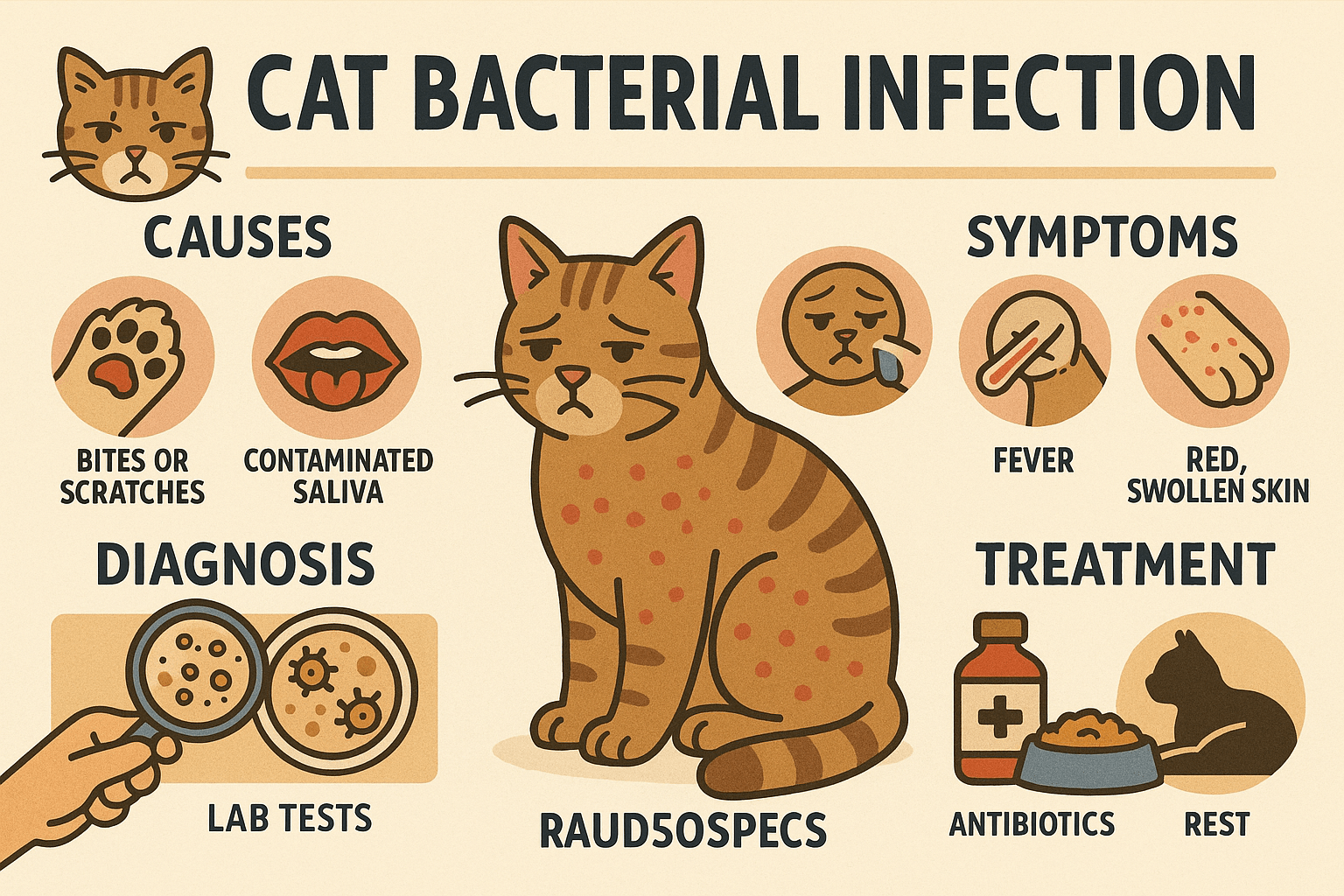
Detecting a bacterial infection early can make a significant difference in your cat’s recovery. Keep an eye out for these common symptoms, which may indicate an underlying issue requiring veterinary attention.

 
  • Excessive Licking or Grooming:
    Cats often lick areas of discomfort. If your cat is obsessively grooming one spot, it could signal an infection.

  • Redness or Swelling:
    Inflamed or swollen areas on the skin, paws, or face may point to a localized bacterial infection.

  • Unusual Discharge:
    Pus, blood, or unusual discharge from the eyes, ears, or wounds can indicate an infection.

  • Fever or Lethargy:
    A sudden lack of energy or elevated body temperature may suggest your cat is fighting off an infection.

  • Loss of Appetite:
    Cats with infections often lose interest in food due to discomfort or illness.


If you notice any of these symptoms, it’s essential to consult your veterinarian promptly to determine the cause and begin appropriate treatment.

Understanding Cat Bacterial Infections: Best 7 Expert Tips!

Common Causes of Bacterial Infections in Cats


Bacterial infections in cats can arise from a variety of sources, many of which are preventable with proper care and attention. Understanding these causes can help you minimize risks and protect your cat’s health.

 
  • Open Wounds or Scratches:
    Even minor injuries can become entry points for bacteria, leading to infections if not cleaned properly.

  • Poor Hygiene:
    Unclean living environments or dirty bedding can expose cats to harmful bacteria.

  • Weakened Immune System:
    Cats with underlying health conditions or stress may be more vulnerable to bacterial infections.

  • Parasites:
    Fleas, ticks, and other parasites can introduce bacteria into your cat’s bloodstream or skin.

  • Dental Issues:
    Untreated dental problems, such as gum disease, can lead to oral bacterial infections.


By addressing these potential causes, you can reduce the likelihood of your cat developing a bacterial infection and maintain their overall well-being.

Prevention Tips for Cat Bacterial Infections
Treatment Options for Infected Cats
Regularly clean your cat’s living space
Antibiotics prescribed by a vet
Check for and treat wounds immediately
Topical ointments for skin infections
Maintain a balanced diet to boost immunity
Pain relief medications if needed
Schedule routine vet check-ups
Warm compresses for abscesses
Keep up with flea and tick prevention
Surgery for severe cases (e.g., abscess)

Steps to Prevent Bacterial Infections in Cats


Prevention is always better than cure when it comes to bacterial infections. By taking proactive measures, you can significantly reduce your cat’s risk of developing an infection.

 
  • Keep Your Cat’s Environment Clean:
    Regularly wash bedding, litter boxes, and toys to eliminate bacteria buildup.

  • Inspect for Injuries Daily:
    Check your cat’s skin and paws for cuts, scratches, or signs of irritation.

  • Provide a Balanced Diet:
    A nutrient-rich diet supports your cat’s immune system, helping them fight off infections.

  • Practice Good Dental Hygiene:
    Brush your cat’s teeth regularly or provide dental treats to prevent oral infections.

  • Stay Up-to-Date on Vaccinations:
    Vaccines can protect your cat from certain diseases that may lead to secondary infections.


By incorporating these habits into your routine, you can help your cat stay healthy and infection-free.

When to Seek Veterinary Care for Your Cat


While some minor issues can resolve on their own, certain signs warrant immediate veterinary attention. Knowing when to seek professional help ensures your cat receives timely treatment.

 
  • Persistent Symptoms:
    If symptoms like swelling, discharge, or lethargy last more than a day or two, contact your vet.

  • High Fever:
    A fever above 103°F (39.4°C) indicates your cat’s body is fighting a serious infection.

  • Difficulty Breathing:
    Labored breathing may signal a respiratory or systemic infection requiring urgent care.

  • Behavioral Changes:
    Sudden aggression, hiding, or withdrawal can indicate pain or illness caused by an infection.

  • Abscesses or Large Swellings:
    Large lumps filled with pus often require professional draining and treatment.


Prompt veterinary intervention can prevent complications and ensure your cat recovers fully.

Types of Bacterial Infections in Cats

Cats can develop bacterial infections in various parts of their bodies, each requiring specific care and treatment. Here’s an overview of the most common types of infections and their characteristics.

 
  • Skin Infections:
    Often caused by scratches, bites, or allergies, these infections result in redness, itching, and scabs.

  • Urinary Tract Infections (UTIs):
    UTIs occur when bacteria enter the bladder, causing frequent urination and discomfort.

  • Ear Infections:
    Bacteria in the ear canal can lead to discharge, odor, and head shaking.

  • Respiratory Infections:
    These infections affect the lungs and airways, causing sneezing, coughing, and nasal discharge.

  • Dental Infections:
    Gum disease or tooth decay can allow bacteria to invade the mouth, leading to pain and bad breath.


Understanding these types of infections helps you identify potential issues and seek appropriate care for your cat.

Home Remedies for Minor Infections

For minor bacterial infections, some home remedies can complement veterinary care. However, always consult your vet before trying any treatments.

 
  • Warm Compresses:
    Applying a warm cloth to swollen areas can reduce inflammation and promote healing.

  • Saltwater Rinses:
    Diluted saltwater can clean minor wounds or irritated skin gently.

  • Probiotics:
    Adding probiotics to your cat’s diet may support gut health and boost their immune system.

  • Herbal Teas:
    Mild herbal teas like chamomile, when cooled, can soothe irritated skin or minor abrasions.

  • Aloe Vera Gel:
    Pure aloe vera gel (free of additives) can help heal small cuts or burns under veterinary supervision.


While these remedies can aid recovery, they should never replace professional medical advice.

Supporting Your Cat During Recovery

Recovery from a bacterial infection requires patience and care. Here are some ways to support your cat during this time.

 
  • Provide a Quiet Space:
    Give your cat a calm, comfortable area to rest away from noise and stressors.

  • Monitor Their Progress:
    Keep track of improvements or setbacks to report back to your vet accurately.

  • Encourage Hydration:
    Ensure your cat drinks plenty of water to flush out toxins and speed up recovery.

  • Offer Soft Foods:
    If your cat has mouth pain, offer soft, palatable foods to encourage eating.

  • Administer Medications as Directed:
    Follow your vet’s instructions carefully to ensure your cat completes their treatment course.


With attentive care and support, your cat will recover more comfortably and quickly.

Frequently Asked Questions About Cat Bacterial Infections

 
How long does it take for a bacterial infection to heal?

With proper treatment, most infections improve within 7-10 days, though severe cases may take longer.

No, human medications can be toxic to cats. Always consult your vet for safe treatment options.

Some infections, like those caused by bites or scratches, can spread to other animals. Isolate infected cats if necessary.

Avoid bursting it yourself. Take your cat to the vet for professional cleaning and care.

Look for reduced swelling, improved appetite, and increased energy levels as signs of recovery.


Protecting Your Cat from Bacterial Infections


Bacterial infections are a common concern for cat owners, but with vigilance and proper care, they can often be prevented or treated effectively. By staying informed about the causes, symptoms, and treatments, you’re better equipped to safeguard your cat’s health. Regular vet visits, a clean environment, and a nutritious diet all play vital roles in keeping infections at bay. Remember, your cat relies on you to notice changes in their behavior or appearance—early detection is key to a speedy recovery. With love, attention, and preventive measures, you can ensure your feline companion enjoys a long, healthy life free from unnecessary suffering.

Cuterebra Larvae in Cats: Best 7 Expert Tips!

Cuterebra Larvae in Cats: Best 7 Expert Tips! – Expert advice on signs, treatment & prevention of this rare but serious feline parasitic infestation.

Cuterebra Larvae in Dogs: Best 7 Expert Tips!

Cuterebra Larvae in Dogs: Best 7 Expert Tips! – Expert advice on signs, treatment & prevention of this rare but serious parasitic infestation.

Cat Tumor on Paw: Best 7 Expert Tips!

Cat Tumor on Paw: Best 7 Expert Tips! – Expert advice on signs, diagnosis, treatment & care for feline paw tumors.

Panacur Side Effects in Dogs: Best 7 Expert Tips!

Panacur Side Effects in Dogs: Best 7 Expert Tips! – Safe usage, common reactions & when to call the vet.

Leave a Reply

Your email address will not be published. Required fields are marked *

Post Category


