

Traumatized Cat Symptoms: Best 7 Expert Tips!

Traumatized Cat Symptoms: Best 7 Expert Tips!

Traumatized Cat Symptoms: How to Recognize and Help Your Feline Friend


Cats are resilient creatures, but they’re not immune to trauma. Whether caused by abuse, neglect, accidents, or a sudden change in environment, trauma can deeply affect a cat’s behavior, health, and overall well-being. Recognizing the signs of a traumatized cat is the first step toward providing the care and support they need to heal. In this blog post, we’ll explore common symptoms of trauma in cats, offer actionable tips for helping them recover, and provide insights into creating a safe, nurturing environment. By understanding your cat’s needs, you can help them regain their confidence and happiness.

Expert Insight on Trauma Symptoms in Cats

“Trauma can also manifest as ‘shaking, hiding, urination and/or defecation when the trigger attempts to interact, howling, pacing, excessive vocalization, and panting,'” says Pia Silvani, director of behavioral rehabilitation at the ASPCA’s Behavioral Rehabilitation Center.

Common Behavioral Symptoms of a Traumatized Cat


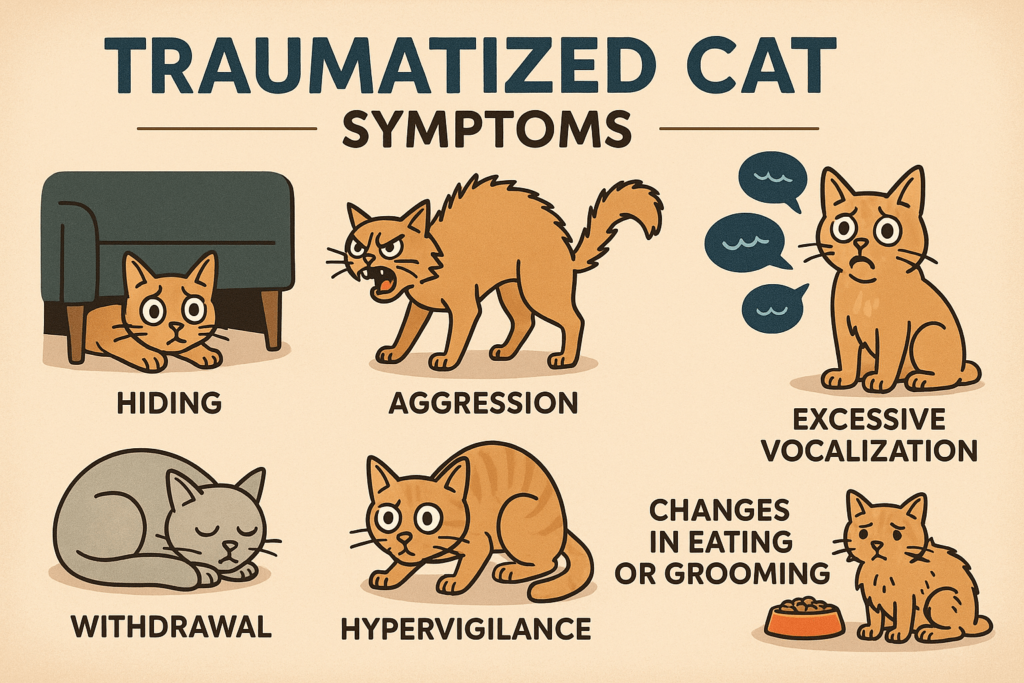
When a cat experiences trauma, it often manifests in changes to their behavior. These shifts can be subtle or dramatic, depending on the severity of the trauma and the cat’s personality. Here are some key behavioral symptoms to watch for:

 
  • Excessive Hiding:
    A traumatized cat may retreat to secluded areas, such as under furniture or in closets, to avoid interaction or perceived threats.

  • Aggression Toward People or Pets:
    Fear or stress can cause a cat to lash out defensively, even toward familiar faces or other animals in the household.

  • Overgrooming or Lack of Grooming:
    Some cats excessively groom themselves as a coping mechanism, while others stop grooming altogether due to apathy or fear.

  • Loss of Appetite:
    Trauma can suppress a cat’s appetite, leading to weight loss or refusal to eat meals they once enjoyed.

  • Avoidance of Eye Contact:
    Cats who feel threatened or anxious may avoid making eye contact with humans or other pets as a sign of submission or fear.


If you notice these behaviors in your cat, it’s essential to approach them with patience and understanding. Early intervention can make a significant difference in their recovery journey.

Traumatized Cat Symptoms: Best 7 Expert Tips!

Physical Signs of Trauma in Cats


In addition to behavioral changes, trauma can also manifest through physical symptoms. While some of these signs may overlap with other health issues, they often indicate stress or emotional distress when combined with behavioral cues.

 
  • Weight Loss or Gain:
    Sudden changes in weight can signal that a cat is struggling emotionally, whether due to overeating or refusing food.

  • Excessive Shedding:
    Stress can lead to increased shedding, leaving more fur around the house than usual.

  • Dilated Pupils:
    Wide, unblinking eyes can indicate heightened anxiety or fear, even in otherwise calm situations.

  • Digestive Issues:
    Vomiting, diarrhea, or constipation may occur as a result of stress-related gastrointestinal upset.

  • Lethargy or Restlessness:
    A traumatized cat might either become unusually inactive or display restless pacing and difficulty settling down.


These physical symptoms highlight the toll trauma can take on a cat’s body. If you observe any of these signs, consult a veterinarian to rule out underlying medical conditions and address potential emotional causes.

Behavioral Symptoms
Physical Symptoms
Excessive hiding
Weight loss or gain
Aggression toward others
Excessive shedding
Overgrooming or lack of grooming
Dilated pupils
Loss of appetite
Digestive issues
Avoidance of eye contact
Lethargy or restlessness

How to Create a Safe Space for a Traumatized Cat


Providing a secure and calming environment is crucial for helping a traumatized cat feel safe and begin healing. These steps can make a world of difference in their recovery process.

 
  • Designate a Quiet Retreat Area:
    Set up a cozy corner with soft bedding, blankets, and hiding spots where your cat can retreat whenever they feel overwhelmed.

  • Limit Loud Noises and Sudden Movements:
    Keep noise levels low and avoid startling your cat with abrupt actions or loud sounds like vacuum cleaners or door slams.

  • Use Calming Products:
    Consider using pheromone diffusers or sprays designed to reduce feline anxiety and promote relaxation.

  • Establish a Consistent Routine:
    Feed, play with, and interact with your cat at the same times each day to build trust and predictability.

  • Introduce Familiar Scents:
    Place items carrying your scent, such as worn clothing, near their sleeping area to provide comfort and reassurance.


By creating a peaceful sanctuary, you give your traumatized cat the time and space they need to heal and rebuild their confidence.

Tips for Helping a Traumatized Cat Regain Trust


Rebuilding trust with a traumatized cat requires patience, consistency, and empathy. These tips can guide you through the process of strengthening your bond with your furry companion.

 
  • Approach Slowly and Respectfully:
    Move calmly and avoid direct eye contact when approaching your cat, as this can be perceived as threatening.

  • Offer Treats and Positive Reinforcement:
    Reward small victories, such as allowing you to pet them briefly, with treats or gentle praise to encourage positive associations.

  • Respect Their Boundaries:
    If your cat shows signs of discomfort, back off immediately and give them space to decompress.

  • Engage in Gentle Play:
    Use interactive toys like feather wands or laser pointers to engage your cat in play without overwhelming them.

  • Be Patient and Persistent:
    Healing takes time, so don’t rush the process. Celebrate incremental progress and remain committed to their recovery.


With consistent effort, you can help your traumatized cat feel safe and loved again, fostering a deeper connection between you both.

Common Triggers of Trauma in Cats

Understanding what triggers trauma in cats can help prevent future incidents and better address their unique needs. Here are some common causes of feline trauma:

 
  • Past Abuse or Neglect:
    Cats rescued from abusive or neglectful environments often carry emotional scars that require time and care to heal.

  • Sudden Changes in Environment:
    Moving homes, introducing new pets, or rearranging furniture can disrupt a cat’s sense of security.

  • Loud Noises or Alarming Events:
    Fireworks, thunderstorms, or construction noise can overwhelm sensitive cats and leave lasting impressions.

  • Veterinary Visits or Medical Procedures:
    Negative experiences at the vet or during surgeries can contribute to lingering fear or anxiety.

  • Loss of a Companion Animal or Human:
    The death of a bonded companion can deeply affect a cat’s emotional well-being.


By identifying and addressing these triggers, you can minimize stressors and create a more stable environment for your cat.

Activities to Help a Traumatized Cat Rebuild Confidence

Engaging your traumatized cat in specific activities can boost their confidence and encourage positive behavior. Here are some ideas to try:

 
  • Interactive Play Sessions:
    Short, structured playtimes with favorite toys can distract from fear and stimulate natural hunting instincts.

  • Clicker Training:
    Teaching simple tricks using clicker training reinforces positive behavior and strengthens your bond.

  • Exploration Opportunities:
    Allow your cat to explore new spaces gradually, starting with small, controlled areas.

  • Puzzle Feeders or Treat Dispensers:
    Mental stimulation through food puzzles encourages problem-solving and reduces boredom.

  • Gentle Petting and Brushing:
    Physical touch, when accepted, can soothe anxiety and foster trust over time.


These activities provide opportunities for growth and healing while keeping your cat engaged and entertained.

Signs That Your Cat Is Improving

As your traumatized cat begins to heal, you’ll notice subtle signs of improvement. These indicators reflect progress and serve as encouragement for continued care.

 
  • Increased Socialization:
    Your cat may start seeking attention or spending more time in shared spaces instead of hiding.

  • Improved Eating Habits:
    A return to regular eating patterns signals growing comfort and stability.

  • Reduced Startle Reflexes:
    Cats recovering from trauma often become less reactive to sudden movements or noises.

  • Playful Behavior Returns:
    Engaging in play or showing curiosity about toys indicates renewed energy and confidence.

  • More Relaxed Body Language:
    Soft eyes, relaxed ears, and a willingness to purr suggest your cat feels safer and more content.


Celebrating these milestones reminds you of the progress made and motivates you to continue supporting your cat’s recovery.

Frequently Asked Questions About Traumatized Cats

 
What causes trauma in cats?

Trauma can result from abuse, neglect, accidents, sudden environmental changes, or loud noises like fireworks or thunderstorms.

Recovery times vary depending on the severity of the trauma and the individual cat, but it can take weeks to months for noticeable improvement.

Yes, adopting a traumatized cat can be incredibly rewarding. With love, patience, and proper care, many traumatized cats thrive in loving homes.

While some cats fully recover, others may retain certain sensitivities or habits. Professional guidance can help manage ongoing challenges.

Seek professional advice if your cat’s symptoms persist, worsen, or interfere with their quality of life despite your efforts.

Supporting Your Cat Through Their Healing Journey


Helping a traumatized cat recover is a challenging yet deeply fulfilling experience. By recognizing the symptoms of trauma, creating a safe and supportive environment, and patiently rebuilding trust, you can guide your feline friend toward a happier, healthier life. Remember, every cat heals at their own pace, and your unwavering compassion plays a vital role in their journey. With time, love, and understanding, you’ll likely find that your bond with your cat grows stronger than ever before.

Understanding Cryptosporidium in Cats: Best 7 Expert Tips!

Understanding Cryptosporidium in Cats: Best 7 Expert Tips! – Spot symptoms, treat safely, and stop parasite spread in your home.

Understanding Cryptosporidium in Dogs: Best 7 Expert Tips!

Understanding Cryptosporidium in Dogs: Best 7 Expert Tips! – Learn symptoms, treatment & prevention for this stubborn gut parasite.

Understanding Syringomyelia in Cats: Best 7 Expert Tips!

Understanding Syringomyelia in Cats: Best 7 Expert Tips! – Recognize signs, manage pain, and support your cat’s neurological health with vet-backed guidance.

Understanding Syringomyelia in Dogs: Best 7 Expert Tips!

Understanding Syringomyelia in Dogs: Best 7 Expert Tips! – Expert insights on symptoms, MRI diagnosis, pain management & quality of life.

Leave a Reply

Your email address will not be published. Required fields are marked *


