
The Norwegian Buhund Dog: Best 7 Expert Tips!
Lively, loyal, and full of Nordic charm, the Norwegian Buhund is a versatile herding dog with a bright eye and boundless energy. Originating from the Viking era, this medium-sized spitz-type breed combines intelligence, agility, and a cheerful disposition in one compact, weather-resistant package. Whether working on a farm or lounging with its family, the Buhund thrives on purpose, partnership, and play. If you’re seeking a dog that’s as eager to learn as it is to cuddle after a long day, the Norwegian Buhund might be your ideal companion.
Origins and History of the Norwegian Buhund
The Norwegian Buhund isn’t just a handsome spitz—it’s a living piece of Scandinavian heritage, with roots that stretch back over a thousand years to Viking longships and farmsteads. Its name comes from the Norwegian word “bu,” meaning homestead or dwelling, reflecting its role as a trusted all-around farm dog.
- Viking-Era Companion:
Archaeological evidence shows Buhund-type dogs were buried with Vikings, suggesting deep spiritual and practical significance in ancient Norse culture. - All-Purpose Farm Dog:
On Norwegian homesteads, the Buhund herded sheep and cattle, guarded property, and even helped with hunting—earning its reputation as a true utility breed. - Near Extinction and Revival:
By the early 20th century, the breed declined due to modernization; dedicated enthusiasts revived it through careful breeding in the 1920s and 1930s. - Official Recognition:
The Norwegian Buhund Club was founded in 1933, and the breed gained international recognition through the FCI and later the AKC (Herding Group, 2009). - Cultural Symbol of Norway:
Still relatively rare outside Scandinavia, the Buhund remains a national treasure in Norway, celebrated for its resilience and historical continuity.
Though centuries have passed since it paced Viking halls, the Buhund’s spirit—alert, hardy, and devoted—remains unchanged.
Distinctive Physical Traits of the Norwegian Buhund
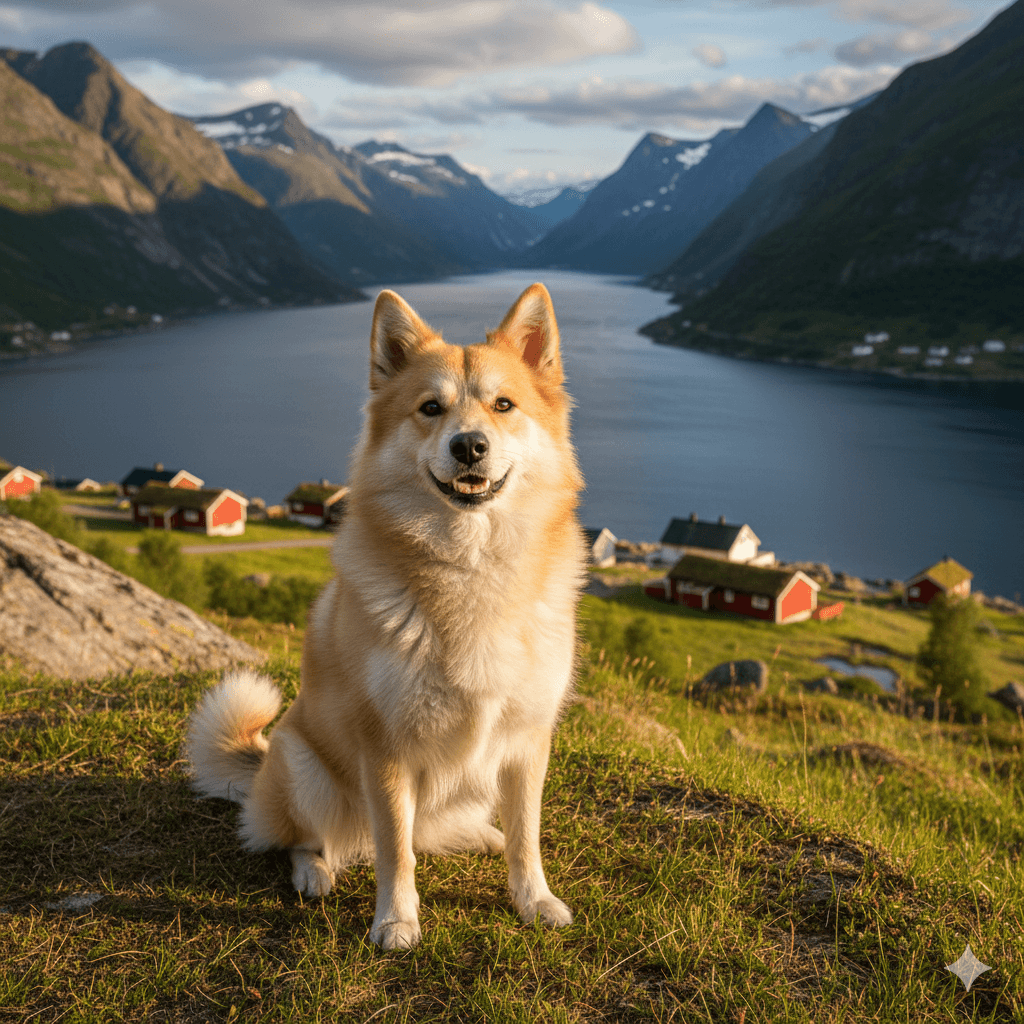
Compact yet muscular, with pricked ears and a curled tail, the Norwegian Buhund looks every bit the classic Nordic spitz. Its build reflects its working origins, balancing speed, endurance, and weather resistance in a tidy, agile frame.
- Medium, Balanced Build:
Standing 16–18.5 inches tall and weighing 26–40 pounds, the Buhund is neither delicate nor bulky—ideal for herding and agility. - Double Coat for Harsh Climates:
A dense, weatherproof double coat—short to medium in length—sheds seasonally and comes in wheaten (light to bright gold) or black. - Expressive, Alert Face:
Dark, oval eyes convey intelligence and warmth, while small, erect ears swivel constantly to catch every sound. - Tail Carriage:
The tail curls tightly over the back, especially when the dog is excited or alert—a hallmark of the spitz family. - Efficient, Ground-Covering Gait:
Movement is smooth, energetic, and effortless, reflecting its heritage as a tireless farm and herding dog.
Every physical detail of the Buhund speaks to function—built not for show, but for life in Norway’s rugged countryside.
Check this guide 👉Understanding Norwegian Dog Breeds: Best 7 Expert Tips!
Check this guide 👉The Norwegian Mountain Dog: Best 7 Expert Tips!
Check this guide 👉Nordic Dog Breeds: Best 7 Expert Tips!
Temperament Highlights | Care Considerations |
|---|---|
Energetic and always ready to work | Daily vigorous exercise required (60+ mins) |
Cheerful and people-oriented | Moderate seasonal shedding—brush 2–3x/week |
Highly trainable and eager to please | Needs mental stimulation to prevent boredom |
Good with respectful children | Sensitive to harsh training—responds to positivity |
Natural watchdog with a loud bark | Prone to barking—early training essential |
Personality and Temperament: Bright, Bold, and Bonded
The Norwegian Buhund is the definition of a “happy dog”—always alert, frequently wagging, and deeply engaged with its human family. It’s not a aloof or independent breed; instead, it seeks inclusion in every household activity with infectious enthusiasm.
- Family-Oriented Companion:
Buhunds form strong attachments and thrive on being part of daily life—don’t expect this dog to be content in a backyard alone. - Naturally Confident and Curious:
They approach new situations with interest rather than fear, making them adaptable to travel, guests, and new environments (with proper socialization). - Work Ethic in a Pet’s Body:
Even as a companion, the Buhund needs a job—whether it’s obedience, agility, nose work, or simply carrying a backpack on walks. - Vocal and Expressive:
Expect barks, yodels, and “talking” sounds—it’s how they communicate excitement, alert, or desire for attention. - Good Dog Park Candidate (With Training):
Most Buhunds enjoy other dogs, but their herding instinct may lead to chasing or nipping—supervision and early socialization help.
This is a breed that brings joy through presence, participation, and a constant readiness to connect.
Training and Socialization Tips for Norwegian Buhund Owners
Training a Buhund is a delight—if you’re prepared to match its intelligence with consistency and creativity. This breed learns quickly but can grow bored with repetition, so variety and positive reinforcement are key.
- Start Socialization Early:
Expose your puppy to diverse people, sounds, surfaces, and animals before 16 weeks to build confidence and prevent reactivity. - Use Reward-Based Methods:
Food, praise, and play work wonders—never resort to yelling or punishment, which can damage trust and shut down learning. - Incorporate Mental Games:
Puzzle toys, scent work, and trick training keep their sharp minds engaged and prevent destructive behaviors from boredom. - Practice Recall Religiously:
Their prey drive is strong; a reliable “come” command could save their life if they spot a squirrel or bird. - Set Clear Boundaries:
While eager to please, Buhunds test limits—consistent rules around jumping, barking, and counter-surfing prevent bad habits.
With the right approach, your Buhund becomes not just well-behaved, but a joyful, responsive partner in all you do.
Grooming and Health Needs of the Norwegian Buhund
The Buhund’s coat is low-maintenance most of the year but requires extra attention during seasonal “blowouts.” Beyond grooming, proactive health care ensures this robust breed lives its full 12–15 year lifespan.
- Seasonal Shedding Management:
Brush weekly year-round; increase to daily during spring and fall shedding seasons to control loose undercoat. - Bathing Only When Needed:
Their coat is naturally dirt-resistant—bathe every 2–3 months or after particularly muddy adventures. - Dental and Nail Care:
Trim nails every 3–4 weeks and brush teeth several times a week to support long-term health. - Breed-Specific Health Concerns:
Watch for hip dysplasia, eye conditions (like PRA), and a rare metabolic disorder called glycogen storage disease (type II). Reputable breeders test for these. - Weight Management:
Buhunds love food and can gain weight easily—measure meals, limit treats, and ensure daily exercise to maintain ideal body condition.
Simple, consistent care keeps your Buhund healthy, comfortable, and gleaming with that characteristic Nordic shine.
Living with a Norwegian Buhund: Ideal Home and Lifestyle Fit
This breed adapts well to many settings—but only if its physical and emotional needs are met. A Buhund in a sedentary home will struggle; one in an active, engaged home will flourish.
- Active Families Only:
Best suited for owners who hike, run, bike, or participate in dog sports—this breed needs purpose and movement every day. - Suburban or Rural Preferred:
While it can live in an apartment with enough exercise, a fenced yard allows safe off-leash play and satisfies its urge to patrol. - Not for Long Alone Hours:
Left alone for 8+ hours regularly, a Buhund may bark excessively, chew, or develop anxiety—consider a dog walker or companion pet. - Great Travel Buddy:
Their compact size and adaptable nature make them excellent road-trip or camping companions—if they’re included in the adventure. - Cold-Weather Lover:
Thanks to its double coat, the Buhund thrives in snow and cool climates but needs shade, water, and AC in hot weather.
The Norwegian Buhund isn’t just a pet—it’s an active participant in your life, ready to go wherever you go, as long as you go together.
Potential Challenges of Owning a Norwegian Buhund
Despite its many virtues, the Buhund isn’t the right fit for every household. Being honest about its needs upfront prevents frustration for both dog and owner.
- High Energy Demands:
Without sufficient exercise and mental outlets, this breed can become restless, noisy, or destructive. - Vocal Nature:
Its watchdog instincts mean it will bark at delivery people, passing dogs, or even leaves blowing—training helps, but silence isn’t guaranteed. - Shedding Surges:
Twice a year, the undercoat comes out in dramatic clouds—vacuuming becomes a daily ritual during these periods. - Herding Instincts:
May try to “round up” children, cats, or bikes by nipping at heels—a behavior that must be redirected early. - Sensitivity to Tone:
Harsh corrections can shut down this responsive breed; patience and positivity yield far better results.
Acknowledging these traits isn’t discouragement—it’s preparation for a rewarding, harmonious life with a truly special dog.
“Cheerful and highly active, Norwegian Buhunds form strong bonds with their families, and they love to snuggle and give kisses.”
— VCA Animal Hospitals
Frequently Asked Questions About the Norwegian Buhund Dog
Is the Norwegian Buhund good with children?
Yes—with proper socialization and supervision. They’re playful and affectionate but may herd fast-moving kids; teach both dog and child respectful interaction.
How much does a Norwegian Buhund shed?
Moderately year-round, heavily twice a year. Regular brushing controls loose fur, but owners should expect seasonal “fur tumbleweeds.”
Are Norwegian Buhunds easy to train?
Very—they’re intelligent, eager to please, and quick learners. However, they need engaging, varied training to stay motivated.
Do they get along with other pets?
Generally yes, especially if raised together. Their prey drive may trigger chasing of small animals, so introductions should be managed.
Where can I find a Norwegian Buhund puppy?
Seek AKC or FCI-affiliated breeders who perform health testing, offer lifetime support, and prioritize temperament. Rescue options exist but are rare.
A Living Legacy from the Land of Fjords
The Norwegian Buhund carries the spirit of its Viking ancestors—resilient, loyal, and full of quiet joy. More than just a herding dog or family pet, it’s a companion that meets life with bright eyes, a wagging tail, and an unwavering desire to be by your side. If you can offer structure, stimulation, and endless affection, the Buhund will repay you tenfold in laughter, loyalty, and shared adventure. In a world of fleeting trends, this ancient Nordic friend remains a timeless choice for the active, devoted dog lover.

Is Rawhide Bad for Cats? Best 7 Expert Tips! – Discover the risks, safe alternatives, and expert advice to keep your feline friend healthy and happy.

Is Rawhide Bad for Dogs? Best 7 Expert Tips! – Discover the risks, benefits, and safer alternatives to rawhides for your dog’s chewing needs.

Understanding Anorexia in Cats: Best 7 Expert Tips! – Learn why cats stop eating, spot warning signs, and discover how to help your feline regain appetite safely.

Understanding Anorexia in Dogs: Best 7 Expert Tips! – Learn causes, symptoms, and solutions to help your dog regain appetite and stay healthy.