
The Neapolitan Mastiff: A Gentle Giant with a Mythic Presence
Few dogs command presence like the Neapolitan Mastiff—a colossal, deeply wrinkled guardian whose origins trace back to Roman war dogs and ancient estate protectors. Despite its intimidating size and imposing scowl, this breed is famously tender with its family, blending loyalty, calmness, and quiet vigilance into a truly noble companion. Bred not for aggression but for steadfast watchfulness, the Neapolitan Mastiff thrives in homes that respect its need for space, structure, and deep emotional bonds. If you’re drawn to a dog of mythic stature and silent devotion, the Neapolitan Mastiff may just be your guardian angel in canine form.
Origins and History of the Neapolitan Mastiff
The Neapolitan Mastiff’s roots run deep through Mediterranean history, shaped by warfare, nobility, and centuries of selective breeding for protection. Its lineage is both practical and poetic—forged in function, refined by culture.
- Descendant of Roman War Dogs:
Bred from the mighty Molossus dogs that accompanied Roman legions, the Neapolitan Mastiff was used for guarding camps, pulling carts, and even fighting in arenas. - Revival in 20th-Century Italy:
After nearly vanishing post-World War II, breeder Piero Scanziani revived the breed in the 1940s by crossing remaining Italian mastiffs with English Mastiffs, preserving its essence while standardizing form. - Traditional Estate Guardian:
For centuries, Italian landowners relied on this breed to patrol vineyards and rural estates—silent, observant, and deterring intruders through presence alone. - Recognition and Global Spread:
Recognized by the FCI in 1949 and the AKC in 2004, the breed remains relatively rare outside Italy but is cherished by enthusiasts for its loyalty and dignity. - Cultural Symbol of Strength:
Often depicted in Italian art and folklore as a symbol of fidelity and resilience, the Neapolitan Mastiff is more than a dog—it’s a living monument.
Though bred for protection, the modern Neapolitan Mastiff’s power lies in restraint—a quiet sentinel whose loyalty outweighs its legendary size.
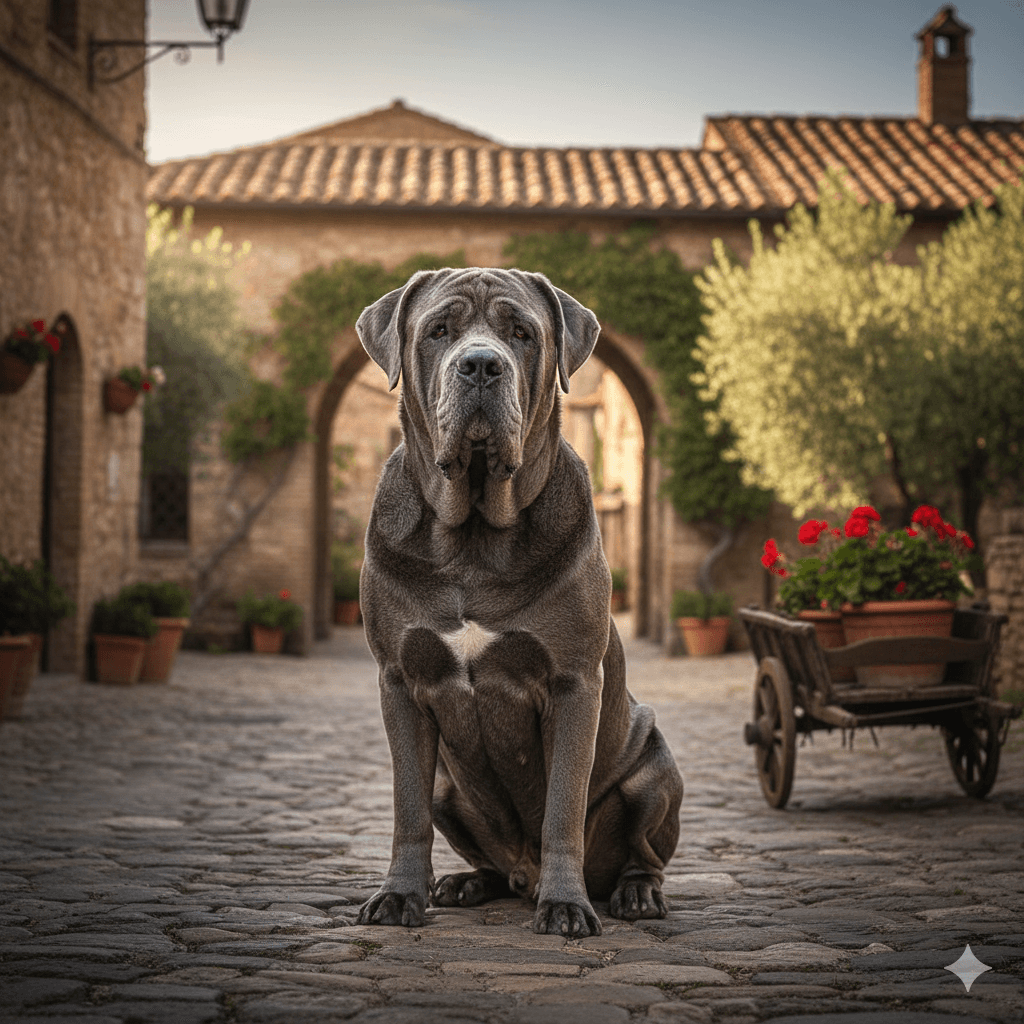
Distinctive Physical Traits of the Neapolitan Mastiff
Massive, wrinkled, and unmistakable, the Neapolitan Mastiff looks like a creature from legend. Every physical trait reflects its role as a calm but formidable guardian, built for endurance and presence rather than speed.
- Enormous, Muscular Frame:
Males stand 26–31 inches tall and weigh 130–155+ pounds; females are slightly smaller but equally substantial—this is one of the heaviest dog breeds relative to height. - Profuse Wrinkles and Dewlap:
Loose skin forms dramatic folds across the head, neck, and body, especially in youth; the heavy dewlap (throat skin) served historically to protect against bites. - Broad, Blocky Head:
The skull is wide with a short muzzle, deep-set eyes, and a slightly undershot bite—contributing to its solemn, almost regal expression. - Short, Dense Coat:
The coat is smooth, thick, and lies close to the body, coming in colors like gray (blue), black, mahogany, tawny, and sometimes with minimal white markings. - Low, Deliberate Movement:
Despite its size, the Neapolitan Mastiff moves with surprising grace—slow, powerful, and purposeful, never rushed or frantic.
These traits are not for show—they are the embodiment of a breed designed to stand, watch, and protect without unnecessary motion.
Check this guide 👉Cane Corso vs Neapolitan Mastiff: Best 7 Expert Tips!
Check this guide 👉The English Mastiff: Best 7 Expert Tips!
Check this guide 👉Cane Corso Mastiff Great Dane Mix: Best 7 Expert Tips!
Temperament Highlights | Care Considerations |
|---|---|
Calm, watchful, and deeply loyal | Daily wiping of facial folds to prevent infection |
Naturally suspicious of strangers | Requires spacious, non-slip living surfaces |
Affectionate and gentle with family | Prone to overheating—limit exercise in warm weather |
Low energy indoors but vigilant outdoors | High risk of bloat—feed multiple small meals |
Rarely barks without cause | Needs early leash training due to immense strength |
Personality and Temperament: Loyal, Watchful, and Thoughtful
Beneath the Neapolitan Mastiff’s formidable exterior lies a heart of profound gentleness—especially toward those it loves. This breed is not loud, hyperactive, or needlessly aggressive; instead, it observes, assesses, and acts only when necessary.
- Quietly Protective:
It doesn’t chase or harass intruders—it stands between them and its family, using size and presence as its first line of defense. - Deeply Bonded to Family:
Though reserved with outsiders, it forms intense attachments to its household and often shadows its favorite person from room to room. - Low Play Drive, High Awareness:
Unlike high-energy breeds, the Neapolitan Mastiff prefers lounging nearby while staying mentally alert to its surroundings. - Naturally Dignified:
It carries itself with quiet composure, rarely engaging in silly antics—this is a dog that exudes calm authority. - Not for Inexperienced Owners:
Its size, strength, and independent thinking require an owner who is confident, consistent, and understands guardian-breed psychology.
When properly socialized and respected, the Neapolitan Mastiff becomes a serene, devoted companion whose loyalty is both quiet and unshakable.
Training and Socialization: Patience, Consistency, and Respect
Training a Neapolitan Mastiff is less about commands and more about building mutual trust. This breed responds poorly to domination but thrives under calm, respectful leadership.
- Begin Socialization Before 16 Weeks:
Expose your puppy to diverse people, sounds, surfaces, and calm dogs to prevent fear-based aggression later in life. - Use Positive, Reward-Based Methods:
Harsh corrections backfire; instead, use treats, calm praise, and patience—this dog remembers tone and fairness. - Focus on Impulse Control:
Teach “wait,” “leave it,” and loose-leash walking early—its sheer size makes manners non-negotiable for safety. - Keep Training Sessions Brief:
With a low tolerance for repetition, 5–10 minute sessions multiple times a day work better than long drills. - Establish Boundaries Early:
Decide where it can sleep, walk, or greet guests—and enforce rules gently but consistently from day one.
Success with this breed isn’t about obedience trials—it’s about raising a well-mannered, emotionally stable guardian who chooses to listen out of respect.
Grooming and Health Needs of the Neapolitan Mastiff
Despite its short coat, the Neapolitan Mastiff demands attentive care due to its skin folds, size-related vulnerabilities, and predisposition to certain conditions.
- Daily Facial and Neck Fold Cleaning:
Moisture and debris trapped in wrinkles can cause skin infections—wipe gently with a damp cloth and dry thoroughly. - Nail and Paw Maintenance:
Large, weight-bearing paws need regular trimming and inspection for cracks or pressure sores, especially on hard floors. - High Risk of Gastric Dilatation-Volvulus (Bloat):
Feed 2–3 small meals daily, avoid exercise around meals, and consider a gastropexy (preventive surgery) if advised by your vet. - Joint and Bone Health Monitoring:
Hip and elbow dysplasia, as well as osteochondrosis, are common—maintain lean weight and avoid jumping in youth. - Lifespan and Preventive Care:
With good genetics and management, most live 8–10 years; annual vet checks, cardiac screening, and dental care are essential.
Proactive health management isn’t optional—it’s the price of loving a dog whose body is as grand as its heart.
Living with a Neapolitan Mastiff: Ideal Home and Lifestyle Fit
This breed adapts surprisingly well to home life—but only if its physical and emotional needs are fully understood and met.
- Best Suited for Experienced Owners:
First-time dog owners often underestimate the strength, space, and decision-making required to manage this giant responsibly. - Thrives in Suburban or Rural Settings:
While calm indoors, it benefits from a securely fenced yard; urban living is possible but requires extra management. - Not Built for Hot or Humid Climates:
Its heavy build and short muzzle make it highly susceptible to heatstroke—air conditioning and shade are mandatory in summer. - Requires Non-Slip Flooring:
Slippery surfaces can injure joints; use rugs or dog-safe mats indoors to support safe movement. - Low Exercise Needs, High Space Needs:
It doesn’t need long runs, but it needs room to lie down comfortably—think extra-large beds and wide doorways.
In the right environment, the Neapolitan Mastiff is a peaceful, low-maintenance housemate who asks only for love, routine, and respect.
Potential Challenges of Owning a Neapolitan Mastiff
Owning this breed is deeply rewarding—but not without significant responsibilities. Honest awareness of its challenges ensures a successful, lifelong bond.
- Extreme Drooling and Slobbering:
Especially after drinking or in heat, drool is constant—keep towels handy and accept that your floors (and clothes) will be damp. - Difficulty Finding Transport and Vets:
Few carriers handle such large dogs, and not all clinics are equipped for giant-breed emergencies—plan ahead. - Cost of Care:
Food, medication, surgery, and even grooming supplies are expensive due to the dog’s size—budget accordingly. - Slow Maturation:
Mental and physical maturity takes 3+ years; puppies are clumsy, and adolescents test boundaries with immense strength. - Public Misconceptions:
Strangers may fear or misjudge your dog—be prepared to educate, manage space, and always keep it leashed in public.
These aren’t reasons to avoid the breed—but reasons to prepare thoroughly before bringing one home.
Frequently Asked Questions About the Neapolitan Mastiff
Are Neapolitan Mastiffs aggressive?
Not inherently—they’re naturally watchful and reserved, but proper socialization prevents fear-based aggression. They protect through presence, not attack.
How much does a Neapolitan Mastiff cost?
Puppies from reputable breeders typically range from $1,500 to $3,500, with additional costs for health testing, training, and giant-breed supplies.
Do they get along with children?
Yes—with gentle, respectful kids they’ve been raised with. Due to size, they’re not recommended for toddlers or chaotic households.
Do Neapolitan Mastiffs bark a lot?
No—they’re famously quiet, barking only when truly necessary, such as a genuine threat or unusual disturbance.
Can they live in apartments?
Only under strict conditions: experienced owner, elevator access, ground-floor unit, climate control, and consistent outdoor management. Most do better in houses.
A Guardian Worthy of Legend
The Neapolitan Mastiff is more than a dog—it’s a living legacy of ancient guardianship, wrapped in folds of wisdom and quiet strength. To live with one is to earn the devotion of a gentle giant who watches over your home not with noise, but with unwavering presence. It won’t fetch endlessly or perform tricks on command, but it will stand by you through life’s storms with dignity, loyalty, and silent courage. If you’re ready to meet its needs with patience and respect, the Neapolitan Mastiff won’t just share your home—it will guard your heart.

Is Rawhide Bad for Cats? Best 7 Expert Tips! – Discover the risks, safe alternatives, and expert advice to keep your feline friend healthy and happy.

Is Rawhide Bad for Dogs? Best 7 Expert Tips! – Discover the risks, benefits, and safer alternatives to rawhides for your dog’s chewing needs.

Understanding Anorexia in Cats: Best 7 Expert Tips! – Learn why cats stop eating, spot warning signs, and discover how to help your feline regain appetite safely.

Understanding Anorexia in Dogs: Best 7 Expert Tips! – Learn causes, symptoms, and solutions to help your dog regain appetite and stay healthy.