
The German Spitz Dog: Fluffy Charm with a Loyal Heart
Meet the German Spitz—a radiant, fox-faced companion wrapped in a cloud of plush fur and brimming with spirited loyalty. Originating from ancient European herding and watchdog roots, this breed dazzles with its expressive eyes, curled tail, and alert demeanor. Despite its elegant appearance, the German Spitz is remarkably hardy, clever, and deeply devoted to its family. Whether in its tiny Klein size or sturdier Mittel variety, this breed offers joyful companionship, vocal vigilance, and a timeless charm that has captivated hearts for centuries.
Origins and History of the German Spitz
Long before designer dog trends, the German Spitz stood guard on farms, carriages, and homesteads across Central Europe. With ancestors dating back to Stone Age Nordic dogs, it’s one of Germany’s oldest native breeds—valued not just for beauty but for brains and bravery.
- Ancient Nordic Heritage:
Genetic and archaeological evidence links the German Spitz to prehistoric spitz-type dogs that migrated with humans across Europe. - Farmstead Guardian Role:
Historically, these dogs protected livestock, alerted to intruders, and even pulled small carts—earning trust through reliability and vigilance. - Victorian-Era Popularity:
In the 1800s, especially in England, the smaller varieties (like the Pomeranian, a German Spitz descendant) became fashionable among nobility. - Breed Standardization in Germany:
The modern classification into five sizes—Wolfspitz, Großspitz, Mittelspitz, Kleinspitz, and Zwergspitz—was formalized in the late 19th century. - Near-Extinction and Revival:
Wars and shifting preferences nearly erased the breed, but dedicated enthusiasts preserved it, especially the Mittel and Klein types still cherished today.
Though often overshadowed by its Pomeranian cousin, the German Spitz remains a proud symbol of resilience, versatility, and unshakable loyalty.
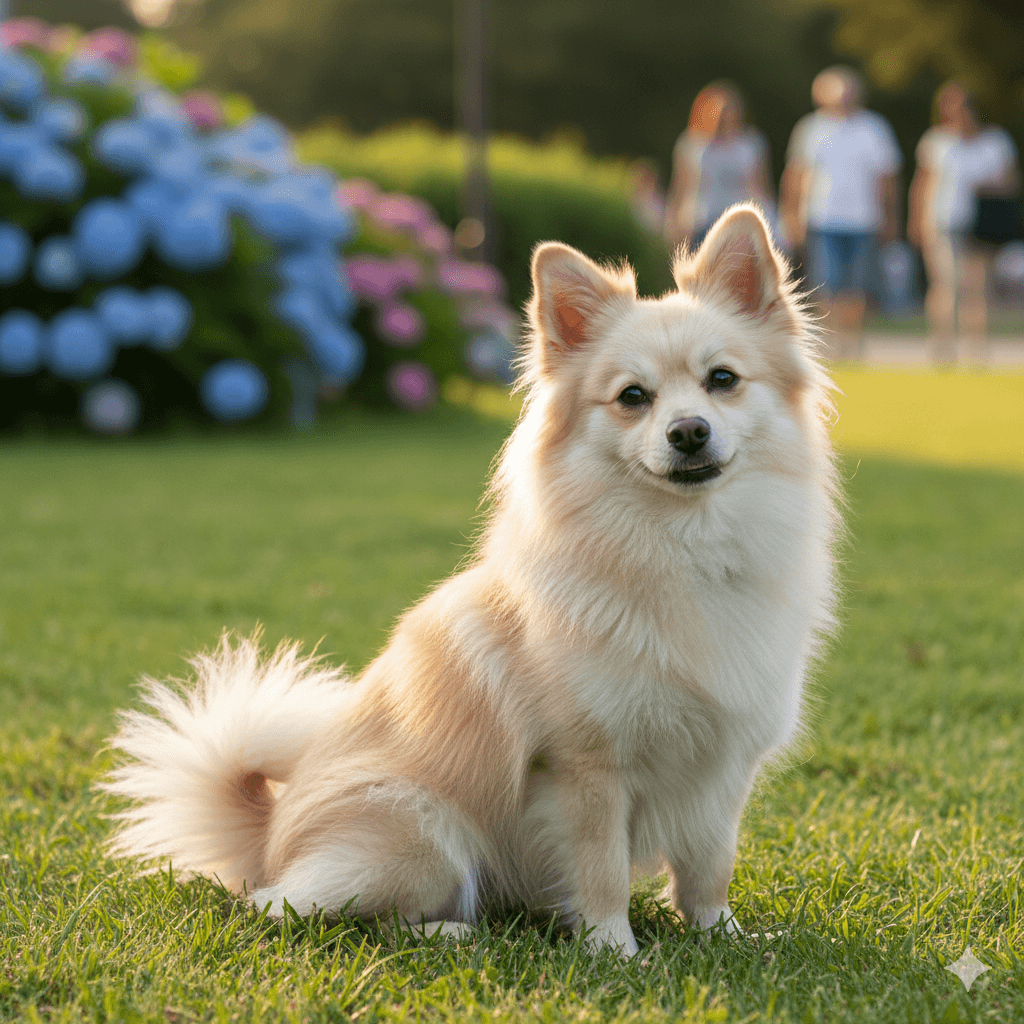
Distinctive Physical Traits of the German Spitz
From its foxy face to its signature plume tail, every feature of the German Spitz reflects both function and flair. This breed’s appearance is so consistent across sizes that it’s instantly recognizable—even to casual observers.
- Double Coat with Stand-Off Texture:
A thick undercoat and long, straight outer guard hairs create a “puffed” silhouette that repels weather and dirt naturally. - Fox-Like Facial Expression:
Almond-shaped eyes, small erect ears, and a tapered muzzle give the breed an intelligent, ever-alert look full of character. - Curled Tail Over the Back:
The tail is high-set and curls tightly forward over the back—a hallmark of the spitz family and a sign of confidence. - Five Official Sizes:
Ranging from the rare Wolfspitz (up to 22 inches) to the tiny Zwergspitz (under 9 inches), all share perfect proportion and balance. - Classic Color Palette:
White, black, orange, brown, and wolf-gray are accepted; pure white is especially iconic in the Mittel and Klein varieties.
These traits aren’t just decorative—they’re evolutionary adaptations that helped the breed thrive in harsh climates and demanding roles.
Check this guide 👉Discover the Finnish Spitz Dog: Best 7 Expert Tips!
Check this guide 👉German Shorthaired Pointer Dog: Best 7 Expert Tips!
Check this guide 👉Saint Bernard German Shepherd Mix: Best 7 Expert Tips!
Temperament Highlights | Care Considerations |
|---|---|
Alert and vocal watchdog | Daily brushing during shedding seasons |
Loyal and affectionate with family | Needs early socialization to prevent suspicion |
Confident but not aggressive | Sensitive to harsh training—responds to praise |
Playful and energetic indoors | Prone to boredom—requires mental stimulation |
Reserved with strangers | Not suited for off-leash parks due to prey drive |
Personality and Temperament: Bright, Bold, and Deeply Devoted
The German Spitz carries itself with cheerful self-assurance, blending watchfulness with warmth in a way few small breeds achieve. It’s neither clingy nor aloof—but proudly present, always aware, and quick to share joy or sound the alarm.
- Natural Watchdog Instincts:
Bred to alert, not attack, it will bark sharply at doorbells, passersby, or unusual sounds—making it an excellent home guardian. - Strong Bond with One or Two People:
While friendly with the household, it often forms an intense attachment to a primary caregiver, following them like a shadow. - Cheerful and Animated:
Known for “dancing” on hind legs or spinning in excitement, the German Spitz brings liveliness to everyday moments. - Cautious with New Faces:
It may take time to warm up to strangers—never shy, but naturally discerning, a trait honed from centuries of guarding duty. - Good with Respectful Children:
Best suited for families with older kids who understand gentle handling; its small size demands supervision around toddlers.
In a world of overly excitable or passive pets, the German Spitz strikes a rare balance: attentive without neediness, bold without aggression.
Training and Socialization Tips for German Spitz Owners
Training this intelligent breed requires consistency, positivity, and early exposure to the wider world. While eager to learn, the German Spitz won’t tolerate repetitive drills or scolding—it thrives on fun and mutual respect.
- Begin Socialization Before 12 Weeks:
Introduce puppies to varied people, sounds, surfaces, and calm dogs to build confidence and reduce wariness. - Use High-Value Rewards:
Small treats, verbal praise, or play work better than mechanical repetition—keep sessions under 10 minutes to maintain focus. - Address Barking Early:
Teach a “quiet” command alongside “speak” to give your dog control over its natural alertness without suppressing it. - Crate and Potty Training Go Hand-in-Hand:
Their cleanliness instinct makes them quick to housebreak—especially with a consistent schedule and positive reinforcement. - Avoid Force-Based Methods:
Harsh tones or punishment can shut down this sensitive breed; patience and clarity yield far better long-term results.
With the right approach, your German Spitz becomes not just obedient—but a willing, joyful partner in daily life.
Grooming and Health Needs of the German Spitz
That glorious coat is stunning—but it demands seasonal attention. Beyond aesthetics, proactive health care ensures your Spitz lives its full 12–15-year lifespan with vitality.
- Heavy Seasonal Shedding (“Blowing Coat”):
Twice a year, the undercoat sheds profusely—daily brushing for 2–3 weeks prevents tangles and airborne fur clouds. - Bathing Only When Necessary:
Over-bathing strips natural oils; use mild dog shampoo every 6–8 weeks or when visibly dirty. - Dental and Eye Care:
Small breeds are prone to tartar buildup; brush teeth 3–4 times weekly. Also, check eyes for tear staining, especially in light-colored dogs. - Common Genetic Conditions:
Patellar luxation, hip dysplasia, and epilepsy can occur—choose breeders who screen for these via OFA or equivalent. - Weight Management:
Despite their fluff, they gain weight easily; measure meals and avoid excessive treats to protect joints and heart health.
Grooming is bonding time—not a chore. A well-maintained German Spitz is not only beautiful but more comfortable and healthier.
Living with a German Spitz: Ideal Home and Lifestyle Fit
This breed adapts beautifully to apartments, houses, and even rural settings—as long as its emotional and mental needs are met. It’s not demanding in space, but it is in companionship.
- Thrives in Engaged Households:
Prefers homes where someone is often present; long solo hours may trigger barking or anxiety-related behaviors. - Excellent for Active Seniors or Singles:
Its moderate exercise needs (30–45 mins/day) and alert nature make it a perfect companion for retirees or remote workers. - Cold-Weather Lover:
The thick double coat makes it happiest in cooler climates; provide shade and water in summer to avoid overheating. - Not Ideal for Multi-Pet Chaos:
Can coexist with other dogs if raised together, but may chase cats or small animals due to strong prey drive. - Low Odor, High Fluff:
Unlike some breeds, it carries little doggy smell—but be prepared for fur on furniture, especially during shedding season.
The German Spitz doesn’t need a mansion—just a loving heart and a window to watch the world from.
Potential Challenges of Owning a German Spitz
Beneath the fluffy exterior lies a complex, opinionated personality. While deeply rewarding, ownership comes with real responsibilities that shouldn’t be overlooked.
- Excessive Barking Tendency:
Without training, it may bark at every leaf rustle—manageable with early intervention but challenging in noise-sensitive areas. - Stubborn Streak During Adolescence:
Around 6–12 months, many test boundaries; consistent rules prevent small habits from becoming big problems. - Grooming Time Commitment:
That dreamy coat mats quickly if neglected—weekly brushing year-round, daily during shedding, is non-negotiable. - Separation Anxiety Risk:
Strong attachment can lead to whining, pacing, or destructive chewing if left alone too often or too long. - Limited Off-Leash Freedom:
High prey drive and curiosity mean it’s rarely 100% recall-reliable—leash walks and secure yards are essential.
Acknowledging these upfront ensures you’re prepared—not surprised—and lets your Spitz thrive in a home built on understanding.
“The German Spitz is always attentive, lively and exceptionally devoted to his owner. He is very teachable and easy to train. His distrust towards strangers and lack of hunting instinct make him the ideal watchdog for the home.” – American Kennel Club
Frequently Asked Questions About the German Spitz Dog
Is the German Spitz the same as a Pomeranian?
No—they share ancestry, but the Pomeranian is a dwarfed, show-bred offshoot of the German Zwergspitz, with a more exaggerated ruff and smaller size.
How often does a German Spitz need grooming?
Brush 2–3 times weekly year-round, and daily for 2–3 weeks during seasonal “blowouts” in spring and fall.
Are German Spitz dogs good for first-time owners?
Yes—with preparation. They’re intelligent and clean, but require early socialization and consistent, gentle training.
Do they get along with other pets?
Often yes with dogs, but their prey drive may cause issues with cats or small animals unless introduced early and supervised.
Can a German Spitz live in an apartment?
Absolutely—they’re quiet when trained, compact, and need only moderate exercise, making them ideal city companions.
A Fluffy Flame of Loyalty and Spirit
The German Spitz may arrive in a whirl of fur and barks, but it stays as a steadfast, joyful presence in your daily life. More than just a pretty face, this breed offers centuries of working intelligence, unwavering vigilance, and affectionate companionship—all wrapped in a cloud-like coat that seems spun from sunlight itself. If you’re ready to welcome a dog that’s equal parts guardian, entertainer, and devoted friend, look no further than the bright-eyed, tail-curled wonder that is the German Spitz. In its loyal gaze, you’ll find not just a pet—but a lifelong spark of joy.

Is Rawhide Bad for Cats? Best 7 Expert Tips! – Discover the risks, safe alternatives, and expert advice to keep your feline friend healthy and happy.

Is Rawhide Bad for Dogs? Best 7 Expert Tips! – Discover the risks, benefits, and safer alternatives to rawhides for your dog’s chewing needs.

Understanding Anorexia in Cats: Best 7 Expert Tips! – Learn why cats stop eating, spot warning signs, and discover how to help your feline regain appetite safely.

Understanding Anorexia in Dogs: Best 7 Expert Tips! – Learn causes, symptoms, and solutions to help your dog regain appetite and stay healthy.