

Symptoms of Cushings Disease in Dogs: Best 7 Expert Tips!

Symptoms of Cushings Disease in Dogs: Best 7 Expert Tips!

Symptoms of Cushings Disease in Dogs: What Every Owner Should Know

Cushing’s disease is a complex but manageable condition that affects thousands of dogs each year—often silently at first. Caused by an excess of cortisol, a natural stress hormone, it can mimic normal aging or other illnesses, making early detection tricky. Yet recognizing the signs early can dramatically improve your dog’s quality of life and long-term outlook. From increased thirst to a pot-bellied appearance, the symptoms are subtle but significant. Understanding what to watch for empowers you to act before complications arise.

What Is Cushing’s Disease?


Cushing’s disease—also known as hyperadrenocorticism—occurs when a dog’s body produces too much cortisol over time. This hormone plays vital roles in metabolism, immune response, and stress management, but chronic excess wreaks havoc on nearly every system. Most cases stem from a benign tumor on the pituitary gland (about 85%), while others arise from adrenal tumors or prolonged steroid use.

 
  • Pituitary-dependent Cushing’s:
    The most common form, caused by a small tumor in the pituitary gland that overstimulates the adrenal glands to produce cortisol.
     
  • Adrenal-dependent Cushing’s:
    Less common; results from a tumor directly on one adrenal gland, leading to unregulated hormone output.
     
  • Iatrogenic Cushing’s:
    Triggered by long-term use of corticosteroid medications (e.g., prednisone) for allergies or immune conditions.
     
  • Slow, progressive onset:
    Symptoms often develop gradually over months or even years, easily mistaken for normal aging.
     
  • Middle-aged to senior dogs at highest risk:
    Typically diagnosed in dogs over 6 years old, with certain breeds like Poodles, Dachshunds, and Boxers more predisposed.
 

Though not immediately life-threatening, untreated Cushing’s can lead to diabetes, high blood pressure, or kidney damage—making awareness essential.

Symptoms of Cushings Disease in Dogs: Best 7 Expert Tips!

Early Warning Signs Many Owners Miss


In its early stages, Cushing’s disease flies under the radar. You might chalk up changes to “getting older,” but these subtle shifts are your first clues.

 
  • Increased water consumption:
    Your dog may suddenly drain their bowl multiple times a day—a classic early red flag.
     
  • Frequent urination or accidents:
    Excess water intake leads to more bathroom trips, sometimes even indoors despite prior housetraining.
     
  • Ravenous appetite:
    Cortisol boosts hunger, so your dog might seem constantly hungry, even after full meals.
     
  • Lethargy or reduced stamina:
    They may nap more, lag on walks, or show less interest in play than before.
     
  • Thinning hair or slow regrowth:
    Patchy fur—especially along the flanks—without itching can signal hormonal imbalance.
 

These signs alone aren’t proof of Cushing’s, but if several appear together, it’s time for a veterinary check.

Common Symptoms of Cushing’s Signs That Need Urgent Attention
Pot-bellied appearance Sudden collapse or weakness
Thin, fragile skin Difficulty breathing
Recurrent skin infections Severe vomiting or diarrhea
Panting at rest Sudden blindness or disorientation
Muscle wasting Inability to stand or walk

Advanced Physical and Behavioral Changes


As Cushing’s progresses, physical changes become more pronounced. These reflect the body’s struggle under constant hormonal stress.

 
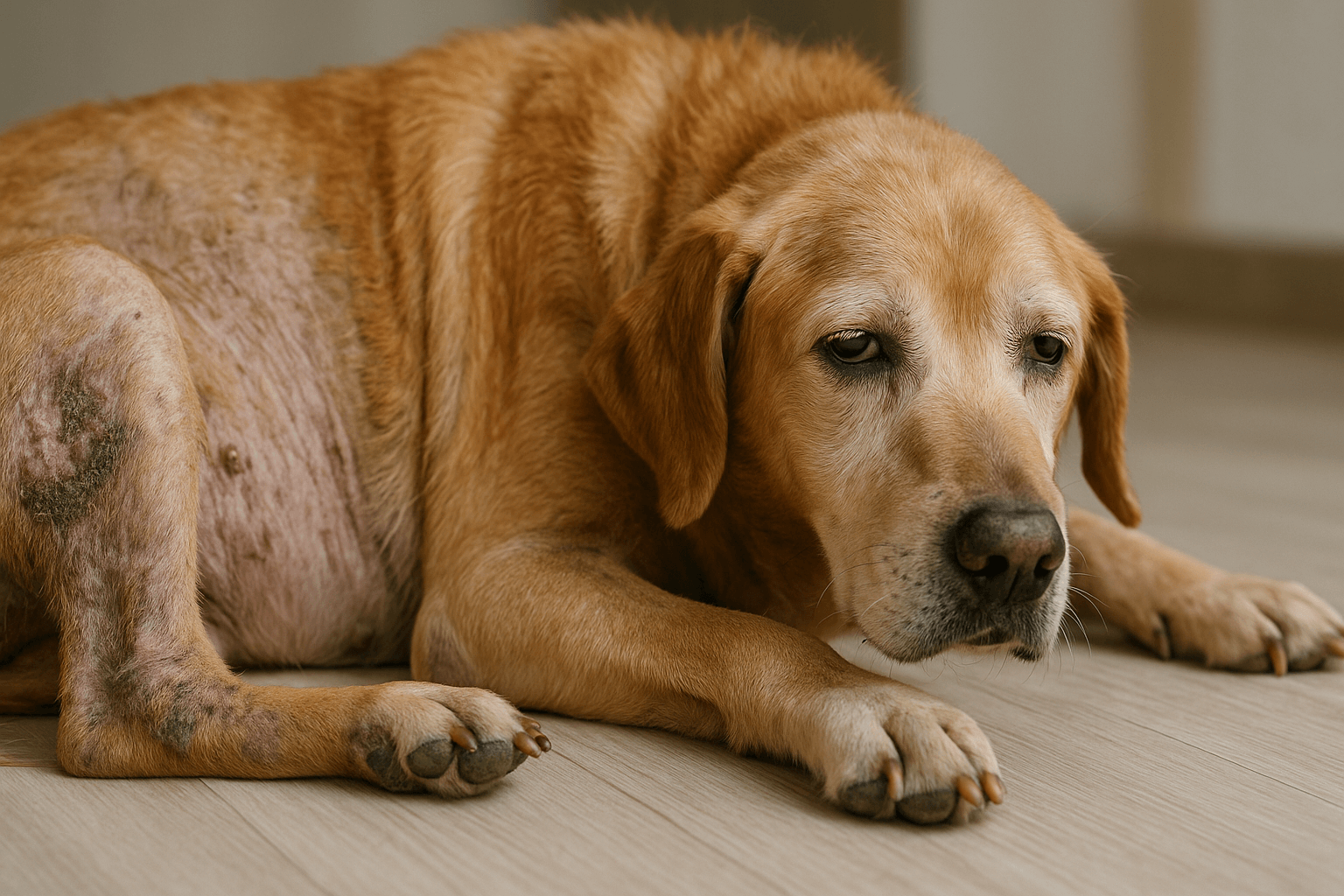
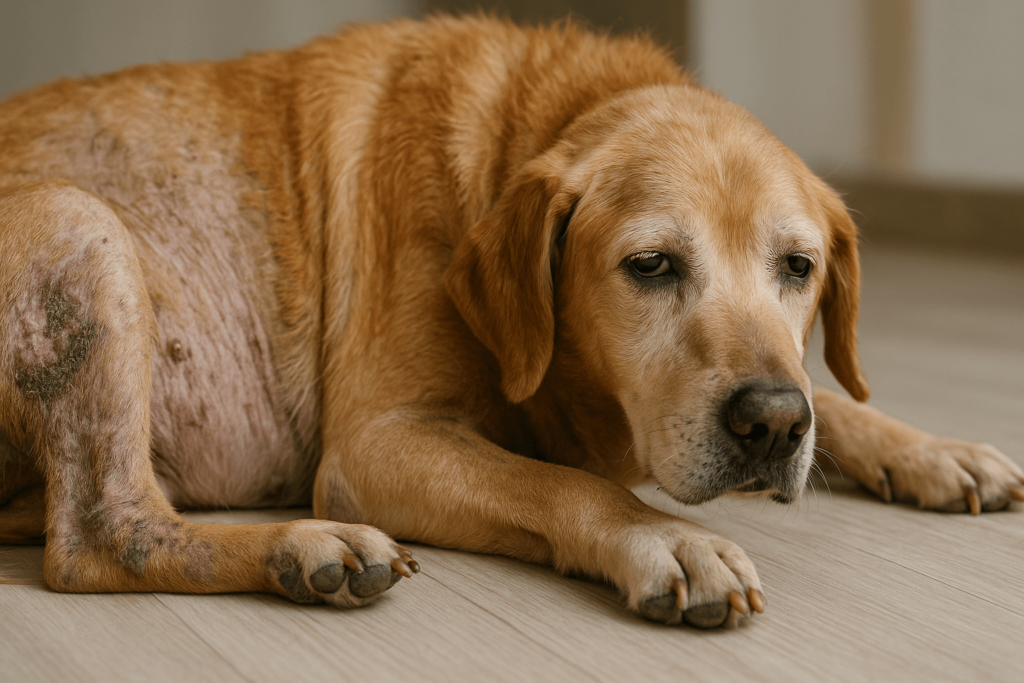
  • “Pot-bellied” abdomen:
    Muscle loss and fat redistribution create a distended belly despite normal or increased weight.
     
  • Hair loss (alopecia):
    Symmetrical bald patches—often on the sides, belly, or tail—without itching are highly suggestive of Cushing’s.
     
  • Darkened or bruised-looking skin:
    Hyperpigmentation and easy bruising occur due to thinning skin and poor healing.
     
  • Excessive panting:
    Even when cool or resting, your dog may pant heavily due to cortisol’s effect on metabolism and respiration.
     
  • Reduced interaction or confusion:
    In advanced cases, mental fog or withdrawal may appear, mimicking cognitive decline.
 

These changes are distressing to witness—but many are reversible with proper treatment.

Diagnostic Challenges and Testing Options


Diagnosing Cushing’s isn’t straightforward. Bloodwork often looks “mostly normal,” requiring specific hormone tests for confirmation.

 
  • ACTH Stimulation Test:
    Measures adrenal response to synthetic ACTH; widely used for initial screening and monitoring treatment.
     
  • Low-Dose Dexamethasone Suppression Test (LDDST):
    More sensitive; helps differentiate between pituitary and adrenal forms.
     
  • Ultrasound imaging:
    Can reveal an enlarged or tumor-bearing adrenal gland in adrenal-dependent cases.
     
  • Urine cortisol-to-creatinine ratio:
    A non-invasive first step—elevated levels suggest Cushing’s but aren’t definitive.
     
  • Repeat testing may be needed:
    Because cortisol fluctuates, vets sometimes run multiple tests over weeks to confirm.
 

Patience and collaboration with your vet are key—accurate diagnosis prevents unnecessary treatment or missed illness.

Treatment Paths Based on Cause


Treatment depends entirely on the underlying cause—and early intervention yields the best outcomes.

 
  • Medication for pituitary-dependent Cushing’s:
    Vetoryl (trilostane) is the gold standard, blocking cortisol production with regular monitoring.
     
  • Surgery for adrenal tumors:
    If localized and benign, surgical removal can be curative—though risks exist.
     
  • Gradual steroid taper for iatrogenic cases:
    Never stop steroids abruptly; wean under veterinary supervision to allow natural hormone recovery.
     
  • Lifelong management, not cure (in most cases):
    Pituitary Cushing’s is controlled, not eliminated—requiring ongoing meds and checkups.
     
  • Diet and supportive care:
    Low-fat, high-protein diets and joint support can improve comfort and overall health during treatment.
 

With consistent care, most dogs return to near-normal energy, appetite, and appearance within months.

What to Expect During Treatment


Starting treatment is just the beginning. Monitoring ensures your dog stays in the “sweet spot”—not too much or too little cortisol.

 
  • Frequent vet visits initially:
    ACTH tests every 1–2 weeks at first, then every 3–6 months once stable.
     
  • Watch for side effects:
    Lethargy, vomiting, or collapse could signal an Addisonian crisis (too little cortisol)—a medical emergency.
     
  • Gradual symptom reversal:
    Fur regrowth may take 3–6 months; belly firmness and energy often improve sooner.
     
  • Adjustments are normal:
    Dosage changes based on test results and behavior keep your dog balanced.
     
  • Quality of life usually improves dramatically:
    Most owners report their dog “feels like themselves again” within weeks.
 

Patience and vigilance make all the difference in long-term success.

Preventing Complications and Supporting Long-Term Health


Even with treatment, Cushing’s increases risks for other issues—so proactive care is crucial.

 
  • Monitor for diabetes:
    Excess cortisol raises blood sugar; watch for renewed thirst or weight loss.
     
  • Maintain dental hygiene:
    Cushing’s dogs are prone to gum disease—brush teeth and schedule cleanings.
     
  • Avoid unnecessary steroids:
    Future use of corticosteroids (even topical) must be carefully considered.
     
  • Keep vaccinations and parasite control up to date:
    Their immune system may be less robust despite treatment.
     
  • Schedule biannual wellness exams:
    Early detection of secondary issues ensures continued well-being.
 

With thoughtful management, many dogs live happily for years after diagnosis.


Frequently Asked Questions

Is Cushing’s disease painful for dogs?

Not directly—but complications like muscle weakness, skin infections, or high blood pressure can cause discomfort.

Adrenal tumors may be curable with surgery. Pituitary-dependent Cushing’s is managed long-term but not cured.

With proper treatment, many dogs live 2–4 years or more after diagnosis, often with excellent quality of life.

No—but symmetrical hair loss is one of the most recognizable signs, especially in advanced cases.

No. While supportive nutrition helps, medication or surgery is required to address the hormone imbalance.

Living Well Beyond the Diagnosis


A Cushing’s diagnosis can feel overwhelming—but it’s not a death sentence. In fact, with modern veterinary care, most dogs regain their spark, strength, and silly quirks once treatment begins. The key is early recognition, accurate diagnosis, and a partnership with your vet who understands the nuances of this condition. You know your dog best: trust your gut when something seems “off,” even if it’s just a little extra panting or a suddenly ravenous appetite. Because in the world of canine health, small signals often speak volumes—and your attention could be the lifeline your loyal companion needs.

Newfoundland Dog Personality: Best 7 Expert Tips!

Newfoundland Dog Personality: Best 7 Expert Tips! – Discover the gentle, loyal, and protective nature of this giant breed perfect for families.

Can Hot Pavement Burn Your Cats Paws? Best 7 Expert Tips!

Can Hot Pavement Burn Your Cats Paws? Best 7 Expert Tips! – Learn how to protect your cat’s paws from hot surfaces and prevent painful burns this summer.

Can Hot Pavement Burn Your Dogs Paws? Best 7 Expert Tips!

Can Hot Pavement Burn Your Dogs Paws? Best 7 Expert Tips! – Learn how to protect your dog’s paws from hot surfaces and ensure safe summer walks.

Irish Wolfhound Size: Best 7 Expert Tips!

Irish Wolfhound Size: Best 7 Expert Tips! – Discover the ideal height, weight, and care tips for this majestic giant breed. Learn how to manage their impressive stature responsibly.

Leave a Reply

Your email address will not be published. Required fields are marked *


