
Understanding Swedish Dog Breeds: Best 7 Expert Tips!
Sweden may be known for its serene landscapes and innovation, but it also boasts a proud heritage of hardy, intelligent dog breeds shaped by centuries of work and companionship. From northern herding guardians to southern hunting partners, Swedish breeds reflect resilience, loyalty, and adaptability. Whether you’re drawn to their striking looks or storied past, learning about these national treasures helps you appreciate their unique needs. Discover the top seven expert insights into Sweden’s native canines—and why they might just be your perfect match.
Origins and History of Swedish Dog Breeds
Swedish dog breeds evolved in harmony with the country’s diverse climate, terrain, and rural lifestyles. Developed primarily for utility rather than show, these dogs were trusted partners in farming, hunting, and guarding. Their histories are deeply intertwined with Scandinavian culture and survival:
- Rooted in Rural Necessity:
These breeds emerged from practical needs—herding reindeer in Lapland, tracking moose in dense forests, or guarding homesteads in remote villages. - Preserved Through Isolation:
Many breeds remained genetically distinct due to Sweden’s vast wilderness and limited crossbreeding with foreign dogs until the 20th century. - National Pride and Conservation:
In the 1900s, Swedish kennel clubs launched efforts to document and protect native breeds from extinction, especially after industrialization reduced their working roles. - Influence of Sami Culture:
The indigenous Sami people played a crucial role in developing northern breeds like the Swedish Lapphund for reindeer herding under extreme Arctic conditions. - Modern Recognition:
While some breeds remain rare outside Scandinavia, international interest has grown thanks to their intelligence, versatility, and striking Nordic appearance.
These breeds are living links to Sweden’s agrarian past—crafted not for glamour, but for grit, loyalty, and quiet competence.
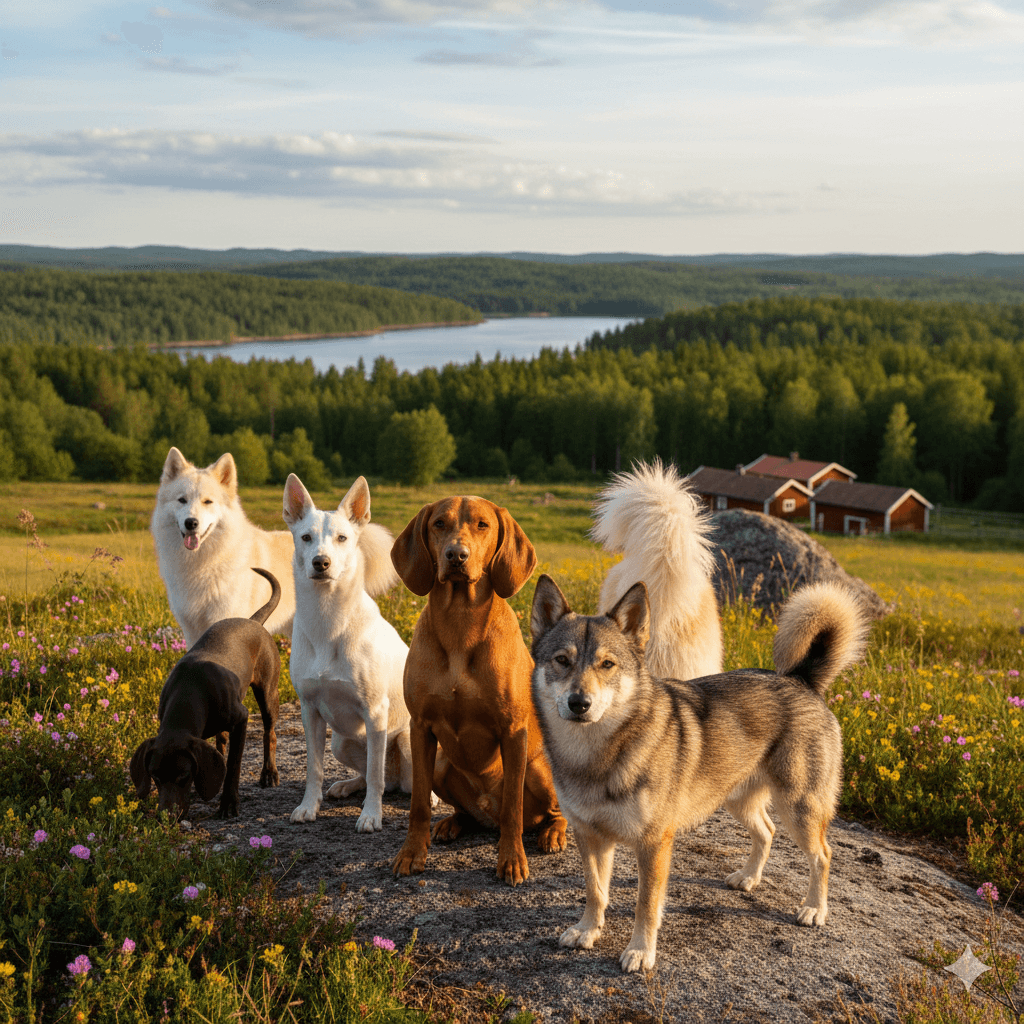
Distinctive Physical Traits of Swedish Dogs
Swedish breeds share certain aesthetic hallmarks shaped by function and climate, yet each has unique features that reflect its original purpose. Their builds and coats are optimized for endurance and adaptability:
- Dense, Weather-Resistant Coats:
Most have double coats—thick undercoats and longer guard hairs—to withstand snow, wind, and freezing temperatures for months each year. - Medium to Large, Balanced Builds:
Neither overly bulky nor delicate, their frames support agility, stamina, and strength without sacrificing elegance or speed. - Erect, Alert Ears:
Nearly all Swedish breeds feature pricked ears, enhancing their acute hearing for hunting or herding in vast, silent landscapes. - Expressive, Almond-Shaped Eyes:
Typically dark and intelligent, their eyes convey attentiveness and calm confidence—key traits for independent working dogs. - Curled or Saber Tails:
Many carry their tails high, often curled over the back, which aids balance in snow and signals mood to their human partners.
These physical traits aren’t just beautiful—they’re survival tools honed over generations in one of Europe’s most demanding environments.
Check this guide 👉Most Popular Dog Breeds: Best 7 Expert Tips!
Check this guide 👉Cuban Dog Breeds: Best 7 Expert Tips!
Check this guide 👉Nordic Dog Breeds: Best 7 Expert Tips!
Temperament Highlights | Care Considerations |
|---|---|
Calm yet alert demeanor | Regular brushing (2–3x weekly) due to thick double coats |
Strong loyalty to family | Need for consistent, positive training from puppyhood |
High working intelligence | Require daily mental and physical stimulation |
Reserved with strangers | Early socialization essential to prevent shyness |
Natural independence | Not overly clingy—ideal for active, respectful owners |
Top Swedish Dog Breeds You Should Know
While Sweden has contributed several remarkable breeds to the canine world, a few stand out for their historical significance and modern appeal. Each brings something special to the table for the right owner:
- Swedish Vallhund:
This compact, fearless herding dog—once rumored to be an ancestor of the Corgi—boasts boundless energy and a bold, cheerful personality. - Swedish Lapphund:
One of Europe’s oldest breeds, it’s a versatile, affectionate reindeer herder with a luxurious coat and keen sensitivity to human emotions. - Hamiltonstövare:
A tricolored scent hound developed for hunting hare and fox, known for its stamina, gentle nature, and melodious bay. - Schillerstövare:
Sleek, swift, and driven, this red-and-tan hound excels in tracking and thrives in active homes with room to run. - Smålandsstövare (Smaland Hound):
Sweden’s oldest native scent hound, rugged and determined, with a protective streak and deep loyalty to its family.
These breeds may not dominate global popularity charts, but their authenticity, versatility, and quiet dignity make them deeply rewarding companions.
Training and Socialization Essentials
Swedish breeds are intelligent and capable, but their independent streak—forged through generations of problem-solving in the field—requires thoughtful training approaches:
- Start Early and Stay Consistent:
Puppies should begin socialization before 16 weeks to build confidence around people, sounds, and other animals. - Use Positive Reinforcement:
Harsh methods backfire; these dogs respond best to praise, play, and food rewards paired with clear, calm guidance. - Channel Their Natural Instincts:
Herding, tracking, or scent games satisfy their drive and prevent boredom-related behaviors like digging or barking. - Respect Their Thoughtful Nature:
They may pause to assess a situation before obeying—a sign of intelligence, not defiance. Patience yields stronger trust. - Avoid Repetitive Drills:
Monotony frustrates them; keep sessions short, varied, and mentally engaging to maintain focus and enthusiasm.
With the right approach, Swedish breeds become not just obedient, but willing and joyful partners in daily life.
Exercise and Lifestyle Needs
These are working dogs at heart—bred for endurance, not lounging. Their energy levels and environmental needs must align with your lifestyle to ensure long-term harmony:
- Daily Vigorous Activity Required:
Long walks, jogging, hiking, or structured dog sports like agility or tracking are essential for physical and mental balance. - Cold-Weather Champions:
They thrive in cooler climates and often love snow; hot, humid weather requires shade, hydration, and limited midday activity. - Not Suited for Apartment Life (Mostly):
While the Vallhund can adapt, most Swedish breeds need a yard or regular access to open, safe spaces to explore. - Mental Enrichment Is Non-Negotiable:
Puzzle toys, obedience challenges, or learning new tricks prevent frustration and destructive behaviors. - Ideal for Active, Outdoor-Oriented Families:
They bond deeply with owners who share their love of nature, routine, and purposeful activity.
A Swedish breed left idle will find their own “job”—often one you’d rather they didn’t!
Grooming and Health Considerations
Their beautiful coats and robust builds come with specific care needs. Proactive health and grooming routines ensure a long, comfortable life:
- Seasonal Blowing of Coat:
Expect heavy shedding twice a year; daily brushing during these periods prevents matting and reduces indoor fur buildup. - Ear and Dental Hygiene:
Pricked ears are generally low-risk, but regular checks are wise; dental care is crucial as many are prone to early tartar buildup. - Generally Hardy but Not Immune:
Most have low rates of genetic disease thanks to careful breeding, but hip dysplasia or eye conditions can occur in some lines. - Avoid Overbathing:
Their natural coat oils provide weather protection—bathe only when necessary (every 2–3 months) with mild dog shampoo. - Vet Visits with Breed Awareness:
Choose a veterinarian familiar with Nordic or working breeds who understands their stoic nature and subtle illness cues.
With consistent care, many Swedish breeds enjoy lifespans of 12–14 years or more—loyal and healthy well into their senior years.
Fun Facts and Cultural Legacy of Swedish Dog Breeds
Beyond their working roles, Swedish dog breeds have carved a quiet but enduring place in Nordic culture, folklore, and modern identity. These lesser-known tidbits reveal just how deeply they’re woven into Sweden’s national fabric:
- Symbol of Rural Heritage:
The Swedish Vallhund is sometimes called “Västgötaspets” after the Västergötland region, where it was nearly lost before a royal revival effort in the 1940s. - Featured on Stamps and Coins:
The Swedish Lapphund has appeared on national postage stamps, honoring its role as a cultural icon of the Arctic north. - Ancient DNA Links:
Genetic studies show the Swedish Lapphund shares ancestry with other Spitz-type dogs like the Finnish Lapphund and Norwegian Buhund—part of a broader Nordic canine family. - Moose Hunting Tradition:
Breeds like the Jämthund (Swedish Elkhound) were historically used not just to track but to hold moose at bay—an incredibly brave and skilled feat still demonstrated in field trials today. - National Breed Status:
Several Swedish breeds are officially recognized as “national dogs” by the Swedish Kennel Club, with strict breeding standards to preserve their authenticity and working ability.
These dogs aren’t just pets—they’re living symbols of resilience, tradition, and the deep bond between humans and animals in Sweden’s wild, windswept landscapes.
Frequently Asked Questions About Swedish Dog Breeds
Are Swedish dog breeds good with children?
Yes—especially the Vallhund and Lapphund, which are affectionate and patient, though supervision and early socialization are always recommended.
Do they bark a lot?
It varies: hounds like the Hamiltonstövare have loud, frequent bays when on scent, while herding breeds may alert-bark but are generally quieter indoors.
Are they hypoallergenic?
No—most have double coats that shed moderately to heavily, making them unsuitable for allergy sufferers.
How rare are they outside Sweden?
Very rare in some regions; the Smålandsstövare and Schillerstövare are seldom seen outside Scandinavia, while Vallhunds have modest international followings.
Can they live in warm climates?
With precautions—plenty of shade, AC access, limited exercise in heat—they can adapt, but they’ll never truly thrive like they do in cooler zones.
Embracing the Spirit of Sweden’s Canine Heritage
Swedish dog breeds carry the quiet strength of a nation shaped by forests, mountains, and long winters. They aren’t flashy or demanding of constant attention, but offer something deeper: unwavering loyalty, thoughtful companionship, and a shared purpose. Whether you’re hiking alpine trails, working on a farm, or simply seeking a grounded, intelligent friend, these Nordic dogs bring authenticity to every moment. By welcoming one into your life, you don’t just gain a pet—you become part of a centuries-old tradition of mutual trust between humans and dogs in the wild heart of Scandinavia. Their legacy isn’t written in trophies, but in the steady rhythm of paws on snow and the quiet watchfulness of eyes that understand your soul.
Pandango Dog: Best 7 Expert Tips! – Discover the perfect mix of Poodle smarts and Dachshund charm, plus care, health, and training advice for this lovable hybrid.
Why Is My Cats Skin Pink? Best 7 Expert Tips! – Discover causes, signs, and solutions for pink skin in cats. Learn when to worry and how to keep your feline healthy.

Why Is My Dogs Skin Pink? Best 7 Expert Tips! – Discover causes, symptoms, and solutions for pink skin in dogs. Learn when to act and how to keep your pup healthy!

Understanding Cat Skin Colors: Best 7 Expert Tips! – Explore the science, patterns, and care behind feline skin colors for a healthier, happier cat.