

Scottish Wildcat Size vs Domestic Cat
The Scottish wildcat, often referred to as the “Highland tiger,” is a fascinating and elusive creature native to Scotland. While it shares some physical similarities with domestic cats, its size, behavior, and wild nature set it apart significantly. Comparing the Scottish wildcat to its domestic counterpart reveals intriguing differences that highlight the unique adaptations of this endangered species. In this blog post, we’ll explore their size disparities, physical traits, and what makes the Scottish wildcat a remarkable yet vulnerable animal. Whether you’re a cat lover or simply curious about wildlife, this comparison will deepen your appreciation for these feline wonders.
Key Differences in Size Between Scottish Wildcats and Domestic Cats
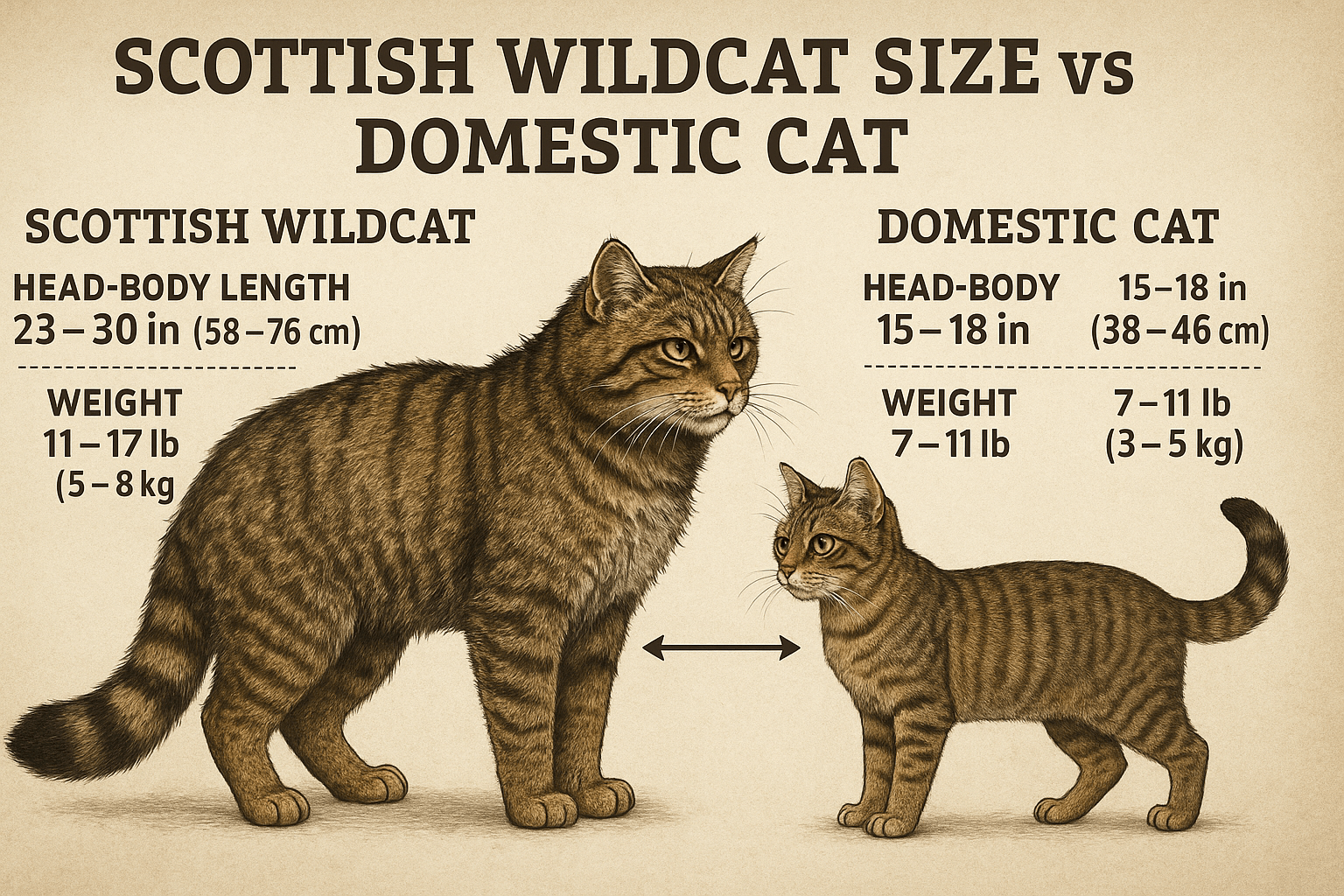
When comparing the Scottish wildcat to a domestic cat, one of the most noticeable distinctions lies in their size. These differences are not just limited to weight but also include height, length, and overall build.
Body Length:
Scottish wildcats typically measure between 55 to 75 cm (22 to 30 inches) from nose to tail base, while domestic cats average around 46 to 60 cm (18 to 24 inches).Tail Length:
The Scottish wildcat’s tail is thick and bushy, measuring about 25 to 35 cm (10 to 14 inches), compared to the slimmer tails of most domestic cats, which range from 20 to 30 cm (8 to 12 inches).Weight:
Adult Scottish wildcats weigh between 5 to 8 kg (11 to 18 lbs), making them significantly heavier than the average domestic cat, which usually weighs 3.5 to 5.5 kg (8 to 12 lbs).Height at Shoulders:
Standing taller due to stronger legs, Scottish wildcats have a shoulder height of approximately 35 to 40 cm (14 to 16 inches), whereas domestic cats are generally around 25 to 30 cm (10 to 12 inches).Muscular Build:
Scottish wildcats possess a stockier, more muscular frame designed for hunting and survival in the wild, unlike the sleeker bodies of domestic cats bred for companionship.
These size differences underscore the wildcat’s role as a formidable predator, perfectly adapted to its rugged environment.
Physical Traits That Set Scottish Wildcats Apart
Beyond size, several physical characteristics distinguish Scottish wildcats from domestic cats. These features reflect their evolutionary adaptation to survive in the wild.
Coat Pattern:
Scottish wildcats have a distinctive tabby pattern with bold, unbroken stripes along their flanks, while domestic cats often display varied patterns including spots or patches.Fur Texture:
Their fur is much thicker and coarser than that of domestic cats, providing insulation against harsh Scottish weather conditions.Facial Features:
Scottish wildcats have a broader, flatter face with a pronounced jawline, giving them a more rugged appearance compared to the softer features of domestic cats.Eyes:
Their eyes are slightly larger and more alert, reflecting their need for heightened awareness in the wild.Claws:
Unlike domestic cats, whose claws may remain retracted unless needed, Scottish wildcats keep their claws sharp and ready for hunting prey.
These physical traits highlight the wildcat’s resilience and ability to thrive in challenging environments, setting them apart from their domestic relatives.
Check this guide 👉Savannah Cat vs Regular Cat: Best 7 Expert Tips!
Check this guide 👉Himalayan Cat vs Maine Coon: Best 7 Expert Tips!
Check this guide 👉Siberian Cat vs Maine Coon: Best 7 Expert Tips!
Scottish Wildcat Characteristics | Domestic Cat Characteristics |
|---|---|
Average weight: 5-8 kg | Average weight: 3.5-5.5 kg |
Thick, coarse fur | Softer, varied textures |
Bold, unbroken tabby stripes | Diverse coat patterns |
Bushy, long tail | Slimmer, shorter tail |
Stocky, muscular build | Sleeker, less robust physique |
Behavioral Differences Between Scottish Wildcats and Domestic Cats
In addition to physical contrasts, Scottish wildcats exhibit behaviors distinct from those of domestic cats. These differences stem from their wild instincts and natural habitat.
Solitary Nature:
Scottish wildcats are solitary animals, avoiding contact with others except during mating season, while domestic cats often form close bonds with humans or other pets.Hunting Skills:
As skilled hunters, wildcats rely on stealth and strength to catch prey like rabbits and rodents, whereas domestic cats may hunt opportunistically if allowed outdoors.Territorial Behavior:
Wildcats fiercely defend their territory, which can span several square kilometers, unlike domestic cats whose territories are usually confined to their home or garden.Vocalizations:
Scottish wildcats rarely meow and instead use growls, hisses, and other sounds to communicate, while domestic cats frequently vocalize to interact with humans.Adaptability:
Domestic cats adapt easily to living indoors, while Scottish wildcats require vast, undisturbed wilderness areas to survive.
These behavioral differences emphasize the wildcat’s independence and specialized needs compared to the adaptable lifestyle of domestic cats.
Conservation Challenges Facing Scottish Wildcats
The Scottish wildcat faces numerous threats that have pushed the species to the brink of extinction. Understanding these challenges is crucial for supporting conservation efforts.
Hybridization with Domestic Cats:
Interbreeding with feral and domestic cats dilutes the pure wildcat gene pool, threatening the survival of genetically authentic Scottish wildcats.Habitat Loss:
Deforestation and agricultural expansion reduce the available wilderness needed for wildcats to thrive.Persecution by Humans:
Historically hunted as pests, wildcats continue to face danger from illegal trapping and poisoning.Declining Prey Populations:
A reduction in natural prey, such as rabbits and small mammals, forces wildcats to struggle for food.Public Awareness Gaps:
Many people are unaware of the wildcat’s plight, leading to insufficient funding and support for conservation initiatives.
Addressing these challenges requires coordinated efforts from governments, organizations, and individuals to protect this iconic species.
The Role of Genetics in Identifying Pure Wildcats
Identifying pure Scottish wildcats is critical for conservation efforts, as hybridization poses a significant threat. Key genetic markers help distinguish true wildcats from hybrids.
Distinctive Tabby Markings:
Pure wildcats display clear, unbroken stripe patterns, unlike hybrids, which often have broken or irregular markings.DNA Testing:
Scientists use DNA analysis to confirm whether an individual carries wildcat-specific genes.Skull Structure Analysis:
Researchers examine skull shapes to differentiate wildcats from domestic cats, as wildcats have proportionally larger skulls.Tail Tip Coloration:
Pure wildcats have a black tip at the end of their tail, a feature absent in most hybrids.Collaborative Research Efforts:
Universities and wildlife organizations work together to refine genetic identification methods and preserve authenticity.
Understanding these genetic nuances is vital for protecting the Scottish wildcat’s future.
How Climate Change Impacts Scottish Wildcats
Climate change poses additional challenges for Scottish wildcats, affecting both their habitats and prey availability.
Shifts in Vegetation:
Changes in plant growth alter the ecosystems where wildcats live, impacting shelter and hunting grounds.Disrupted Food Chains:
Rising temperatures affect rodent populations, reducing the availability of prey for wildcats.Increased Human Activity:
As climate change drives humans to exploit new areas for agriculture, wildcat habitats shrink further.Extreme Weather Events:
Harsh storms and flooding disrupt nesting sites and force wildcats to relocate.Long-Term Survival Risks:
Without intervention, climate-induced stressors could push already vulnerable populations closer to extinction.
Addressing climate-related threats is essential for safeguarding the Scottish wildcat’s fragile ecosystem.
Fun Facts About Scottish Wildcats
Scottish wildcats are full of surprises! Here are some lesser-known facts about these captivating creatures.
Ancient Origins:
Scottish wildcats are descendants of European wildcats that arrived in Britain over 9,000 years ago.Cultural Symbolism:
They feature prominently in Celtic mythology, representing courage and independence.Impressive Agility:
Wildcats can leap up to three times their body length to catch prey or escape predators.Seasonal Breeding:
Mating occurs primarily during winter months, with kittens born in spring when food is abundant.Unique Roar-Like Growl:
Unlike domestic cats’ meows, Scottish wildcats emit a deep, growling sound that resembles a miniature roar.
These fun facts highlight the charm and mystique of the Scottish wildcat, inspiring greater interest in its protection.
Frequently Asked Questions About Scottish Wildcats
Are Scottish wildcats dangerous?
No, they avoid human interaction and pose no threat unless cornered or provoked.
How many Scottish wildcats are left?
Estimates suggest fewer than 300 genetically pure Scottish wildcats remain in the wild.
Can Scottish wildcats be kept as pets?
No, they are wild animals unsuited for domestication and should remain in their natural habitats.
What is being done to save Scottish wildcats?
Conservation programs focus on habitat restoration, captive breeding, and public education campaigns.
How can I help protect Scottish wildcats?
Support conservation organizations, report sightings responsibly, and spay/neuter domestic cats to prevent hybridization.
Preserving the Legacy of the Scottish Wildcat
The Scottish wildcat stands as a symbol of untamed beauty and resilience, embodying the spirit of Scotland’s rugged landscapes. While it shares some resemblance to domestic cats, its unique size, traits, and behaviors make it a truly extraordinary creature. However, without urgent action, this magnificent animal risks disappearing forever. By raising awareness, supporting conservation efforts, and respecting their wild nature, we can ensure future generations have the privilege of witnessing the Highland tiger in its rightful place—roaming free amidst the Scottish hills. Together, let’s champion the cause of this incredible species.
Is Rawhide Bad for Cats? Best 7 Expert Tips! – Discover the risks, safe alternatives, and expert advice to keep your feline friend healthy and happy.

Is Rawhide Bad for Dogs? Best 7 Expert Tips! – Discover the risks, benefits, and safer alternatives to rawhides for your dog’s chewing needs.

Understanding Anorexia in Cats: Best 7 Expert Tips! – Learn why cats stop eating, spot warning signs, and discover how to help your feline regain appetite safely.

Understanding Anorexia in Dogs: Best 7 Expert Tips! – Learn causes, symptoms, and solutions to help your dog regain appetite and stay healthy.