
Understanding the Samoyed Dog Personality: A Joyful Companion
Key Traits That Define the Samoyed Personality
- Friendly and Outgoing Nature:
Samoyeds are known for their affectionate demeanor, forming strong bonds with family members and even strangers. Their friendliness makes them poor guard dogs but exceptional companions. - Playful Energy and Enthusiasm:
These dogs have boundless energy and love to play, whether it’s fetch, tug-of-war, or romping in the snow. Their playful nature keeps them youthful and entertaining. - Intelligent and Trainable:
Samoyeds are highly intelligent, capable of learning commands and tricks quickly. However, their independent streak may require patience and consistency during training. - Social Butterflies:
They thrive on social interaction and dislike being left alone for long periods. Isolation can lead to anxiety or destructive behaviors due to their pack-oriented instincts. - Gentle with Children and Pets:
Samoyeds are patient and gentle, making them ideal playmates for kids and compatible with other household pets like cats or smaller dogs.
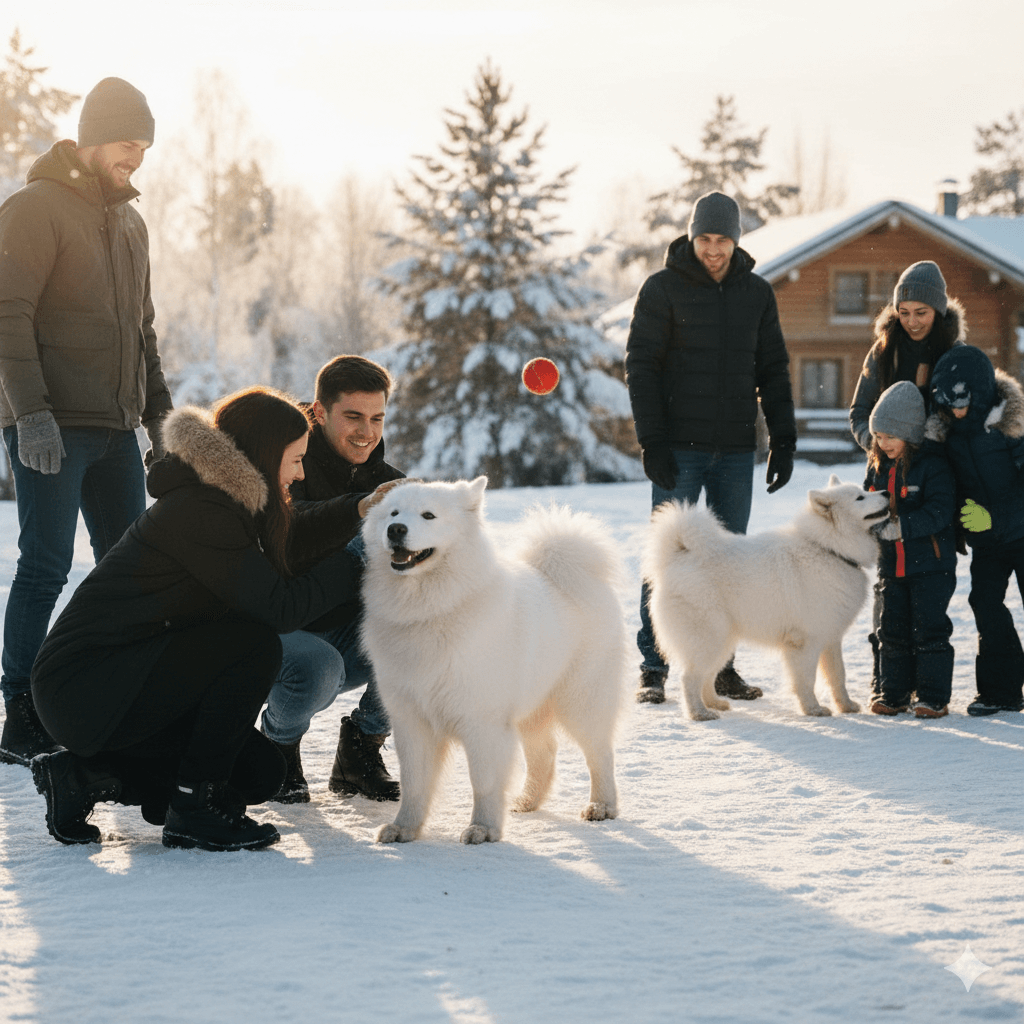
The Samoyed’s Affectionate Nature: Why They’re Great Family Dogs
- Unwavering Loyalty:
Samoyeds form unbreakable bonds with their owners, often following them from room to room to stay close. Their loyalty ensures they’re always eager to please. - Comfort Seekers:
They enjoy physical closeness, whether it’s cuddling on the couch or leaning against your leg while you work. Their warmth is both literal and figurative. - Emotional Support Qualities:
Many Samoyeds exhibit intuitive sensitivity to their owner’s emotions, offering comfort during stressful times through their calming presence. - Family-Oriented Behavior:
As pack animals, Samoyeds view their human family as their “pack” and prioritize group harmony. They rarely show aggression within the home environment. - Adaptable to Different Lifestyles:
Whether living in an apartment or a house with a yard, Samoyeds adjust well as long as they receive ample attention and mental stimulation.
Check this guide 👉Newfoundland Dog Personality: Best 7 Expert Tips!
Check this guide 👉Samoyed Dog Hypoallergenic: Best 7 Expert Tips!
Check this guide 👉Samoyed Husky Mix: Best 7 Expert Tips!
Key Personality Traits | Care Requirements |
|---|---|
Friendly and outgoing | Daily brushing to prevent matting |
Intelligent and trainable | At least 1–2 hours of exercise daily |
Playful and energetic | Secure fencing to prevent escapes |
Social and people-oriented | Consistent human interaction to avoid loneliness |
Gentle with children and pets | Positive reinforcement training methods |
How Samoyeds Express Their Intelligence and Independence
- Quick Learners:
Samoyeds pick up new commands and tasks rapidly, thanks to their sharp minds and eagerness to engage with their humans. - Problem-Solving Skills:
They enjoy solving puzzles and figuring out challenges, whether it’s opening doors or finding hidden treats around the house. - Stubborn Streaks:
While intelligent, Samoyeds can be willful, choosing to ignore commands if they don’t see the point or feel motivated enough. - Herding Instincts:
Bred to herd reindeer, Samoyeds retain this instinct, often trying to “herd” children, pets, or even moving objects like cars—a behavior requiring redirection. - Curiosity and Exploration:
Their cleverness drives them to explore their surroundings, sometimes leading to mischief if left unsupervised.
The Playful Side of Samoyeds: Keeping Them Entertained
- Love for Outdoor Adventures:
From hiking trails to playing fetch in the park, Samoyeds adore outdoor activities that allow them to stretch their legs and explore. - Snow Enthusiasts:
With their thick double coats, Samoyeds absolutely love snow and will happily frolic in it for hours without tiring. - Interactive Toys and Games:
Puzzle toys, treat-dispensing gadgets, and games like hide-and-seek keep their minds sharp and prevent boredom-related issues. - Exercise Requirements:
At least 1–2 hours of vigorous exercise daily is recommended to satisfy their stamina and prevent restlessness indoors. - Bonding Through Play:
Engaging in interactive play strengthens the bond between Samoyeds and their owners, reinforcing trust and mutual enjoyment.
Social Needs of Samoyeds: Why Companionship Matters
- Separation Anxiety Risks:
Leaving a Samoyed alone for extended periods can trigger anxiety, resulting in whining, barking, or destructive chewing. - Preference for Group Activities:
They enjoy participating in family gatherings, outings, or simply lounging together during quiet evenings at home. - Compatibility with Other Pets:
Samoyeds generally get along well with other animals, especially if raised together from puppyhood. - Need for Human Interaction:
Regular petting, talking, and playing reassure them of their place within the family unit, boosting their confidence. - Avoiding Isolation:
Crates or confined spaces should only be used temporarily, as prolonged isolation contradicts their sociable instincts.
Challenges of Owning a Samoyed: Managing Their Stubborn Side
- Selective Obedience:
Samoyeds may choose to obey commands inconsistently, particularly if distracted or disinterested in the task at hand. - Escape Artists:
Their curiosity and resourcefulness often lead them to find creative ways to escape yards or enclosures, necessitating secure fencing. - Vocal Tendencies:
Samoyeds are known for their “talking” or vocalizing, which can range from soft murmurs to loud barks if ignored or bored. - Grooming Demands:
Their thick double coat requires frequent brushing to prevent matting and shedding, adding to their maintenance needs. - High Exercise Threshold:
Without sufficient physical and mental stimulation, they may resort to digging, chewing, or other destructive habits.
Training Tips for a Well-Behaved Samoyed
- Start Early:
Begin training during puppyhood to establish good habits early and prevent undesirable behaviors from developing later. - Use Positive Reinforcement:
Reward-based methods using treats, praise, or toys motivate Samoyeds to repeat desired actions willingly. - Keep Sessions Short and Fun:
Their attention spans are limited, so aim for brief, engaging sessions that maintain their interest and enthusiasm. - Be Consistent:
Consistency in commands, routines, and expectations prevents confusion and reinforces clear boundaries. - Incorporate Mental Stimulation:
Combine training with puzzle-solving exercises to challenge their intellect and reduce boredom-related disobedience.
“Samoyeds are active dogs. They are inquisitive, quick-witted, and mischievous, remaining playful through old age. With a twinkle in their dark, intelligent eyes and their ever present ‘Samoyed smile,’ they are quick to engage with people and other dogs.” – Samoyed Club of America
Frequently Asked Questions About Samoyed Dog Personalities
What makes Samoyeds such friendly dogs?
Their history as Arctic working dogs bred for companionship and teamwork has shaped their inherently friendly and social nature.
Are Samoyeds good with children?
Yes, Samoyeds are incredibly gentle and patient, making them excellent playmates for kids when properly socialized.
Do Samoyeds bark a lot?
While not excessive barkers, Samoyeds can be vocal, especially if bored or seeking attention. Proper training helps manage this behavior.
How much exercise do Samoyeds need daily?
They require at least 1–2 hours of vigorous exercise daily to stay happy and healthy, including walks, runs, or playtime.
Can Samoyeds live in apartments?
Yes, but only if their exercise and social needs are met consistently. Their adaptability depends on active owners who provide ample stimulation.
A Loyal Companion Like No Other

Is Rawhide Bad for Cats? Best 7 Expert Tips! – Discover the risks, safe alternatives, and expert advice to keep your feline friend healthy and happy.

Is Rawhide Bad for Dogs? Best 7 Expert Tips! – Discover the risks, benefits, and safer alternatives to rawhides for your dog’s chewing needs.

Understanding Anorexia in Cats: Best 7 Expert Tips! – Learn why cats stop eating, spot warning signs, and discover how to help your feline regain appetite safely.

Understanding Anorexia in Dogs: Best 7 Expert Tips! – Learn causes, symptoms, and solutions to help your dog regain appetite and stay healthy.