

Possum Poop vs Cat Poop: How to Tell Them Apart
If you’ve ever stumbled upon animal droppings in your yard or home, you may have wondered whether they came from a possum, a cat, or another creature entirely. While both possums and cats are common visitors to suburban areas, their poop can sometimes look similar at first glance. However, there are distinct differences that can help you identify the source and take appropriate action. Understanding these differences is not only important for maintaining cleanliness but also for ensuring safety, as some animal droppings may carry diseases or parasites. In this guide, we’ll explore everything you need to know about possum poop vs cat poop, from appearance to potential risks, so you can confidently handle any situation.
Expert Insight: Understanding Your Cat’s Poop
“A quick look at the surface of the stool will help you to determine what’s a normal amount of mucus (that shiny coating on the surface of the poop) for your kitty. You should also check for any unusual objects (like hair ties or milk jug rings!) in your cat’s poop.”
Key Differences Between Possum Poop and Cat Poop
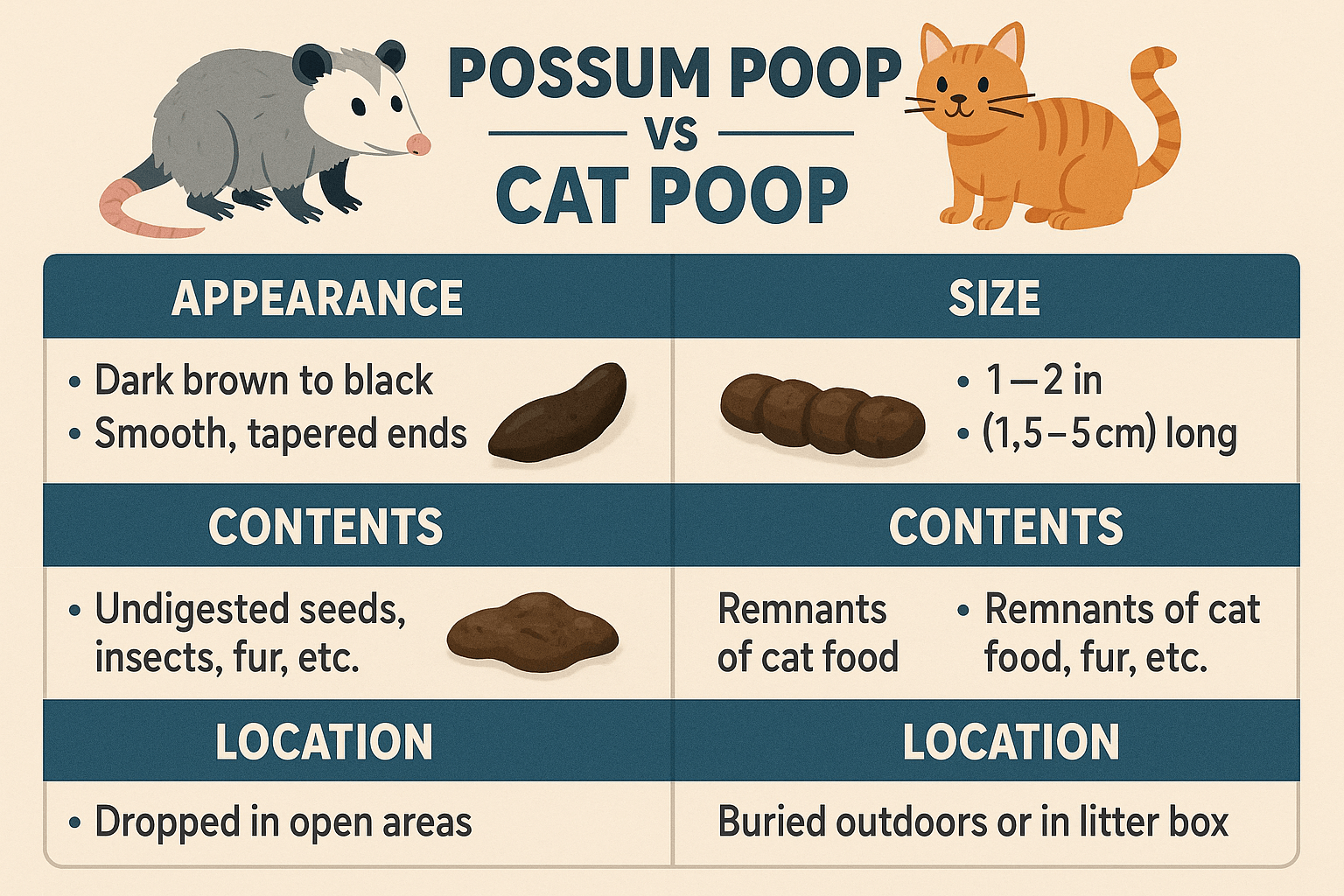
While possum and cat poop may share some similarities, there are several key characteristics that set them apart. By paying attention to these details, you can accurately identify which animal left the droppings.
Shape and Size:
Possum poop is typically tubular and smooth, resembling small pellets. Cat poop, on the other hand, tends to be more compact and rounded, often slightly larger than possum droppings.Color Variations:
Possum droppings are usually dark brown or black, while cat poop is often medium to dark brown, depending on their diet.Texture and Consistency:
Possum poop is often softer and may have a segmented appearance. Cat poop is firmer and more uniform in texture.Location of Droppings:
Possums tend to leave their droppings in sheltered areas like under decks or in attics. Cats, especially outdoor ones, may defecate in open spaces like gardens or flower beds.Smell Intensity:
Both types of poop have a strong odor, but possum droppings often smell muskier due to their varied diet of fruits, insects, and garbage.
By observing these distinguishing features, you can confidently determine whether the droppings belong to a possum or a cat.
Health Risks Associated with Possum and Cat Poop
Both possum and cat poop can pose health risks if not handled properly. Understanding these risks can help you take precautions to protect yourself, your family, and your pets.
Parasites in Cat Poop:
Cat feces can contain Toxoplasma gondii, a parasite that causes toxoplasmosis. This poses a risk to pregnant women and individuals with weakened immune systems.Disease Transmission from Possums:
Possum droppings may carry leptospirosis, a bacterial infection that can spread through contact with contaminated soil or water.Salmonella Risk:
Both possum and cat poop can harbor salmonella bacteria, which can cause gastrointestinal illness if ingested accidentally.Allergens and Odors:
Accumulated droppings can release allergens and unpleasant odors, affecting indoor air quality and causing respiratory issues.Environmental Contamination:
Animal waste can contaminate soil and water sources, impacting local ecosystems and plant growth.
Taking steps to clean up and prevent exposure to these droppings is essential for safeguarding your health and environment.
Check this guide 👉Can You Flush Cat Poop? Best 7 Expert Tips!
Check this guide 👉Cat Poop vs Dog Poop: Best 7 Expert Tips!
Check this guide 👉Yellow Cat Poop: Best 7 Expert Tips!
Characteristics of Possum Poop | Characteristics of Cat Poop |
|---|---|
Tubular and pellet-like shape | Compact and rounded |
Dark brown or black color | Medium to dark brown |
Softer texture with segments | Firmer and uniform consistency |
Found in sheltered areas | Often in open spaces like gardens |
Muskier, fruity odor | Strong, ammonia-like smell |
How to Safely Clean Up Animal Droppings
Cleaning up possum or cat poop requires caution to avoid contamination and ensure thorough sanitation. Follow these steps to handle the task safely and effectively.
Wear Protective Gear:
Always wear gloves and a mask to minimize direct contact with the droppings and reduce inhalation of harmful particles.Use Disinfectants:
After removing the droppings, clean the area with a disinfectant solution to kill bacteria and parasites.Dispose of Waste Properly:
Place the droppings in a sealed plastic bag and dispose of them in an outdoor trash bin to prevent spreading germs.Ventilate the Area:
If cleaning indoors, open windows and use fans to improve airflow and reduce lingering odors.Wash Hands Thoroughly:
After cleanup, wash your hands with soap and warm water to remove any residual contaminants.
By following these guidelines, you can minimize health risks and maintain a clean, safe environment.
Preventing Possums and Cats from Defecating in Your Yard
To avoid dealing with unwanted droppings, it’s important to take preventive measures that discourage possums and cats from frequenting your property.
Remove Food Sources:
Secure trash cans, clean up fallen fruit, and avoid leaving pet food outside to deter possums and stray cats.Install Motion-Activated Lights:
Bright lights can scare away nocturnal animals like possums and discourage them from returning.Use Natural Repellents:
Sprinkle citrus peels, coffee grounds, or vinegar around your yard, as these scents repel both possums and cats.Fence Off Vulnerable Areas:
Block access to spaces like under decks or sheds where possums might nest or leave droppings.Encourage Predators (Safely):
Install owl decoys or play recordings of predator calls to keep possums and cats at bay.
With these strategies, you can create an unwelcoming environment for unwanted visitors and reduce the likelihood of finding droppings on your property.
Signs You May Have a Possum Problem
If you suspect possums are visiting your property, certain signs can confirm their presence. These indicators can help you take action before the problem escalates.
Nocturnal Activity Sounds:
Listen for scratching or rustling noises in your attic or under your deck during nighttime hours.Visible Droppings:
Look for pellet-like droppings in sheltered areas, such as garages or sheds.Damage to Plants:
Possums often feed on fruits, vegetables, and flowers, leaving behind nibbled plants or scattered debris.Unusual Pet Behavior:
Dogs or cats may act agitated or bark excessively if they sense a possum nearby.Odor Issues:
A strong, musky smell may indicate the presence of possums in enclosed spaces like attics.
Recognizing these signs early allows you to address the issue promptly and prevent further damage.
Ways to Identify Stray Cats in Your Area
Stray cats can leave behind droppings and cause disturbances in your yard. Identifying their presence helps you manage the situation effectively.
Footprints Around Your Property:
Look for small paw prints in soft soil or snow, often accompanied by claw marks.Scratching Posts Near Trees:
Stray cats may scratch tree trunks or fences to mark their territory.Food Remnants:
Uneaten food scraps near your trash can signal a stray cat’s visit.Vocalizations at Night:
Yowling or meowing after dark could indicate stray cats roaming nearby.Frequent Sightings:
Spotting the same cat repeatedly in your yard suggests it has claimed the area as its own.
By identifying stray cats, you can take steps to humanely deter them and protect your property.
Eco-Friendly Solutions for Dealing with Animal Droppings
For those seeking environmentally friendly ways to handle possum and cat poop, these sustainable solutions offer effective alternatives.
Composting Non-Cat Waste Safely:
Use a dedicated compost bin for possum droppings, ensuring it reaches high temperatures to kill pathogens.Natural Enzyme Cleaners:
Opt for enzyme-based cleaners that break down organic waste without harsh chemicals.DIY Repellent Sprays:
Mix water with essential oils like peppermint or eucalyptus to create a homemade repellent spray.Plant Barrier Gardens:
Grow prickly plants like holly or rose bushes to create natural barriers against possums and cats.Encourage Beneficial Wildlife:
Attract birds or snakes (if safe) to naturally control possum populations without harming the ecosystem.
These eco-conscious methods allow you to address animal droppings responsibly while protecting the environment.
Frequently Asked Questions About Possum Poop vs Cat Poop
Is possum poop dangerous?
Yes, possum droppings can carry diseases like leptospirosis and should be handled with care.
Can I compost cat poop?
It’s generally not recommended due to the risk of pathogens like Toxoplasma gondii contaminating the compost.
What does possum poop look like compared to raccoon poop?
Possum poop is smoother and more pellet-like, while raccoon poop is often larger and rope-like.
How do I stop my cat from pooping in my garden?
Use deterrents like citrus scents, motion-activated sprinklers, or designated litter areas to redirect their behavior.
Should I call pest control for possum droppings?
If the infestation is severe or poses a health risk, professional assistance may be necessary to safely remove possums and sanitize the area.
Understanding and Managing Possum Poop vs Cat Poop
Identifying the differences between possum poop and cat poop is crucial for maintaining a clean and healthy environment. By recognizing their unique characteristics, understanding the associated risks, and implementing preventive measures, you can effectively manage unwanted droppings on your property. Whether you’re dealing with a curious neighborhood cat or a sneaky possum, knowledge and preparation are your best tools for handling these situations. With the right approach, you can keep your home and yard free from unwanted messes and enjoy peace of mind knowing you’ve taken the necessary steps to protect your space.
Is Rawhide Bad for Cats? Best 7 Expert Tips! – Discover the risks, safe alternatives, and expert advice to keep your feline friend healthy and happy.

Is Rawhide Bad for Dogs? Best 7 Expert Tips! – Discover the risks, benefits, and safer alternatives to rawhides for your dog’s chewing needs.

Understanding Anorexia in Cats: Best 7 Expert Tips! – Learn why cats stop eating, spot warning signs, and discover how to help your feline regain appetite safely.

Understanding Anorexia in Dogs: Best 7 Expert Tips! – Learn causes, symptoms, and solutions to help your dog regain appetite and stay healthy.