

Playful Cat Body Language: Best 7 Expert Tips!

Playful Cat Body Language: Best 7 Expert Tips!

Playful Cat Body Language: Decoding Your Cat’s Joyful Signals


Cats don’t just play—they perform. Every pounce, tail flick, and ear twitch is a silent conversation in the language of joy. When your cat rolls onto their back, leaps at a sunbeam, or chases a crumpled ball of paper, they’re not being silly. They’re expressing instinct, energy, and trust. Understanding playful cat body language isn’t just adorable—it’s essential for bonding, preventing boredom, and recognizing when your cat is truly thriving.

The Science Behind Playful Behavior in Cats


Play isn’t frivolous—it’s fundamental. Even adult cats retain juvenile behaviors because play sharpens survival skills, relieves stress, and strengthens neural pathways. Here’s why your cat’s play matters:

 
  • Instinctual Practice:
    Play mimics hunting—stalking, pouncing, and capturing—helping cats stay mentally and physically prepared for real-life scenarios.

  • Energy Release:
    Indoor cats often have excess energy with no outlet; play is their natural way to burn it off.

  • Bonding Ritual:
    When your cat brings you a toy or initiates play, they’re inviting you into their social circle.

  • Emotional Regulation:
    Play releases endorphins that reduce anxiety and promote calm, even in high-stress environments.

  • Cognitive Development:
    Puzzle toys and interactive games stimulate problem-solving, memory, and focus—especially in kittens and seniors.


Ignoring your cat’s need to play isn’t harmless—it’s neglect. A cat that doesn’t play is a cat at risk of boredom, obesity, and behavioral issues.

Playful Cat Body Language: Best 7 Expert Tips!

Key Signs of Playful Cat Body Language (And What They Really Mean)


Your cat communicates joy through movement, posture, and expression. Learning these cues turns everyday moments into deeper connections.

 
  • Tail Twitching at the Tip:
    A gently flicking tail during play signals excitement—not agitation. It’s the feline equivalent of a child bouncing on their toes.

  • Belly Exposure (With Relaxed Posture):
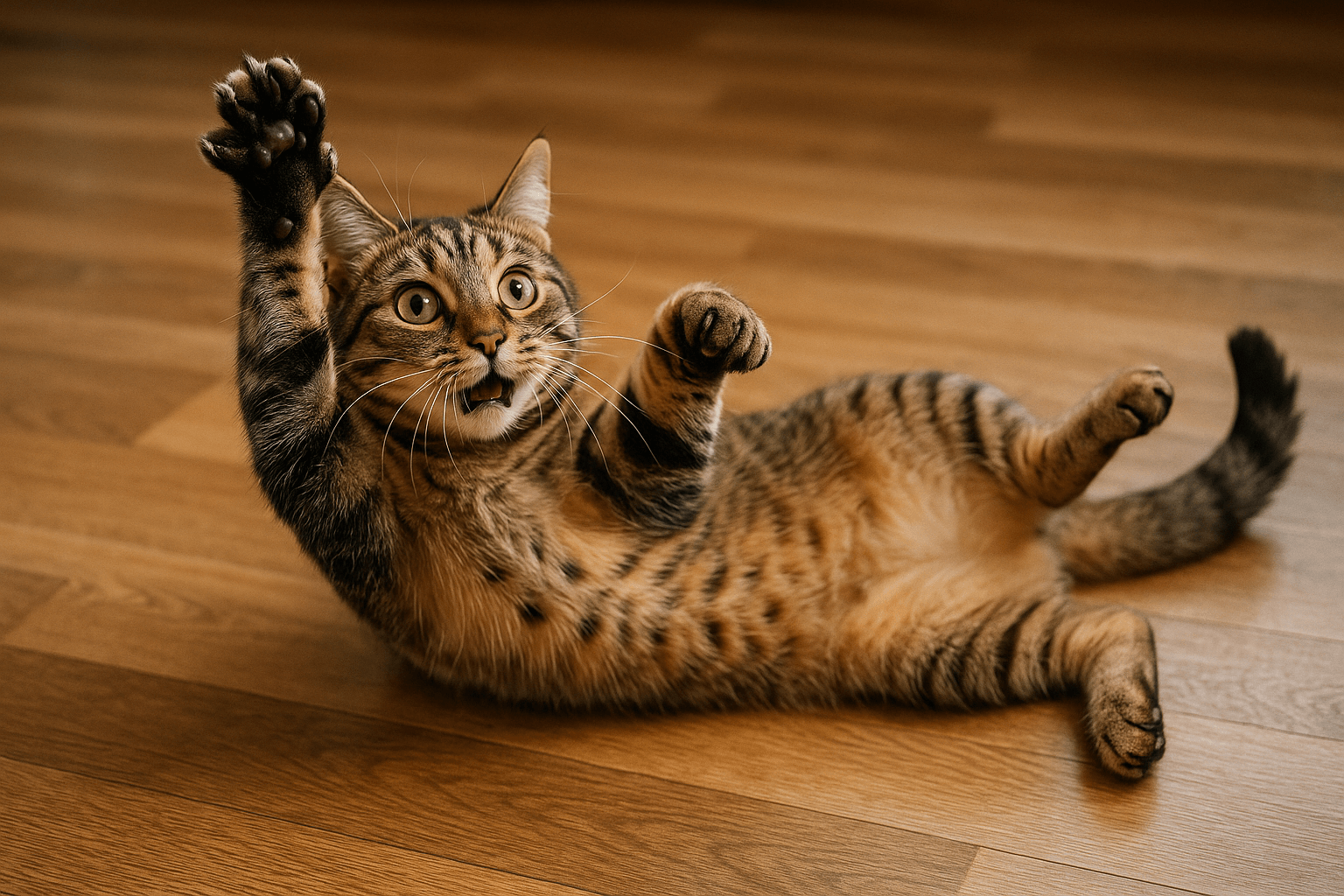
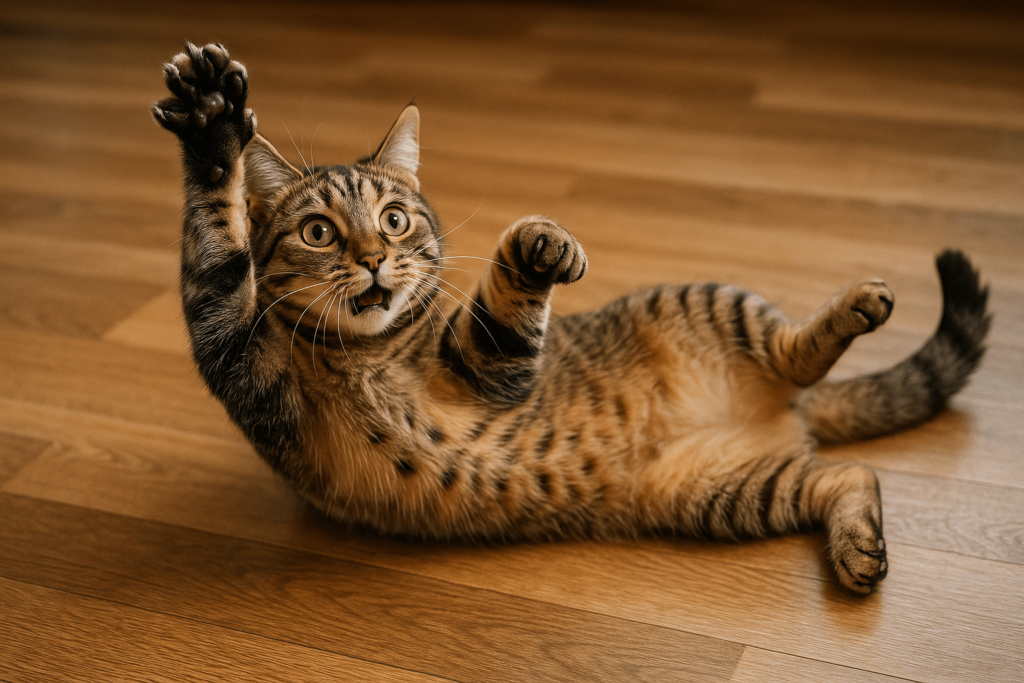
    When a cat rolls over and shows their belly while playfully batting at you, it’s a sign of trust—not an invitation to rub it.

  • Crouching with Quivering Hindquarters:
    This low, trembling stance precedes a pounce. It’s pure focus, honed by millennia of predatory instinct.

  • Ears Forward and Slightly Rotated:
    Alert, forward-facing ears show engagement. If they flatten, it’s time to pause—play may have turned overstimulated.

  • Rapid Blinking or “Cat Kisses”:
    Slow blinks during play indicate contentment and safety. Your cat feels secure enough to lower their guard.


These signals aren’t random—they’re a language. Learn them, and you’ll understand when your cat is ready to engage… or when they need space.

Playful Body Signal What It Communicates
Crouching low with tail held high Ready to pounce—excited and focused
Rolling on back with paws in air Trust and invitation to play, not a request for belly rubs
Tail whipping side to side rapidly Overstimulation or frustration—pause play immediately
Zoomies (sudden bursts of running) Energy release and pure joy—common after naps or meals
Soft vocalizations (chirps, trills) Excitement and communication—often directed at prey or owners

When Play Turns Aggressive: Recognizing the Fine Line


Not all energetic behavior is playful. Cats can cross from fun to frustration in seconds. Distinguishing the two protects both your cat and your home.

 
  • Dilated Pupils + Stiff Posture:
    If your cat’s eyes widen unnaturally and their body becomes rigid, they’re likely overstimulated—not playing.

  • Growling or Hissing Mid-Play:
    These are warning signs. Even if it started as a game, your cat is signaling discomfort.

  • Biting Without Letting Go:
    Play bites are quick and gentle. Deep, holding bites mean your cat feels threatened or overwhelmed.

  • Flattened Ears or Tail Puffing:
    Classic signs of fear or aggression. Stop interaction immediately and give space.

  • Chasing Without Return:
    Play involves chasing and retreating. If your cat relentlessly pursues without pause, it may be territorial or anxious behavior.


Play should leave your cat energized, not exhausted or anxious. If it feels tense, it’s not play—it’s stress in disguise.

How to Encourage Healthy Play: Tools, Timing, and Techniques


Creating a playful environment isn’t about buying expensive toys—it’s about understanding rhythm, instinct, and your cat’s unique personality.

 
  • Mimic Prey Movement:
    Move toys erratically—zigzag, pause, dart. Cats respond to unpredictability, not linear motion.

  • Short, Frequent Sessions:
    Five-minute bursts 2–3 times a day are more effective than one long session. Match their natural hunting cycles.

  • Rotate Toys Weekly:
    Cats get bored. Store toys out of sight and rotate them to keep things fresh and exciting.

  • Use Interactive Toys:
    Wand toys, feather lures, and laser pointers (used carefully) engage their hunting drive better than static toys.

  • End Play with a “Catch”:
    Always let your cat “capture” the toy before ending. This satisfies their instinct and prevents frustration.


Play isn’t entertainment—it’s enrichment. A cat who plays daily is a cat who sleeps peacefully, behaves calmly, and bonds deeply.


The Role of Environment in Playful Behavior


Your home is your cat’s jungle. If it lacks stimulation, play becomes scarce—or destructive.

 
  • Vertical Space Matters:
    Cat trees, shelves, and window perches give cats elevated vantage points to “hunt” from and explore.

  • Light and Shadow Play:
    Sunbeams, moving curtains, and flickering lights naturally trigger play. Don’t block them—enhance them.

  • Sensory Variety:
    Introduce textures: crinkly paper, soft plush, sisal rope. Different sensations spark curiosity.

  • Safe Outdoor Access:
    A catio or supervised leash walks offer new sights, smells, and sounds that fuel natural play.

  • Companionship:
    Multi-cat households often have more play—when introductions are calm. Even humans can be play partners.


A boring environment leads to a bored cat. A stimulating one turns your home into a playground—on your cat’s terms.


Common Mistakes That Kill Playful Energy


Even well-meaning owners unknowingly discourage play. Avoid these pitfalls:

 
  • Using Hands as Toys:
    Biting or scratching your fingers teaches your cat that skin is fair game—leading to painful habits later.

  • Ignoring Play Cues:
    If your cat brings you a toy or stares intently at you, don’t ignore it. Respond—even briefly—to reinforce communication.

  • Overstimulating with Loud Toys:
    Harsh noises or rapid movements can scare rather than excite. Observe your cat’s reaction, not your own expectations.

  • Forcing Play When Tired:
    Cats nap 16–20 hours a day. Don’t demand play after a long sleep—they may just want quiet.

  • Buying One Toy and Expecting Lifelong Interest:
    Cats are curious by nature. One toy = one week of interest. Variety is non-negotiable.


Play isn’t a chore—it’s a dialogue. If your cat stops responding, ask yourself: Did I stop listening?


FAQ: Playful Cat Body Language

 
Why does my cat bite me gently during play?

Gentle nibbling is normal—it mimics the “kill bite” in hunting. Redirect to a toy if it becomes too hard.


Yes. Cats are crepuscular—most active at dawn and dusk. Adjust playtime before bed to help them sleep through the night.

Absolutely. Their play may be slower—gentle batting, slow pounces—but they still crave mental and physical engagement.

They’re offering you a gift—just like a mother cat brings prey to her kittens. Praise them, then play with the toy together.

Not at all. Independent play is healthy. But regular interaction with you strengthens your bond and prevents loneliness.

Celebrate Their Joy—It’s a Gift


When your cat leaps through a sunbeam, bats a feather toy with wild abandon, or rolls onto their back to offer you a paw, they’re not just playing. They’re inviting you into their world.


They’re saying: I feel safe. I feel alive. I trust you.


Play isn’t just about toys or tricks. It’s the quiet, daily poetry of connection—the way your cat chooses to show you their heart.


So when they pounce, don’t just watch. Join them.

Cat Anaphylactic Shock Treatment Costs: Best 7 Expert Tips!

Cat Anaphylactic Shock Treatment Costs: Best 7 Expert Tips! – Learn about costs, treatments, and financial aid options to save your cat’s life.

Exocrine Pancreatic Insufficiency in Cats: Best 7 Tips!

Exocrine Pancreatic Insufficiency in Cats: Best 7 Tips! – Learn to spot symptoms, manage EPI effectively, and improve your cat’s quality of life with expert advice.

Cost of Dog Anaphylactic Shock Treatment: Best 7 Tips!

Cost of Dog Anaphylactic Shock Treatment: Best 7 Tips! – Learn about emergency costs, financial planning, and ways to manage expenses for your dog’s care.

Exocrine Pancreatic Insufficiency in Dogs: Best 7 Tips!

Exocrine Pancreatic Insufficiency in Dogs: Best 7 Tips! – Learn to spot symptoms, manage EPI effectively, and improve your dog’s quality of life with expert guidance.

Leave a Reply

Your email address will not be published. Required fields are marked *


