
Physical Therapy for Dogs: Best 7 Expert Tips!
Physical therapy for dogs—also known as canine rehabilitation—is a growing field that helps restore mobility, reduce pain, and improve quality of life after injury, surgery, or age-related decline. Far from being just for elite athletes or show dogs, rehab techniques are now widely used for pets of all ages and activity levels. Whether your dog is recovering from a torn cruciate ligament, managing arthritis, or simply slowing down with age, targeted therapy can make a profound difference. With the right guidance, you can support your dog’s strength, balance, and confidence through science-backed, compassionate care.
Origins and Evolution of Canine Physical Therapy
Once limited to racehorses and elite working dogs, physical therapy has evolved into a mainstream veterinary specialty thanks to advances in research, equipment, and pet-owner awareness. Today’s canine rehab blends veterinary medicine with human physical therapy principles, tailored to dogs’ unique anatomy and behavior.
- Roots in Equine and Human Rehab:
Early techniques were adapted from horse sports medicine and human physiotherapy, modified for dogs’ quadrupedal movement and communication styles. - Post-Surgical Rehabilitation Boom:
As orthopedic surgeries like TPLO became common, vets recognized that recovery wasn’t just about healing—it required active rehab to restore function. - Certification and Professional Standards:
Organizations like the Canine Rehabilitation Institute (CRI) and IVRA now certify veterinarians and therapists, ensuring evidence-based, safe protocols. - Integration into Veterinary Hospitals:
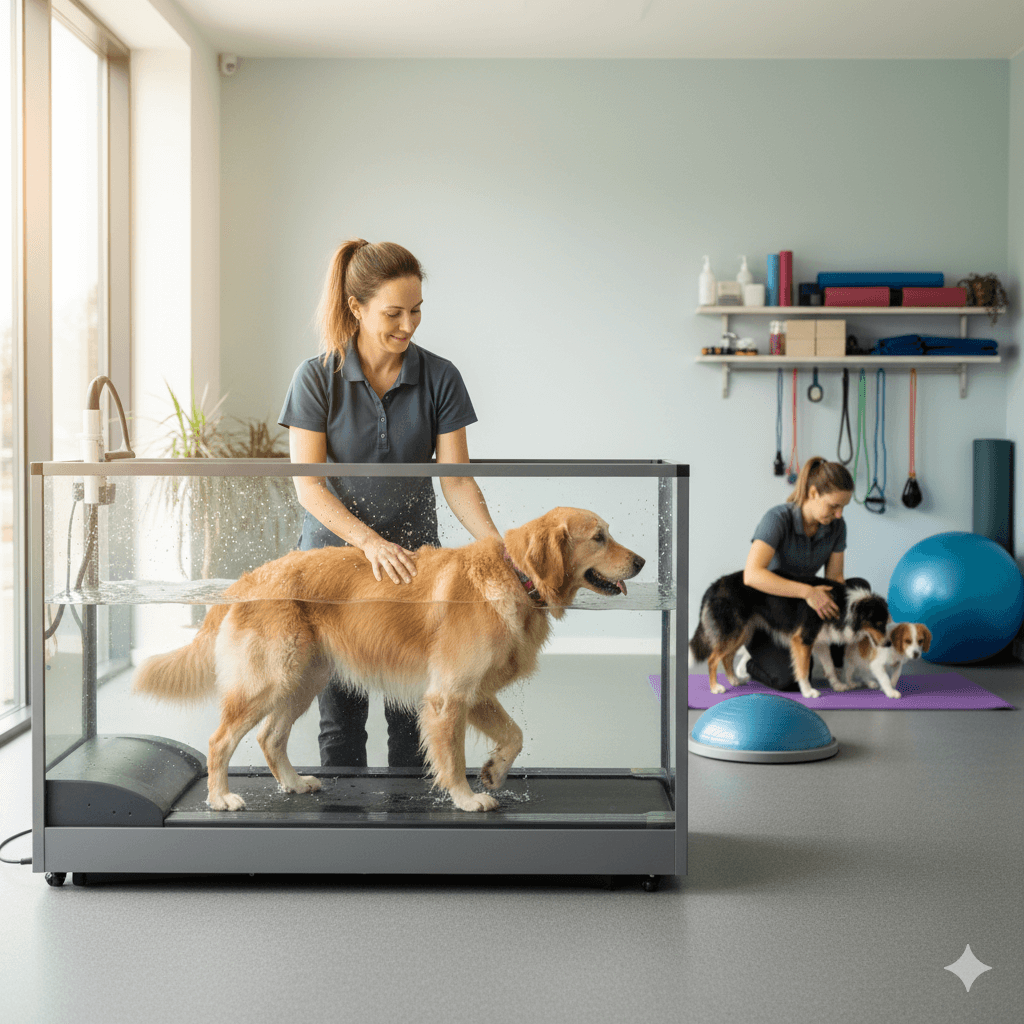
Many clinics now offer in-house rehab suites with underwater treadmills, laser therapy, and balance equipment—making access easier for pet owners. - Rise of Home-Based Programs:
With telehealth and owner education, simple exercises can be performed at home under professional supervision, extending care beyond the clinic.
What began as a niche service is now a vital part of holistic pet care—proving that dogs, like humans, thrive when movement is restored with purpose and patience.
Core Benefits of Physical Therapy for Dogs
Beyond pain relief, physical therapy offers a cascade of physical and emotional benefits that enhance your dog’s daily life. These outcomes are especially powerful for seniors, post-op patients, or dogs with chronic conditions like hip dysplasia or IVDD.
- Pain Reduction Through Targeted Modalities:
Techniques like cold laser, massage, and TENS therapy decrease inflammation and soothe sore muscles without heavy reliance on medication. - Improved Joint Mobility and Flexibility:
Gentle stretching and passive range-of-motion exercises prevent stiffness and maintain healthy movement patterns. - Muscle Strengthening After Atrophy:
Controlled resistance work rebuilds muscle lost during rest or immobility, crucial after surgeries or prolonged crate confinement. - Enhanced Balance and Coordination:
Wobble boards, cavaletti poles, and uneven surfaces retrain the nervous system, reducing fall risk in older or neurologically affected dogs. - Faster Return to Normal Activity:
Structured rehab shortens recovery time and lowers re-injury risk by ensuring tissues heal correctly and functionally.
When applied consistently, physical therapy doesn’t just treat symptoms—it rebuilds your dog’s physical confidence from the ground up.
Check this guide 👉Water Therapy for Dogs: Best 7 Expert Tips!
Check this guide 👉How to Become a Therapy Dog Trainer: Best 7 Expert Tips!
Check this guide 👉Therapy Dog Breeds: Best 7 Expert Tips!
Functional Goals | Common Therapeutic Tools |
|---|---|
Restore walking gait | Underwater treadmill |
Reduce post-op swelling | Cold laser therapy |
Rebuild hind-end strength | Therapeutic exercise bands |
Improve core stability | Balance discs and peanut balls |
Maintain joint health | Passive range-of-motion routines |
Types of Physical Therapy Modalities for Dogs
Not all rehab looks the same—therapists select techniques based on your dog’s diagnosis, age, and temperament. From high-tech devices to hands-on manual work, each modality serves a specific purpose in the healing journey.
- Hydrotherapy (Underwater Treadmill):
Buoyancy reduces joint stress while resistance builds muscle—ideal for dogs with arthritis, obesity, or post-orthopedic surgery. - Therapeutic Laser Therapy:
Low-level lasers stimulate cellular repair, reduce pain, and accelerate healing in wounds, tendons, and arthritic joints. - Manual Therapy and Massage:
Skilled hands relieve muscle tension, improve circulation, and break down scar tissue—often calming anxious or tense dogs. - Neuromuscular Electrical Stimulation (NMES):
Mild electrical currents activate dormant muscles, especially helpful after nerve injury or prolonged immobility. - Therapeutic Exercise Programs:
Custom routines using ramps, cones, and balance tools challenge coordination, strength, and proprioception in a controlled way.
Your dog’s therapist will combine these approaches into a personalized plan that evolves as your pet progresses—never one-size-fits-all.
Conditions That Respond Well to Canine Rehab
Physical therapy isn’t just for accidents—it’s a powerful tool for managing both acute injuries and lifelong conditions. Early intervention often slows progression and preserves mobility longer than medication alone.
- Orthopedic Injuries:
Torn ACLs, fractures, or ligament sprains benefit from structured rehab to regain strength without overloading healing tissues. - Degenerative Joint Disease (Arthritis):
Regular low-impact exercise and pain management keep arthritic dogs moving comfortably for years longer. - Neurological Disorders:
Dogs with IVDD, fibrocartilaginous embolism (FCE), or wobblers syndrome regain function through targeted nerve and gait retraining. - Post-Surgical Recovery:
Whether it’s a TPLO, spinal surgery, or amputation, rehab is critical to optimal recovery and adaptation. - Geriatric Mobility Decline:
Senior dogs often slow down due to weakness, not just pain—therapy rebuilds strength and confidence to keep them active.
Even dogs with chronic conditions can enjoy better days when therapy addresses the root of their movement challenges.
How to Start Physical Therapy for Your Dog
Beginning rehab starts with a veterinary diagnosis—but your involvement ensures success. Most programs require collaboration between your vet, a certified canine rehab professional, and you as the home caregiver.
- Get a Veterinary Referral:
Your primary vet must diagnose the issue and approve therapy—some conditions (like unstable fractures) need stabilization first. - Find a Certified Rehab Professional:
Look for credentials like CCRT (Certified Canine Rehabilitation Therapist) or CCRP through recognized institutes. - Initial Assessment and Goal Setting:
The therapist will evaluate gait, strength, pain, and range of motion, then create a measurable plan with short- and long-term goals. - Commit to Home Exercises:
Most programs include daily 10–15 minute home routines—consistency here makes or breaks progress. - Track Progress and Adjust:
Regular re-evaluations ensure the plan evolves with your dog’s healing, avoiding plateaus or overexertion.
Starting rehab is an investment—but one that often reduces long-term costs, medication needs, and suffering.
At-Home Physical Therapy Exercises You Can Do Safely
With professional guidance, many effective exercises can be done in your living room using household items. Never start without approval—but once cleared, these routines build trust and strength together.
- Passive Range-of-Motion (PROM):
Gently flex and extend each joint (like a bicycle motion for hind legs) to maintain flexibility—5–10 reps per limb, 1–2x daily. - Sit-to-Stand Repetitions:
Have your dog sit, then stand on command—10 reps, 2–3x daily—to strengthen quads and glutes without impact. - Weight Shifting on Balance Pads:
Place front paws on a soft pillow or foam pad; your dog will engage core muscles to stay balanced for 10–30 seconds. - Curb or Step-Ups:
Use a low step (2–4 inches) to practice controlled ascent/descent—builds coordination and hind-end drive. - Controlled Leash Walks:
Short, slow walks on flat ground maintain cardiovascular health without overexertion—focus on even gait, not distance.
Always stop if your dog shows pain, panting, or resistance—and report changes to your therapist immediately.
Special Considerations for Puppies, Seniors, and Performance Dogs
Physical therapy must be tailored to life stage and lifestyle. A racing Greyhound, an 14-year-old Lab, and a playful Dachshund puppy all need vastly different approaches to stay safe and effective.
- Puppies with Developmental Issues:
Early intervention for conditions like hip dysplasia or angular limb deformities can alter long-term outcomes through gentle conditioning. - Senior Dogs with Multiple Conditions:
Older pets often have arthritis plus heart or kidney concerns—therapy must be low-stress and closely monitored. - Working or Sport Dogs:
These high-drive dogs need sport-specific conditioning to return to duty without re-injury, including agility or scent work simulations. - Brachycephalic or Overweight Breeds:
Breeds like Pugs or Bulldogs require careful heat and exertion management, while obese dogs need hydrotherapy to protect joints. - Amputee Dogs:
Three-legged dogs adapt remarkably—but targeted core and balance work prevents secondary strain on remaining limbs.
One size never fits all—great rehab meets your dog exactly where they are.
“Physical therapy for dogs can help improve strength and mobility and decrease pain. Treatments for dogs include massage, hydrotherapy, and weight training.”
— Dr. Heather Berst, MA, VMD
Frequently Asked Questions About Physical Therapy for Dogs
Is physical therapy covered by pet insurance?
Many comprehensive plans (like Trupanion or Healthy Paws) cover rehab if prescribed by a vet—check your policy’s rehab or alternative therapy section.
How soon after surgery can therapy begin?
Often within 3–7 days for passive exercises; active work starts after suture removal (10–14 days), depending on the procedure.
Can I do physical therapy without a certified professional?
Basic home exercises are safe with vet approval—but complex cases require expert guidance to avoid harm.
How long does a typical rehab program last?
Acute injuries may need 4–8 weeks; chronic conditions often involve lifelong maintenance sessions every few weeks.
Do dogs enjoy physical therapy?
Most do! They receive one-on-one attention, gentle handling, and often treats—many wag their tails walking into the clinic.
Empowering Your Dog’s Journey to Better Movement
Physical therapy for dogs is more than a treatment—it’s a promise of possibility. It says that even after injury, aging, or surgery, your companion deserves to move without pain, play without fear, and live with dignity. By embracing rehab, you’re not just managing a condition; you’re restoring joy in every step, leap, and tail wag. Whether your dog is bouncing back from a torn ligament or simply needs help climbing the stairs again, compassionate, science-backed care can light the path forward. And in that journey, you’re not just an owner—you’re a healer, a coach, and their greatest advocate.

Is Rawhide Bad for Cats? Best 7 Expert Tips! – Discover the risks, safe alternatives, and expert advice to keep your feline friend healthy and happy.

Is Rawhide Bad for Dogs? Best 7 Expert Tips! – Discover the risks, benefits, and safer alternatives to rawhides for your dog’s chewing needs.

Understanding Anorexia in Cats: Best 7 Expert Tips! – Learn why cats stop eating, spot warning signs, and discover how to help your feline regain appetite safely.

Understanding Anorexia in Dogs: Best 7 Expert Tips! – Learn causes, symptoms, and solutions to help your dog regain appetite and stay healthy.