
Understanding the Most Popular Cat Breeds
Cats have captivated human hearts for millennia, and today’s most popular breeds reflect a blend of beauty, personality, and adaptability. Whether you’re drawn to plush fluff, sleek elegance, or playful chatter, there’s a feline friend to match every lifestyle. Popularity often stems from temperament, ease of care, or striking looks—but the best breed for you depends on your home, routine, and expectations. Exploring the top contenders helps you find not just a cat, but a true companion.
Origins and Historical Appeal of Today’s Favorite Breeds
Many of the world’s most beloved cat breeds have ancient roots or fascinating origin stories that shaped their modern traits. Their rise in popularity isn’t accidental—it’s tied to how well they’ve adapted to living alongside humans in homes across the globe.
- Domestication Legacy:
The domestic shorthair—though not a formal breed—is historically the foundation of many pedigreed cats, valued for resilience and adaptability. - Royal and Cultural Reverence:
Breeds like the Siamese were treasured in ancient Siam (Thailand), often kept in temples and royal palaces, boosting their mystique and global spread. - Selective Breeding for Companionship:
In the 19th and 20th centuries, cat fanciers refined traits like docility, coat texture, and vocalization to suit urban pet ownership. - Media and Celebrity Influence:
Films, social media, and celebrity ownership (e.g., Taylor Swift’s Scottish Folds) have dramatically boosted breed visibility and demand. - Adaptation to Modern Living:
Breeds that thrive in apartments, bond closely with owners, or require minimal grooming tend to rank highest in household surveys.
These historical currents continue to shape which cats win hearts—and top spots—in popularity rankings worldwide.
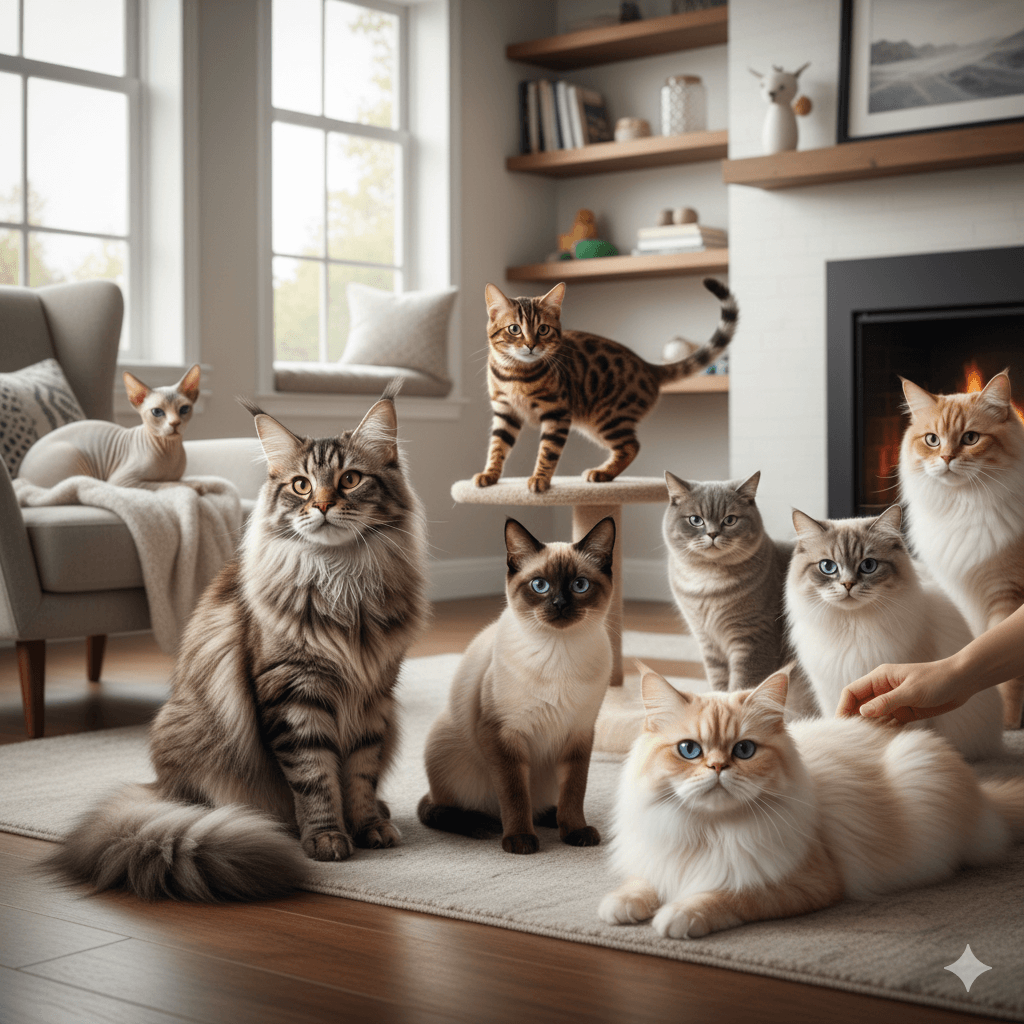
Distinctive Traits That Drive Breed Popularity
Certain physical and behavioral features consistently make specific breeds stand out in surveys and adoption centers. It’s not just about looks—temperament, vocalization, and interaction style matter deeply to cat lovers.
- Soft, Luxurious Coats:
Breeds like the Maine Coon and Persian offer plush, photogenic fur that appeals to those who enjoy grooming and cuddling. - Expressive Eyes and Facial Structure:
Round-faced breeds like the British Shorthair or exotic-looking Persians create an “eternally kitten-like” appeal that many find irresistible. - Vocal and Social Personalities:
The Siamese and Oriental Shorthair are known for “talking” to their owners, satisfying those who want an interactive, responsive pet. - Playful, Dog-Like Energy:
Breeds such as the Abyssinian and Bengal retain high energy and curiosity, appealing to active households seeking engagement. - Calm and Affectionate Demeanor:
Ragdolls and Scottish Folds are famed for their gentle, lap-loving nature—ideal for families or seniors seeking quiet companionship.
These traits don’t just make cats charming—they make them well-suited to the rhythms of modern life, driving their consistent top rankings.
Check this guide 👉How Many Cat Breeds Exist? Best 7 Expert Tips!
Check this guide 👉Hypoallergenic Cat Breeds: Best 7 Expert Tips!
Check this guide 👉Discover the Calmest Cat Breeds: Best 7 Expert Tips!
Personality & Lifestyle Fit | Care & Maintenance Needs |
|---|---|
Siamese: vocal, social, thrives on attention | Persian: daily brushing to prevent matting |
Maine Coon: gentle giant, good with kids & dogs | Bengal: high stimulation needs, not for idle homes |
Ragdoll: relaxed, follows owners like a shadow | Sphynx: weekly bathing due to oily skin |
British Shorthair: independent but affectionate | Scottish Fold: requires ear monitoring for cartilage issues |
Domestic Shorthair: adaptable, low-maintenance | Abyssinian: needs climbing space and puzzle toys |
Top 7 Most Popular Cat Breeds Worldwide
Global registries like TICA, CFA, and FIFe consistently rank certain breeds at the top based on registrations, shelter adoptions, and owner surveys. These seven stand out for their balance of beauty, temperament, and accessibility.
- Domestic Shorthair (Moggy):
Not a pedigree, but the most common cat worldwide—resilient, diverse in appearance, and often healthier than purebreds due to genetic variety. - Siamese:
With striking blue eyes, sleek coat, and chatty nature, the Siamese remains iconic for its intelligence and strong human bonds. - Maine Coon:
Known as the “gentle giant,” this large, tuft-eared breed is friendly, adaptable, and surprisingly good with children and other pets. - Persian:
Famous for its flat face and long, flowing coat, the Persian is the ultimate lap cat—calm, quiet, and deeply affectionate. - Ragdoll:
Named for going limp when held, Ragdolls are docile, blue-eyed beauties that seek constant closeness with their favorite humans. - British Shorthair:
With its plush “teddy bear” coat and calm demeanor, this breed is low-energy, independent, and perfect for quiet households. - Bengal:
A wild-looking hybrid with domestic manners, the Bengal is energetic, curious, and ideal for owners who enjoy interactive play.
While trends shift slightly by region, these breeds consistently dominate lists due to their unique blend of appeal and compatibility with pet owners.
Choosing the Right Breed for Your Lifestyle
Popularity doesn’t automatically mean suitability—your daily routine, living space, and expectations should guide your choice. A mismatch can lead to stress for both you and your cat.
- Apartment Living:
Low-activity breeds like the British Shorthair or Persian do well in small spaces, while high-energy Bengals may need vertical enrichment. - Families with Children:
Gentle, patient cats like Maine Coons or Ragdolls tolerate gentle handling and enjoy family interaction. - Single or Busy Owners:
Independent breeds such as the Domestic Shorthair or Norwegian Forest Cat can handle solitude better than clingy Siamese. - Allergy Concerns:
While no cat is hypoallergenic, shorter-haired breeds like the Devon Rex or Siberian may produce fewer allergens for sensitive individuals. - First-Time Cat Owners:
Easygoing, low-maintenance breeds like the British Shorthair or Domestic Shorthair offer a forgiving introduction to cat care.
The “most popular” becomes “perfect for you” only when it aligns with your real-life habits and emotional availability.
Grooming and Health Considerations by Breed
Popularity often overshadows care realities—some top breeds require significant grooming or have inherited health issues that demand proactive management.
- Long-Haired Breeds (Persian, Maine Coon, Ragdoll):
Need daily to weekly brushing to prevent painful mats and hairballs; Persians also require eye cleaning due to facial structure. - Hairless Breeds (Sphynx):
Despite no fur, they need weekly baths to remove skin oils and protection from sun or cold due to lack of insulation. - Flat-Faced (Brachycephalic) Cats:
Persians and Exotics may suffer from breathing difficulties, dental crowding, and tear duct overflow requiring daily care. - Breed-Specific Conditions:
Maine Coons can develop hypertrophic cardiomyopathy; Scottish Folds are prone to osteochondrodysplasia due to ear cartilage gene. - Hybrid Vigor in Mixed Breeds:
Domestic Shorthairs often enjoy greater genetic diversity, leading to fewer inherited disorders and lower vet costs over time.
Understanding these needs helps you choose not just a beautiful cat, but one you can care for responsibly for 15+ years.
Debunking Myths About Popular Cat Breeds
Popularity breeds misconceptions—many assume all Persians are lazy or all Siamese are noisy, but individual variation is vast within any breed.
- “All Purebreds Are High-Maintenance”:
While some are, others like the British Shorthair are remarkably low-effort—short coat, calm temperament, minimal vocalization. - “Popular Breeds Are Always Easy to Adopt”:
Purebreds often come from breeders with waitlists; shelter “look-alikes” may offer similar traits without the cost or health risks. - “Fluffy Cats Are Always Hypoallergenic”:
Allergies are triggered by proteins in saliva and skin—not fur length—so a long-haired Siberian may be better than a short-haired non-hypoallergenic breed. - “Bengals Are Wild and Unpredictable”:
Modern Bengals are at least four generations removed from wild ancestors and are fully domesticated with proper socialization. - “Ragdolls Can’t Be Left Alone”:
While affectionate, many Ragdolls adapt well to solo time if given toys, windows, and routine—bonding deeply but not always clingy.
Separating fact from fiction ensures you choose based on reality, not reputation.
Why These Breeds Consistently Top Global Rankings
Beyond individual charm, certain practical and emotional factors explain why the same cat breeds dominate popularity charts year after year. These aren’t just pretty faces—they’ve earned their spots by fitting seamlessly into modern human lives across continents and cultures.
- Adaptability to Indoor Living:
Breeds like the British Shorthair and Ragdoll thrive in homes without outdoor access, making them ideal for urban dwellers and apartment residents. - Strong Human Bonding Instincts:
Cats such as the Siamese and Maine Coon seek interaction, offering companionship that feels more like a relationship than cohabitation. - Predictable Temperaments:
Reputable breeders prioritize stable personalities, so owners know what to expect—calm, playful, or independent—reducing behavioral surprises. - Visual Appeal and “Instagrammability”:
Striking features—blue eyes, tufted ears, or plush coats—boost social media visibility, influencing trends and adoption desires worldwide. - Availability Through Reputable Channels:
Widespread breeder networks and dedicated rescues make top breeds more accessible than rare or regional types, increasing ownership rates.
Ultimately, these breeds succeed because they meet real-world needs: emotional connection, manageable care, and visual delight—all wrapped in a feline form that feels like family.
Frequently Asked Questions About the Most Popular Cat Breeds
What’s the most popular cat breed in the United States?
The Domestic Shorthair is the most common overall, but among pedigreed cats, the Exotic Shorthair and Maine Coon often top CFA registration lists.
Are popular breeds more expensive?
Generally yes—purebred kittens from reputable breeders range from $500 to $2,500+, while mixed breeds from shelters cost far less.
Which popular breed is best for beginners?
The British Shorthair or Domestic Shorthair are ideal for first-time owners due to calm temperaments and minimal grooming needs.
Do popular breeds have more health problems?
Not always—but some (like Persians or Scottish Folds) have known genetic issues due to selective breeding for looks.
Can I find popular purebreds in shelters?
Yes! Many shelters and rescues specialize in specific breeds (e.g., Maine Coon Rescue, Siamese Rescue), offering adoptable adults or kittens.
Finding Your Perfect Feline Match
The world’s most popular cat breeds offer a stunning variety of looks, sounds, and personalities—but the best choice isn’t about trends. It’s about finding a cat whose natural rhythm mirrors yours. Whether you’re charmed by the Siamese’s song, soothed by the Ragdoll’s calm, or delighted by the Maine Coon’s playful grandeur, your ideal companion is out there. Take time to learn, observe, and connect—because popularity fades, but the bond you build with your cat lasts a lifetime.

Is Rawhide Bad for Cats? Best 7 Expert Tips! – Discover the risks, safe alternatives, and expert advice to keep your feline friend healthy and happy.

Is Rawhide Bad for Dogs? Best 7 Expert Tips! – Discover the risks, benefits, and safer alternatives to rawhides for your dog’s chewing needs.

Understanding Anorexia in Cats: Best 7 Expert Tips! – Learn why cats stop eating, spot warning signs, and discover how to help your feline regain appetite safely.

Understanding Anorexia in Dogs: Best 7 Expert Tips! – Learn causes, symptoms, and solutions to help your dog regain appetite and stay healthy.