

Understanding Minor Cat Bite Treatment: Best 7 Expert Tips!
If your cat nips you during play or gets startled and leaves a small bite, it’s easy to brush it off—but even minor cat bites carry real risks. Unlike dogs, cats have sharp, needle-like teeth that can drive bacteria deep into the skin, potentially leading to infection. While many bites are superficial, knowing how to respond immediately can prevent complications and promote faster healing. Quick, proper care is your best defense against swelling, redness, or worse. With these expert-backed steps, you’ll handle minor cat bites confidently and safely.
Common Signs of a Minor Cat Bite Injury
Not all cat bites look dramatic—sometimes it’s just a tiny puncture or a drop of blood—but the underlying risk remains. Recognizing what qualifies as a “minor” bite helps you decide whether home care is enough or if professional help is needed. Look for these typical, low-severity indicators:
- Small Puncture Wounds:
A single or paired pinprick marks, often less than 2mm wide, with minimal surrounding damage. - Mild Redness Around the Site:
Slight pinkness or warmth is normal initially but shouldn’t spread or intensify after a few hours. - Minimal or No Bleeding:
The wound may ooze a little but stops quickly with light pressure—no active or pulsing flow. - No Swelling or Limited Swelling:
The area might feel slightly tender but doesn’t balloon or restrict movement in fingers or joints. - Normal Skin Temperature Nearby:
The skin around the bite feels the same as the rest of your hand or arm, not hot to the touch.
Most minor bites heal well with prompt cleaning and monitoring—but never ignore them completely, as infections can develop silently within 12–24 hours.
When to Seek Medical Attention
Even if a bite seems harmless, certain red flags mean it’s time to see a healthcare provider. Cat bites can escalate quickly due to Pasteurella multocida, a common bacterium in feline mouths that thrives in deep tissue. Don’t wait if you notice any of these warning signs:
- Increasing Pain After 6–12 Hours:
Discomfort that worsens instead of improving suggests bacterial invasion. - Red Streaks or Spreading Warmth:
These indicate lymphatic spread—a sign the infection is moving beyond the bite site. - Pus or Cloudy Discharge:
Yellow or green fluid means your body is fighting a significant bacterial load. - Bite on Hand, Face, or Joint:
These areas are high-risk due to dense nerve, tendon, or cartilage structures. - Fever or Chills:
Systemic symptoms mean the infection may be entering your bloodstream.
Early antibiotics can prevent serious complications—so when in doubt, get it checked.
Check this guide 👉How Long a Cat Bite Takes to Get Infected: Best 7 Tips!
Check this guide 👉Tetanus Shot After Cat Bite: Best 7 Expert Tips!
Check this guide 👉My Cat Bites Me and Holds On: Best 7 Expert Tips!
Safe for Home Care | Requires Medical Evaluation |
|---|---|
Single small puncture on arm or leg | Bite on hand, finger, or face |
Clean wound with no debris | Deep or jagged wound |
No redness beyond 1 cm | Redness spreading outward |
Mild tenderness only | Severe pain or throbbing |
Healthy immune system | Diabetes, immunosuppression, or chronic illness |
Immediate First Aid Steps for Minor Bites
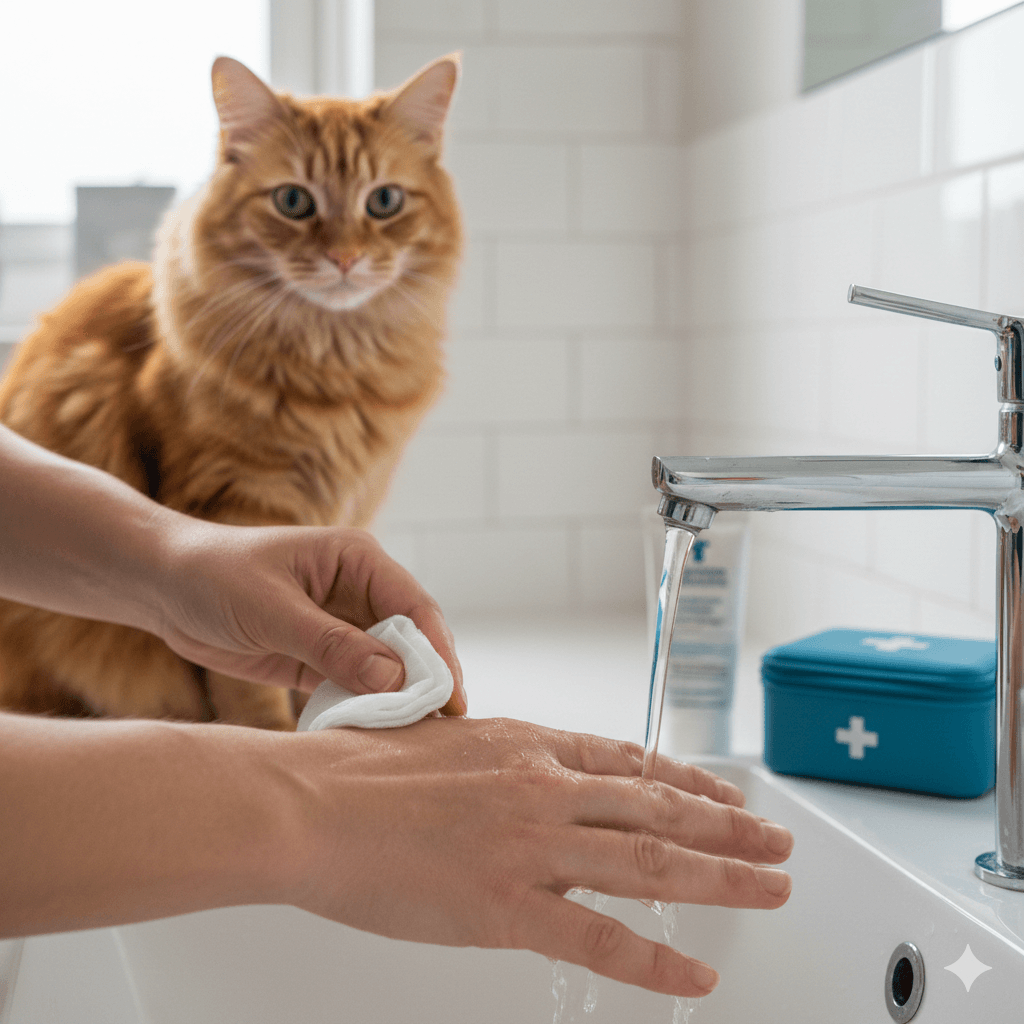
The first 10 minutes after a cat bite are critical. Proper cleaning drastically reduces infection risk by flushing out bacteria before they embed. Follow these steps calmly and thoroughly:
- Wash Hands First (If Possible):
Before touching the wound, clean your hands to avoid introducing extra germs—use soap and water or hand sanitizer. - Rinse Under Running Warm Water:
Hold the bite under lukewarm (not hot) running water for 3–5 minutes to flush out saliva and debris. - Use Mild Soap Gently:
Lather around—but not deep inside—the puncture to clean the surrounding skin without irritating tissue. - Pat Dry with Clean Towel:
Avoid rubbing; gently dab the area to prevent reopening or swelling. - Apply Antiseptic Solution:
Use over-the-counter iodine, chlorhexidine, or hydrogen peroxide (sparingly) to disinfect the surface.
This simple routine neutralizes many pathogens and sets the stage for safe healing at home.
Preventing Future Cat Bites
Understanding why your cat bites—even gently—helps you adjust interactions to avoid repeat incidents. Most “minor” bites aren’t aggression; they’re communication. Prevention starts with reading feline body language:
- Recognize Overstimulation Cues:
Tail flicking, flattened ears, or sudden stillness often precede a warning nip during petting. - Avoid Rough Play with Hands:
Never use fingers as toys; always use wand toys or balls to separate play from skin contact. - Respect Personal Space:
Don’t surprise your cat while sleeping or eating—approach calmly and let them initiate contact. - Trim Claws Regularly:
While not directly preventing bites, it reduces overall injury risk during excited interactions. - Provide Enrichment and Outlets:
Puzzle feeders, climbing shelves, and daily play sessions reduce stress-induced nipping.
A cat that feels safe and understood is far less likely to use its teeth as a boundary signal.
Special Considerations for Children and Vulnerable Individuals
Kids, seniors, and those with weakened immune systems face higher risks from even tiny cat bites. Their bodies may respond more aggressively to bacteria, and children often can’t report early symptoms. Extra caution is essential:
- Supervise All Cat-Child Interactions:
Teach gentle handling and intervene before play becomes overstimulating. - Clean Bites Immediately in Kids:
Children’s thinner skin allows bacteria deeper access—never delay first aid. - Avoid Face-to-Face Contact During Play:
Redirect games to floor level to prevent accidental facial bites during excitement. - Vaccination Status Matters:
Ensure your tetanus booster is current—cat bites can introduce Clostridium tetani in rare cases. - Monitor Closely for 48 Hours:
Check the wound site twice daily in high-risk individuals for subtle changes.
When it comes to vulnerable loved ones, over-caution is always safer than under-reaction.
What to Avoid After a Cat Bite
Well-meaning home remedies can sometimes do more harm than good. Knowing what not to do protects your healing process and prevents complications:
- Don’t Suck the Wound:
This introduces oral bacteria and won’t remove deep contaminants—stick to water and soap. - Avoid Sealing with Strong Adhesives:
Super glue or thick ointments trap bacteria inside; let minor wounds breathe or use a light bandage. - Never Ignore a Bite from a Stray or Unknown Cat:
Rabies risk, while rare, requires immediate assessment and possibly post-exposure prophylaxis. - Skip Alcohol or Vinegar Soaks:
These irritate tissue and delay healing—gentle antiseptics are more effective and less damaging. - Don’t Assume “No Blood = No Risk”:
Even dry punctures can carry bacteria deep below the surface where infection thrives unseen.
Smart care means knowing when simplicity beats improvisation.
Essential Supplies for Treating a Minor Cat Bite at Home
Having the right items on hand means you can respond quickly and effectively the moment a bite occurs—reducing infection risk and supporting faster healing. Keep this simple first-aid kit accessible in your home, especially if you have a playful or reactive cat:
- Mild Antiseptic Solution:
Choose chlorhexidine or povidone-iodine (diluted) for safe, effective disinfection without excessive skin irritation. - Sterile Gauze Pads or Cotton Balls:
Ideal for gentle cleaning and drying without leaving lint in the wound like tissues might. - Clean Running Water Access:
A sink with warm, running water is crucial—never skip the 3–5 minute rinse step. - Antibiotic Ointment (Triple Formula):
A small tube of Neosporin or generic equivalent helps prevent surface bacterial growth after cleaning. - Adhesive Bandages or Non-Stick Dressings:
Useful for bites on hands or feet where dirt exposure is likely, but avoid sealing punctures completely.
With these basics ready, you’re prepared to act calmly and correctly—turning a potentially worrisome moment into a manageable one.
Frequently Asked Questions About Minor Cat Bite Treatment
Should I get a tetanus shot after a cat bite?
If your last tetanus booster was over 5 years ago—or you’re unsure—it’s wise to get one, especially for puncture wounds.
Can I use Neosporin on a cat bite?
Yes, a thin layer of triple-antibiotic ointment like Neosporin can help prevent surface infection, but don’t overuse it.
How soon do cat bite infections show up?
Symptoms often appear within 12–24 hours—redness, swelling, pain, or pus mean it’s time to see a doctor.
Is it normal for the bite to itch as it heals?
Mild itching after 2–3 days can signal healing, but if it’s accompanied by spreading redness, it could be infection.
Do indoor cats carry dangerous bacteria?
Yes—even healthy, vaccinated indoor cats harbor Pasteurella and other bacteria in their mouths—never assume “clean” means “safe.”
Caring for Yourself While Caring for Your Cat
A minor cat bite doesn’t have to strain your loving bond—it’s simply a reminder that even the gentlest companions communicate through instinct. By responding with calm, informed care, you protect your health without punishing or fearing your feline friend. Use this moment to deepen your understanding of their body language, refine your interactions, and create a safer space for mutual trust. After all, your cat isn’t being “bad”—they’re expressing a boundary, a surprise, or overexcitement in the only way they know. With patience and prevention, you’ll both move forward with greater harmony, confidence, and connection.
How to Check Your Cat for a Fever: Best 7 Expert Tips! – Learn the signs, safe temperature checks, and when to see a vet. Keep your feline healthy and happy!
How to Check Your Dog for a Fever: Best 7 Expert Tips! – Learn the signs, safe temperature checks, and when to see a vet if your dog has a fever.
Hypothyroidism and Its Impact on Cat Skin: Best 7 Tips! – Discover how hypothyroidism affects your cat’s skin, spot symptoms early, and learn effective care strategies to keep your feline healthy.
Hypothyroidism and Its Impact on Dog Skin: Best 7 Tips! – Discover how hypothyroidism affects your dog’s skin, spot symptoms early, and learn effective care strategies to restore their health.


