

Leash Training a Dog: A Step-by-Step Guide to Success
Walking your dog on a leash is one of the most fundamental aspects of responsible pet ownership. It not only ensures safety but also strengthens the bond between you and your furry companion. However, leash training can be challenging, especially for first-time dog owners or overly energetic pups. The key to success lies in patience, consistency, and positive reinforcement. Whether you’re starting with a puppy or working with an older dog, this guide will walk you through everything you need to know about leash training effectively. From choosing the right equipment to mastering advanced techniques, we’ll help you transform leash walking into a pleasant and rewarding experience for both you and your dog.
Expert Insight: The Role of Relationship in Leash Training
“The key to successfully leash training a dog is having a strong relationship. Being tethered to someone can leave some dogs feeling vulnerable, frustrated, or anxious. A relationship with your dog built on consistency, predictability, and positive reinforcement can help keep these negative emotions from arising.”
Essential Tips for Successful Leash Training
Before diving into the process, it’s important to understand the foundational tips that make leash training successful. These strategies set the stage for a smooth and stress-free learning experience.
Choose the Right Equipment:
Invest in a well-fitted collar or harness and a sturdy leash. Avoid retractable leashes for training, as they offer less control.Start Indoors or in a Quiet Space:
Begin training in a low-distraction environment like your home or backyard. This helps your dog focus on learning without external distractions.Use Positive Reinforcement:
Reward your dog with treats, praise, or toys whenever they walk calmly by your side. Positive reinforcement encourages good behavior.Keep Sessions Short and Fun:
Limit training sessions to 5-10 minutes initially to prevent fatigue and frustration. Gradually increase the duration as your dog improves.Be Patient and Consistent:
Leash training takes time, so avoid rushing the process. Consistency is key to helping your dog understand what’s expected of them.
By incorporating these tips, you create a strong foundation for effective leash training and set your dog up for long-term success.
Step-by-Step Process for Leash Training Your Dog
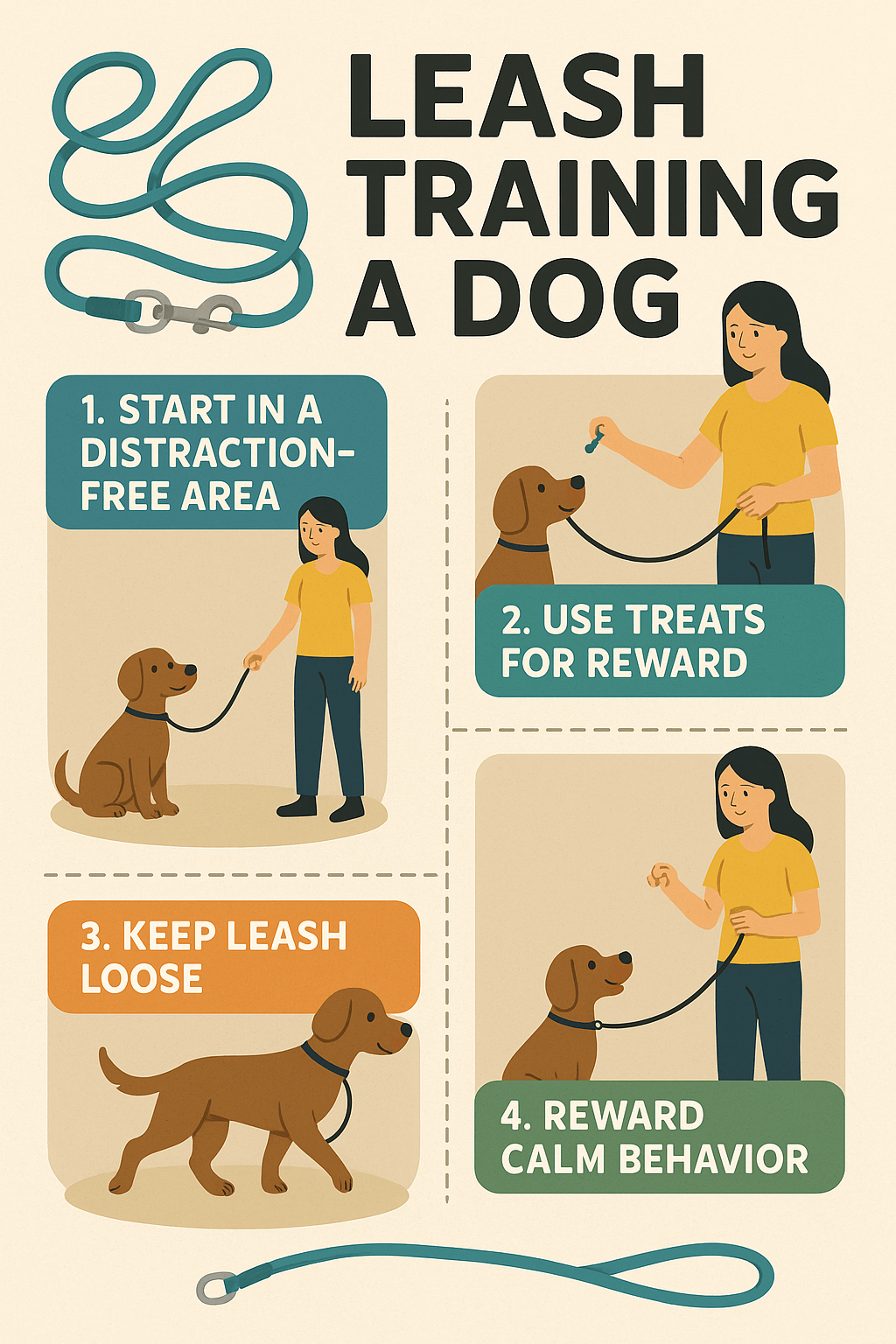
Leash training requires a structured approach to ensure your dog learns proper walking etiquette. Follow these steps to guide your dog through the process seamlessly.
Introduce the Leash Gradually:
Allow your dog to sniff and get comfortable with the leash before attaching it. Let them wear it around the house to reduce resistance.Teach Loose-Leash Walking:
Encourage your dog to walk beside you without pulling. Stop walking whenever they tug, and only resume when the leash is slack.Practice Basic Commands:
Reinforce commands like “heel,” “stop,” and “come” during walks. These commands help maintain control in various situations.Gradually Increase Distractions:
Once your dog masters walking in quiet spaces, move to busier environments like parks or sidewalks to test their focus.Reward Calm Behavior:
Praise and reward your dog for staying calm and focused, even in distracting scenarios. This reinforces their good behavior consistently.
By following these steps, you’ll build your dog’s confidence and ability to walk politely on a leash in any setting.
Check this guide 👉Long vs Short Dog Leash: Best 7 Expert Tips!
Check this guide 👉How to Wash a Dog Leash: Best 7 Expert Tips!
Check this guide 👉Why Does My Dog Run Away When Off Leash? Best 7 Tips!
Benefits of Leash Training | Common Challenges and Solutions |
|---|---|
Ensures safety during walks | Dog pulls excessively—use stop-and-go technique |
Strengthens the bond with your dog | Dog gets distracted—practice in quieter areas first |
Prevents behavioral issues | Dog chews the leash—redirect attention with toys |
Allows access to public spaces | Dog resists wearing a leash—introduce it gradually |
Improves communication and control | Dog barks at strangers—reward calm behavior near triggers |
How to Handle Common Leash Training Mistakes
Even experienced dog owners make mistakes during leash training. Recognizing and addressing these errors early ensures a smoother learning process for your dog.
Using Harsh Corrections:
Yanking or jerking the leash can damage trust and cause fear. Opt for gentle guidance instead.Allowing Pulling Behavior:
Letting your dog pull teaches them it’s acceptable. Always stop walking until the leash is loose.Skipping Regular Practice:
Inconsistent training slows progress. Aim for daily practice sessions to reinforce good habits.Overlooking Proper Fit of Equipment:
Ill-fitting collars or harnesses can cause discomfort. Ensure gear fits snugly but allows room for movement.Neglecting Mental Stimulation:
Dogs may act out due to boredom. Incorporate mental exercises like scent games to keep them engaged.
Avoiding these mistakes helps you create a positive and effective leash training experience for your dog.
Advanced Techniques for Mastering Leash Walking
Once your dog has mastered the basics, you can introduce advanced techniques to refine their leash skills further. These methods enhance their ability to handle real-world scenarios confidently.
Teach Focus Cues:
Use a cue like “watch me” to redirect your dog’s attention back to you in distracting environments.Practice Heeling in Crowds:
Walk through busy areas to teach your dog to stay focused despite noise and movement around them.Incorporate Direction Changes:
Make sudden turns or stops during walks to keep your dog attentive and responsive to your movements.Work on Distance Commands:
Train your dog to respond to commands like “stay” or “come” while on a leash, even from a distance.Simulate Real-Life Scenarios:
Expose your dog to different surfaces, weather conditions, and obstacles to prepare them for diverse walking experiences.
These advanced techniques elevate your dog’s leash-walking abilities, ensuring they remain calm and obedient in all situations.
Benefits of Leash Training Beyond Walks
Leash training offers numerous advantages that extend beyond simply going for a walk. These benefits highlight why investing time in training is worthwhile for both you and your dog.
Improved Socialization Skills:
Leash-trained dogs are better equipped to interact with other animals and people in public settings.Enhanced Safety in Emergencies:
A well-trained dog is easier to control in unexpected situations, such as encountering wildlife or navigating crowded areas.Increased Exercise Opportunities:
Leash training opens doors to exploring new places like hiking trails or dog-friendly parks.Reduced Behavioral Problems:
Dogs who understand leash manners are less likely to exhibit destructive behaviors caused by frustration or lack of exercise.Stronger Owner-Dog Bond:
Training fosters trust and cooperation, strengthening the emotional connection between you and your dog.
These benefits demonstrate how leash training enriches your dog’s life and enhances your shared experiences.
Choosing the Right Leash and Harness
Selecting the appropriate equipment plays a crucial role in successful leash training. Here’s what to consider when making your choice.
Types of Leashes:
Standard nylon leashes are versatile, while hands-free options are great for active owners. Avoid retractable leashes for beginners.Harness Styles:
Front-clip harnesses discourage pulling, while back-clip harnesses provide basic control. Choose based on your dog’s size and behavior.Comfort and Fit:
Ensure the harness or collar doesn’t rub or pinch. Check for adjustable straps and breathable materials.Durability Matters:
Invest in high-quality gear that withstands daily use and outdoor adventures.Reflective Features for Safety:
Opt for leashes and harnesses with reflective elements to improve visibility during nighttime walks.
The right equipment ensures comfort, safety, and effectiveness during leash training.
Addressing Fear-Based Resistance to Leash Training
Some dogs resist leash training due to fear or anxiety. Understanding the root cause and addressing it compassionately is vital for overcoming resistance.
Identify Triggers of Fear:
Observe whether your dog reacts negatively to specific sounds, sights, or sensations related to the leash.Desensitize Gradually:
Introduce the leash slowly, pairing its presence with positive experiences like treats or playtime.Create a Safe Environment:
Train in a familiar, secure space where your dog feels comfortable experimenting with new behaviors.Use Calming Techniques:
Incorporate calming aids like pheromone sprays or soothing music to ease anxiety during training.Consult a Professional Trainer:
If fear persists, seek guidance from a certified trainer to develop a tailored plan for your dog.
Addressing fear-based resistance with empathy and care ensures a positive outcome for both you and your dog.
Frequently Asked Questions About Leash Training a Dog
How long does it take to leash train a dog?
The timeline varies depending on the dog’s age, temperament, and consistency of training. Most dogs show improvement within a few weeks.
What if my dog refuses to walk on a leash?
Gradually introduce the leash in a familiar, low-stress environment. Use treats and encouragement to build positive associations.
Can I leash train an older dog?
Absolutely! While puppies learn quickly, older dogs can also adapt with patience and consistent training.
Should I use a collar or a harness?
Harnesses are generally recommended for better control and reduced strain on the neck, especially for pullers.
How do I stop my dog from pulling?
Use the stop-and-go method—pause whenever your dog pulls and resume walking only when the leash is slack.
Mastering the Art of Leash Training
Leash training is more than just teaching your dog to walk beside you—it’s about fostering trust, communication, and mutual respect. With the right tools, techniques, and mindset, you can transform leash walking into a joyful activity that benefits both you and your dog. Remember, every dog learns at their own pace, so patience and persistence are essential. By celebrating small victories and staying committed to the process, you’ll soon enjoy peaceful, stress-free walks together. Embrace the journey, and watch as your dog becomes a confident and well-behaved walking companion.
Is Rawhide Bad for Cats? Best 7 Expert Tips! – Discover the risks, safe alternatives, and expert advice to keep your feline friend healthy and happy.

Is Rawhide Bad for Dogs? Best 7 Expert Tips! – Discover the risks, benefits, and safer alternatives to rawhides for your dog’s chewing needs.

Understanding Anorexia in Cats: Best 7 Expert Tips! – Learn why cats stop eating, spot warning signs, and discover how to help your feline regain appetite safely.

Understanding Anorexia in Dogs: Best 7 Expert Tips! – Learn causes, symptoms, and solutions to help your dog regain appetite and stay healthy.