Is Olive Oil Good for Dogs? Best 7 Expert Tips!

Is Olive Oil Good for Dogs? Best 7 Expert Tips!

Is Olive Oil Good for Dogs?

You’ve probably heard olive oil praised as a kitchen staple with endless health perks—but does that extend to your four-legged best friend? Many dog owners wonder if a drizzle of this golden liquid can do more than just dress a salad. In truth, olive oil can offer real benefits for dogs when used wisely and in moderation. From supporting a shiny coat to easing mild constipation, this pantry item has earned its place in pet care—but it’s not a miracle cure. Understanding exactly how, when, and how much to give is key to keeping your pup safe and thriving.

What Olive Oil Offers: Nutritional Benefits Explained

Olive oil is rich in monounsaturated fats and antioxidants, making it a surprisingly useful dietary supplement for dogs in controlled amounts. While it shouldn’t replace balanced meals or vet-recommended treatments, it can complement your dog’s wellness routine when used thoughtfully.

 
  • Heart-Healthy Fats:
    Olive oil contains oleic acid, a monounsaturated fat that may support cardiovascular health in dogs, just as it does in humans.
     
  • Anti-Inflammatory Properties:
    Polyphenols and vitamin E in extra virgin olive oil help reduce inflammation, which can ease joint discomfort in older dogs.
     
  • Skin and Coat Enhancement:
    A small amount can moisturize dry skin from the inside out, leading to a softer, shinier coat over time.
     
  • Mild Laxative Effect:
    Its lubricating properties can gently ease occasional constipation without harsh chemical interventions.
     
  • Antioxidant Protection:
    Natural antioxidants like hydroxytyrosol may help combat cellular damage and support immune function.
 

When used correctly, olive oil acts as a subtle but meaningful boost to your dog’s daily nutrition—not a primary treatment, but a supportive tool.

Is Olive Oil Good for Dogs? Best 7 Expert Tips!

Safe Types of Olive Oil for Canine Consumption

Not all olive oils are created equal, and what’s stocked in your pantry might not be ideal for your dog. Choosing the right type ensures you’re giving a safe, high-quality product free from additives or rancidity.

 
  • Extra Virgin Olive Oil (EVOO):
    This unrefined, cold-pressed oil retains the most nutrients and antioxidants, making it the safest and most beneficial option for dogs.
     
  • Avoid “Light” or Blended Oils:
    These are often processed with heat or chemicals and may contain other vegetable oils that lack nutritional value or even cause digestive upset.
     
  • Skip Flavored Varieties:
    Garlic, herb, or citrus-infused olive oils can be toxic to dogs—always stick to plain, pure EVOO.
     
  • Check the Harvest Date:
    Freshness matters; rancid oil loses benefits and can irritate your dog’s stomach. Use within 12–18 months of bottling.
     
  • Choose Dark Glass Bottles:
    Olive oil degrades in light; bottles that protect from UV exposure preserve quality and safety longer.
 

Selecting the right olive oil is the first step in ensuring your dog reaps the benefits without unnecessary risks.

When Olive Oil Helps When to Avoid It
Dry, flaky skin or dull coat Pancreatitis or history of fat-sensitive conditions
Occasional mild constipation Obesity or active weight management plan
Senior dogs with joint stiffness Current diarrhea or digestive upset
Natural antioxidant support Puppies under 12 weeks old
Enhancing meal palatability Dogs on veterinarian-prescribed low-fat diets

How Much Olive Oil Is Safe for Dogs?

Dosage is everything when it comes to giving olive oil to your dog. Too little may have no effect, while too much can lead to digestive distress or weight gain. The ideal amount depends on your dog’s size, age, and health status.

 
  • Toy Breeds (Under 10 lbs):
    A mere ¼ teaspoon every other day is sufficient—never daily.
     
  • Small Dogs (10–25 lbs):
    ½ teaspoon 2–3 times per week is typically safe and effective.
     
  • Medium Dogs (25–50 lbs):
    Up to 1 teaspoon 2–3 times weekly can support coat and digestion.
     
  • Large Dogs (50–90 lbs):
    1½ teaspoons 2–3 times per week may be appropriate, but consult your vet first.
     
  • Giant Breeds (90+ lbs):
    No more than 1 tablespoon per week, split into two doses, and only under guidance.
 

Consistency and moderation matter more than frequency—less is often more when it comes to healthy fats.

Potential Risks and Side Effects to Watch For

While olive oil is generally safe, it’s not without risks—especially if overused or given to dogs with certain health conditions. Being vigilant helps prevent unintended consequences.

 
  • Weight Gain:
    Olive oil is calorie-dense (about 120 calories per tablespoon), which can contribute to obesity if not balanced with diet and exercise.
     
  • Digestive Upset:
    Too much can cause loose stools, vomiting, or pancreatitis in sensitive dogs.
     
  • Fat-Related Illnesses:
    Dogs with a history of pancreatitis, gallbladder issues, or inflammatory bowel disease should avoid added fats.
     
  • Reduced Appetite for Balanced Food:
    Some dogs may prefer the taste of oil over their regular food, leading to nutritional imbalances.
     
  • Interference with Medications:
    High-fat supplements can affect the absorption of certain drugs—always check with your vet if your dog is on medication.
 

Listening to your dog’s body and adjusting—or stopping—use at the first sign of trouble is essential for safe supplementation.

Creative Ways to Add Olive Oil to Your Dog’s Diet

Incorporating olive oil doesn’t have to be complicated. A few simple strategies can seamlessly integrate it into meals without fuss or resistance.

 
  • Mix into Wet Food:
    Stir a measured amount into your dog’s regular wet or fresh meal for easy, even distribution.
     
  • Drizzle Over Kibble:
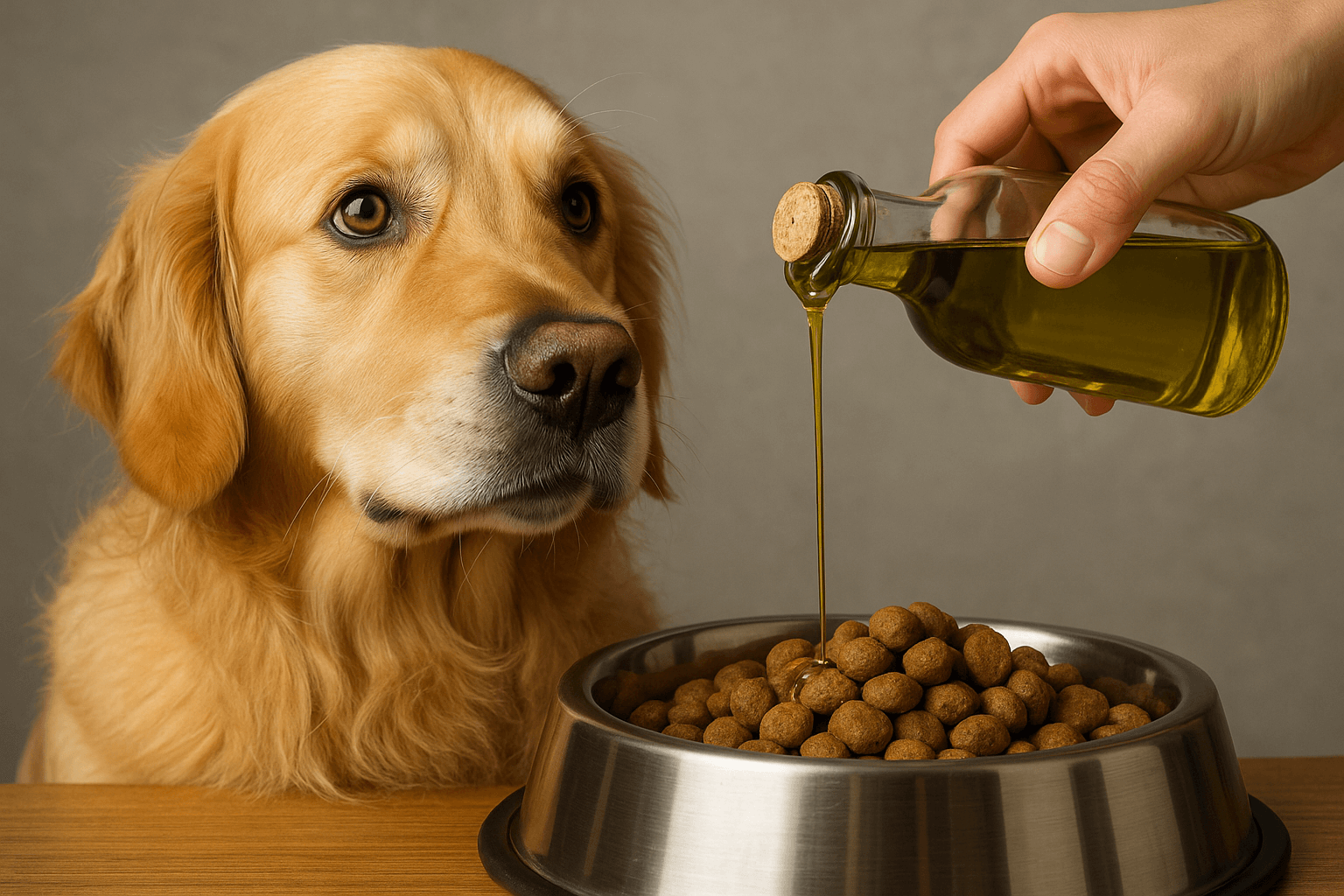
    Lightly coat dry food to enhance palatability and add moisture—great for picky eaters.
     
  • Blend into Homemade Treats:
    Use a small amount in dog-safe baking recipes like pumpkin-oat cookies or banana bites.
     
  • Add to Bone Broth:
    Combine with cooled, unsalted bone broth for a soothing, nutrient-rich topper.
     
  • Use in Food Puzzles:
    Coat puzzle toy compartments lightly to encourage licking and mental stimulation.
 

Keep portions precise—creativity shouldn’t override caution when it comes to dosage.

Signs Your Dog Is Responding Well (or Poorly)

Monitoring your dog’s reaction helps you determine whether olive oil is a helpful addition or something to discontinue.

 
  • Positive Indicators:
    Softer fur, reduced flakiness, regular bowel movements, and increased energy can signal a good response.
     
  • Digestive Warning Signs:
    Greasy stools, diarrhea, vomiting, or excessive gas mean you’ve likely given too much.
     
  • Behavioral Changes:
    Lethargy or loss of appetite may indicate intolerance or an underlying issue exacerbated by fat intake.
     
  • Skin Reactions (Rare):
    Though uncommon, some dogs may develop mild itching or redness if they’re sensitive.
     
  • Weight Shifts:
    Unexplained weight gain after a few weeks suggests you need to reduce or eliminate olive oil.
 

Observation over 2–4 weeks typically reveals whether the supplement is beneficial or not.


When to Consult Your Veterinarian

Olive oil may be natural, but it’s not universally appropriate. Professional guidance ensures safe, tailored use for your unique dog.

 
  • Pre-Existing Conditions:
    Always check with your vet before giving olive oil if your dog has diabetes, liver disease, or gastrointestinal disorders.
     
  • Puppy or Senior Use:
    Young puppies and elderly dogs have specific nutritional needs—supplements should be vet-approved.
     
  • Sudden Health Changes:
    If your dog develops symptoms after starting olive oil, stop use and seek advice immediately.
     
  • Uncertain Dosage:
    When in doubt about how much to give, your vet can calculate a safe amount based on your dog’s health profile.
     
  • Alternative Options Needed:
    If olive oil isn’t suitable, your vet may recommend fish oil, flaxseed, or other vet-formulated supplements instead.
 

Your veterinarian is your best ally in making informed, safe choices for your pet’s wellness.

Frequently Asked Questions About Olive Oil and Dogs

Is olive oil safe for dogs every day?

No—daily use isn’t recommended. Stick to 2–3 times per week at most, depending on your dog’s size and health.

Not directly. While some use it to soften earwax, it doesn’t treat infection and may worsen yeast or bacterial issues. Always see a vet for ear problems.

No. Olive oil might smother a few fleas temporarily, but it’s not an effective or reliable flea treatment. Use vet-approved preventatives instead.

Yes, sparingly. A tiny amount can soothe dry, cracked paw pads or nose—but avoid overuse, as dogs may lick it off and ingest excess.

Yes. EVOO is less processed, richer in antioxidants, and free from additives, making it the safest and most beneficial choice.

A Thoughtful Addition to Your Dog’s Wellness Routine

Olive oil isn’t a cure-all, but when used with care, it can be a gentle, natural way to support your dog’s skin, coat, and digestion. Its benefits shine not in dramatic transformations, but in subtle, sustained improvements—softer fur, brighter eyes, and easier mornings after a constipation scare. Yet, like any supplement, it demands respect for limits, awareness of your dog’s individual needs, and partnership with your veterinarian. In the end, the goal isn’t to turn your kitchen staple into a miracle potion, but to enhance your dog’s life in small, meaningful ways—one mindful teaspoon at a time.

Dog Seizure Symptoms: Best 7 Expert Tips!

Dog Seizure Symptoms: Best 7 Expert Tips! – Learn to spot signs, respond effectively, and manage seizures in dogs for a healthier, happier life.

Carprofen Dosage for Cats: Best 7 Expert Tips!

Carprofen Dosage for Cats: Best 7 Expert Tips! – Learn safe dosing, risks, and alternatives to manage pain and inflammation in cats effectively.

Africanis Dog Breed: Best 7 Expert Tips!

Africanis Dog Breed: Best 7 Expert Tips! – Explore the resilience, loyalty, and adaptability of this ancient African breed, perfect for diverse lifestyles.

Cruciate Ligament Injury Symptoms in Dogs: Best 7 Tips!

Cruciate Ligament Injury Symptoms in Dogs: Best 7 Tips! – Discover key signs like limping, swelling, and joint instability to ensure prompt treatment.

Leave a Reply

Your email address will not be published. Required fields are marked *

Post Category