
Intensive Cat Training: Unlocking Your Feline’s Hidden Potential
Cats are often labeled as aloof or untrainable—but with the right approach, they’re capable of remarkable focus, cooperation, and even advanced behaviors. Intensive cat training goes beyond simple tricks; it builds communication, trust, and mental enrichment through structured, consistent methods. Whether you’re preparing your cat for therapy work, managing behavioral issues, or simply deepening your bond, focused training can transform your relationship. The key lies in patience, positive reinforcement, and respecting your cat’s unique personality. With expert guidance, even the most independent feline can thrive in a well-designed training program.
Foundations of Effective Intensive Cat Training
Successful intensive training starts with understanding feline psychology and setting realistic, structured goals. Unlike dogs, cats respond best to voluntary participation and immediate rewards—forcing cooperation often backfires. Begin with these core principles to create a strong training foundation:
- Respect Feline Autonomy:
Cats train best when they feel in control; sessions should be short, voluntary, and end on a positive note to build trust. - Use High-Value Rewards:
Identify what motivates your cat—treats, play, or affection—and use it immediately after desired behaviors to reinforce learning. - Consistency Is Non-Negotiable:
Use the same cues, timing, and routines daily; inconsistency confuses cats and slows progress significantly. - Start with Basic Cues:
Master “sit,” “come,” “stay,” and “touch” before advancing to complex tasks like leash walking or multi-step tricks. - Track Progress Systematically:
Keep a training journal to note successes, setbacks, and session durations—this helps adjust methods based on real data.
By anchoring your program in these fundamentals, you set the stage for steady, stress-free advancement tailored to your cat’s pace and preferences.
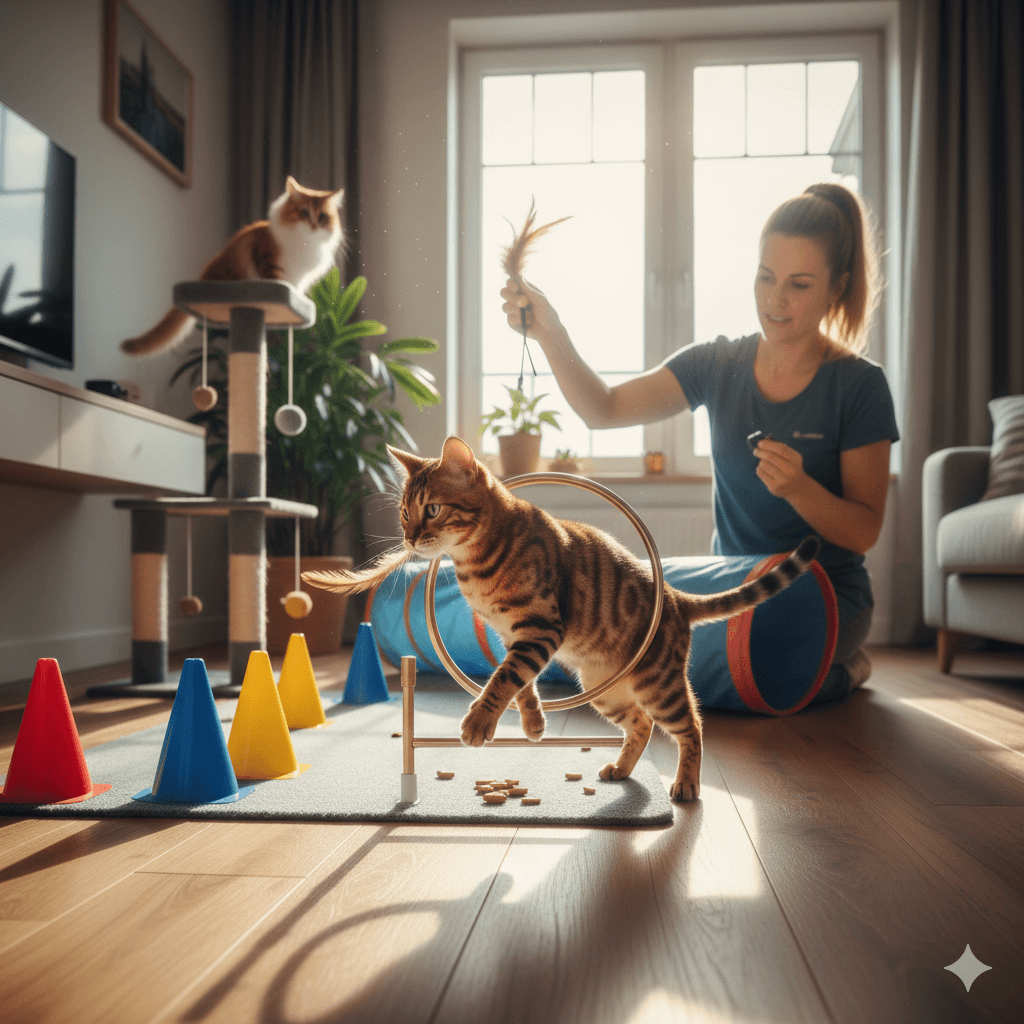
Essential Tools and Environment Setup
The right tools and a thoughtfully prepared space dramatically increase the effectiveness of intensive cat training. Distractions, discomfort, or inadequate equipment can derail even the most motivated feline. Optimize your setup with these essentials:
- Clicker or Marker Word:
A consistent auditory signal (like a click or “yes!”) precisely marks the correct behavior, speeding up learning. - Treat Pouch or Dispenser:
Keeps high-value rewards accessible without breaking flow—crucial during fast-paced or multi-step sessions. - Quiet, Low-Traffic Training Zone:
Choose a calm room away from loud noises, other pets, or foot traffic to minimize distractions and anxiety. - Target Stick and Mat:
These tools help teach precision behaviors like directional movement, stationing, or complex sequences. - Cat-Safe Enrichment Items:
Incorporate tunnels, perches, or puzzle feeders to keep sessions engaging and mentally stimulating between drills.
A well-equipped, peaceful environment signals to your cat that training time is safe, rewarding, and worth their attention.
Check this guide 👉Discover the Magic of Cat Training Spray: Best 7 Expert Tips
Check this guide 👉Therapy Cat Training: Best 7 Expert Tips!
Check this guide 👉Can You Potty Train a Cat? Best 7 Expert Tips!
Core Training Principles | Common Pitfalls to Avoid |
|---|---|
Short sessions (3–5 minutes) repeated 2–4x daily | Long sessions that cause frustration or disengagement |
Immediate reward delivery after correct behavior | Delayed treats that weaken association |
Clear, one-word verbal cues | Inconsistent or multi-word commands |
Ending on success (even small wins) | Pushing through when the cat is stressed or bored |
Building on mastered skills gradually | Skipping foundational steps for advanced tricks |
Building Advanced Behaviors Step by Step
Once your cat masters basics, you can layer skills into impressive, functional, or therapeutic behaviors. Intensive training shines here—breaking complex actions into tiny, achievable steps using shaping and chaining techniques. Approach advanced work methodically:
- Leash and Harness Conditioning:
Begin by letting your cat wear the harness indoors for short periods, rewarding calm behavior before adding the leash or outdoor steps. - Recall Under Distraction:
Practice “come” in increasingly challenging environments—first in a quiet room, then with toys or mild noise present. - Multi-Step Tricks (e.g., “Fetch,” “Spin & Sit”):
Teach each component separately, then link them using consistent cues and bridging rewards. - Station Training for Calmness:
Train your cat to go to a mat or perch on cue—a powerful tool for managing vet visits, guests, or household chaos. - Impulse Control Exercises:
Use “wait” or “leave-it” games to build self-regulation, essential for safety and advanced obedience.
Patience and precision turn seemingly impossible feats into routine behaviors—proving cats are far more trainable than most assume.
Addressing Behavioral Challenges Through Training
Intensive training isn’t just for tricks—it’s a powerful intervention for common behavioral issues like aggression, anxiety, or litter box avoidance. By replacing unwanted actions with trained alternatives, you reshape your cat’s responses constructively:
- Redirecting Aggression:
Teach a “go to mat” cue to interrupt territorial or fear-based aggression before it escalates. - Reducing Separation Anxiety:
Use departure drills (picking up keys, putting on shoes) paired with calm behaviors to desensitize stress triggers. - Litter Box Re-Training:
Pair the box with positive associations—treats, calm petting—after ruling out medical causes. - Managing Overstimulation:
Train a “pause” cue so your cat learns to signal when petting becomes too much, preventing biting or swatting. - Noise Desensitization:
Gradually expose your cat to recorded sounds (thunder, vacuum) at low volume while rewarding relaxed behavior.
In these cases, training becomes therapy—giving your cat agency and reducing fear through predictable, rewarding structure.
Maintaining Progress and Preventing Burnout
Even the most engaged cat can plateau or lose interest without thoughtful maintenance. Sustainable intensive training balances challenge with rest, ensuring long-term success without stress:
- Schedule Regular “Tune-Up” Sessions:
Even after mastery, revisit key behaviors weekly to keep them sharp and reliable. - Rotate Training Goals:
Alternate between trick work, impulse control, and enrichment to keep your cat mentally stimulated. - Watch for Stress Signals:
Flattened ears, tail flicking, or walking away mean it’s time to pause—never push through discomfort. - Incorporate Play as Reward:
End sessions with wand play or chase games to release energy and strengthen your bond. - Allow “Off Days”:
If your cat seems uninterested, skip formal training and focus on relaxed interaction or observation instead.
Training should always enrich your cat’s life—not add pressure. Flexibility and empathy keep motivation high for both of you.
Special Considerations for Kittens, Seniors, and Rescue Cats
Age and background profoundly influence how cats respond to intensive training. Tailoring your approach ensures safety, relevance, and emotional well-being for every feline:
- Kittens (8–16 Weeks):
Focus on socialization, bite inhibition, and foundational cues—keep sessions playful and under 2 minutes. - Adult Rescue Cats:
Prioritize trust-building over performance; let them initiate interaction and move at their own pace. - Senior Cats (10+ Years):
Adapt for arthritis or hearing loss—use visual cues, soft mats, and low-impact behaviors like “touch” or “look.” - Highly Sensitive Personalities:
Reduce stimuli drastically; reward even glances or proximity as first steps toward engagement. - Previously Abused Cats:
Avoid restraint or sudden movements; use distant rewards and let the cat control distance and duration.
Meeting your cat where they are—emotionally and physically—turns training into a healing, empowering experience.
What to Expect During a Professional Cat Training Program
If you seek expert help, certified feline behaviorists or trainers use science-based, force-free methods to design personalized intensive plans. Knowing what to expect helps you collaborate effectively:
- Initial Behavioral Assessment:
A detailed interview and observation to understand triggers, history, and your cat’s unique communication style. - Customized Training Protocol:
A step-by-step plan with daily goals, reward strategies, and progress benchmarks tailored to your household. - Owner Coaching Sessions:
You’ll learn timing, cueing, and body language—because your consistency is key to your cat’s success. - Remote or In-Home Support:
Many trainers offer video analysis or home visits to adjust techniques based on real-time behavior. - Ethical, Fear-Free Certification:
Reputable pros avoid punishment, flooding, or dominance tactics—only using methods that protect your cat’s welfare.
Professional guidance doesn’t replace your role—it amplifies it, turning you into a confident, skilled partner in your cat’s development.
„Training your cat using positive reinforcement means focusing on what you want your cat to do and rewarding those behaviors. This approach can improve behavior, reduce stress, and strengthen the bond between you and your cat.”
Frequently Asked Questions About Intensive Cat Training
Can any cat be trained intensively, or only certain breeds?
Any cat—regardless of breed, age, or background—can participate, though progress varies based on personality, health, and past experiences.
How long does it take to see results with intensive training?
Basic cues may appear in days; complex behaviors or behavioral rehab can take weeks to months of consistent practice.
Is clicker training necessary for intensive cat training?
Not mandatory—but highly effective. A verbal marker like “yes!” works if you’re consistent and precise with timing.
Will intensive training change my cat’s personality?
No—it enhances their natural traits while giving them tools to navigate human environments more confidently and calmly.
Can I train my cat to stop scratching furniture through intensive methods?
Yes—by teaching an approved scratching post as the rewarded alternative, not by punishing the unwanted behavior.
Empowering Your Cat Through Purposeful Partnership
Intensive cat training isn’t about control—it’s about connection. By meeting your feline halfway with clarity, respect, and joy, you unlock a level of communication many never thought possible. Whether you’re teaching calm focus for vet visits, complex tricks for mental enrichment, or coping strategies for anxiety, every session strengthens your bond. Remember, your cat isn’t being stubborn—they’re communicating in the only way they know how. With patience and structure, you give them a voice, a sense of security, and a richer life within your shared world. In the end, the greatest reward isn’t a perfect “stay”—it’s the quiet trust in your cat’s eyes when they choose to stay with you.

Is Rawhide Bad for Cats? Best 7 Expert Tips! – Discover the risks, safe alternatives, and expert advice to keep your feline friend healthy and happy.

Is Rawhide Bad for Dogs? Best 7 Expert Tips! – Discover the risks, benefits, and safer alternatives to rawhides for your dog’s chewing needs.

Understanding Anorexia in Cats: Best 7 Expert Tips! – Learn why cats stop eating, spot warning signs, and discover how to help your feline regain appetite safely.

Understanding Anorexia in Dogs: Best 7 Expert Tips! – Learn causes, symptoms, and solutions to help your dog regain appetite and stay healthy.