
Indoor Activities for Dogs: Best 7 Expert Tips!
Rainy days, extreme weather, or busy schedules shouldn’t mean boredom for your dog. Indoor activities keep your pup mentally sharp, physically engaged, and emotionally satisfied—even when you’re stuck inside. From simple games to brain-boosting puzzles, there’s no shortage of ways to turn your living room into a fun, safe playground. Whether you have a high-energy Border Collie or a laid-back Bulldog, tailored indoor play builds connection, reduces anxiety, and prevents destructive behavior. Discover how to make every day indoors an adventure your dog will love.
Why Indoor Activities Matter for Your Dog’s Well-Being
Confinement without stimulation can lead to restlessness, whining, or chewing on furniture—but purposeful indoor play meets your dog’s physical and emotional needs. These activities aren’t just distractions; they’re essential for balance, especially in urban homes or during seasonal extremes. Consider these key benefits:
- Mental Stimulation Prevents Boredom:
Interactive games challenge your dog’s problem-solving skills, reducing anxiety and unwanted behaviors like pacing or barking. - Physical Exercise Without Outdoor Access:
Even small spaces allow for movement that maintains joint health, circulation, and weight management—critical for senior or mobility-limited dogs. - Strengthens Human-Dog Bond:
One-on-one indoor play builds trust, reinforces communication, and deepens your relationship through shared focus and joy. - Supports Training Reinforcement:
Indoor settings minimize distractions, making them ideal for practicing commands, impulse control, and new tricks consistently. - Reduces Stress During Isolation:
Dogs left alone benefit from pre-set puzzle toys or scent games that keep them occupied and calm while you’re away.
When done right, indoor time becomes enriching—not restrictive—for your dog’s overall quality of life.
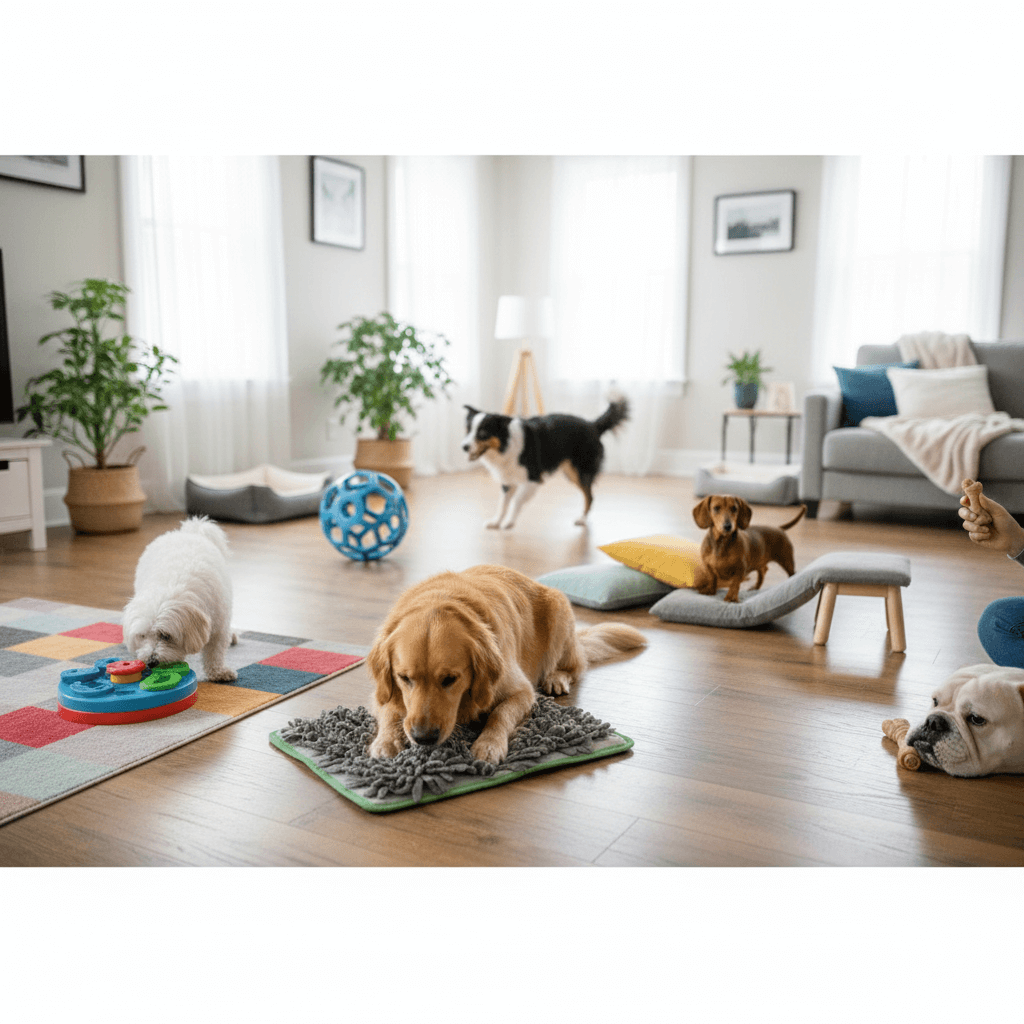
Top 7 Indoor Activities That Keep Dogs Engaged and Happy
You don’t need a backyard to keep your dog entertained. With creativity and everyday household items, you can design fun, safe, and rewarding indoor experiences. These expert-approved ideas work for most breeds and energy levels:
- Hide-and-Seek with Treats or Toys:
Toss a treat down a hallway or hide a favorite toy under a towel, then encourage your dog to “find it” using scent—great for nose work lovers. - DIY Puzzle Feeders:
Use muffin tins, cardboard boxes, or egg cartons to create treat-dispensing challenges that slow eating and stimulate cognition. - Indoor Obstacle Course:
Arrange chairs, tunnels (use a blanket over stools), cones, or yoga mats for weaving, jumping (low height!), and crawling—adjust difficulty to your dog’s ability. - Tug-of-War with Rules:
Play with a sturdy rope toy, but teach a “drop it” cue to maintain control and turn it into a structured, bonding game—not a free-for-all. - Teach New Tricks Daily:
Spend 5–10 minutes on commands like “spin,” “high-five,” or “play dead”—mental effort tires dogs as much as physical exercise. - Scent Trails with Essential Oils (Pet-Safe Only):
Using dog-safe scents like anise or diluted coconut (never tea tree or citrus!), create simple trails for your dog to follow across the floor. - Calm Settle Practice:
Use a mat or bed to practice “go to place” and “stay” amid household activity—this builds self-control and reduces reactivity.
Rotate activities to keep novelty high, and always end on a positive note with praise or a small reward.
Check this guide 👉How to Keep a Dog Entertained: Best 7 Expert Tips!
Check this guide 👉How Much Play Time Does a Dog Need? Best 7 Expert Tips!
Check this guide 👉How to Play with Your Dog: Best 7 Behavior Tips!
Low-Energy Indoor Games | High-Energy Indoor Options |
|---|---|
Chew toy rotation on a quiet mat | Short sprints down a hallway (with soft stops) |
Gentle massage or brushing session | Fetch with soft toys (use carpeted areas) |
“Leave-it” practice with treats | Jumping over low cushions (supervised) |
Calm music or dog TV for relaxation | Tug with structured start/stop cues |
Snuffle mat exploration | Hide-and-seek with owner (you hide!) |
Safe Indoor Play Guidelines Every Owner Should Follow
Indoor fun must prioritize safety—slippery floors, fragile items, and overexcitement can lead to injury. Set clear boundaries and modify games based on your space and dog’s size or health. Keep these rules in mind:
- Clear the Play Area:
Remove breakables, cords, and small objects your dog could swallow before starting any activity. - Use Non-Slip Surfaces:
Place yoga mats, rugs, or runners on hardwood or tile to prevent leg strain or falls during quick turns or stops. - Avoid High-Impact Moves for Small or Senior Dogs:
Jumping from furniture or rapid direction changes can harm joints—opt for low-impact alternatives like nose work or trick training. - Monitor for Overheating:
Indoor heating or poor ventilation can cause overheating during vigorous play—watch for heavy panting and offer water breaks. - Know Your Dog’s Limits:
Some dogs get overstimulated indoors; if yours becomes frantic or mouthy, switch to calming activities like chew time or massage.
Safety isn’t about restriction—it’s about smart, sustainable fun that protects your dog’s long-term health.
Adapting Indoor Activities for Puppies, Seniors, and Special Needs Dogs
Not all dogs play the same way. Tailor activities to your dog’s age, mobility, and temperament to ensure inclusion and comfort. Thoughtful adjustments make indoor time enjoyable for everyone:
- Puppies Under 6 Months:
Focus on short, gentle games that build confidence—like “find the treat under a cup”—and avoid rough play that stresses developing joints. - Senior Dogs:
Prioritize low-movement brain games (puzzle toys, scent work) and soft-surface comfort to protect arthritic limbs while keeping minds sharp. - Blind or Deaf Dogs:
Use textured mats, scented markers, or vibration cues to create predictable, safe indoor experiences they can navigate confidently. - Anxious or Reactive Dogs:
Quiet, predictable activities like chew sessions or “settle on mat” build security without triggering stress from noise or chaos. - Toy Breeds (Under 10 lbs):
Keep obstacles very low, avoid deep drops, and use extra-light toys to prevent injury from overexertion or accidental falls.
When activities match your dog’s unique needs, indoor time becomes therapeutic—not taxing.
Creative Ways to Rotate and Refresh Indoor Entertainment
Dogs thrive on variety. Repeating the same game daily leads to disinterest—so build a weekly rotation to keep engagement high. Use household items creatively and track what your dog enjoys most:
- Weekly Theme Days:
Assign days (e.g., “Treat Tuesday” for puzzles, “Trick Thursday” for new commands) to add structure and anticipation. - Toy Rotation System:
Store 70% of toys away and swap a few in weekly—novelty makes old toys feel new again. - Seasonal Indoor Setups:
In winter, create a “snow-free agility course”; in summer, use cooling mats for calm chew time during heatwaves. - Involve Family Members:
Teach kids safe interaction games (like “sit for petting”) to spread enrichment beyond just the primary caregiver. - Use Mealtime as Playtime:
Replace bowl feeding with food-dispensing toys or scatter-hunt meals across a rug to turn eating into an engaging activity.
Variety isn’t just fun—it prevents boredom-based behavior issues before they start.
Common Mistakes to Avoid During Indoor Play
Even well-intentioned play can backfire if it encourages bad habits or ignores safety. Stay mindful of these frequent pitfalls:
- Allowing Rough Play on Slippery Floors:
Sliding during tug or chase increases injury risk—always use rugs or limit high-energy games to carpeted rooms. - Ignoring Overstimulation Signs:
Whining, frantic circling, or nipping means your dog is over-aroused—switch to calming activities immediately. - Using Unsafe Household Items as Toys:
Rubber bands, plastic bags, or small stuffed animals with button eyes can be choking hazards—stick to dog-safe toys. - Skipping the “Wind-Down” Phase:
End energetic play with a calm command like “settle” to teach emotional regulation, not just physical exertion. - Forgetting Hydration Breaks:
Even indoors, dogs lose fluids—offer small water sips after active sessions, especially in heated or dry environments.
Avoiding these errors ensures indoor play remains positive, safe, and truly enriching.
Quick Indoor Enrichment Ideas You Can Start Today
You don’t need special equipment or hours of free time to enrich your dog’s indoor life—just a little creativity and everyday household items. These simple, vet-approved ideas can be implemented immediately to spark joy, calm anxiety, or redirect restless energy:
- Towel Snuffle Hunt:
Roll kibble or small treats into a clean kitchen towel, twist the ends, and let your dog sniff and paw to uncover the rewards—excellent for scent-driven breeds. - Muffin Tin Memory Game:
Place treats under a few tennis balls in a muffin tin; your dog must nudge the balls aside to find the hidden prizes, boosting problem-solving skills. - “Go Find It” with Favorite Toy:
Toss a beloved soft toy down a hallway while saying “find it!”—this mimics outdoor retrieving in a controlled, safe space. - Chew Time on a Designated Mat:
Offer a long-lasting chew (like a bully stick or dental bone) on a specific rug or bed to create a calming “zone” for solo relaxation. - Mirror Play (For Social Dogs):
Some dogs enjoy watching their reflection—place a non-breakable mirror near their play area for visual stimulation (discontinue if it causes barking or stress).
These mini-activities take less than five minutes to set up but deliver big rewards in mental engagement and emotional balance.
“Enrichment helps keep your pup’s mind sharp, allows them to burn off excess energy, reduces stress and anxiety, and helps prevent problem behaviors.”
Frequently Asked Questions About Indoor Activities for Dogs
Can indoor activities fully replace outdoor walks?
Not entirely—outdoor walks provide irreplaceable sensory input and mental reset. But indoor games can supplement or temporarily substitute when needed.
How long should indoor play sessions last?
Aim for 10–20 minutes, 2–3 times daily. Short, frequent sessions prevent overexertion and maintain focus—especially for puppies or seniors.
Are puzzle toys worth the investment?
Absolutely. They slow eating, reduce anxiety, and provide solo entertainment—ideal for dogs home alone or during bad weather.
What if my dog isn’t interested in indoor games?
Start with high-value treats and simple tasks (like “touch” a hand), then gradually increase difficulty. Some dogs need time to learn how to play.
Can indoor play help with separation anxiety?
Yes—teaching independent activities like chew time or snuffle mats builds confidence when you’re not present, reducing dependency.
Enriching Every Day Indoors—One Game at a Time
Your home can be more than just shelter—it can be a haven of joy, learning, and connection for your dog. With thoughtful indoor activities, you transform ordinary moments into opportunities for bonding, growth, and calm. Whether you’re dodging raindrops or simply choosing to spend a quiet day together, these games remind your dog they’re seen, loved, and never bored. And in return, you’ll be rewarded with wagging tails, focused eyes, and the quiet contentment of a dog who feels truly cared for—no matter the weather outside.

Is Rawhide Bad for Cats? Best 7 Expert Tips! – Discover the risks, safe alternatives, and expert advice to keep your feline friend healthy and happy.

Is Rawhide Bad for Dogs? Best 7 Expert Tips! – Discover the risks, benefits, and safer alternatives to rawhides for your dog’s chewing needs.

Understanding Anorexia in Cats: Best 7 Expert Tips! – Learn why cats stop eating, spot warning signs, and discover how to help your feline regain appetite safely.

Understanding Anorexia in Dogs: Best 7 Expert Tips! – Learn causes, symptoms, and solutions to help your dog regain appetite and stay healthy.