
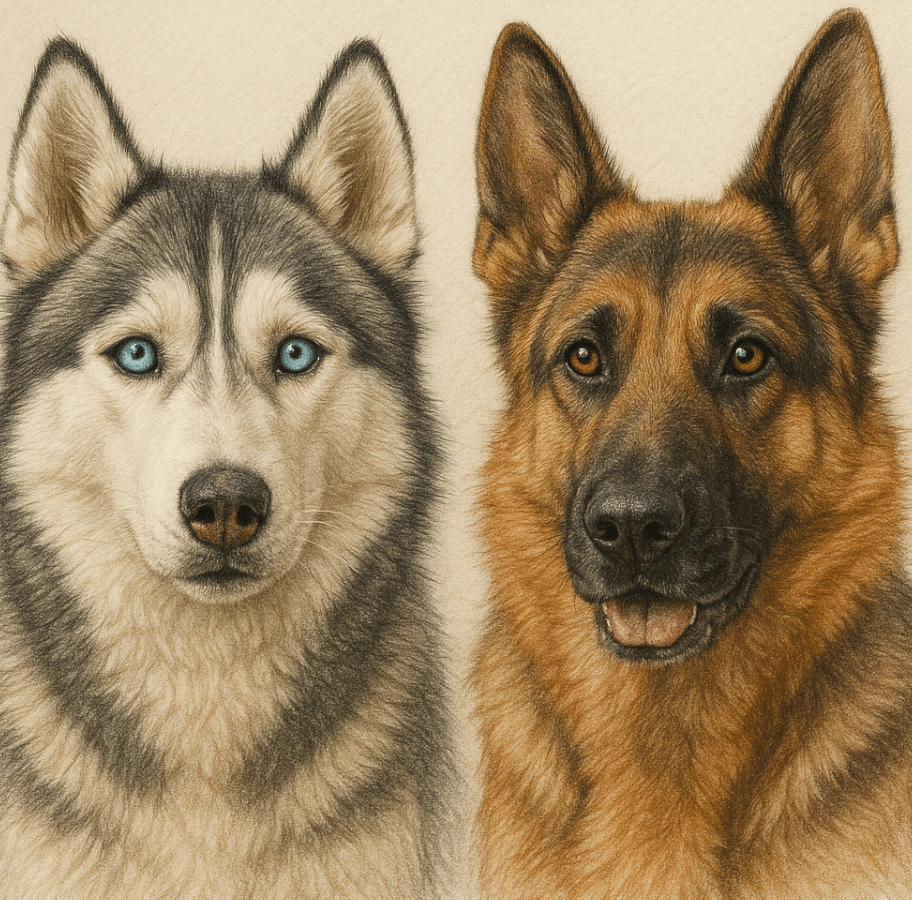

Husky vs German Shepherd: Best 7 Expert Tips!

Husky vs German Shepherd: Best 7 Expert Tips!

Husky vs German Shepherd: Which Breed is Right for You?


When it comes to choosing a canine companion, few breeds are as iconic or beloved as the Siberian Husky and the German Shepherd. Both dogs are known for their striking appearances, intelligence, and loyalty, but they have distinct personalities, needs, and characteristics that set them apart. Whether you’re drawn to the playful, mischievous nature of the Husky or the disciplined, protective demeanor of the German Shepherd, understanding their differences is crucial to finding the perfect match for your lifestyle. In this blog post, we’ll compare these two incredible breeds across various aspects, from temperament to care requirements, to help you make an informed decision.

Temperament Differences Between Huskies and German Shepherds


The temperaments of Huskies and German Shepherds reflect their unique roles and histories. While both breeds are intelligent and energetic, their personalities cater to different types of owners.

 
  • Huskies Are Playful and Independent:
    Huskies are known for their fun-loving and sometimes stubborn nature. They thrive on playtime and can be a bit more aloof compared to other breeds.

  • German Shepherds Are Loyal and Protective:
    German Shepherds are natural guardians, deeply devoted to their families and always ready to defend them if needed.

  • Huskies Tend to Be More Social:
    Huskies often get along well with strangers, children, and even other pets, thanks to their friendly disposition.

  • German Shepherds Are Reserved Around Strangers:
    While not aggressive, German Shepherds are naturally cautious around unfamiliar people and require proper socialization.

  • Energy Levels Differ in Expression:
    Both breeds are high-energy, but Huskies channel their energy into mischief, while German Shepherds focus on tasks and work.


These differences highlight how each breed interacts with their environment and humans, making one or the other better suited to specific households.

Physical Characteristics of Huskies and German Shepherds


The physical traits of these breeds contribute significantly to their appeal, but they also come with unique care considerations. Here’s a breakdown of their key features.

 
  • Coat Type and Maintenance:
    Huskies have a thick double coat designed for cold climates, requiring frequent brushing to manage shedding. German Shepherds also shed heavily but have a slightly shorter coat.

  • Size and Build:
    Huskies typically weigh between 35-60 pounds and stand about 20-24 inches tall. German Shepherds are larger, weighing 50-90 pounds and standing 22-26 inches tall.

  • Eye Color Variations:
    Huskies are famous for their striking blue eyes, though some have brown or heterochromatic eyes. German Shepherds usually have dark brown eyes.

  • Lifespan Expectancy:
    Both breeds live 10-14 years on average, but Huskies tend to stay healthier longer with fewer hereditary issues.

  • Distinctive Markings:
    Huskies often sport a wolf-like appearance with masks and patterns, while German Shepherds have a sleek, uniform look with saddleback markings.


Understanding these physical traits helps you prepare for grooming needs and anticipate potential health concerns.

Husky vs German Shepherd: Best 7 Expert Tips!
Husky Traits
German Shepherd Traits
High-energy and playful
Calm and task-oriented
Friendly with strangers
Cautious and protective
Prone to wandering off due to curiosity
Strong sense of loyalty and duty
Requires minimal training motivation
Excels in advanced obedience training
Thrives in cooler climates
Adaptable to various weather conditions

Training Challenges and Approaches for Each Breed


Training plays a vital role in shaping the behavior of both Huskies and German Shepherds. However, their differing temperaments require tailored approaches.

 
  • Huskies Need Consistency and Patience:
    Their independent streak means Huskies may test boundaries, so consistent reinforcement is essential.

  • German Shepherds Respond Well to Structure:
    These dogs excel in structured environments where clear commands and expectations are provided.

  • Positive Reinforcement Works Best for Huskies:
    Reward-based methods motivate Huskies to engage in training sessions without becoming bored.

  • German Shepherds Thrive on Purpose-Driven Tasks:
    Incorporating jobs like agility courses or scent work keeps German Shepherds mentally stimulated.

  • Preventing Boredom is Key for Huskies:
    Without adequate mental stimulation, Huskies are prone to destructive behaviors like chewing and digging.


Tailoring your training strategy to each breed’s strengths ensures a harmonious relationship.

Exercise Needs of Huskies and German Shepherds


Both breeds are highly active, but their exercise preferences and intensity levels differ. Meeting their needs is critical for maintaining balance and happiness.

 
  • Huskies Require Long Walks and Runs:
    Daily runs or hikes are ideal for burning off their endless energy reserves.

  • German Shepherds Prefer Structured Activities:
    Activities like obedience drills or fetch align with their desire for purposeful movement.

  • Mental Stimulation Matters for Huskies:
    Puzzle toys and interactive games prevent boredom and curb destructive tendencies.

  • German Shepherds Benefit from Jobs:
    Engage them in tasks like guarding or retrieving to fulfill their working instincts.

  • Supervision is Crucial for Huskies:
    Their wanderlust makes them prone to escaping, so secure fencing and leashed walks are necessary.


Providing ample exercise ensures both breeds remain calm and content at home.

Common Health Issues in Huskies and German Shepherds


Like all purebred dogs, Huskies and German Shepherds are prone to certain health conditions. Being aware of these risks allows you to take preventive measures.

 
  • Hip Dysplasia:
    Affecting both breeds, this joint condition requires monitoring through regular vet check-ups.

  • Progressive Retinal Atrophy (PRA):
    Common in Huskies, PRA leads to vision loss; genetic testing can identify carriers early.

  • Degenerative Myelopathy (DM):
    German Shepherds are particularly susceptible to this spinal cord disease, which affects mobility.

  • Bloat (Gastric Torsion):
    Rapid eating and stress increase the risk of bloat in German Shepherds; feeding smaller meals helps mitigate this.

  • Zinc Deficiency in Huskies:
    Some Huskies struggle to absorb zinc, leading to skin issues; dietary supplements can help.


Proactive healthcare ensures a longer, healthier life for your furry friend.

Living Arrangements Suitable for Each Breed


The living environment you provide greatly influences the happiness and well-being of your Husky or German Shepherd.

 
  • Huskies Thrive in Cooler Climates:
    Their thick coats make them uncomfortable in hot weather; air conditioning and shade are essential.

  • German Shepherds Adapt Easily:
    They tolerate various climates but need shelter from extreme heat or cold.

  • Space Requirements for Huskies:
    Despite being adaptable to apartments, Huskies need room to roam and explore safely.

  • Security Measures for German Shepherds:
    Their protective instincts mean they benefit from secure yards and supervised outdoor time.

  • Noise Levels Matter for Huskies:
    Known for “talking,” Huskies may not suit noise-sensitive neighborhoods.


Matching your home environment to the breed’s needs fosters a harmonious living situation.


Fun Facts About Huskies and German Shepherds


Learning quirky details about these breeds adds to their charm and deepens your appreciation for their uniqueness.

 
  • Huskies Were Originally Sled Dogs:
    Bred by the Chukchi people of Siberia, Huskies were developed for endurance and teamwork.

  • German Shepherds Excel in Police Work:
    Their intelligence and trainability make them top choices for K-9 units worldwide.

  • Huskies Have Unique Vocalizations:
    From howls to “talking,” their expressive sounds mimic human speech patterns.

  • German Shepherds Star in Movies:
    Famous films like I Am Legend feature heroic German Shepherds, showcasing their versatility.

  • Huskies Are Escape Artists:
    Their agility and curiosity often lead them to find creative ways out of enclosures.


These fun facts celebrate the rich history and endearing quirks of both breeds.

Frequently Asked Questions About Huskies and German Shepherds

 
Which breed is better for first-time owners?

German Shepherds are generally easier for beginners due to their eagerness to please, whereas Huskies require experienced handling.

Yes, if they receive sufficient exercise and mental stimulation, though their vocal nature might disturb neighbors.

Yes, they “blow” their undercoat twice a year, leading to heavy shedding during those periods.

Secure fencing, leash training, and microchipping are essential to prevent escapes.

With proper socialization, both breeds can live peacefully with smaller animals, though supervision is recommended.

Choosing Between a Husky and a German Shepherd


Deciding between a Husky and a German Shepherd ultimately depends on your lifestyle, preferences, and ability to meet their needs. While Huskies charm with their playful antics and striking looks, German Shepherds impress with their unwavering loyalty and versatility. By carefully considering factors like temperament, exercise requirements, and grooming commitments, you can determine which breed will thrive in your home. Whichever you choose, both breeds offer boundless love, companionship, and unforgettable memories.

Cat Anaphylactic Shock Treatment Costs: Best 7 Expert Tips!

Cat Anaphylactic Shock Treatment Costs: Best 7 Expert Tips! – Learn about costs, treatments, and financial aid options to save your cat’s life.

Exocrine Pancreatic Insufficiency in Cats: Best 7 Tips!

Exocrine Pancreatic Insufficiency in Cats: Best 7 Tips! – Learn to spot symptoms, manage EPI effectively, and improve your cat’s quality of life with expert advice.

Cost of Dog Anaphylactic Shock Treatment: Best 7 Tips!

Cost of Dog Anaphylactic Shock Treatment: Best 7 Tips! – Learn about emergency costs, financial planning, and ways to manage expenses for your dog’s care.

Exocrine Pancreatic Insufficiency in Dogs: Best 7 Tips!

Exocrine Pancreatic Insufficiency in Dogs: Best 7 Tips! – Learn to spot symptoms, manage EPI effectively, and improve your dog’s quality of life with expert guidance.

Leave a Reply

Your email address will not be published. Required fields are marked *


