
Understanding How to Train a PTSD Service Dog
Training a PTSD service dog can be life-changing for individuals managing post-traumatic stress disorder, providing both practical support and emotional comfort. These highly skilled dogs are trained to perform specific tasks that help mitigate symptoms and create a sense of safety in everyday situations. With dedication, patience, and the right approach, you can transform a well-suited canine into a reliable companion ready to assist with PTSD-related challenges.
Key Traits of a Successful PTSD Service Dog
Not every dog is suited for the demanding role of a PTSD service dog. These animals must possess specific temperamental and physical traits to excel in their duties. A successful service dog is calm, intuitive, and highly trainable, with a natural inclination to bond deeply with their handler. Additionally, they must be resilient enough to handle stressful environments without becoming overwhelmed. Understanding these traits ensures you select the right canine candidate for this important role.
- Calm and Confident Demeanor:
A service dog must remain composed in chaotic or unfamiliar situations, such as crowded public spaces or loud environments, to provide consistent support. - Strong Focus and Trainability:
Dogs with high intelligence and a willingness to learn are better equipped to master complex tasks required for PTSD assistance. - Natural Empathy and Bonding Ability:
The ideal service dog intuitively senses their handler’s emotional state and responds with comfort, making them an invaluable emotional anchor. - Moderate Energy Levels:
While too much energy can lead to distractibility, overly lethargic dogs may lack the stamina needed for long training sessions or active tasks. - Good Health and Physical Fitness:
A service dog must be free of chronic health issues and physically capable of performing tasks like retrieving items or providing deep pressure therapy.
Choosing a dog with these qualities sets the foundation for a successful partnership and ensures your service dog can meet the demands of their role effectively.
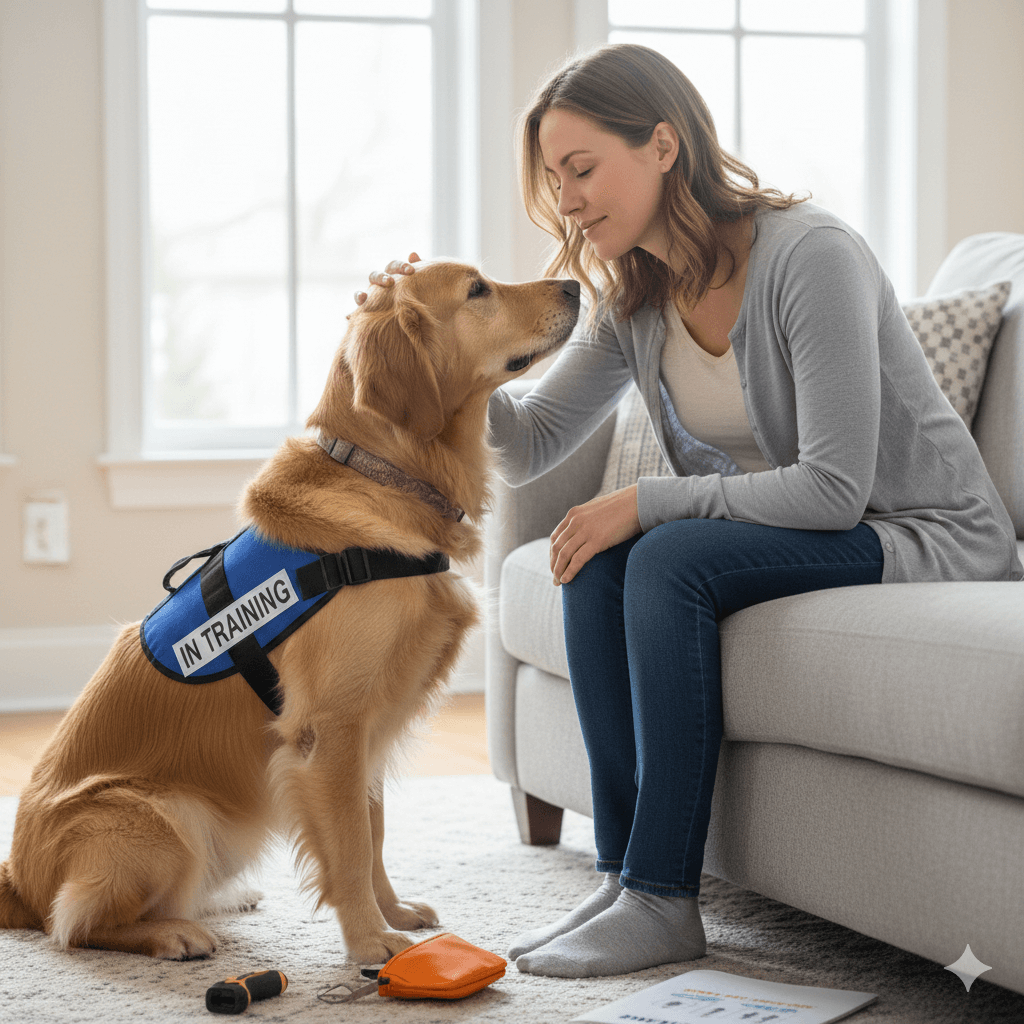
Essential Commands for PTSD Service Dogs
Basic obedience commands form the backbone of any service dog’s training, but PTSD service dogs require additional specialized cues tailored to their handler’s needs. These commands ensure the dog can perform tasks that alleviate symptoms and provide immediate support during distressing moments. Mastery of these skills takes time, patience, and consistent reinforcement, but the results are life-changing for both dog and handler.
- “Watch Me” or “Focus”:
This command trains the dog to maintain eye contact, helping handlers feel grounded during anxiety-inducing situations. - “Block” or “Cover”:
The dog positions itself between the handler and others, creating a physical barrier to reduce feelings of vulnerability in crowded spaces. - “Find Help” or “Go Get”:
In emergencies, the dog locates a designated person or retrieves a phone to summon assistance quickly. - “Paws On” or “Deep Pressure Therapy”:
The dog applies gentle weight to the handler’s lap or chest, offering calming tactile stimulation during panic attacks or flashbacks. - “Interrupt” or “Alert”:
Trained to recognize early signs of distress, the dog interrupts harmful behaviors like self-harm or dissociation by nudging or licking.
These commands empower the dog to act as a proactive partner, addressing PTSD symptoms before they escalate and fostering a sense of security.
Check this guide 👉What Does a PTSD Service Dog Do? Best 7 Expert Tips!
Check this guide 👉How to Make My Pitbull a Service Dog: Best 7 Expert Tips!
Check this guide 👉Reasons to Get a Service Dog: Best 7 Expert Tips!
Professional Training | DIY Training |
|---|---|
Structured programs with expert guidance | Personalized approach tailored to handler’s needs |
Faster results (6–12 months) | Longer process (1–2 years) |
High cost ($10,000–$30,000) | Cost-effective (mainly food, supplies, and optional consultations) |
Access to specialized equipment and resources | Requires self-research and learning |
Guaranteed certification upon completion | Certification depends on handler’s consistency and skill |
Step-by-Step Training Process for PTSD Service Dogs
Training a PTSD service dog involves a structured process that progresses from basic obedience to advanced task-specific skills. Consistency, positive reinforcement, and gradual exposure to real-world scenarios are key to building confidence and reliability. While professional trainers often guide this process, many handlers successfully train their dogs with dedication and proper resources. Breaking down the steps simplifies what might initially seem overwhelming.
- Foundation Obedience Training (Weeks 1–8):
Teach essential commands like sit, stay, come, and heel using treats and praise to establish clear communication and trust. - Public Access Skills Development (Weeks 9–16):
Expose the dog to various environments, teaching them to remain calm and focused despite distractions like noise, movement, or unfamiliar people. - Task-Specific Skill Introduction (Weeks 17–24):
Introduce tasks such as “block,” “paws on,” or “find help,” reinforcing each behavior through repetition and reward. - Real-Life Scenario Practice (Months 6–12):
Simulate challenging situations like crowded stores or noisy events to ensure the dog performs reliably under realistic conditions. - Handler-Dog Bond Strengthening (Ongoing):
Spend quality time together daily to deepen your connection, as a strong bond enhances the dog’s responsiveness and effectiveness.
By following this step-by-step approach, you’ll create a well-trained service dog capable of transforming your daily life.
Common Challenges in Training PTSD Service Dogs
While the rewards of training a PTSD service dog are immense, the journey isn’t without its challenges. Handlers and trainers often encounter obstacles ranging from behavioral setbacks to logistical hurdles. Recognizing these difficulties early allows you to address them proactively and maintain momentum throughout the training process. Overcoming these challenges requires patience, adaptability, and unwavering commitment.
- Behavioral Setbacks During Training:
Dogs may regress or struggle with certain tasks due to stress, fatigue, or confusion, requiring adjustments to the training plan. - Handler Fatigue or Emotional Strain:
Training a service dog can be emotionally taxing for individuals managing PTSD, potentially impacting consistency and progress. - Environmental Sensitivities:
Some dogs may exhibit fear or reactivity in new or overwhelming environments, necessitating gradual desensitization techniques. - Balancing Training with Daily Life:
Finding time to dedicate to training while managing work, family, or personal responsibilities can feel overwhelming at times. - Financial Constraints for Professional Help:
While DIY training is possible, hiring a professional trainer or enrolling in programs can be costly but beneficial for achieving optimal results.
Despite these hurdles, perseverance ensures that both you and your dog emerge stronger and more connected at the end of the journey.
Legal Rights and Public Access for PTSD Service Dogs
PTSD service dogs are protected under laws like the Americans with Disabilities Act (ADA), granting them access to public spaces where pets are typically restricted. However, understanding your rights—and responsibilities—as a handler is crucial for navigating potential conflicts or misunderstandings. Proper documentation, etiquette, and education about service dog regulations prevent unnecessary confrontations and ensure smooth interactions in public settings.
- ADA Protections for Service Dogs:
Under the ADA, service dogs can accompany their handlers in businesses, restaurants, and transportation regardless of pet policies. - Required Documentation and Identification:
While not legally mandated, some handlers carry identification cards or vests to clarify their dog’s role in public spaces. - Handler Responsibilities in Public:
Handlers must ensure their dog remains under control, behaves appropriately, and does not disrupt others during outings. - Dealing with Access Denials or Questions:
Politely educate business owners about service dog rights if denied entry, avoiding escalation whenever possible. - Traveling with a Service Dog:
Service dogs are allowed on flights and in accommodations under federal law, though additional documentation may be requested internationally.
Knowing your rights empowers you to advocate confidently for yourself and your service dog in all situations.
Benefits of Having a Trained PTSD Service Dog
A trained PTSD service dog offers far-reaching benefits beyond task-specific assistance, enhancing both mental and physical well-being for their handler. These dogs serve as constant companions, reducing feelings of isolation and providing a sense of purpose and routine. Their presence alone can significantly improve quality of life, making daily activities more manageable and enjoyable. Investing in a service dog is not just practical—it’s transformative.
- Reduced Anxiety and Panic Attacks:
The dog’s calming presence and ability to interrupt escalating symptoms lower overall anxiety levels and promote relaxation. - Improved Social Interactions:
Having a service dog can ease social anxiety, acting as a conversation starter and bridging gaps between the handler and others. - Enhanced Sense of Safety:
Tasks like “block” or “watch my back” reassure handlers in vulnerable situations, fostering confidence in public spaces. - Increased Physical Activity:
Walking and caring for a service dog encourages movement and outdoor time, benefiting both physical and mental health. - Emotional Support and Companionship:
The unconditional love and loyalty of a service dog combat loneliness and depression, creating a profound human-animal bond.
These benefits extend beyond symptom management, enriching every aspect of life for individuals living with PTSD.
Choosing Between Professional Trainers vs. DIY Training
Deciding whether to hire a professional trainer or train your PTSD service dog yourself depends on factors like budget, time availability, and personal preference. Both approaches have unique advantages and drawbacks, so weighing them carefully helps you make an informed choice. Regardless of the path you choose, dedication and consistency remain the keys to success.
- Professional Trainer Advantages:
Experts bring experience, structured programs, and access to specialized equipment, ensuring efficient and effective training outcomes. - Cost Considerations for Professional Help:
Hiring a trainer can be expensive, with costs ranging from $10,000 to $30,000 depending on the program’s length and scope. - DIY Training Benefits:
Training your dog yourself strengthens your bond and saves money, allowing for personalized customization of tasks to fit your needs. - Time Commitment for DIY Training:
Self-training requires significant time investment—up to 1–2 years of consistent effort to achieve full certification readiness. - Hybrid Approach Options:
Some handlers combine DIY training with periodic consultations from professionals, balancing cost with expert guidance.
Ultimately, the best choice aligns with your resources, goals, and comfort level, ensuring a successful partnership between you and your service dog.
“I see service dogs providing veterans with the motivation to get up every day and have the confidence to participate in activities they haven’t been able to do since prior to their service.”
— Bella Mendoza, Instructor, Reducing the Impact of PTSD
Frequently Asked Questions About Training a PTSD Service Dog
What qualifies a dog as a PTSD service dog?
A PTSD service dog must be trained to perform specific tasks that mitigate symptoms of post-traumatic stress disorder, such as interrupting panic attacks or providing deep pressure therapy.
How long does it take to train a PTSD service dog?
Training typically takes 1–2 years, depending on whether you choose professional help or opt for DIY training.
Can any breed become a PTSD service dog?
While any breed can potentially qualify, larger breeds like Labrador Retrievers, Golden Retrievers, and German Shepherds are commonly chosen due to their temperament and size.
Do PTSD service dogs need certification?
Certification is not legally required under the ADA, but some handlers pursue voluntary certification for credibility and convenience in public settings.
Is it possible to train a rescue dog as a PTSD service dog?
Yes, many rescue dogs excel as service animals, provided they have the right temperament, health, and trainability. Proper evaluation is essential before beginning training.
A Lifeline in Every Moment of Need
Training a PTSD service dog is a journey of patience, dedication, and profound connection—one that transforms both lives in unimaginable ways. These remarkable animals don’t just assist with daily tasks; they become pillars of strength, offering unwavering support during life’s most challenging moments. By understanding the process, committing to consistent training, and fostering a deep bond, you create a partnership that empowers you to reclaim independence and peace of mind. Remember, every small step you take brings you closer to a brighter, more secure future alongside your loyal companion.

Is Rawhide Bad for Cats? Best 7 Expert Tips! – Discover the risks, safe alternatives, and expert advice to keep your feline friend healthy and happy.

Is Rawhide Bad for Dogs? Best 7 Expert Tips! – Discover the risks, benefits, and safer alternatives to rawhides for your dog’s chewing needs.

Understanding Anorexia in Cats: Best 7 Expert Tips! – Learn why cats stop eating, spot warning signs, and discover how to help your feline regain appetite safely.

Understanding Anorexia in Dogs: Best 7 Expert Tips! – Learn causes, symptoms, and solutions to help your dog regain appetite and stay healthy.