

How to Test Cat for Heartworm: Best 7 Expert Tips!

How to Test Cat for Heartworm: Best 7 Expert Tips!

Understanding How to Test Cat for Heartworm

Heartworm disease in cats is often misunderstood—but it’s a serious, potentially fatal condition that can be difficult to diagnose. Unlike in dogs, heartworm infections in felines are subtle, with symptoms that mimic asthma or gastrointestinal issues. Early and accurate testing is essential for detection, though it’s more complex than many pet owners expect. Knowing the right diagnostic approach can make all the difference in managing your cat’s health. With expert guidance, you can navigate testing options confidently and ensure your cat receives the best possible care.

Why Heartworm Testing in Cats Is Different

Testing a cat for heartworm isn’t as straightforward as it is for dogs. Feline heartworm disease involves fewer worms, erratic antibody responses, and unpredictable clinical signs. This complexity means a single test is rarely enough—veterinarians often combine multiple diagnostics to form a complete picture:

 
  • Lower Worm Burden:
    Cats typically host only 1–3 adult heartworms (vs. dozens in dogs), making antigen tests less reliable.
     
  • Antibody vs. Antigen Tests:
    Antibody tests show exposure but not active infection; antigen tests only detect mature female worms—often missing early or male-only infections.
     
  • Variable Immune Response:
    A cat’s immune system may clear larvae before adulthood, leaving ambiguous test results despite prior exposure.
     
  • Non-Specific Symptoms:
    Coughing, vomiting, or lethargy may be mistaken for asthma or IBD, delaying suspicion of heartworm altogether.
     
  • Lack of Approved Treatment:
    Since no heartworm treatment exists for cats, diagnosis focuses on monitoring and supportive care—making accurate testing even more critical.
 

Because of these challenges, veterinarians rely on a combination of tests, imaging, and clinical judgment to assess heartworm status in cats.

How to Test Cat for Heartworm: Best 7 Expert Tips!

Essential Diagnostic Tools for Feline Heartworm

Accurate diagnosis requires more than a blood test—modern veterinary protocols integrate several tools to evaluate risk and confirm infection. These methods increase detection confidence, especially in ambiguous cases:

 
  • Antibody Blood Test:
    Detects exposure to heartworm larvae; positive results suggest current or past infection but don’t confirm live worms.
     
  • Antigen Blood Test:
    Identifies proteins from adult female heartworms; useful only if mature females are present—often negative in cats.
     
  • Chest X-Rays (Radiographs):
    Reveal enlarged pulmonary arteries or lung changes typical of heartworm-associated respiratory disease (HARD).
     
  • Echocardiogram (Ultrasound):
    Can visually detect adult worms in the heart or pulmonary arteries, though sensitivity is limited in early infections.
     
  • Complete Blood Work & Urinalysis:
    Helps rule out other conditions (like asthma or kidney disease) that mimic heartworm symptoms.
 

Using these tools together allows vets to build a more accurate clinical picture, even when individual tests are inconclusive.

Screening Indicators
Confirmatory Diagnostics
Coughing or wheezing
Chest X-rays showing vascular changes
Intermittent vomiting
Echocardiogram visualizing adult worms
Sudden collapse or lethargy
Positive antibody + antigen combo
Weight loss without cause
Elevated eosinophils in blood work
History of mosquito exposure
Bronchial inflammation on imaging

When to Test Your Cat for Heartworm

Timing matters—testing too early or without symptoms can lead to false reassurance. Veterinarians recommend testing based on risk factors, clinical signs, or preventive protocols:

 
  • After a Missed Dose of Prevention:
    If your cat skipped even one month of heartworm preventive, testing 6–7 months later may be advised.
     
  • Before Starting Preventive Medication:
    While not always required for cats (unlike dogs), some vets test first if the cat is older or adopted with unknown history.
     
  • When Respiratory Symptoms Appear:
    Chronic cough, labored breathing, or asthma-like episodes warrant heartworm screening, especially in endemic areas.
     
  • Following a Mosquito Season Peak:
    In high-risk regions, annual testing may be considered for outdoor or previously unprotected cats.
     
  • After Unexplained Collapse or Sudden Death:
    Post-mortem testing can confirm heartworm as a cause and inform care for other pets in the household.
 

Proactive testing is less about routine screening and more about strategic evaluation when clinical concern arises.

Interpreting Test Results: What the Numbers Mean

Understanding your cat’s test report helps you participate in care decisions. Results aren’t always “positive” or “negative”—they exist on a spectrum of likelihood:

 
  • Antibody Positive / Antigen Negative:
    Suggests exposure or early infection; worms may be immature, male-only, or already cleared by the immune system.
     
  • Antibody Negative / Antigen Negative:
    Likely no infection—but doesn’t rule out very recent exposure (within 2–3 months).
     
  • Both Tests Positive:
    Strong evidence of adult female heartworms, though still rare in cats.
     
  • Inconclusive or Conflicting Results:
    Common in cats; requires follow-up testing in 2–3 months or advanced imaging.
     
  • Positive Imaging + Negative Blood Tests:
    Possible if worms are present but below detection thresholds—clinical signs guide next steps.
 

Your veterinarian will explain what the combination means for your individual cat’s health and monitoring plan.

Prevention: The Best “Test” Is Avoiding Infection Altogether

Since treatment isn’t available and diagnosis is tricky, prevention is the cornerstone of feline heartworm care. Monthly preventives not only stop new infections but also support overall wellness:

 
  • Year-Round Monthly Preventives:
    Topical or oral medications (like selamectin or moxidectin) kill early-stage larvae before they mature.
     
  • Indoor Cats Need Protection Too:
    Mosquitoes enter homes—up to 25% of infected cats are strictly indoors.
     
  • Consistency Is Critical:
    Missing doses—even in winter—leaves gaps where infection can take hold.
     
  • Combination Products Offer Extra Benefits:
    Many preventives also treat fleas, ear mites, or intestinal parasites, simplifying care.
     
  • Discuss Risk with Your Vet Annually:
    Even in low-risk areas, climate change is expanding mosquito habitats—reassess your cat’s needs yearly.
 

Prevention turns a potentially fatal disease into a non-issue, sparing your cat—and you—from diagnostic uncertainty and distress.

Special Considerations for At-Risk Cats

Not all cats face the same level of heartworm risk, but certain factors increase vulnerability and influence testing urgency:

 
  • Outdoor or Part-Time Outdoor Cats:
    Direct mosquito exposure significantly raises infection likelihood—testing may be more frequent.
     
  • **Cats in the Southern or Gulf Coast U.S.:
    Regions like Florida, Texas, and Louisiana have high mosquito and heartworm prevalence, warranting heightened vigilance.
     
  • Young Adult Cats (2–5 Years):
    Most commonly diagnosed age group, possibly due to higher outdoor activity or immune response patterns.
     
  • Cats with Preexisting Respiratory Conditions:
    Asthma or bronchitis can mask or worsen heartworm symptoms—differentiation is key.
     
  • Multi-Cat Households with Dogs:
    Infected dogs increase local mosquito infectivity, indirectly raising risk for cats in the same environment.
 

For these cats, even subtle changes in breathing or behavior should prompt a heartworm discussion with your vet.

What to Expect During a Heartworm Testing Visit

A heartworm evaluation for your cat is typically a calm, non-invasive process—but knowing what to expect reduces anxiety for both of you:

 
  • Physical Exam First:
    Your vet will listen to the heart and lungs, check gum color, and assess overall condition.
     
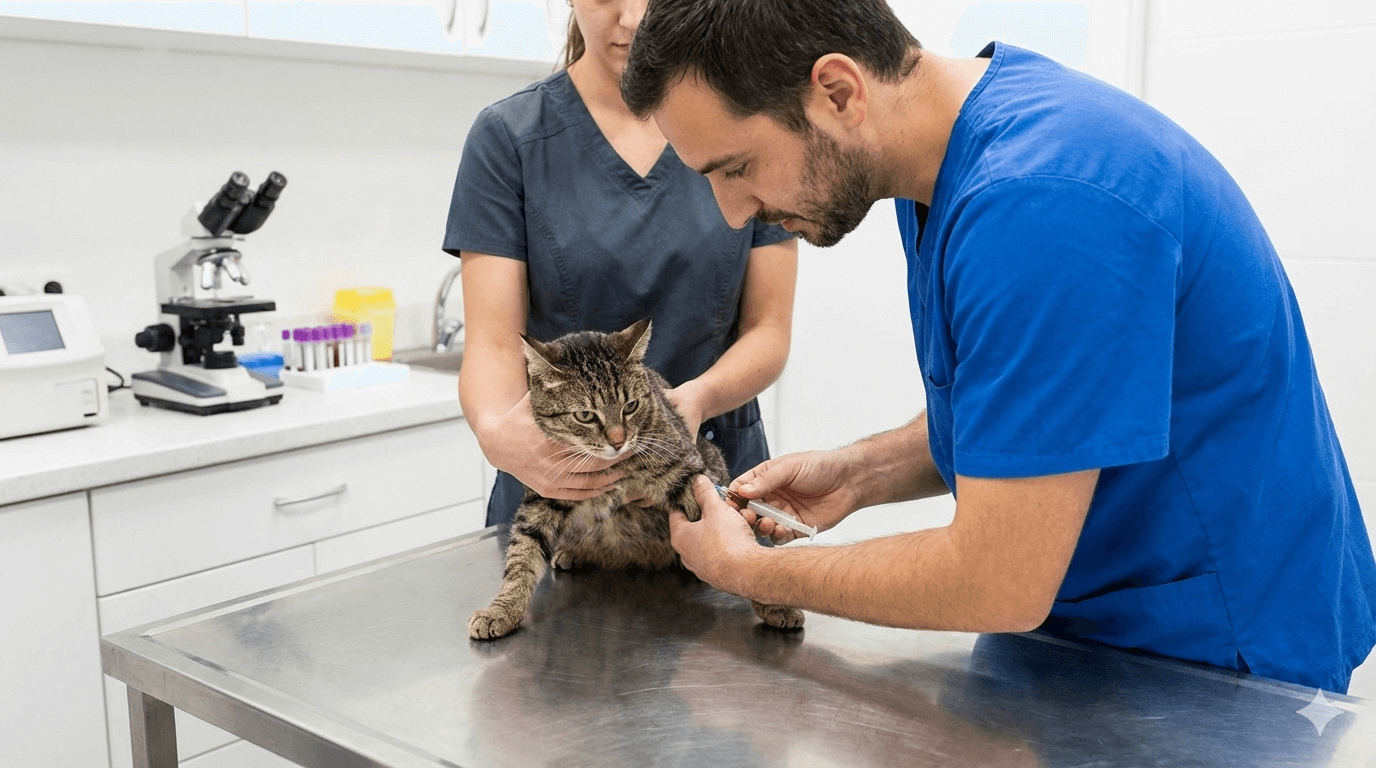
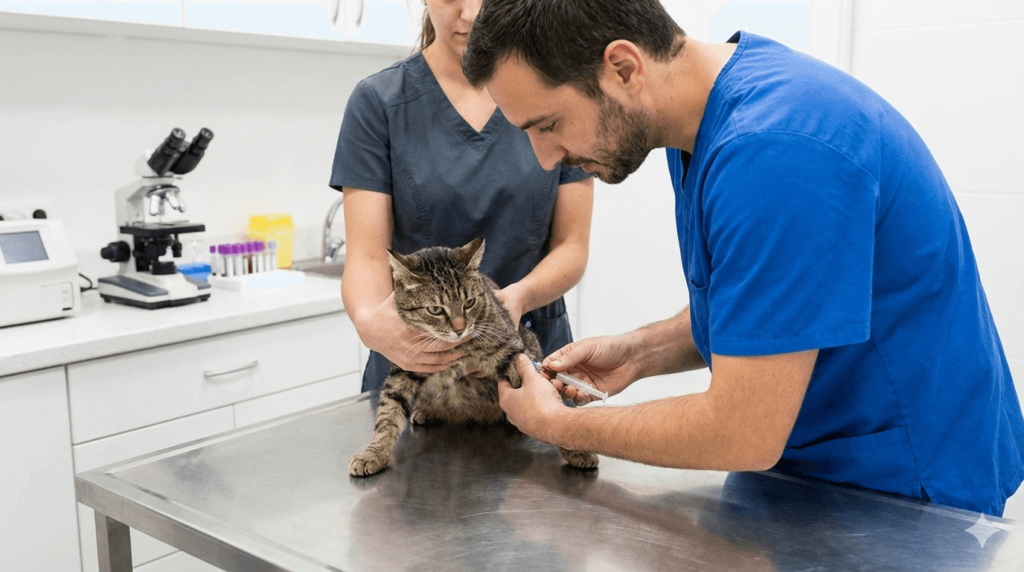
  • Small Blood Sample:
    Usually drawn from a leg or neck vein; sent to an in-house lab or external reference lab.
     
  • Possible X-Ray or Ultrasound:
    If symptoms suggest heartworm, imaging may be recommended the same day or at a follow-up.
     
  • Discussion of Preventive History:
    Be ready to share what (if any) heartworm prevention your cat has received and for how long.
     
  • Personalized Monitoring Plan:
    Even if tests are negative, your vet may suggest retesting in a few months or starting prevention.
 

The goal isn’t just a diagnosis—it’s a long-term strategy to keep your cat safe and symptom-free.


Frequently Asked Questions About How to Test Cat for Heartworm

Can a cat test negative and still have heartworms?

Yes—due to low worm counts or immature infections, false negatives are common. Clinical signs often guide further testing.

Typically $50–$150 for blood tests; imaging (X-rays/echo) adds $100–$300 depending on your clinic.

No—unlike dogs, cats can usually start preventives without a test, but vets may recommend it for older or symptomatic cats.

Antibodies may appear in 2–3 months; antigens only after 6–7 months, once worms mature.

Yes—studies show 25–30% of infected cats are indoor-only, as mosquitoes easily enter homes through doors or windows.

Protecting Your Cat From a Silent Threat

Heartworm disease in cats is often called a “silent killer”—but with informed vigilance, it doesn’t have to be. While testing presents unique challenges, combining blood work, imaging, and clinical observation gives veterinarians powerful tools to detect and manage this condition. More importantly, consistent monthly prevention transforms heartworm from a looming threat into a preventable footnote in your cat’s health story. By staying proactive, interpreting results wisely, and partnering closely with your vet, you give your feline companion the best chance at a long, vibrant life—free from the hidden dangers of heartworm.

Cat Anaphylactic Shock Treatment Costs: Best 7 Expert Tips!

Cat Anaphylactic Shock Treatment Costs: Best 7 Expert Tips! – Learn about costs, treatments, and financial aid options to save your cat’s life.

Exocrine Pancreatic Insufficiency in Cats: Best 7 Tips!

Exocrine Pancreatic Insufficiency in Cats: Best 7 Tips! – Learn to spot symptoms, manage EPI effectively, and improve your cat’s quality of life with expert advice.

Cost of Dog Anaphylactic Shock Treatment: Best 7 Tips!

Cost of Dog Anaphylactic Shock Treatment: Best 7 Tips! – Learn about emergency costs, financial planning, and ways to manage expenses for your dog’s care.

Exocrine Pancreatic Insufficiency in Dogs: Best 7 Tips!

Exocrine Pancreatic Insufficiency in Dogs: Best 7 Tips! – Learn to spot symptoms, manage EPI effectively, and improve your dog’s quality of life with expert guidance.

Leave a Reply

Your email address will not be published. Required fields are marked *


