
Understanding How to Take Care of Cat Paws: Best 7 Expert Tips!
Your cat’s paws do far more than just carry them—they’re essential for balance, communication, grooming, and even temperature regulation. Yet, many pet parents overlook this sensitive area until a problem arises. Healthy paws mean a happier, more comfortable cat, whether they lounge indoors or explore the great outdoors. With a few simple routines and mindful observations, you can protect your feline friend’s foot health year-round. From winter salt to summer asphalt, every season brings new risks—so knowing how to care for those soft pads is both practical and deeply loving.
Common Reasons Cat Paws Need Special Attention
Cat paws are deceptively complex: packed with nerves, scent glands, sweat pores, and delicate tissue. Even minor injuries or irritants can cause discomfort that affects your cat’s behavior and mobility. Routine paw care isn’t just for outdoor cats—indoor felines face risks too, from household chemicals to overgrown nails. Recognizing why paws demand attention is the first step toward proactive care and early problem detection:
- Sensitivity to Temperature Extremes:
Hot pavement in summer or icy sidewalks in winter can burn or crack paw pads, causing pain and potential infection. - Exposure to Household Toxins:
Cleaning products, antifreeze residue, or fertilizers tracked inside can cling to paws and be ingested during grooming. - Overgrown Claws:
Uncut nails may curl into the paw pad, leading to pain, infection, or difficulty walking—especially in senior or less active cats. - Embedded Foreign Objects:
Tiny splinters, thorns, glass shards, or even hair ties can become lodged between toes or under pads unnoticed. - Allergies or Dermatitis:
Environmental or food allergies often manifest as red, itchy, or swollen paws that your cat licks excessively.
Keeping a close eye on your cat’s paws helps you catch these issues early—before they lead to serious discomfort or behavioral changes.
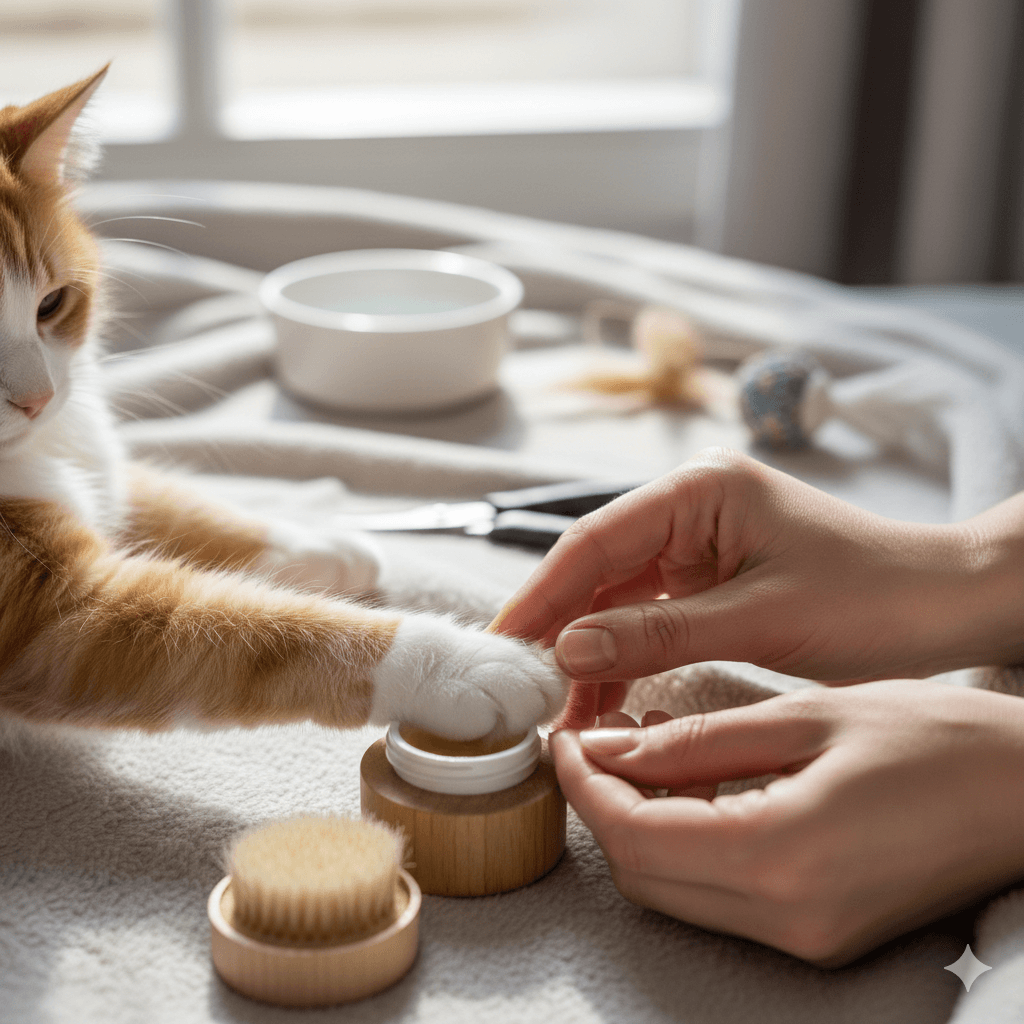
Daily and Weekly Paw Care Essentials
Routine paw maintenance doesn’t require hours—just consistency and gentle handling. Start early in your cat’s life to build trust, and make it part of cuddle time. These habits not only keep paws healthy but also strengthen your bond through calm, positive interaction:
- Gentle Paw Inspections:
Lift each paw weekly (or after outdoor time) to check pads, between toes, and nail beds for redness, swelling, or debris. - Wiping After Outdoor Excursions:
Use a damp, soft cloth to clean paws after walks or porch time, removing pollen, chemicals, or road salt. - Trimming Nails Every 2–3 Weeks:
Use cat-specific clippers to trim just the clear tip of each nail, avoiding the pink “quick” that contains blood vessels. - Moisturizing Dry or Cracked Pads:
Apply a vet-approved balm (like coconut oil or pet-safe paw wax) if pads look flaky or split—never use human lotions. - Providing Safe Scratching Surfaces:
Scratching keeps nails worn down and pads stretched; offer sisal posts, cardboard, or wood to satisfy this natural need.
With these simple practices, you’ll support not just paw health—but your cat’s overall confidence and comfort in their environment.
Check this guide 👉Mast Cell Tumor in Cat Paws: Best 7 Expert Tips!
Check this guide 👉Cat Paws vs Dog Paws: Best 7 Expert Tips!
Check this guide 👉Why Do Cats Cross Their Paws? Best 7 Expert Tips!
Paw Health Indicators | Warning Signs to Act On |
|---|---|
Smooth, pliable pads | Cracked, bleeding, or peeling skin |
Clean fur between toes | Redness, swelling, or foul odor |
Quiet, comfortable walking | Limping, licking, or reluctance to jump |
Nails of moderate length | Nails curling, clicking loudly, or snagging |
No visible debris | Embedded thorns, glass, or sticky substances |
Seasonal Paw Protection Strategies
Your cat’s paws face unique challenges with every changing season. Whether it’s summer heat or winter ice melt, adjusting your care approach ensures year-round comfort and safety—even for primarily indoor cats who encounter seasonal hazards near doors or windows:
- Summer Heat Hazards:
Avoid walking your cat on asphalt or concrete during peak sun; test surface temperature with your hand first—it should feel warm, not hot. - Winter Chemical Exposure:
Road salts and de-icers are toxic if licked; always wipe paws after brief outdoor exposure, even just to the porch or balcony. - Spring Allergens:
Pollen and lawn treatments cling to paws; frequent wiping reduces allergy risks and prevents your cat from ingesting irritants. - Fall Leaf and Mold Risks:
Damp leaves harbor mold and bacteria; outdoor cats may track in spores that cause paw infections or respiratory irritation. - Indoor Climate Control Effects:
Dry winter air from heating systems can dry out paw pads—use a humidifier and pet-safe moisturizer as needed.
Proactive seasonal care turns potential hazards into manageable moments of connection and care.
Tools and Products for Safe Paw Maintenance
Not all grooming tools are created equal—using the wrong product can cause stress or injury. Choose cat-specific, vet-recommended items designed for feline sensitivity and anatomy. Introduce tools slowly, pairing them with treats and praise to build positive associations:
- Cat Nail Clippers (Guillotine or Scissor Style):
Opt for sharp, precise clippers made for cats; dull blades can crush rather than cut, causing pain and anxiety. - Soft Microfiber Cloths or Pet Wipes:
Use fragrance-free, alcohol-free wipes or damp cloths for cleaning—never baby wipes, which may contain harmful ingredients. - Pet-Safe Paw Balms:
Look for balms with natural ingredients like shea butter, calendula, or vitamin E; avoid anything with tea tree oil or essential oils. - Nail Grinders (Optional):
For cats who tolerate them, quiet electric grinders can smooth sharp edges after trimming—introduce gradually with positive reinforcement. - Scratching Posts with Varied Textures:
Offer vertical and horizontal scratchers in sisal, cardboard, and wood to promote natural nail wear and paw flexing.
The right tools, used gently and consistently, make paw care a calm, even enjoyable part of your routine.
Signs Your Cat’s Paws Need Veterinary Attention
While minor issues can be managed at home, some symptoms signal infection, injury, or systemic illness. Never ignore persistent paw problems—cats often hide pain until it becomes severe. Early vet care prevents complications and long-term discomfort:
- Limping or Favoring One Paw:
A sudden change in gait suggests pain, injury, or a foreign object that needs removal. - Excessive Licking or Chewing:
Obsessive paw grooming may indicate allergies, infection, or even neurological discomfort. - Discharge or Foul Odor:
Yellow, green, or bloody fluid and bad smells point to bacterial or fungal infection requiring medication. - Swelling or Heat in the Paw Area:
Inflammation can result from insect stings, abscesses, or trauma needing professional evaluation. - Changes in Paw Color:
Pale, blue, or unusually red pads may reflect circulation issues, anemia, or immune-mediated conditions.
When in doubt, a quick vet check is always worth it—your cat’s silence doesn’t mean they’re fine.
Special Considerations for Senior Cats and High-Risk Breeds
Older cats and certain breeds need extra paw attention due to reduced mobility, grooming ability, or genetic predispositions. Tailor your care to their unique needs to maintain dignity and comfort in their golden years:
- Senior Cats:
Arthritis may make paw grooming difficult; assist with cleaning and check for overgrown nails or pressure sores more frequently. - Long-Haired Breeds (e.g., Maine Coon, Persian):
Fur between toes can trap moisture and debris, leading to matting or infection—trim hair around paws gently if needed. - Outdoor or Former Stray Cats:
These cats may have scarred or thickened pads but still need checks for embedded objects or slow-healing wounds. - White or Light-Furred Cats:
Paw pads may be more sensitive to sunburn; limit midday sun exposure on reflective surfaces like balconies. - Cats with Chronic Conditions (e.g., Diabetes, Hyperthyroidism):
These can affect circulation and skin health, making paws more prone to cracking, slow healing, or infection.
Gentle, breed- and age-specific care shows your deepest respect for your cat’s changing needs.
Essential Tools and Techniques for Proper Cat Paw Care
Caring for your cat’s paws isn’t just about observation—it’s also about using the right methods and tools to maintain health without causing stress. A gentle, species-appropriate approach ensures your cat stays calm and cooperative during handling. Whether you’re trimming nails, cleaning debris, or soothing dry pads, these proven techniques and tools make paw care safer and more effective:
- Soft-Bristle Nail File or Pet Nail Grinder:
After trimming, gently smooth sharp nail edges to prevent snagging on fabric or scratching skin—introduce slowly with treats to build tolerance. - Pet-Safe Paw Cleaning Solution:
Use a mild, fragrance-free cleanser (or plain lukewarm water) on a soft cloth to remove dirt, pollen, or chemicals—never use soap or alcohol-based products. - Cotton Swabs for In-Between Toes:
For long-haired cats or after muddy outings, lightly wipe between toes with a dry or slightly damp cotton swab to prevent matting and infection. - Non-Slip Grooming Mat or Towel:
Place your cat on a textured surface during paw handling to reduce slipping and anxiety—this increases their sense of security and control. - Treat-and-Pause Method:
Reward your cat with a small treat after handling each paw, and stop immediately if they show tension—short, positive sessions build long-term trust.
With the right tools and a calm, respectful approach, paw care becomes less of a chore and more of a quiet ritual of care—one your cat may even begin to accept, or dare we say, enjoy.
Frequently Asked Questions About Cat Paw Care
How often should I check my indoor cat’s paws?
Even indoor cats should have their paws inspected weekly—household cleaners, spilled oils, or loose threads can cause issues.
Can I use human moisturizer on my cat’s dry paws?
No—many human lotions contain toxic ingredients like essential oils or xylitol. Always use pet-safe balms approved by your vet.
Why does my cat lick their paws so much?
Moderate licking is normal grooming, but obsessive licking may signal allergies, pain, anxiety, or skin infection—monitor closely.
Do cats need their paw hair trimmed?
Only if long fur mats between toes or traps moisture; never shave paw pads, as hair provides natural protection and traction.
Is it normal for cat paw pads to peel?
Occasional light peeling after sunburn or minor trauma can happen, but persistent peeling warrants a vet visit to rule out infection or autoimmune disease.
Nurturing Every Step Your Cat Takes
Your cat’s paws are silent storytellers—revealing where they’ve walked, what they’ve felt, and how they’re truly doing beneath their stoic exterior. By tending to them with patience and care, you do more than prevent injury; you honor the quiet trust your feline places in you. Whether you’re gently trimming a nail, wiping away winter salt, or simply noticing a change in their stride, these small acts weave into a lifetime of comfort and safety. Let every paw check be a moment of connection—a reminder that love lives not just in play and cuddles, but in the tender attention to every soft, silent step they take beside you.

Is Rawhide Bad for Cats? Best 7 Expert Tips! – Discover the risks, safe alternatives, and expert advice to keep your feline friend healthy and happy.

Is Rawhide Bad for Dogs? Best 7 Expert Tips! – Discover the risks, benefits, and safer alternatives to rawhides for your dog’s chewing needs.

Understanding Anorexia in Cats: Best 7 Expert Tips! – Learn why cats stop eating, spot warning signs, and discover how to help your feline regain appetite safely.

Understanding Anorexia in Dogs: Best 7 Expert Tips! – Learn causes, symptoms, and solutions to help your dog regain appetite and stay healthy.