
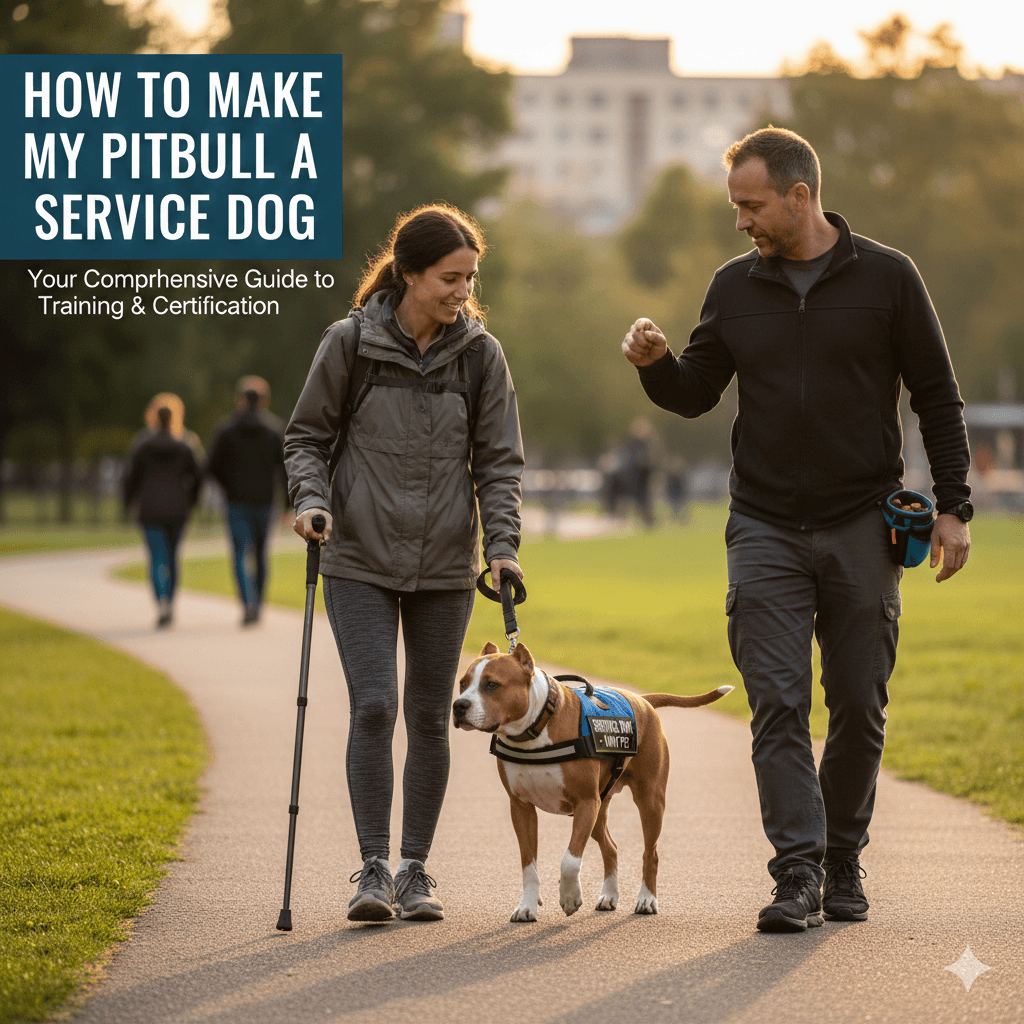
How to Make My Pitbull a Service Dog
Service dogs transform lives—and your Pitbull has the intelligence, loyalty, and heart to excel in this role. Despite outdated stereotypes, Pitbulls are increasingly recognized for their calm focus, trainability, and deep bond with humans. With the right approach, your dog can become a certified service animal, legally protected to assist you with physical, psychiatric, or neurological disabilities. The journey requires patience, consistency, and adherence to legal standards, but the reward is a devoted companion who enhances your independence and well-being every single day.
Understanding Service Dog Eligibility and Legal Foundations
Before training begins, it’s essential to grasp what legally defines a service dog under U.S. law (ADA) and what qualifies you as a handler. Not every well-behaved dog is a service animal—only those trained to perform specific tasks that mitigate a documented disability. Clarity here prevents confusion and ensures your efforts align with federal protections:
- Disability Requirement:
You must have a physical, sensory, psychiatric, intellectual, or neurological disability recognized under the ADA to qualify for a service dog. - Task-Specific Training Mandate:
Your Pitbull must be trained to perform at least one concrete task directly related to your disability—such as interrupting panic attacks or retrieving medication. - Public Access Rights:
Legitimate service dogs are allowed in all public spaces, including restaurants and stores, regardless of breed restrictions or “no pets” policies. - No Mandatory Certification:
The ADA does not require registration, vests, or ID cards—though many handlers use them for clarity and ease of access. - Breed Discrimination Is Illegal:
Under federal law, businesses cannot deny access to a service dog solely based on breed, including Pitbull-type dogs.
Understanding these legal pillars protects both you and your dog while ensuring your training path remains focused and purposeful.
Assessing Your Pitbull’s Temperament and Suitability
Not every dog, even within a capable breed, is cut out for service work. A successful service dog must remain calm, focused, and non-reactive in unpredictable environments. Honest assessment early on saves time and emotional energy:
- Calm Demeanor in Chaos:
Your Pitbull should stay relaxed amid loud noises, crowds, or sudden movements without barking, lunging, or hiding. - Strong Impulse Control:
They must resist chasing squirrels, ignoring food on the floor, or greeting strangers without permission—critical for public safety. - Resilience to Stress:
Service dogs encounter elevators, sirens, and crowded transit; your dog should recover quickly from minor stressors. - Bond and Focus on You:
A strong handler-dog connection ensures your Pitbull looks to you for guidance rather than being distracted by surroundings. - Health and Stamina:
Physical soundness is non-negotiable—chronic pain, hip dysplasia, or severe allergies can disqualify even the most willing dog.
If your Pitbull shows these traits, they likely have the foundation to thrive with structured training and real-world exposure.
Check this guide 👉What Disabilities Qualify for a Service Dog: Best 7 Tips!
Check this guide 👉What Does a PTSD Service Dog Do? Best 7 Expert Tips!
Check this guide 👉Tactile Stimulation Service Dog: Best 7 Expert Tips!
Core Temperament Traits | Red Flags to Reconsider |
|---|---|
Steady, confident posture | Frequent growling or snapping |
Recovers quickly from surprises | Excessive fearfulness or shutdown |
Enjoys learning and repetition | Easily overstimulated or distracted |
Ignores other dogs in public | Reactivity toward people or animals |
Seeks handler’s cues consistently | Independent or willful in new settings |
Step-by-Step Training Pathway for Pitbull Service Dogs
Transforming your Pitbull into a service dog is a multi-phase process blending foundational obedience, public access skills, and disability-specific tasks. Consistency and positive reinforcement are key—this isn’t about dominance, but partnership:
- Master Basic Obedience First:
Ensure reliability with sit, stay, down, heel, and leave-it in low-distraction environments before progressing. - Introduce Public Access Training:
Gradually expose your dog to stores, sidewalks, and transit while practicing settled behavior (e.g., “under” at your feet for 2+ hours). - Teach Disability-Specific Tasks:
Train precise actions like deep pressure therapy for anxiety, fetching a phone during seizures, or blocking in crowded spaces. - Proof Behaviors in Real Settings:
Practice skills in increasingly challenging environments—busy parks, escalators, cafés—to build reliability. - Document Training Progress:
Keep logs of tasks mastered, public outings, and behavioral responses; useful for self-advocacy or professional evaluation.
This journey typically takes 1–2 years of daily practice, but the result is a dog who functions as both medical aid and emotional anchor.
Overcoming Breed Bias and Public Misconceptions
As a Pitbull handler, you’ll likely face unwarranted scrutiny—preparedness turns confrontation into education. Knowing your rights and presenting your dog professionally minimizes conflict:
- Use a Clear Service Vest:
While not legally required, a vest labeled “Service Dog – Do Not Pet” reduces unwanted interaction and signals legitimacy. - Carry an ADA Information Card:
A small card explaining federal rights can defuse tense situations without verbal confrontation. - Remain Calm and Confident:
Business staff can legally ask only two questions: (1) Is this a service dog? (2) What task is it trained to perform? - Avoid Confrontation When Possible:
If denied access illegally, note the business name and contact the Department of Justice—your dog’s behavior should speak louder than words. - Model Exceptional Public Conduct:
A well-behaved Pitbull in public quietly challenges stereotypes every time you walk through a door together.
Your advocacy not only protects your rights but also paves the way for future Pitbull service teams.
Professional Support vs. Owner-Training: Which Path Fits You?
While owner-training is legal and common, some situations benefit from professional guidance—especially for complex psychiatric or mobility tasks. Weigh your skills, time, and your dog’s needs honestly:
- Owner-Training Is Ideal If:
You have strong dog training experience, ample time, and a relatively straightforward task list (e.g., anxiety alerts). - Seek a Trainer If:
Your disability affects your ability to train consistently, or you need advanced tasks like seizure response or diabetic alerts. - Beware of “Instant Certification” Scams:
Legitimate training takes months or years—any program selling “certified service dog” status online is fraudulent. - Consider a Mentor Program:
Organizations like IAADP offer guidance for owner-trainers, even if they don’t provide dogs directly. - Veterinary and Behavioral Input Matters:
Consult your vet and a force-free behaviorist early to ensure your dog’s physical and mental readiness.
The best path is the one that honors both your disability needs and your dog’s welfare—there’s no shame in seeking help.
Maintaining Your Pitbull’s Service Skills for Life
Certification isn’t a finish line—it’s the start of lifelong upkeep. Service dogs require ongoing practice, health monitoring, and mental enrichment to remain effective and happy:
- Daily Skill Reinforcement:
Even simple task cues (e.g., “brace” or “find door”) should be practiced weekly to maintain reliability. - Mental and Physical Wellness:
Schedule regular vet checks, joint supplements if needed, and “off-duty” playtime to prevent burnout. - Reassess Tasks as Needs Change:
If your disability evolves, retrain or add new tasks to keep your dog’s support relevant and effective. - Plan for Retirement:
Most service dogs retire around age 8–10; having a transition plan ensures their golden years are peaceful and loved. - Keep Records Updated:
Maintain vaccination, training logs, and health records—some housing or travel situations may request them.
A well-maintained service dog doesn’t just work—they thrive, bringing dignity and joy to your shared life.
Essential Tools and Resources for Training Your Pitbull as a Service Dog
Equipping yourself with the right tools and support systems makes training more efficient, humane, and successful. From foundational gear to community backing, these resources lay the groundwork for a confident, capable service dog:
- High-Quality Harness with Service Dog Patch:
A comfortable, no-pull harness labeled clearly as a service dog helps manage your Pitbull in public and signals their working status. - Clicker and Treat Pouch for Precision Training:
Positive reinforcement tools like a clicker and waist-mounted treat pouch enable consistent, hands-free reward delivery during task training. - Public Access Training Checklist:
Use ADA-aligned checklists (available from IAADP or Assistance Dogs International) to systematically track progress in real-world environments. - Supportive Online Communities:
Join owner-trainer forums or social media groups dedicated to Pitbull service dogs for troubleshooting, encouragement, and shared experiences. - Force-Free Professional Trainers (When Needed):
Even if you train independently, having access to a certified, positive-reinforcement trainer for occasional coaching ensures you stay on track.
With the right combination of gear, knowledge, and community, you’ll build not just skills—but confidence—for both you and your Pitbull.
“The Americans with Disabilities Act does not set specific training requirements for a service dog, nor does it require professional training programs—owners are legally allowed to train their Pit Bull as a service dog themselves.” – Pettable Team
Frequently Asked Questions About Making a Pitbull a Service Dog
Can a Pitbull legally be a service dog?
Yes. The ADA does not restrict service dogs by breed—only by training and behavior. Pitbulls are fully protected under federal law.
Do I need to register my Pitbull as a service dog?
No. Registration, certification, or ID cards are not required by U.S. law and hold no legal weight—though vests can aid public clarity.
How long does it take to train a Pitbull as a service dog?
Typically 1–2 years of consistent training, depending on task complexity and your dog’s baseline temperament.
Can I train my Pitbull for anxiety or PTSD?
Absolutely. Psychiatric service dogs can perform tasks like grounding during panic attacks, creating personal space, or waking from nightmares.
What if a business refuses my Pitbull service dog?
This is illegal under the ADA. Stay calm, state your rights, and file a complaint with the Department of Justice if access is denied.
Building a Future of Dignity, Partnership, and Purpose
Training your Pitbull as a service dog is more than a practical solution—it’s a profound act of trust and mutual empowerment. In a world quick to misjudge this misunderstood breed, your dog becomes a living testament to their intelligence, loyalty, and unwavering devotion. Every public outing, every calmly executed task, every quiet moment of support chips away at stigma and builds a legacy of inclusion. With patience, legal awareness, and deep respect for your dog’s well-being, you’re not just creating a service animal—you’re forging a partnership that restores autonomy, fosters confidence, and proves that the heart of a service dog knows no breed.

Is Rawhide Bad for Cats? Best 7 Expert Tips! – Discover the risks, safe alternatives, and expert advice to keep your feline friend healthy and happy.

Is Rawhide Bad for Dogs? Best 7 Expert Tips! – Discover the risks, benefits, and safer alternatives to rawhides for your dog’s chewing needs.

Understanding Anorexia in Cats: Best 7 Expert Tips! – Learn why cats stop eating, spot warning signs, and discover how to help your feline regain appetite safely.

Understanding Anorexia in Dogs: Best 7 Expert Tips! – Learn causes, symptoms, and solutions to help your dog regain appetite and stay healthy.