
How to Adopt a Retired Military Dog: Best 7 Expert Tips!
Retired military dogs have served with courage, loyalty, and unwavering dedication—now they deserve a peaceful, loving home to enjoy their golden years. Adopting one of these heroes is a deeply rewarding experience, but it comes with unique considerations. From understanding eligibility requirements to preparing your home for a dog with specialized training, the process requires patience and compassion. These brave canines may carry physical or emotional scars from service, yet they offer immense love in return. With the right support, a retired military working dog can transition into a cherished family member—grateful, protective, and forever loyal.
Understanding the Journey of a Military Working Dog
Before adoption, it’s essential to appreciate the life your future companion has led. Military working dogs (MWDs) are elite partners in defense, trained for high-stakes roles that shape their temperament and needs in civilian life.
- Highly Specialized Roles:
These dogs serve as detection experts (sniffing out explosives or narcotics), patrol partners, or search-and-rescue assets—often in combat zones or high-security environments. - Rigorous Training Background:
From puppyhood, MWDs undergo intense obedience, scent work, and stress-resilience training, making them exceptionally focused but sometimes sensitive to chaos. - Strong Bonds with Handlers:
Most form deep attachments to their military handlers; separation during retirement can cause adjustment challenges in a new home. - Potential for Service-Related Issues:
Some may experience noise sensitivity, anxiety in crowds, or physical conditions like joint wear from years of demanding work. - Not “Just a Pet” Mentality:
Having lived with purpose, many retired MWDs thrive when given structure, mental stimulation, and clear routines in civilian life.
Recognizing their past helps you provide the understanding and stability they need to heal and flourish.
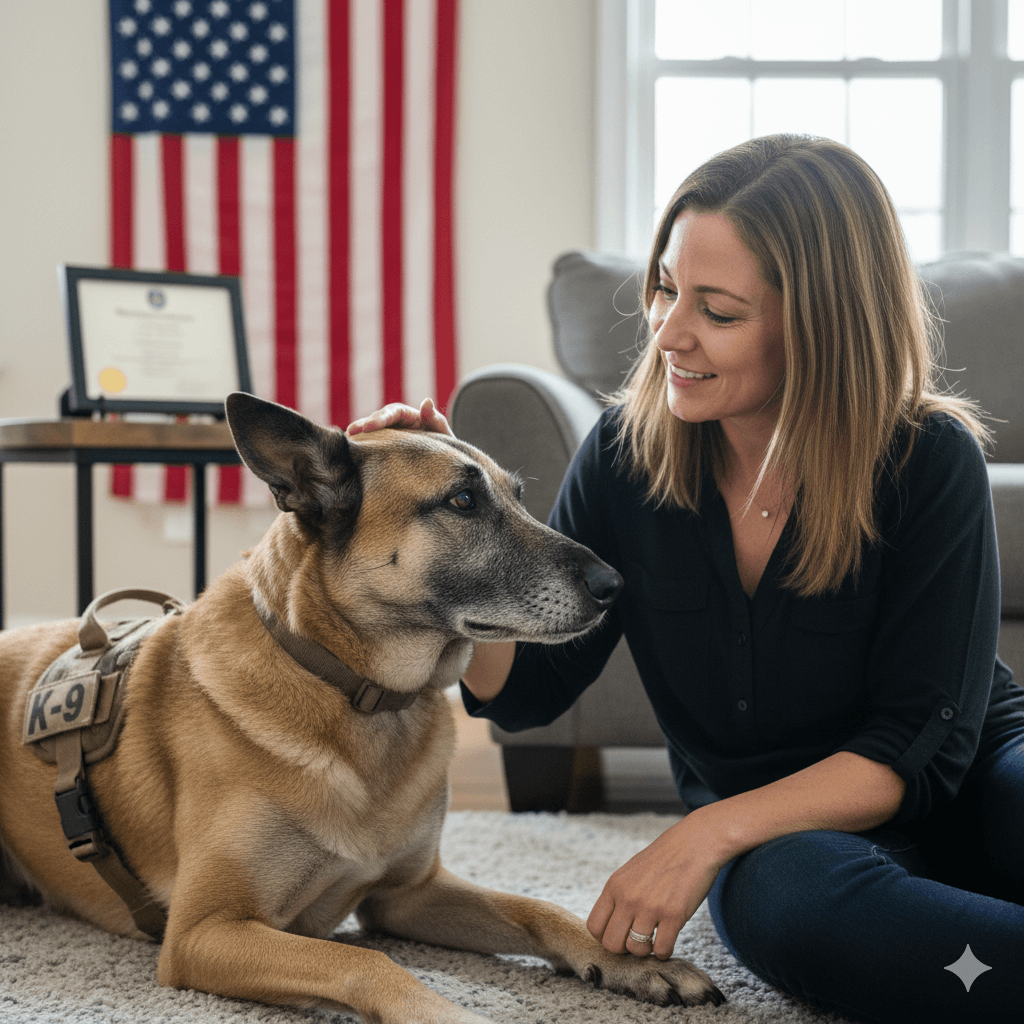
Who Is Eligible to Adopt a Retired Military Dog?
Adoption isn’t open to everyone—agencies prioritize homes that can meet the dog’s physical, emotional, and behavioral needs. The U.S. Department of Defense and nonprofit partners screen applicants carefully.
- U.S. Citizens with Stable Housing:
You must be a U.S. resident with a secure, fenced yard (usually 6 feet minimum) and a permanent address. - Experience with Dogs Preferred:
Prior experience with large, trained, or working breeds is strongly favored—especially those familiar with obedience or structure. - No Young Children in Some Cases:
Due to their intensity or startle reflexes, many retired MWDs are placed in homes with older teens or adults only. - Financial and Time Commitment:
You must prove ability to cover potential veterinary costs, training support, and daily engagement—these dogs need consistent care. - Willingness to Undergo Home Inspection:
A representative may visit or request video walkthroughs to ensure safety, fencing, and quiet living conditions.
While requirements may vary slightly by program, the goal is always the same: match each hero dog with a home worthy of their service.
Check this guide 👉What to Expect When Adopting a Dog: Best 7 Expert Tips!
Check this guide 👉Do You Have to Pay to Adopt a Dog? Best 7 Expert Tips!
Check this guide 👉Key Questions to Ask When Adopting a Dog: Best 7 Tips!
Adoption Readiness Factors | Common Placement Preferences |
|---|---|
Secure, quiet home environment | Handlers (first right of adoption) |
Experience with disciplined dogs | Veterans or active-duty military |
Ability to provide routine & structure | Families with no small children |
Commitment to possible rehab needs | Homes within the continental U.S. |
Patience for adjustment period | Applicants with prior working-dog experience |
Where to Start: Official Programs and Resources
The primary pathway to adopt a retired U.S. military dog is through the Department of Defense (DoD), though nonprofit partners often assist with transport, training, and aftercare.
- DoD Military Working Dog Adoption Program:
Based at Joint Base San Antonio-Lackland (Texas), this is the official U.S. military adoption source—visit their website or call for current availability. - No Adoption Fees (Usually):
The DoD typically covers spay/neuter, vaccinations, and transport to your nearest airport—though you’ll pay for pickup and future care. - Nonprofit Support Organizations:
Groups like Mission K9 Rescue, Save Our Pets Military Program, and American Humane offer transition support, training grants, and advocacy. - Application Process Timeline:
From inquiry to placement, expect 2–6 months due to screening, matching, and logistics—patience is essential. - Limited Public Listings:
Dogs aren’t “shopped” like shelter pets; the program matches based on your profile and the dog’s specific needs.
Starting with the official DoD channel ensures legitimacy and ethical placement—never attempt to adopt through unofficial or paid third parties.
Preparing Your Home for a Retired Hero
Even the most well-adjusted MWD needs a thoughtful transition. Your home should offer calm, predictability, and gentle boundaries to ease their shift from service to sanctuary.
- Create a Quiet Space:
Designate a low-traffic room or crate area where your dog can rest undisturbed—essential for anxiety-prone or noise-sensitive dogs. - Secure Fencing Is Non-Negotiable:
Many MWDs are agile and driven; reinforce gates, check for gaps, and avoid invisible fences (they’re trained to ignore them). - Remove Overstimulating Triggers:
Initially limit loud noises, flashing lights, or chaotic gatherings; reintroduce gradually as trust builds. - Stock Up on Calming Tools:
Consider pheromone diffusers, white noise machines, or anxiety wraps to support emotional regulation. - Plan for Routine:
Feed, walk, and sleep at consistent times—structure mimics their military life and reduces stress.
Preparation isn’t about perfection—it’s about signaling safety and respect for everything your new companion has endured.
What to Expect During the First Few Weeks
The initial adjustment period is critical. Most retired MWDs are confused, cautious, or even withdrawn as they process their new reality—your patience sets the tone for lifelong trust.
- Possible Shutdown or Withdrawal:
Some dogs may barely move, eat little, or avoid eye contact for days; this is normal and not a reflection of your care. - Testing Boundaries Quietly:
They may observe your reactions closely before showing their true personality—give them time to “read” your household. - Unexpected Triggers:
A slamming door, vacuum, or siren might cause panic; note these triggers and work with a trainer to desensitize gently. - Bonding Takes Time:
Don’t rush affection—let the dog initiate contact. Many form deep bonds after 4–8 weeks of consistent, calm presence. - Veterinary Evaluation Is Key:
Schedule a full wellness check within the first week to address hidden injuries, dental issues, or joint concerns.
This isn’t just an adoption—it’s a rescue in reverse: you’re giving a hero the peace they’ve earned through years of service.
Long-Term Care and Enrichment for Your Veteran Dog
Retirement doesn’t mean inactivity. These intelligent dogs thrive when given purpose, mental challenges, and loving leadership—even in civilian life.
- Continue Training with Positive Methods:
Use reward-based cues to build confidence; avoid corrections, as many MWDs are sensitive to tone or pressure. - Provide Scent Work or Puzzle Toys:
Their powerful noses still crave work—hide treats, use snuffle mats, or enroll in nose work classes for joy and focus. - Monitor for Arthritis or Dental Issues:
Years of hard service take a toll; ask your vet about joint supplements, dental cleanings, and mobility aids. - Honor Their Past Without Over-Romanticizing:
Celebrate their service, but treat them as an individual—not a symbol. Let them be a dog first. - Connect with Other Adopters:
Online groups (like DoD MWD Alumni networks) offer invaluable tips, emotional support, and shared experiences.
Caring for a retired military dog is a privilege that deepens over time—each wag, nap, and trusting glance is a quiet “thank you.”
Essential Resources and Support for Adopters
Adopting a retired military dog is a meaningful journey—but you don’t have to walk it alone. Numerous organizations, programs, and communities exist to guide, support, and empower adopters through every stage of the transition.
- Official DoD Adoption Liaisons:
The Military Working Dog Program at Lackland AFB assigns coordinators who help match dogs with suitable homes and answer procedural questions. - Veteran-Focused Rescue Groups:
Nonprofits like Mission K9 Rescue and K9s For Warriors specialize in retired working dogs and often provide transport, medical grants, and post-adoption counseling. - Online Peer Communities:
Private Facebook groups and forums—such as “MWD Alumni” or “Retired Military Dog Owners”—offer real-time advice, training tips, and emotional support from experienced adopters. - Behavioral Training Networks:
Many programs partner with certified trainers familiar with working-dog psychology; some even offer subsidized or free sessions for adopters. - Veterinary Discount Programs:
Organizations like the American Humane Society or Pets for Patriots may offer reduced-cost care for retired service animals through participating clinics.
Leveraging these resources not only eases your path but also honors your dog’s legacy by ensuring they receive the highest standard of post-service care.
“Every MWD, when they’re retiring, they do a behavioral test and an adoption test to make sure they’re not going to be food aggressive or bite a small child or chase the mailman down the street.”
Frequently Asked Questions About Adopting a Retired Military Dog
Can civilians adopt retired military dogs?
Yes—civilians are eligible if they meet housing, experience, and stability requirements, though handlers get first priority.
How much does it cost to adopt?
Adoption through the DoD is typically free (including transport to your nearest airport), but you’ll cover ongoing food, vet care, and supplies.
Are retired MWDs aggressive?
Not inherently—but their protective instincts and training mean they may react strongly to perceived threats. Proper assessment and training are crucial.
Do they come with medical records?
Yes. The DoD provides full veterinary history, behavioral notes, and any known health conditions or triggers.
Can I adopt a dog that served overseas?
Yes—most U.S. military dogs return to Lackland AFB after deployment and enter the adoption program after retirement.
Giving a Hero the Peace They’ve Earned
Adopting a retired military dog is more than pet ownership—it’s a solemn promise to honor their service with unwavering kindness, patience, and dedication. These dogs have run through fire, guarded bases, and saved countless lives without asking for anything in return. Now, in their quieter years, they seek only safety, routine, and a soft place to rest their head. By opening your home, you don’t just give them a second chance—you complete their story with the love and dignity they so richly deserve. In return, you’ll gain a loyal friend whose courage, quiet strength, and grateful presence will inspire you every single day.

Is Rawhide Bad for Cats? Best 7 Expert Tips! – Discover the risks, safe alternatives, and expert advice to keep your feline friend healthy and happy.

Is Rawhide Bad for Dogs? Best 7 Expert Tips! – Discover the risks, benefits, and safer alternatives to rawhides for your dog’s chewing needs.

Understanding Anorexia in Cats: Best 7 Expert Tips! – Learn why cats stop eating, spot warning signs, and discover how to help your feline regain appetite safely.

Understanding Anorexia in Dogs: Best 7 Expert Tips! – Learn causes, symptoms, and solutions to help your dog regain appetite and stay healthy.