How Much CBD Oil Should I Give My Dog? Best 7 Expert Tips!

How Much CBD Oil Should I Give My Dog? Best 7 Expert Tips!

How Much CBD Oil Should I Give My Dog?

If you’ve heard about the potential benefits of CBD for pets but aren’t sure where to start, you’re not alone. Many dog owners turn to CBD oil to help manage anxiety, joint discomfort, or general wellness—yet dosing remains the biggest source of confusion. Giving too little may yield no results, while too much could cause unwanted side effects. The truth is, the ideal amount depends on your dog’s size, condition, and the product you’re using. In this guide, we’ll break down safe, science-backed dosing principles so you can support your pup with confidence.

Understanding CBD and How It Works in Dogs


Before calculating a dose, it’s important to know what CBD is and how it interacts with your dog’s body. Unlike THC, CBD is non-psychoactive and won’t make your pet “high”—but it can influence mood, pain perception, and inflammation through the endocannabinoid system.

 
  • Endocannabinoid System (ECS):
    Dogs, like humans, have an ECS that helps regulate sleep, appetite, pain, and immune response—CBD supports its balance.
     
  • Non-intoxicating and generally well-tolerated:
    High-quality, THC-free CBD oil is considered safe for dogs when used appropriately and sourced responsibly.
     
  • Not FDA-approved (yet):
    While research is promising, CBD for pets isn’t officially regulated—so quality and labeling vary widely.
     
  • Onset and duration:
    Effects typically appear within 30–60 minutes and last 4–8 hours, depending on method (oil vs. treat) and metabolism.
     
  • Individual responses vary:
    Some dogs show noticeable improvement quickly, while others need consistent use over days or weeks.
 

Understanding these basics helps you set realistic expectations and choose the right product for your dog’s needs.

How Much CBD Oil Should I Give My Dog? Best 7 Expert Tips!

Factors That Influence CBD Dosage


There’s no universal dose—what works for a Chihuahua won’t suit a Great Dane. Several key factors shape the right amount for your individual dog.

 
  • Body weight:
    Most dosing guidelines start with milligrams per pound (e.g., 0.1–0.5 mg per lb), making weight the primary reference point.

     
  • Severity of the condition:
    Mild anxiety may need a low dose, while chronic joint pain or seizures often require a higher, vet-monitored amount.

     
  • CBD concentration:
    A 300 mg bottle vs. a 1,500 mg bottle delivers very different amounts per drop—always check the label carefully.

     
  • Delivery method:
    Oils offer faster absorption and precise dosing; treats are easier but less flexible and slower to act.

     
  • Your dog’s metabolism and sensitivity:
    Some dogs process CBD quickly, others slowly—watch for subtle changes in behavior or energy.
 

Tailoring the dose to these variables ensures both safety and effectiveness.

Low-Dose Range (Mild Support) Higher-Dose Range (Targeted Relief)
0.1 mg CBD per pound of body weight 0.3–0.5 mg CBD per pound
Ideal for daily wellness or mild stress Used for arthritis, severe anxiety, or seizures
Start here if new to CBD Only under veterinary guidance
Give once or twice daily May require split doses (AM/PM)
Monitor for 5–7 days before increasing Reassess weekly; avoid long-term high doses without checks

Step-by-Step Guide to Dosing CBD Oil


Finding the right amount doesn’t have to be guesswork. Follow this practical, cautious approach to introduce CBD safely.

 
  • Step 1: Calculate baseline dose
    Use 0.1 mg per pound as your starting point (e.g., a 40-lb dog = 4 mg daily).
     
  • Step 2: Check your product’s concentration
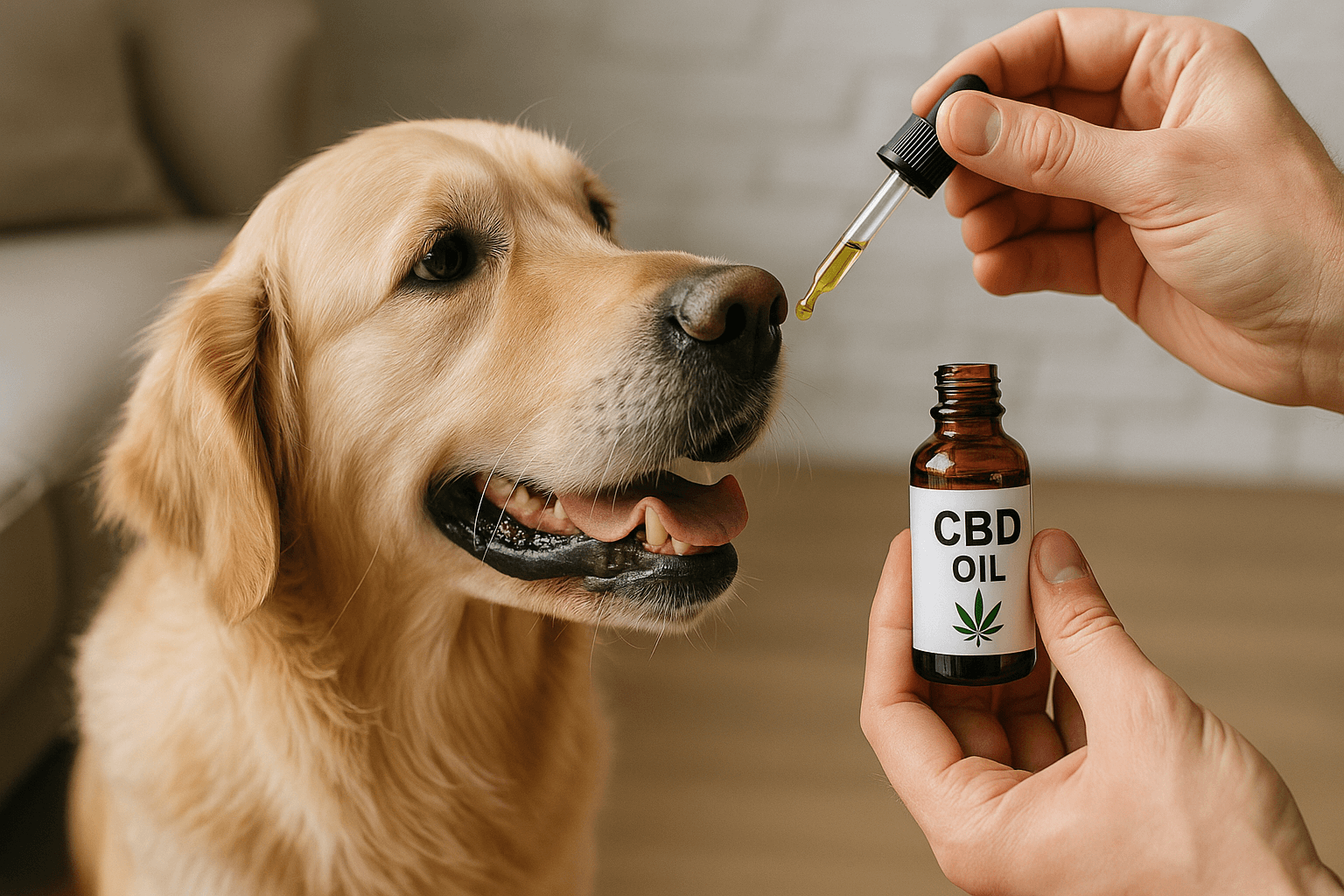
    If the bottle says 600 mg in 30 ml, that’s 20 mg per ml—or roughly 1 mg per drop (varies by dropper).
     
  • Step 3: Start low, go slow
    Begin with half your calculated dose for the first 2–3 days to assess tolerance.
     
  • Step 4: Split doses if needed
    For better consistency, divide the daily amount into morning and evening servings.
     
  • Step 5: Observe and adjust
    Watch for changes in behavior, appetite, or symptoms over 5–7 days before increasing by 10–25%.
 

Patience and precision turn uncertainty into a personalized plan that truly supports your dog.

Signs You’re Giving the Right (or Wrong) Amount


Your dog’s response tells you everything. Learn to read the signals—both positive and concerning.

 
  • Positive indicators:
    Calmer during storms, easier mobility on walks, improved sleep, or reduced licking/chewing behaviors.
     
  • Too little CBD:
    No noticeable change after 7–10 days of consistent use at a low dose.
     
  • Too much CBD:
    Excessive drowsiness, dry mouth (licking lips, seeking water), mild diarrhea, or unsteady walking.
     
  • Delayed effects:
    Some benefits, like reduced inflammation, build gradually—don’t rush to increase too soon.
     
  • Behavioral shifts:
    A suddenly withdrawn or unusually lethargic dog may be getting more than they need.
 

Trust your observations—and when in doubt, scale back and consult your vet.

What to Look for in a High-Quality CBD Product


Not all CBD oils are created equal. Choosing a safe, effective product is just as important as dosing correctly.

 
  • Third-party lab testing (COAs):
    Reputable brands publish Certificates of Analysis verifying CBD content and absence of THC, pesticides, or heavy metals.
     
  • Hemp source and extraction method:
    Organic, U.S.-grown hemp extracted via CO2 is the gold standard for purity and potency.
     
  • THC-free or <0.3% THC:
    Ensure the product is labeled “broad-spectrum” or “isolate” to avoid any psychoactive risk.
     
  • Clear dosing instructions:
    The label should state total CBD per bottle and per serving—avoid vague terms like “natural blend.”
     
  • Veterinarian-formulated or endorsed:
    Products developed with veterinary input are more likely to prioritize pet safety and bioavailability.
 

Investing in quality protects your dog and ensures you’re actually giving what the label promises.

Conditions Commonly Supported by CBD in Dogs


While research is ongoing, many pet owners and integrative vets use CBD as part of a holistic approach for specific concerns.

 
  • Anxiety and stress:
    Helps with noise phobias (fireworks, thunder), separation distress, or travel-related nervousness.
     
  • Osteoarthritis and joint pain:
    Studies show CBD may reduce inflammation and improve mobility in aging dogs.
     
  • Seizure disorders:
    Some dogs with epilepsy experience fewer or less intense episodes when CBD is added to their regimen.
     
  • Appetite and nausea support:
    May stimulate appetite or ease stomach upset during illness or medication side effects.
     
  • Skin and allergy relief:
    Topical or oral CBD can help soothe itching and inflammation from environmental allergies.
 

Always use CBD as a complement—not a replacement—for veterinary diagnosis and treatment.

Common Mistakes to Avoid When Dosing CBD


Even well-meaning owners can make simple errors that reduce effectiveness or create risks.

 
  • Assuming “more is better”:
    CBD follows a biphasic response—too much can diminish benefits or cause side effects.
     
  • Using human CBD products:
    These may contain xylitol, essential oils, or THC—all toxic to dogs.
     
  • Ignoring interactions with medications:
    CBD can affect how the liver processes certain drugs (e.g., anticonvulsants, steroids)—consult your vet first.
     
  • Switching brands without recalculating:
    Different concentrations mean your old dose no longer applies—always recheck the label.
     
  • Giving inconsistently:
    CBD builds up in the system; sporadic use leads to unpredictable results.
 

Avoiding these pitfalls keeps your dog safe and maximizes the potential benefits.

Frequently Asked Questions

How long does it take for CBD oil to work in dogs?

For anxiety, effects may appear in 30–60 minutes. For chronic issues like arthritis, it can take 1–2 weeks of consistent use to see improvement.

Yes—many dogs benefit from daily or twice-daily dosing, especially for ongoing conditions. Just monitor for long-term side effects.

True overdose is rare, but excessive amounts can cause drowsiness, vomiting, or diarrhea. Always stay within recommended ranges.

Yes—giving it with a small meal or treat can improve absorption and reduce the chance of stomach upset.

Seniors often benefit greatly. For puppies, consult a vet first—CBD isn’t typically needed unless managing a diagnosed condition.

Final Thoughts – Empowerment Through Informed Choices


Dosing CBD oil for your dog doesn’t have to be complicated—but it does require attention, care, and a commitment to quality. By starting low, observing closely, and choosing trusted products, you can offer your loyal companion gentle, natural support without guesswork. Remember: your veterinarian is your ally in this journey. Open communication ensures CBD complements—not complicates—your dog’s overall health plan. With the right approach, you’re not just giving a supplement—you’re giving peace of mind, comfort, and a better quality of life, one thoughtful drop at a time.

Newfoundland Dog Personality: Best 7 Expert Tips!

Newfoundland Dog Personality: Best 7 Expert Tips! – Discover the gentle, loyal, and protective nature of this giant breed perfect for families.

Can Hot Pavement Burn Your Cats Paws? Best 7 Expert Tips!

Can Hot Pavement Burn Your Cats Paws? Best 7 Expert Tips! – Learn how to protect your cat’s paws from hot surfaces and prevent painful burns this summer.

Can Hot Pavement Burn Your Dogs Paws? Best 7 Expert Tips!

Can Hot Pavement Burn Your Dogs Paws? Best 7 Expert Tips! – Learn how to protect your dog’s paws from hot surfaces and ensure safe summer walks.

Irish Wolfhound Size: Best 7 Expert Tips!

Irish Wolfhound Size: Best 7 Expert Tips! – Discover the ideal height, weight, and care tips for this majestic giant breed. Learn how to manage their impressive stature responsibly.

Leave a Reply

Your email address will not be published. Required fields are marked *