

How Long Can a Tick Live on a Cat? Best 7 Expert Tips!

How Long Can a Tick Live on a Cat? Best 7 Expert Tips!

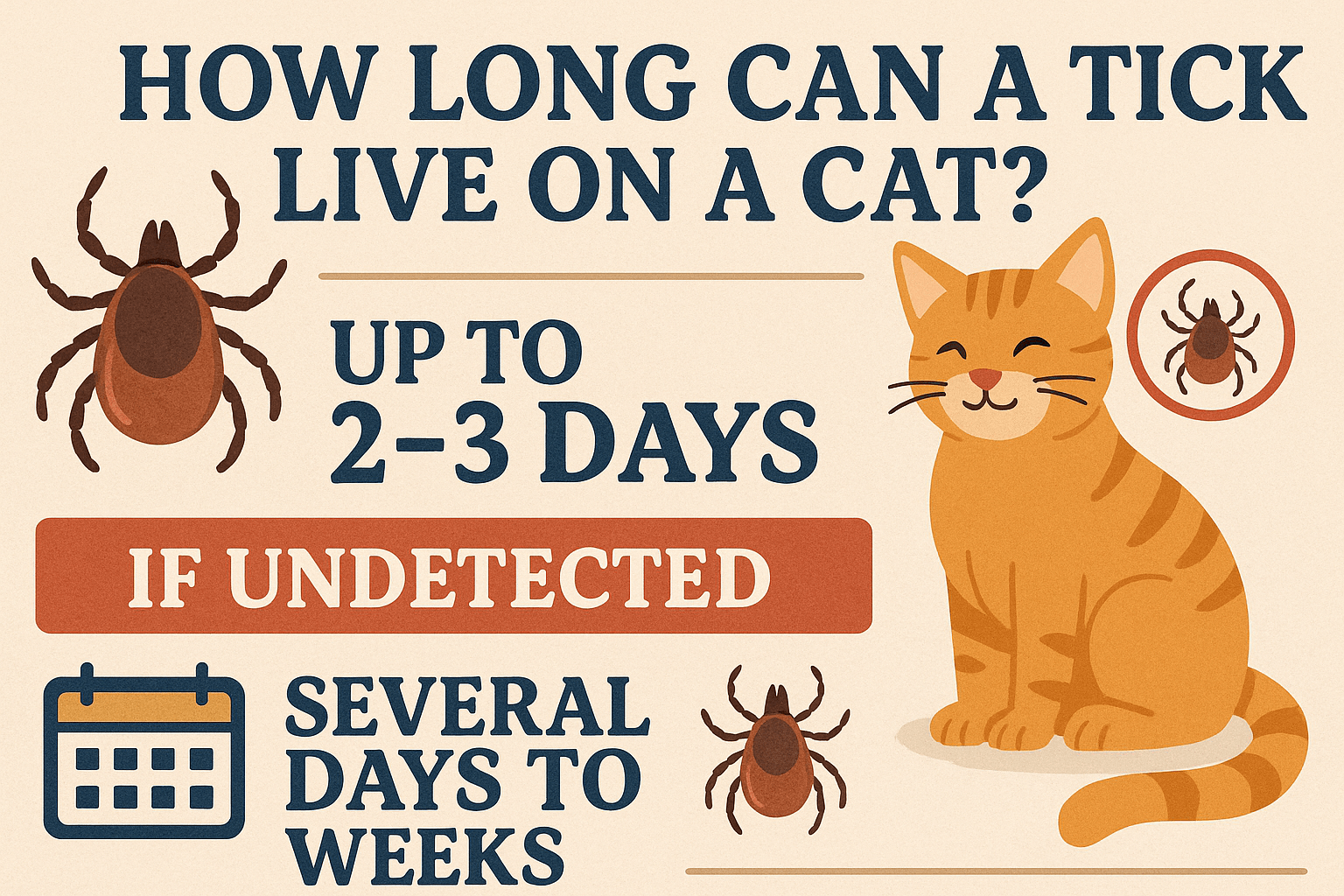
How Long Can a Tick Live on a Cat?


Ticks are more than just a nuisance—they can pose serious health risks to your feline companion. These tiny parasites latch onto cats to feed on their blood, potentially transmitting diseases in the process. Many cat owners wonder how long a tick can survive on their pet and what they can do to protect their furry friend. Understanding the lifecycle of ticks, their feeding habits, and the dangers they pose is essential for keeping your cat healthy and tick-free. In this blog post, we’ll explore everything you need to know about ticks on cats, from their lifespan to prevention strategies.

Expert Opinion on Avoiding Tick Contact

“To avoid contact with ticks, avoid environments such as wooded areas that may harbor ticks. Maintained yards, meanwhile, are less likely to encourage ticks. The tick does not jump, so it depends on long grass, shrubs, etc, to latch onto passing animals.”

PetMD

The Lifespan of a Tick on a Cat


Once a tick attaches itself to a cat, its survival depends on several factors, including the species of tick and environmental conditions. Here’s a breakdown of how long ticks can live on your cat and what influences their lifespan.

 
  • Feeding Duration:
    Most ticks remain attached to a host for 3 to 10 days while feeding. During this time, they engorge themselves on blood before detaching.

  • Environmental Factors:
    Ticks thrive in warm, humid climates. If a tick falls off your cat into an unfavorable environment, it may die sooner than expected.

  • Tick Species Variations:
    Different tick species have varying lifespans. For example, deer ticks (black-legged ticks) may feed for up to a week, while dog ticks might stay attached longer.

  • Cat’s Grooming Habits:
    Cats are meticulous groomers, and frequent licking or scratching can dislodge ticks before they finish feeding.

  • Health of the Host:
    A healthy cat with strong immune defenses may make it harder for ticks to survive, though this doesn’t eliminate the risk entirely.


Understanding these factors helps explain why some ticks stay longer than others and highlights the importance of regular checks to prevent infestations.

How Long Can a Tick Live on a Cat? Best 7 Expert Tips!

Signs Your Cat May Have Ticks


Detecting ticks early is crucial for preventing complications. Look out for these signs that your cat may be hosting unwanted guests.

 
  • Visible Ticks on the Skin:
    Ticks often attach around the ears, neck, or between the toes. Check these areas regularly during grooming sessions.

  • Excessive Scratching or Licking:
    If your cat seems unusually itchy or focuses on one spot, it could indicate the presence of a tick.

  • Redness or Irritation:
    Tick bites can cause localized redness, swelling, or even small wounds on your cat’s skin.

  • Behavioral Changes:
    Some cats become lethargic or irritable when dealing with a tick infestation.

  • Unexplained Hair Loss:
    Persistent scratching or biting at a tick-infested area may lead to patches of missing fur.


By staying vigilant and recognizing these signs, you can act quickly to remove ticks and minimize potential harm to your cat.

Prevention Tips for Ticks
Risks of Untreated Tick Infestations
Use vet-recommended tick prevention
Risk of Lyme disease or other infections
Regularly check your cat’s coat
Anemia due to excessive blood loss
Keep your home and yard clean
Allergic reactions to tick saliva
Avoid walking in wooded or grassy areas
Transmission of diseases to humans
Schedule routine vet check-ups
Stress and discomfort for your cat

How to Safely Remove a Tick from Your Cat


Removing a tick improperly can increase the risk of infection or disease transmission. Follow these steps to ensure safe and effective removal.

 
  • Gather Supplies First:
    You’ll need fine-tipped tweezers or a tick removal tool, gloves, and antiseptic wipes.

  • Grasp the Tick Close to the Skin:
    Avoid squeezing the tick’s body, as this can push harmful bacteria into your cat’s bloodstream.

  • Pull Straight Upward:
    Use steady, even pressure to pull the tick straight out without twisting or jerking.

  • Clean the Area After Removal:
    Disinfect the bite site with antiseptic and wash your hands thoroughly afterward.

  • Dispose of the Tick Properly:
    Place the tick in alcohol or flush it down the toilet to ensure it cannot reattach or lay eggs.


Proper removal techniques reduce the risk of complications and keep your cat safe from tick-borne illnesses.

Effective Tick Prevention Strategies


Preventing ticks is far easier than dealing with an infestation. Implementing these strategies can help protect your cat year-round.

 
  • Use Preventative Medications:
    Consult your veterinarian about topical treatments, oral medications, or collars designed to repel ticks.

  • Maintain Yard Hygiene:
    Keep your yard free of tall grass, leaves, and debris where ticks thrive.

  • Limit Outdoor Exposure:
    Restrict your cat’s access to wooded or overgrown areas where ticks are commonly found.

  • Bathe Your Cat After Outdoor Adventures:
    Washing your cat after outdoor play can help remove any ticks that haven’t yet attached.

  • Regularly Inspect Your Cat:
    Make tick checks part of your daily routine, especially after spending time outdoors.


By taking proactive measures, you can significantly reduce the chances of your cat encountering ticks.

Common Misconceptions About Ticks

Misinformation about ticks can lead to ineffective prevention or delayed treatment. Clearing up these misconceptions ensures better protection for your cat.

 
  • Myth: Ticks Only Bite in Summer:
    While ticks are more active in warmer months, they can survive year-round in mild climates.

  • Myth: Cats Can’t Get Sick from Ticks:
    Although cats are less prone to certain tick-borne diseases, they are still vulnerable to others like cytauxzoonosis.

  • Myth: Ticks Fall Off Once They’re Full:
    While ticks detach after feeding, they can still lay eggs and continue the cycle if not removed properly.

  • Myth: Home Remedies Are Enough to Remove Ticks:
    Using substances like alcohol or matches can irritate your cat and increase infection risks. Stick to proven methods.

  • Myth: Indoor Cats Don’t Need Protection:
    Even indoor cats can encounter ticks brought in by other pets or people.


Understanding these truths empowers you to take informed action against ticks.

The Lifecycle of a Tick

Understanding the lifecycle of a tick sheds light on how they find hosts and reproduce. This knowledge can inform better prevention strategies.

 
  • Egg Stage:
    Female ticks lay thousands of eggs in sheltered environments, which hatch into larvae.

  • Larva Stage:
    Larvae seek their first blood meal from small animals like rodents or birds.

  • Nymph Stage:
    After molting, nymphs require another blood meal, often targeting larger hosts like cats or dogs.

  • Adult Stage:
    Adult ticks mate and feed on hosts, completing their lifecycle before laying eggs.

  • Survival Without a Host:
    Depending on the species, ticks can survive weeks to months without feeding, waiting for a new host.


Knowing the stages of a tick’s life helps identify opportunities to break the cycle and reduce infestations.

Natural Ways to Repel Ticks

For cat owners seeking non-chemical solutions, natural repellents offer an alternative approach to tick prevention.

 
  • Essential Oils (in Safe Amounts):
    Certain oils like lavender or cedarwood can deter ticks, but always dilute them and consult your vet first.

  • Diatomaceous Earth:
    This natural powder kills ticks by dehydrating them. Sprinkle it sparingly in your home or yard.

  • Apple Cider Vinegar Spray:
    Mixing apple cider vinegar with water creates a mild repellent spray for your cat’s fur.

  • Herbal Collars:
    Some herbal collars use plant-based ingredients to repel ticks without harsh chemicals.

  • Regular Brushing:
    Using a fine-toothed comb can help remove ticks before they attach.


While natural methods can complement traditional prevention, they should never replace vet-approved treatments.

Frequently Asked Questions About Ticks on Cats

 
Can indoor cats get ticks?

Yes, ticks can hitchhike indoors on clothing, pets, or even humans, so indoor cats aren’t completely safe.

Ticks can carry diseases like Lyme disease, ehrlichiosis, and cytauxzoonosis, though not all are common in cats.

Daily checks are ideal, especially during warmer months when ticks are most active.

Some tick collars are safe, but always consult your vet to ensure the product is appropriate for felines.

No, many dog-specific products contain ingredients that are toxic to cats. Always use cat-safe options.

Protecting Your Cat from Ticks Year-Round


Ticks are persistent pests, but with the right knowledge and tools, you can keep your cat safe and healthy. By understanding how long ticks can live on a cat, recognizing the signs of infestation, and implementing preventative measures, you’re taking important steps toward ensuring your pet’s well-being. Regular vet visits, proper grooming, and vigilance are key to maintaining a tick-free environment. Remember, prevention is always better than cure—so stay proactive and give your feline friend the care they deserve.

Cuterebra Larvae in Cats: Best 7 Expert Tips!

Cuterebra Larvae in Cats: Best 7 Expert Tips! – Expert advice on signs, treatment & prevention of this rare but serious feline parasitic infestation.

Cuterebra Larvae in Dogs: Best 7 Expert Tips!

Cuterebra Larvae in Dogs: Best 7 Expert Tips! – Expert advice on signs, treatment & prevention of this rare but serious parasitic infestation.

Cat Tumor on Paw: Best 7 Expert Tips!

Cat Tumor on Paw: Best 7 Expert Tips! – Expert advice on signs, diagnosis, treatment & care for feline paw tumors.

Panacur Side Effects in Dogs: Best 7 Expert Tips!

Panacur Side Effects in Dogs: Best 7 Expert Tips! – Safe usage, common reactions & when to call the vet.

Leave a Reply

Your email address will not be published. Required fields are marked *

Post Category


