

How Long a Cat Bite Takes to Get Infected: Best 7 Tips!

How Long a Cat Bite Takes to Get Infected: Best 7 Tips!

Understanding How Long a Cat Bite Takes to Get Infected 

Cat bites may seem small, but they carry a surprisingly high risk of infection due to bacteria deep in their mouths. Unlike scratches or superficial wounds, puncture wounds from feline teeth seal quickly—trapping harmful microbes beneath the skin. Many pet owners assume a bite isn’t serious if it barely bleeds, but infection can develop within hours. Knowing the typical infection timeline helps you act fast and protect your cat’s health. With prompt care, most complications are preventable, but delay can lead to abscesses or systemic illness.

Early Warning Signs of Infection

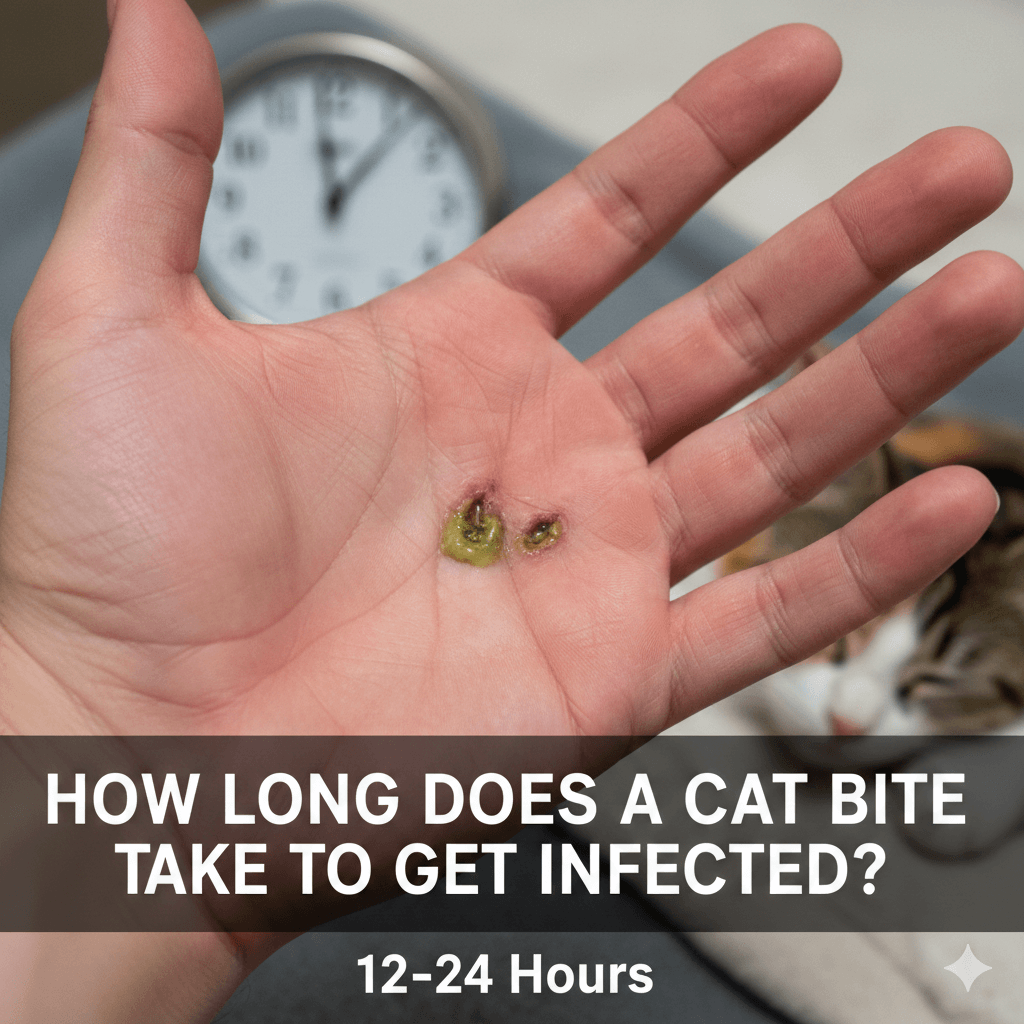
Infection from a cat bite often progresses faster than expected—sometimes within 12 to 24 hours. Early detection allows for quicker treatment and reduces the chance of severe complications like cellulitis or sepsis. Watch for these subtle changes at the bite site and beyond:

 
  • Swelling and Redness:
    The area around the puncture may become warm, puffy, and noticeably redder within hours of the bite.
     
  • Pain or Sensitivity:
    Your cat may flinch, lick excessively, or avoid being touched near the wound—even if they seemed fine initially.
     
  • Pus or Discharge:
    A yellow, green, or cloudy fluid oozing from the wound signals bacterial invasion and active infection.
     
  • Fever or Lethargy:
    Infected cats often act withdrawn, sleep more than usual, or show a slight rise in body temperature.
     
  • Loss of Appetite:
    Even mild infections can cause nausea or discomfort, leading your cat to skip meals temporarily.
 

If any of these signs appear within the first day, veterinary evaluation is strongly recommended to prevent worsening.

How Long a Cat Bite Takes to Get Infected: Best 7 Tips!

Common Bacteria Behind Cat Bite Infections

The danger of cat bites lies not in the wound size—but in the potent mix of oral bacteria transferred during the bite. Cats’ sharp teeth inject microbes deep into tissue, creating an ideal environment for rapid growth. Understanding the usual suspects helps explain why infections escalate so quickly:

 
  • Pasteurella multocida:
    Found in over 70% of cats’ mouths, this bacterium can cause severe inflammation within just 12 hours.
     
  • Streptococcus and Staphylococcus spp.:
    Common skin and oral flora that become problematic when introduced below the skin surface.
     
  • Bartonella henselae:
    While more linked to scratches (cat scratch fever), it can also enter through bite wounds, especially from outdoor cats.
     
  • Anaerobic Bacteria:
    Thrive in low-oxygen environments like deep puncture wounds, often teaming up with other bacteria to worsen infection.
     
  • Fusobacterium and Bacteroides:
    Part of the normal feline oral microbiome but highly pathogenic when deep tissues are inoculated.
 

Because of this dangerous cocktail, even “clean-looking” bites warrant close monitoring for 48–72 hours.

Bite Characteristics That Raise Risk
Signs Infection Is Developing
Deep puncture wounds
Increasing redness around the site
Bites on legs or face
Swelling that worsens after 12 hours
Unvaccinated or stray cats
Warmth or heat radiating from wound
Delayed wound cleaning
Pus or foul odor from the area
Bites during aggressive fights
Fever, hiding, or reduced grooming

Timeline: From Bite to Full Infection

While every cat and wound is different, infection typically follows a predictable window. Knowing this timeline helps you decide when to intervene versus when to keep watching:

 
  • 0–12 Hours:
    The wound appears minor—maybe a tiny scab or no visible mark. Bacteria are already multiplying beneath the skin.
     
  • 12–24 Hours:
    Early signs like localized swelling, tenderness, or slight lethargy may emerge. This is the ideal window for vet care.
     
  • 24–48 Hours:
    Pus, significant redness, or fever often appear. Abscess formation may begin, especially in thick-furred areas.
     
  • 48–72 Hours:
    Untreated infections can spread to lymph nodes or bloodstream, causing systemic illness requiring hospitalization.
     
  • Beyond 72 Hours:
    Chronic abscesses, tissue necrosis, or sepsis become real risks—especially in kittens, seniors, or immunocompromised cats.
 

Most infections become clinically evident within 24 to 48 hours, making early action critical for a swift recovery.

At-Home First Aid Immediately After a Bite

Proper initial care can significantly reduce infection risk—even before you see the vet. Clean the wound gently but thoroughly to flush out bacteria and support healing:

 
  • Wear Gloves:
    Cat bites can transmit zoonotic bacteria to humans, so always protect yourself during wound cleaning.
     
  • Rinse with Saline or Mild Antiseptic:
    Flush the puncture site with sterile saline or diluted chlorhexidine (never hydrogen peroxide or alcohol).
     
  • Avoid Tight Bandages:
    Sealing the wound traps bacteria; instead, keep it open and clean with daily gentle rinses.
     
  • Monitor Closely for 72 Hours:
    Check the area 2–3 times daily for color, temperature, and swelling changes.
     
  • Contact Your Vet Promptly:
    Even if the bite seems minor, a quick vet consult can determine if antibiotics are needed preventively.
 

Immediate, gentle care buys time—but professional assessment remains the gold standard after any cat bite.

When to Seek Emergency Veterinary Care

Not every bite needs an ER visit, but certain red flags mean “go now.” Delaying treatment in these cases can turn a simple wound into a life-threatening condition:

 
  • Bite Near Eyes, Joints, or Spine:
    These areas are high-risk for rapid, damaging infection spread.
     
  • Rapidly Spreading Redness:
    Red streaks moving up the limb suggest lymphatic involvement—a medical emergency.
     
  • High Fever (>103.5°F / 39.7°C):
    Indicates systemic infection that may require IV fluids and antibiotics.
     
  • Severe Lethargy or Collapse:
    Your cat won’t respond, eat, or move—signs of possible sepsis.
     
  • Known Bite from Feral or Unknown Cat:
    Higher risk of resistant bacteria or diseases like feline immunodeficiency virus (FIV).
 

If in doubt, always err on the side of caution—early antibiotics can prevent days of suffering and costly treatment.


Preventing Future Bite Wounds and Infections

While cat bites often occur during play or territorial disputes, many are preventable with awareness and environmental management:

 
  • Spay/Neuter Your Cat:
    Reduces aggressive roaming and fighting behavior, especially in males.
     
  • Supervise Outdoor Time:
    Use enclosed catio spaces or leash walks to minimize encounters with unfamiliar cats.
     
  • Introduce New Cats Slowly:
    Rushed introductions often lead to bites; use scent swapping and visual barriers first.
     
  • Recognize Aggression Cues:
    Flattened ears, hissing, or tail-lashing mean “back off”—intervene before a bite occurs.
     
  • Keep Nails Trimmed:
    Though not directly related to bites, shorter nails reduce injury severity during scuffles.
 

Prevention isn’t about eliminating all risk—it’s about creating a safer, calmer environment where bites rarely happen.

Special Considerations for Kittens, Seniors, and Immune-Compromised Cats

Young, old, or medically vulnerable cats face much higher stakes when bitten. Their immune systems can’t contain bacteria as effectively, making infection more likely and severe:

 
  • Kittens Under 6 Months:
    Thin skin and immature immunity mean even tiny bites can become serious within hours.
     
  • Senior Cats:
    Chronic conditions like kidney disease or diabetes impair healing and increase infection susceptibility.
     
  • FIV/FeLV-Positive Cats:
    Severely compromised immunity makes them prone to aggressive, hard-to-treat infections.
     
  • Cats on Immunosuppressants:
    Medications for allergies or autoimmune diseases reduce infection-fighting ability.
     
  • Brachycephalic Breeds (e.g., Persians):
    While not directly related, their stress sensitivity can delay healing if hospitalized.
 

For these cats, any bite should be treated as potentially serious—call your vet immediately, even if the wound looks small.

Frequently Asked Questions About Cat Bite Infections

How soon can a cat bite get infected?

Infection can begin within 12 hours, with clear signs often visible by 24–48 hours after the bite.

Minor bites might heal if cleaned immediately and monitored closely—but most deep punctures benefit from antibiotics to prevent abscesses.

Look for swelling, redness, pus, warmth, pain, and behavioral changes like hiding or refusing food.

Generally yes—indoor cats have lower bacterial loads and less exposure to aggressive pathogens than outdoor or feral cats.

No—this can push bacteria deeper. Let a vet lance and drain if an abscess forms.

Protecting Your Cat From the Hidden Danger of Bite Wounds

A cat bite may leave only a pinprick on the skin, but beneath the surface, a silent battle can rage. The speed at which infection takes hold is both surprising and deeply concerning—especially for cats who hide pain until they’re seriously ill. As a loving guardian, your vigilance in the first 48 hours can mean the difference between a quick recovery and a life-threatening crisis. Trust your instincts: if something feels “off,” seek help. By combining prompt first aid, professional guidance, and preventive strategies, you give your feline friend the best defense against this common but serious risk. Remember, in the world of cat bites, time is not just a factor—it’s everything.


How to Check Your Cat for a Fever: Best 7 Expert Tips!

How to Check Your Cat for a Fever: Best 7 Expert Tips! – Learn the signs, safe temperature checks, and when to see a vet. Keep your feline healthy and happy!

How to Check Your Dog for a Fever: Best 7 Expert Tips!

How to Check Your Dog for a Fever: Best 7 Expert Tips! – Learn the signs, safe temperature checks, and when to see a vet if your dog has a fever.

Hypothyroidism and Its Impact on Cat Skin: Best 7 Tips!

Hypothyroidism and Its Impact on Cat Skin: Best 7 Tips! – Discover how hypothyroidism affects your cat’s skin, spot symptoms early, and learn effective care strategies to keep your feline healthy.

Hypothyroidism and Its Impact on Dog Skin: Best 7 Tips!

Hypothyroidism and Its Impact on Dog Skin: Best 7 Tips! – Discover how hypothyroidism affects your dog’s skin, spot symptoms early, and learn effective care strategies to restore their health.

Leave a Reply

Your email address will not be published. Required fields are marked *


