
Homemade Dog Food Recipes for Pitbulls: Best 7 Expert Tips
Pitbulls are energetic, muscular dogs that thrive on a balanced and nutrient-rich diet tailored to their unique needs. Preparing homemade dog food allows you to control ingredients, ensuring your Pitbull gets the protein, vitamins, and minerals necessary for optimal health. With the right recipes, you can support their energy levels, muscle development, and overall well-being while avoiding harmful additives found in some commercial foods.
Key Nutritional Needs of Pitbulls
Pitbulls are athletic, muscular dogs with high energy levels and specific dietary requirements to maintain their health and vitality. Their diet must be rich in protein to support muscle development, healthy fats for energy, and essential vitamins and minerals for overall well-being. Understanding their nutritional needs ensures your homemade recipes provide a balanced meal that keeps your Pitbull thriving.
- High-Quality Protein Sources:
Lean meats like chicken, turkey, beef, or fish should form the foundation of your Pitbull’s diet. Protein supports muscle repair, growth, and immune function while keeping them energetic and strong. - Healthy Fats for Energy:
Ingredients like salmon oil, flaxseed, or coconut oil provide omega-3 and omega-6 fatty acids. These fats promote a shiny coat, reduce inflammation, and fuel their active lifestyle. - Complex Carbohydrates for Sustained Energy:
Whole grains such as brown rice, quinoa, or sweet potatoes offer slow-digesting carbs. These supply steady energy and fiber to support digestive health without causing spikes in blood sugar. - Calcium and Phosphorus for Bone Health:
Pitbulls need strong bones to support their athletic build. Incorporate calcium-rich foods like ground eggshells, yogurt, or leafy greens to maintain skeletal strength and prevent joint issues. - Vitamins and Minerals for Immune Support:
Fruits and vegetables like carrots, blueberries, spinach, and pumpkin provide antioxidants, vitamins A, C, and E, and essential minerals that boost immunity and overall health.
By focusing on these key nutrients, you can create meals that meet your Pitbull’s unique dietary needs and keep them in peak condition.
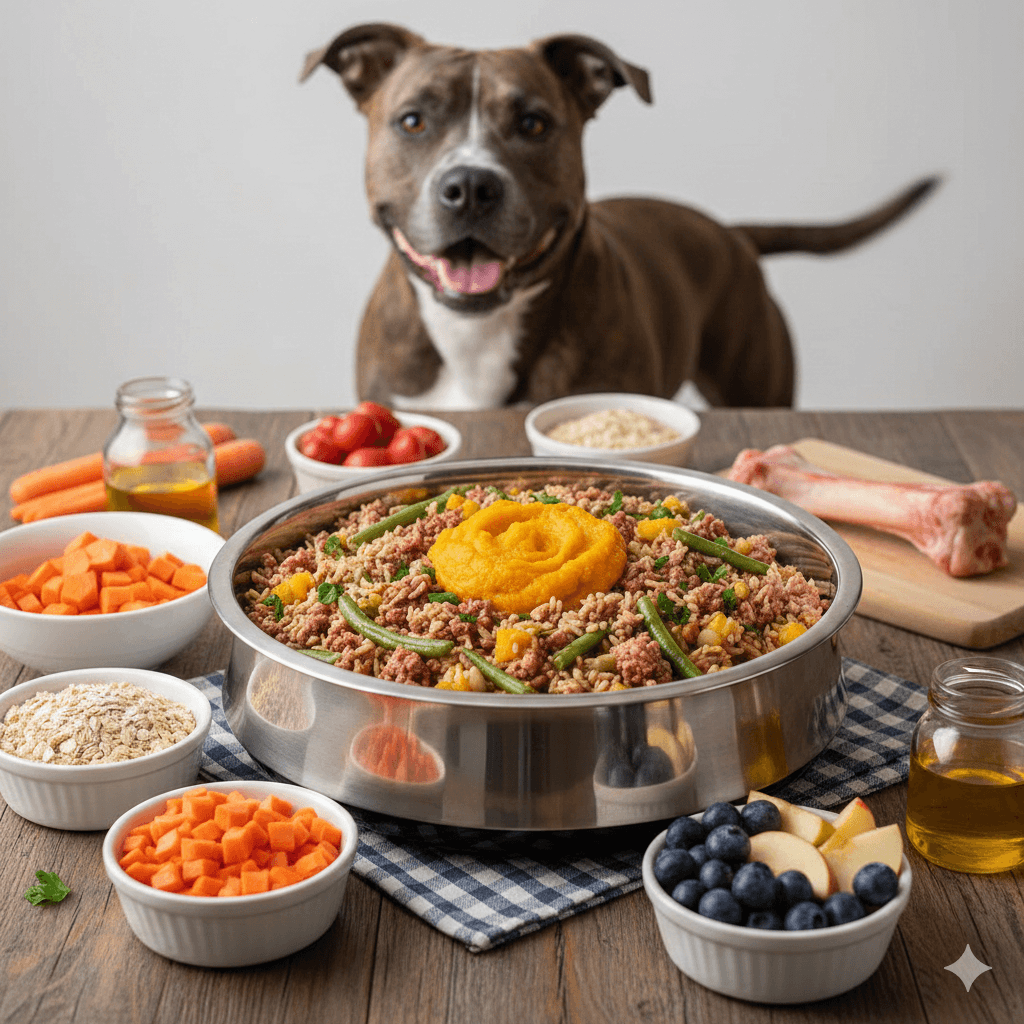
Best Protein-Rich Recipes for Pitbulls
Protein is the cornerstone of any Pitbull’s diet, as it fuels their muscles and supports their active lifestyle. Homemade recipes allow you to use fresh, high-quality ingredients that are free from fillers or artificial additives. These protein-rich recipes ensure your Pitbull gets the nutrients they need to thrive.
- Chicken and Sweet Potato Stew:
Boil diced chicken breast with sweet potatoes, green beans, and carrots. This stew provides lean protein, complex carbs, and vitamins for sustained energy. - Beef and Quinoa Bowl:
Cook lean ground beef with quinoa, spinach, and peas. Quinoa adds extra protein, while spinach supplies iron and antioxidants for improved circulation. - Turkey and Pumpkin Casserole:
Combine ground turkey with mashed pumpkin, brown rice, and zucchini. Pumpkin aids digestion, while turkey offers a low-fat protein source. - Salmon and Broccoli Mix:
Bake salmon fillets and mix with steamed broccoli, brown rice, and a dash of olive oil. Salmon provides omega-3s, supporting skin, coat, and joint health. - Lamb and Lentil Medley:
Slow-cook lamb chunks with lentils, carrots, and parsley. Lentils are rich in plant-based protein and fiber, making this dish both filling and nutritious.
These recipes cater to your Pitbull’s protein needs while offering variety to keep mealtime exciting and nutritious.
Check this guide 👉How to Make My Pitbull a Service Dog: Best 7 Expert Tips!
Check this guide 👉Saint Bernard Pitbull Mix: Best 7 Expert Tips!
Check this guide 👉Azawakh Pitbull Mix: Best 7 Expert Tips!
Essential Ingredients | Benefits for Pitbulls |
|---|---|
Lean proteins (chicken, beef, turkey) | Supports muscle growth and energy levels |
Healthy fats (salmon oil, flaxseed) | Promotes a shiny coat and reduces inflammation |
Complex carbs (sweet potatoes, quinoa) | Provides sustained energy and aids digestion |
Calcium-rich foods (yogurt, spinach) | Strengthens bones and prevents joint issues |
Fruits/veggies (blueberries, carrots) | Boosts immunity and provides antioxidants |
Benefits of Homemade Dog Food for Pitbulls
Switching to homemade dog food offers numerous advantages for Pitbulls, from improved digestion to better overall health. By preparing meals at home, you eliminate harmful additives, control portion sizes, and tailor recipes to your dog’s specific needs.
- Improved Digestive Health:
Homemade food avoids artificial preservatives and fillers that irritate sensitive stomachs. Ingredients like pumpkin and probiotic-rich yogurt promote gut health. - Enhanced Coat and Skin Condition:
Fresh ingredients like salmon oil and leafy greens nourish the skin and coat, reducing dryness, itching, and shedding. - Customizable Portions and Ingredients:
You can adjust recipes based on your Pitbull’s age, weight, and activity level, ensuring they receive the right balance of nutrients. - Reduced Risk of Allergies:
Homemade meals let you exclude common allergens like wheat, soy, or corn, minimizing the risk of food sensitivities. - Increased Energy Levels:
Fresh, whole-food ingredients provide superior nutrition compared to processed kibble, boosting stamina and vitality.
Making the switch to homemade meals not only benefits your Pitbull’s health but also strengthens the bond between you through shared care and attention.
Common Mistakes to Avoid When Making Dog Food
While homemade dog food offers many benefits, mistakes in preparation or ingredient selection can harm your Pitbull’s health. Avoiding these pitfalls ensures your recipes remain safe, balanced, and nutritious.
- Skipping Calcium Sources:
Many homemade diets lack sufficient calcium, leading to weak bones. Always include ground eggshells, bone meal, or dairy products. - Overloading on Carbs:
Too many carbs can lead to weight gain and sluggishness. Balance carb-heavy ingredients like rice with ample protein and fats. - Using Toxic Ingredients:
Avoid garlic, onions, grapes, raisins, and chocolate, which are toxic to dogs and can cause serious health issues. - Neglecting Portion Control:
Overfeeding, even with healthy ingredients, can lead to obesity. Measure portions carefully based on your Pitbull’s size and activity level. - Failing to Consult a Vet:
Always discuss your recipes with a veterinarian or canine nutritionist to ensure they meet all dietary requirements.
By avoiding these mistakes, you can create meals that are both safe and beneficial for your Pitbull’s long-term health.
How to Transition to Homemade Dog Food
Switching your Pitbull to homemade food requires a gradual transition to avoid digestive upset. Proper planning and execution ensure a smooth shift while maintaining their health and happiness.
- Start with Small Portions:
Mix a small amount of homemade food with their current kibble, gradually increasing the homemade portion over 7–10 days. - Monitor Digestive Reactions:
Watch for signs of diarrhea, vomiting, or constipation during the transition. Adjust recipes or slow the process if needed. - Maintain Consistent Feeding Times:
Stick to regular feeding schedules to prevent confusion and ensure consistent nutrient intake. - Introduce Ingredients Gradually:
Add one new ingredient at a time to identify potential allergies or intolerances before finalizing recipes. - Adjust Based on Activity Levels:
Active Pitbulls may need higher-calorie meals, while less active seniors require fewer calories to prevent weight gain.
A thoughtful transition minimizes stress for your Pitbull and sets the stage for a successful switch to homemade meals.
Creative Additions to Enhance Flavor and Nutrition
Adding flavorful and nutritious extras to your Pitbull’s homemade meals makes them more appealing while boosting their nutritional value. These creative additions ensure your dog enjoys their food and reaps maximum health benefits.
- Bone Broth for Flavor and Hydration:
Simmer beef or chicken bones to create a nutrient-rich broth. It enhances flavor and encourages hydration, especially for picky eaters. - Eggs for Extra Protein:
Hard-boiled eggs are an excellent protein source and add variety to meals. The yolks also provide healthy fats and essential vitamins. - Berries for Antioxidants:
Blueberries, strawberries, and raspberries are packed with antioxidants, supporting immune health and reducing inflammation. - Herbs for Digestive Support:
Parsley and cilantro aid digestion and freshen breath, while turmeric reduces inflammation and promotes joint health. - Yogurt for Probiotics:
Plain, unsweetened yogurt supports gut health and adds creaminess to meals. Choose varieties with live cultures for maximum benefits.
These additions not only enhance taste but also provide a nutritional boost that keeps your Pitbull happy and healthy.
Storage and Preparation Tips for Homemade Dog Food
Proper storage and preparation are crucial to maintaining the quality and safety of homemade dog food. Following best practices ensures your Pitbull’s meals stay fresh, nutritious, and free from contamination.
- Use Airtight Containers:
Store prepared meals in airtight containers to prevent spoilage and exposure to air or bacteria. Glass or BPA-free plastic works best. - Label and Date Portions:
Clearly label each container with the date of preparation to track freshness. Most homemade meals last 3–4 days in the fridge and up to 3 months frozen. - Freeze for Long-Term Storage:
Portion meals into individual servings and freeze them. Thaw overnight in the fridge before serving to preserve texture and nutrients. - Reheat Safely:
Warm meals slightly before serving, but avoid overheating, which can destroy nutrients. Use a microwave-safe bowl or stovetop for reheating. - Clean Utensils and Surfaces:
Wash all utensils, bowls, and prep surfaces thoroughly after handling raw ingredients to prevent cross-contamination.
By following these tips, you ensure your Pitbull’s homemade meals remain safe, fresh, and appetizing every time.
“We found that only 6% of homemade diets had the potential to be nutritionally complete.” – Dr. Janice O’Brien
Frequently Asked Questions About Homemade Dog Food for Pitbulls
Can I feed my Pitbull only homemade food?
Yes, but ensure the diet is balanced and meets all nutritional needs. Consult a vet or canine nutritionist to avoid deficiencies.
How often should I feed my Pitbull homemade meals?
Most adult Pitbulls thrive on two meals per day, spaced evenly apart. Puppies may require three smaller meals until they’re fully grown.
What are safe vegetables for Pitbulls?
Carrots, green beans, spinach, and pumpkin are excellent choices. Avoid onions, garlic, and mushrooms, which are toxic to dogs.
Can I include grains in my Pitbull’s diet?
Yes, whole grains like brown rice, quinoa, and oats are safe and provide fiber and energy. Avoid refined grains like white bread.
How do I know if my Pitbull likes the food?
Watch for enthusiasm during mealtime, clean bowls, and consistent energy levels. If your Pitbull refuses food, try adjusting flavors or textures.
Supporting Your Pitbull’s Health Through Nutrition
Feeding your Pitbull homemade dog food is more than just a dietary choice—it’s an investment in their health, happiness, and longevity. By understanding their unique nutritional needs and preparing meals with care, you give them the fuel they need to thrive. Whether you’re crafting protein-packed stews or adding nutrient-rich extras, every step you take shows your love and commitment to their well-being. Remember, a healthy Pitbull is a happy Pitbull, and your efforts in the kitchen will shine through in their boundless energy, glossy coat, and joyful personality. Together, you’re building a foundation of trust, nourishment, and lifelong companionship.

Is Rawhide Bad for Cats? Best 7 Expert Tips! – Discover the risks, safe alternatives, and expert advice to keep your feline friend healthy and happy.

Is Rawhide Bad for Dogs? Best 7 Expert Tips! – Discover the risks, benefits, and safer alternatives to rawhides for your dog’s chewing needs.

Understanding Anorexia in Cats: Best 7 Expert Tips! – Learn why cats stop eating, spot warning signs, and discover how to help your feline regain appetite safely.

Understanding Anorexia in Dogs: Best 7 Expert Tips! – Learn causes, symptoms, and solutions to help your dog regain appetite and stay healthy.