
Gulf Coast Tick vs Cat Tick: Best 7 Expert Tips!
When it comes to protecting your pets from parasitic threats, distinguishing between tick species is more than academic—it’s essential. The Gulf Coast tick and the so-called “cat tick” (often referring to the American dog tick or other common species found on cats) differ significantly in habitat, behavior, appearance, and disease risk. Misidentifying them could mean overlooking a dangerous pathogen or applying the wrong prevention strategy. Whether you’re a pet owner along the southern U.S. coast or simply vigilant about tick exposure, knowing how these two ticks compare helps you act swiftly and accurately. Here’s what you need to know to keep your feline—and canine—companions safe from these tiny but tenacious pests.
Origins and Geographic Distribution
While both ticks can affect pets, they occupy distinct ecological niches and thrive in different regions of North America. Their ranges sometimes overlap, particularly in the southeastern U.S., but their preferred environments shape where you’re most likely to encounter them.
- Gulf Coast Tick Range:
Primarily found along the Atlantic and Gulf coasts—from New Jersey to Texas—with hotspots in Florida, Georgia, and the Carolinas. - “Cat Tick” Common Species:
Often refers to Dermacentor variabilis (American dog tick), widespread east of the Rocky Mountains, including urban and suburban backyards. - Habitat Preferences:
Gulf Coast ticks favor coastal grasslands, marshes, and shrubby fields, while dog ticks thrive in tall grass, wooded edges, and even city parks. - Seasonal Activity Peaks:
Gulf Coast ticks are most active in spring and early summer; dog ticks peak in late spring through early fall. - Host Specialization:
Gulf Coast ticks prefer large mammals like deer but will bite dogs and, less commonly, cats; dog ticks readily target dogs, cats, and humans.
Understanding where and when each tick thrives helps you tailor prevention to your local risk level.
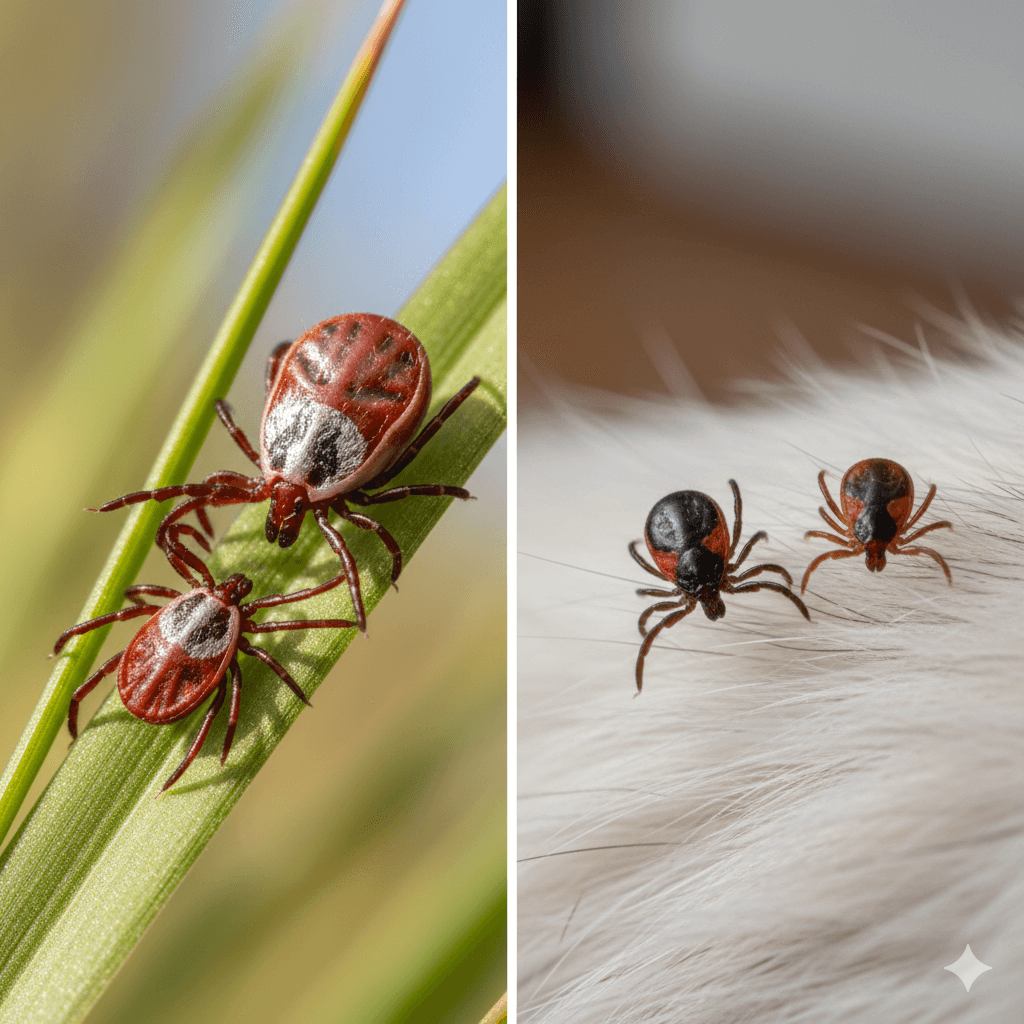
Distinctive Physical Traits of Each Tick
At first glance, ticks look similar—but subtle differences in color, shape, and size can reveal their identity and potential danger. Correct visual identification is the first step in managing exposure.
- Gulf Coast Tick Appearance:
Adults have ornate, silvery-white geometric patterns on a reddish-brown body; males are smaller with full-body markings. - “Cat Tick” (American Dog Tick) Look:
Features a large, brown body with bold, creamy-white scutum (shield); females have a noticeable size increase after feeding. - Mouthpart Visibility:
Gulf Coast ticks have prominent, forward-facing mouthparts visible from above; dog ticks have shorter, less conspicuous mouthparts. - Size Comparison:
Unfed adult Gulf Coast ticks are ~5 mm; dog ticks average 6–7 mm unfed but can swell to over 15 mm when engorged. - Leg Coloration:
Gulf Coast ticks often have reddish-brown legs, while dog ticks display lighter, almost yellowish legs—especially in nymphs.
These physical clues, especially when examined under magnification, can guide your next steps in tick removal and veterinary reporting.
Check this guide 👉Understanding Cat Tick Disease: Best 7 Expert Tips!
Check this guide 👉Understanding Tick Paralysis in Cats: Best 7 Expert Tips!
Check this guide 👉How Long Can a Tick Live on a Cat? Best 7 Expert Tips!
Gulf Coast Tick Characteristics | “Cat Tick” (Dog Tick) Characteristics |
|---|---|
Ornate white shields on reddish body | Bold creamy-white scutum on brown base |
Prefers coastal grasslands and deer | Thrives in lawns, trails, and backyards |
Transmits Rickettsia parkeri (spotted fever) | Carries Rocky Mountain spotted fever & tularemia |
Less likely to infest homes | Can enter homes on pets and lay eggs indoors |
Active spring to early summer | Peak activity late spring through early fall |
Disease Risks and Zoonotic Concerns
Not all ticks are equally dangerous—but both the Gulf Coast tick and the American dog tick can transmit serious illnesses to pets and people. Knowing the specific pathogens each carries informs monitoring and treatment.
- Gulf Coast Tick Diseases:
Primarily spreads Rickettsia parkeri rickettsiosis—a form of spotted fever with fever, rash, and eschar (black scab) at bite site. - Dog Tick Disease Threats:
Known for Rocky Mountain spotted fever (Rickettsia rickettsii), which causes high fever, vomiting, and neurological signs in dogs. - Transmission to Cats:
While cats are less commonly affected, they can contract rickettsial infections—often showing lethargy, anorexia, or joint pain. - Human Health Impact:
Both ticks pose zoonotic risks; Gulf Coast tick bites are typically solitary, while dog ticks may bite repeatedly. - Onset and Diagnosis:
Symptoms may appear 2–14 days post-bite; PCR testing or serology is needed for accurate diagnosis in pets.
Prompt tick removal within 24 hours dramatically reduces disease transmission risk—making daily checks non-negotiable in tick season.
Prevention and Tick Control Strategies
Effective tick management blends environmental control, topical protection, and routine pet checks. A layered defense works best against both Gulf Coast and dog ticks.
- Use Vet-Approved Preventatives:
Products containing fluralaner, afoxolaner, or permethrin (for dogs only) offer month-long protection against multiple tick species. - Yard Maintenance:
Keep grass short, remove leaf litter, and create barriers (like wood chips) between lawns and wooded areas to deter ticks. - Daily Tick Checks:
Examine your pet’s ears, armpits, groin, and between toes after outdoor time—ticks may take hours to attach. - Avoid High-Risk Areas:
Steer clear of tall grass, marshy edges, and deer trails during peak tick months, especially in southern states. - Tick Removal Protocol:
Use fine-tipped tweezers to grasp the tick close to the skin and pull straight upward—never twist or squeeze the body.
Consistent prevention turns a high-risk season into a manageable routine for pets and owners alike.
Special Considerations for Cats vs Dogs
Cats are more sensitive to certain tick treatments and may exhibit different symptoms, requiring tailored approaches to protection and care.
- Permethrin Toxicity in Cats:
Never use dog-specific tick products on cats—permethrin can cause seizures, tremors, or death in felines. - Grooming as Defense:
Cats’ meticulous self-grooming may remove some ticks, but long-haired breeds or older cats need extra help. - Indoor-Only Isn’t Risk-Free:
Ticks can hitchhike indoors on clothing or dogs, putting even indoor cats at risk—especially in multi-pet homes. - Subtle Symptom Presentation:
Cats often hide illness; watch for decreased appetite, hiding, or reluctance to jump as possible signs of tick-borne disease. - Safe Tick Preventatives for Cats:
Selamectin, fluralaner (oral), or fipronil-based spot-ons are generally safe—always confirm with your veterinarian first.
Protecting cats demands extra caution—but with species-appropriate products, they can stay just as safe as dogs.
What to Do After Finding a Tick on Your Pet
Discovering a tick doesn’t mean your pet is doomed—but your next steps matter. Quick, calm action minimizes health risks and provides valuable data for your vet.
- Remove the Tick Immediately:
Use proper technique to ensure full removal, including mouthparts, to reduce infection risk. - Save the Tick for ID:
Place it in a sealed bag with a damp cotton ball; many vets or labs can identify species and test for pathogens. - Clean the Bite Site:
Disinfect with mild antiseptic and monitor for redness, swelling, or scab formation over the next week. - Track Symptoms for 14 Days:
Note any fever, lameness, lethargy, or appetite changes—these may signal emerging illness. - Consult Your Veterinarian:
Even if your pet seems fine, share the tick photo or specimen; some vets recommend prophylactic treatment in high-risk zones.
A single tick bite can be harmless—or the start of something serious. Vigilance bridges that gap.
Why Proper Tick Identification Matters for Pet Safety
Correctly identifying whether a tick on your pet is a Gulf Coast tick or a common “cat tick” (like the American dog tick) isn’t just academic—it directly impacts your response, treatment plan, and prevention strategy. Misidentification can lead to unnecessary panic or, worse, missed signs of serious illness. Taking a moment to compare key features and understand species-specific risks empowers you to act quickly and appropriately. Consider these critical reasons why accurate identification makes a real difference:
- Targeted Disease Monitoring:
Knowing which pathogens a tick carries helps you watch for the right symptoms—Rickettsia parkeri vs. Rocky Mountain spotted fever, for example. - Informed Vet Communication:
Providing a photo or preserved specimen allows your veterinarian to assess risk more accurately and decide on testing or prophylactic care. - Effective Environmental Control:
Gulf Coast ticks rarely infest homes, while dog ticks can lay eggs indoors—so your cleaning and yard strategies should differ. - Appropriate Preventative Choices:
Some tick preventatives offer better coverage against certain species; identification helps you select the most effective product. - Reduced Anxiety Through Knowledge:
Understanding whether a tick is a known vector in your area replaces fear with facts, helping you stay calm and proactive.
In tick season, knowledge isn’t just power—it’s protection for your pet’s health and your peace of mind.
“Gulf Coast ticks are of increasing concern because of their ability to transmit several pathogens of veterinary and medical importance.” – Jeffrey C. Hertz & Phillip E. Kaufman
Frequently Asked Questions About Gulf Coast Tick vs Cat Tick
Is the “cat tick” a specific species?
No—this is a common misnomer. Cats are usually bitten by generalist ticks like the American dog tick (Dermacentor variabilis) or Lone Star tick, not a unique “cat” species.
Can Gulf Coast ticks live indoors?
Rarely. They prefer outdoor hosts like deer and don’t reproduce indoors, unlike dog ticks, which may lay eggs in home cracks or carpets.
Which tick is more dangerous for pets?
Both are concerning, but the American dog tick spreads Rocky Mountain spotted fever more widely, while Gulf Coast ticks cause a milder—but still serious—spotted fever.
Can I use the same tick prevention for dogs and cats?
Absolutely not. Many dog tick preventatives contain permethrin, which is highly toxic to cats. Always use species-specific products.
How long must a tick be attached to transmit disease?
Most rickettsial diseases require 24–48 hours of feeding—but some pathogens may transfer faster, so daily checks are critical.
Protecting Your Pets Starts with Knowing Your Enemy
Ticks may be small, but their impact can be enormous. By understanding the differences between the Gulf Coast tick and the common “cat tick,” you move from fear to informed action. You’re not just removing pests—you’re safeguarding your pet’s long-term health, comfort, and quality of life. Whether you’re walking through coastal marshes or playing in your suburban backyard, knowledge is your first line of defense. Stay observant, stay prepared, and remember: the best tick control begins with a clear-eyed understanding of the threats hiding in the grass.

Is Rawhide Bad for Cats? Best 7 Expert Tips! – Discover the risks, safe alternatives, and expert advice to keep your feline friend healthy and happy.

Is Rawhide Bad for Dogs? Best 7 Expert Tips! – Discover the risks, benefits, and safer alternatives to rawhides for your dog’s chewing needs.

Understanding Anorexia in Cats: Best 7 Expert Tips! – Learn why cats stop eating, spot warning signs, and discover how to help your feline regain appetite safely.

Understanding Anorexia in Dogs: Best 7 Expert Tips! – Learn causes, symptoms, and solutions to help your dog regain appetite and stay healthy.